Our Underlying Goal In A SHTF Scenario Is Ultimately to Stay Alive And Live Without Exposure To Risks: The Six Laws Of Survival (Read This. Memorize This. Apply This. One Day, You Will Need It.)

Our underlying goal in a SHTF scenario is ultimately to stay alive and live without exposure to risks.  As much preparation as many of us have made, in the altered world of a SHTF crisis, there will be many dangers that lurk; and some of them will be inadvertently from our own doing.

Here are the six laws of survival. Read this. Memorize this. Apply this. One day, you will need it.]

In a survival scenario all bets are off and the following laws will keep you alive. These laws are rigid, but necessary. Harsh, but true. Keep your cards close and always have a plan.

Law 1: Wherever that crowd is running, do not join them.

This is not to say that they aren’t (initially) running in the right direction.  But what of it?  They are bound to be either captured en masse or worse (bombed, strafed, or shot).  For the horror of the IHM (the Incredible Human Mob), look no further than “War of the Worlds” with Tom Cruise where he and his family are driving the passenger van…right up and into the mob.  Look what happened there.  You can’t defeat their numbers, and you will be captive to them…another steer in the herd.

Strike out on your own, you and your family, avoiding the main thoroughfares at all cost, and avoiding the IHM.

Law 2: You have to have a place (and places) to go.

This is where thinking outside of the general herd will pay off.  We’re going to instruct by running through a checklist…. this will be a “handy-dandy” checklist that you can print out or run over in your mind to be able to follow rule #2.

  • Did you preposition assets (food, weapons, money, etc.) at an initial safe location?
  • Is that location within walking distance for you and your family?
  • Once there, are you and your family secure for at least a 24 – 48-hour period?
  • Safe from enemy troops/government “peacekeepers” on the hunt?
  • Safe from fallout and/or NBC agents?
  • Does it have a food and water supply to sustain all of you for 7 days?
  •  If your initial safe location has been compromised, is a duplicate location nearby?
  • Do you have a farther (more remote) location that you can reach on foot in 3 days?
  • A secure, sustainable location with supplies for at least a month?
  • Do you and your family have a handheld method of communication for each member?
  • Have you formulated short-term (initial contact, 48 hours, 7 days) plans?
  • Have you made long-term (1 month and month-by-month; 6 months and 6-month continuous analysis; 1 year) plans?

Guys and gals, these are just basics.  You must have these things in place in order to give you and your family a fighting chance.  Whether or not it is a foreign invasion or a domestic communist takeover of the United States, you must leave your home in suburbia or you will be rounded up, bringing us forward:

Law 3: You will be leaving your home, permanently or for a long time.

This is survival.  The majority of readers are not living in the mountains or in a remote location.  If you follow these steps and practice them on a dry-run on a regular basis…it will give you the advantage that most people will not have.  You must innovate: come up with ideas that others will not think of.  Do you know of an abandoned warehouse on the outskirts of town?  Chances are that 90% of others will think the same thing in a grid-down/Red Dawn survival scenario.  You need to find the places that are off the beaten path.  And if there are none?  It may mean that you have to create a place.

How?  By caching your supplies within the walking distances described for each part of the “safe” area.  By finding tunnels, caves, or other sub-structures that can protect you from the elements and at least afford partial protection from radiation.  By being who it is you imagine yourself to be: a prepper…a survivalist…or a survivor.  When you enter any contest, do you enter it to lose?  Do you strive for just “second place” or “second best” in this arena?  Chances are the answer is “no,” but you have to arrive on that conclusion on your own.  All of this is a challenge, and this underlines everything for you if it needs clarification:

Law 4: In survival, there is no silver medal: “second place” means death.

Forget that phrase in “The Hunger Games,” because if you are taken…the odds are not ever in your favor.  We went through a 4-article series on how to escape from the Gulag where I reiterated how important it is for you to stay out of it.  I stand by this concept.  If you are taken captive, the odds aren’t in your favor of getting out…for the duration of it.

And then guess what?  The Germans during WWII as the allies approached began to hide their transgressions by liquidating the camps…basically killing everyone that could bear any type of witness to the atrocities.  Do not think for an instant that it will not happen again.  Look at Holodomor in Ukraine and the starvation tactics the USSR used to follow after the Malthusian model.  Our enemies have very little regard for human life, and the lives they value are of their own people.  If the Chinese communists would run over their own people with tanks and sell their internal organs while they’re still alive, what will they do with us?

Which brings us to the “Malcolm X” rule:

Law 5: You must stay out and survive by any and all means necessary.

Some of you may think “JJ is a little harsh.”  I would rather be hard and harsh now, and enable you, my countrymen, to have some tools at your disposal and a “sharp tack” under the figurative buttocks of your mind to give you the impetus to do something about the situation prior to its occurrence.  The country is “long in the tooth,” and you have to grasp these concepts and act upon them now…not burn off the pages and save them in the survival archives…but use them to inculcate your own, individual plan of action now.

Rule #5 means resolving yourself to do what you must in order to protect yourself from the ravages (and not just possible, but probable death) inside of one of these camps.  These are all basic, “generic” things to begin as a base for your preparations.  This is a form of guerilla warfare!  Avoid the occupiers/oppressors at all cost!  These things will work for you…if you resolve yourself (ves) to do them.  I’ll close with a note on OPSEC (operational security): you better build off of these basics and keep all of them to yourself.

JJ is giving you the basics that you need, without revealing everything of his own plans.  Why?  Because I earned them by paying for them with years of experience and suffering, and it means my family’s survival.  Such measures would run you a lot of money and imagination; such measures come from years of practical experience and the willingness to take chances.  This thought brings us to our final rule, the failure of which means compromise leading to death:

Law 6:  Do not tip your hand or reveal your plans to anyone.

Next installment we will talk about life under occupation, be that by foreign invaders or by totalitarian state that has morphed out of a democracy.  In the meantime, prepare and plan, and when you are reasonably sure, execute a dry run.  The practice does make perfect and affords you a time and trials to iron out all of the glitches in your operations.  Until next time be good to one another and keep up the fight!
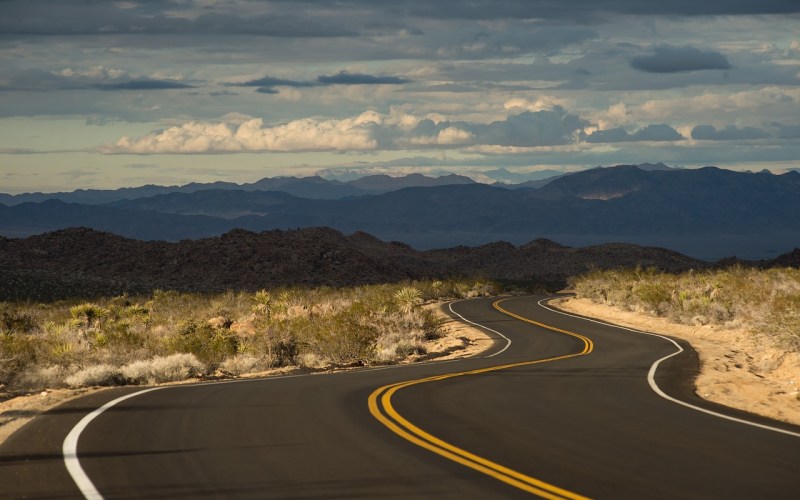
SHTF Route Planning- Your Route Assessment Should Be A Part Of An Overall Bug-Out Plan (It’s one of the more common problems us preppers try to figure out. What is the best way home as quickly and safely as possible when SHTF and you are far away?)

Imagine it’s 1:15 on a Thursday afternoon. You and some friends at work have recently returned from lunch and you are settling back into work. As you are going about your daily responsibilities, the Emergency Broadcast System starts to blare over a coworker’s radio. Normally you would ignore this, but you also get an Emergency alert message on your smart phone. Funny, you could swear you had disabled those, but is says that there has been a terrorist attack in Los Angeles and urges calm and promises more information soon. You start walking out of your office towards the break-room and notice everyone crowded around the TV when the power goes out. Looking down, you notice your phone isn’t working either.

During a SHTF situation, pain could become an annoyance for some, but unbearable for others.

If doctors are scarce and medicine becomes even scarcer, this one little weed, found all over North America and similar to morphine, could be a saving grace.

Making for the nearest window, you notice that vehicles on the road have stopped, seemingly right in their tracks. Could this be an EMP? Not wanting to overreact, you take the stairs and walk out to the parking lot. You try your key fob but that doesn’t work either so you use your key. A quick check of the ignition and you realize your car isn’t going anywhere either. Slowly your co-workers validate the same with their cars and you start looking at the possibility that you will could have to walk back home. Unfortunately for you, you work 72 miles away from home.

It’s one of the more common problems us preppers try to figure out. What is the best way home as quickly and safely as possible when SHTF and you are far away? I had a reader ask me the following question:

My husband works 75 miles from home. My greatest fear is that disaster or SHTF will happen while he is at work. I would like to start planning for how he might get home, but don’t know how to begin figuring out what is the best route. Most posts (here and elsewhere) on the subject are about get home bags and what equipment to have with you, but not so much about planning the actual route, other than to stay off major highways. Would like to hear the pros and cons of sticking to roadways, crossing private property, what type of maps to consult, etc.

I always appreciate questions from our readers and I will try to give my thoughts about this subject as I have considered this myself. So without any further ado…

What is the best way home during a SHTF event?

There are so many factors that come into play when you are talking about a situation like this. How far away are you? What is the weather like? What region will you be traveling through? Are you in an urban environment or rural? What type of shape are you in? Do you have other people, like children you have to consider? Are your two youngest in school or daycare? What type of clothing and footwear are you wearing? What time of day are you starting out?

Each person is unique and our situations are also unique so there are no firm and set rules for anything but I have given this some thought. At one point in my life I commuted 90 minutes each way to work. It was 77 miles’ door to door and getting home in that type of scenario I mentioned above would be no picnic for anyone. To be really prepared, you have to imagine walking home in the heat of summer or the bitter cold of winter.

For this hypothetical, we will assume that there really has been some type of national catastrophe. Maybe an EMP attack from a rogue nation or terrorist cell has disrupted all modern electrical appliances. Virtually everything electric has shut down and you have precious little time, a couple of days tops to make it back home to your family before the chaos really starts.

It’s one of the more common problems us preppers try to figure out. What is the best way home as quickly and safely as possible when SHTF and you are far away?
To be really prepared, you have to imagine walking home in the heat of summer or the bitter cold of winter.

Before you take the first step: What gear do you need to consider?

I know our reader mentioned that most people only talk about Get Home Bags when this topic comes up but it is worth spending a few sentences here on how best to equip yourself before this even happens.

  • Get Home Bag – Having a get home bag in your car will be an important step in the right direction so to speak. I won’t get into what you should pack in your get home bag, but we do cover all of that in several articles on the subject. You can read our post about putting together your Get Home Bag.
  • Proper Footwear – Flip flops belong at the pool people! My children are guilty of this too, but if you are forced to walk home, what are you going to wish you had on your feet? Sturdy footwear like hiking boots or at least good athletic shoes should be one consideration.
  • Dress for the elements – Dress like you will be spending all day outside not sitting in a cubicle. Regardless of the season, have appropriate clothing on that will protect you from the elements, especially if you are going to be further than an hour’s walking time from home.
  • Food/Water/Shelter – You should have at a minimum, a container that will hold water, a way to filter water, some form of emergency shelter and food. You don’t need a four course meal to survive, but something to keep your energy up. Think power bars or protein bars. Survival rations work too and won’t go bad in the car.
  • Protection – Do you have some protection from two-legged animals? I always have a personal firearm, but Tasers and bear spray are options too that are better than nothing.
  • Maps – And the knowledge of how to read them. These can be simple street maps, you don’t have to have topo maps of the entire region. You can grab the road atlas out of your car before you head out.

During a SHTF situation, pain could become an annoyance for some, but unbearable for others.

If doctors are scarce and medicine becomes even scarcer, this one little weed, found all over North America and similar to morphine, could be a saving grace.

Planning your route and alternate route home.

For the commuter who drives to work, I would imagine that each of you have already mapped out the most efficient route to your place of business that you use virtually every single day. We get into a routine because we found a way that works. It’s usually the most direct, fastest way to get where you need to go. I even go into autopilot some days on the weekend and start driving my work route even when I am not going that direction. These habits can be a good thing in one respect.

London Map
each of you have already mapped out the most efficient route to your place of business that you use virtually every single day

Commuters who use trains or buses follow a similar route. The trains go into central spokes normally that would mimic a commute via car. None of us should really worry about the normal route we take back home as long as we know the roads we would take if public or personal transportation was down. With few exceptions, the highway system is going to be the quickest way we can get back to our home city. Highways level out hills and go around natural obstacles. However, what if the route you normally follow has been blocked? What if you travel through less savory parts of town that you wouldn’t normally want to be walking down the street?

Identify your primary, secondary and tertiary routes home – In my case, working 77 miles from home, I was likely looking at 2 to 3 days of hiking to make it back assuming I did not encounter anything that made me need to alter my course. Most of my commute was interstate highway so I would have simply followed that route. However, if that didn’t work out, I could cut back on a smaller highway that would have taken me on a much more rural track to the South back home.

Depending on how people were reacting you could run into rioting or looting in some areas. I would have been walking on the highway through several major population centers that might be best avoided. I don’t think I would ever cut across someone’s property unless there were strong benefits and low risks that I perceived from doing so. Going cross-country, without the benefit of a road can slow you down and may even bring on injury more quickly as you could have to navigate natural obstacles like streams, dense underbrush, rocks, etc. The last thing you want to do is injure your self and make walking more difficult or even impossible while you try to shave 20 minutes off your trip.

Having more than one route back home can help you avoid dangerous areas.

Rather than having a specific route I am taking, I would consult the maps I store in my car to decide which ways I would alternate if needed. I would go to the south of the major urban areas if I sensed any danger but I would still be staying on paved roads that were common thoroughfares.

Pros and Cons of various routes

In the example above, does your normal route take you through urban areas you would rather avoid? Has the disaster already started to make people act irrationally? I think that most of us even in the scenario I described above will be able to count on average people thinking that nothing is wrong. The power will come back on because it always does. Food will still be available and there will still be items on store shelves. You should be home way ahead of any actual panic, but sometimes it’s better to be safe than sorry with your route. I don’t think anyone would be barricading streets the first or even third day after the lights go out.

Are you carrying three days’ worth of water on your or are their sources you can tap into along the way. Assuming you have cash on hand you will likely be able to purchase it from stores who are likely still in operation as the Normalcy bias takes over for most.

What factors do the weather play?

Adverse weather could seriously impede your progress. Walking in snow or ice or even extreme heat would sap your energy and could cause injuries. You first have to plan for those extremes if they are common to your area.

If you are facing a walk home and you live in the deserts of the Southwest, you could be forced to walk only at night when the temperatures are cooler and find shade to rest during the day. You understand the weather factors that could influence a trip like this so you have to plan accordingly.

For most of us, walking home is not incredibly difficult with a decent fitness level and some simple preparation. We may never be forced to use our get home bags, but it makes sense to prepare now like we do. You will be more able to react quickly and make the right decisions if you do.

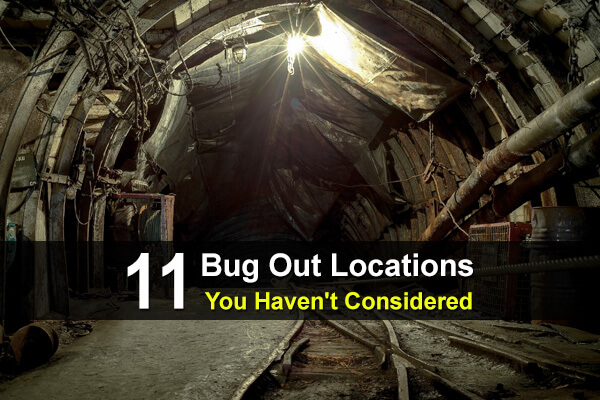
11 Bug Out Locations You Haven’t Considered- Not everyone can afford to purchase hidden acres in the middle of nowhere, so what will you do when the SHTF and you need to head for the hills?

If there ever comes a time when you need to bug out, you’re going to need a good bug out location. But not everyone can afford to purchase hidden acres in the middle of nowhere, so what will you do when the SHTF and you need to head for the hills?

Here are some unusual ideas for bug out locations you may not have considered, and some suggestions on what makes a good place to run to when you need an escape plan.

Bug Out Considerations:

Before you choose your bug out location, you’ll want to keep in mind what makes a location good or not so useful. You’ll need to determine which aspects of a bug out location are the most important to you.

Distance and Travel

Your bug out location needs to be far enough from any major cities, but not so far away from work and home that you can’t get there in an emergency. Also, keep in mind your mode of travel. If you’ll be walking or biking, you’ll need a bug out location that is considerably closer than if you are able to drive there.

Seclusion and Population

If you need to make use of a bug out location, you’ll want to consider how many people live in the general location. If it is highly populated, you’ll be fighting for resources and you may have to use considerable energy and money to defend your property. If it’s too secluded, you won’t have neighbors to help you.

Medical Care

Will there be access to medical care where you are bugging out? What medical supplies will you have at your disposal if there isn’t?

Communication

How will you communicate with friends and loved ones in an emergency, especially if you have to make use of your bugout location?

Water and Food

You’ll need food and water if you’re going to stay there for any length of time. Is there a potable water source nearby? How will you get food? Are you able to set up camp ahead of time so you can make sure there are supplies?

Shelter

You’ll need some sort of shelter. Will it be a tent? A cabin? Or some other structure to protect you from the elements, wild animals, or people?

Self-sufficiency

Is there a place to grow food where you will be bugging out? How will you be self-sufficient if you need to live there?

Security

Will you be able to defend your bug out location against theft, looters, or people meaning to do harm?

Natural Threats

What kind of natural threats do you need to worry about where you are bugging out? Are there wild animals, weather problems, or flooding?

Company

How many people will you be bringing with you? Is your bug out location able to house everyone that needs to be with you in an emergency? What if other people need a place to stay? How many people can you accommodate?

Ownership

Who owns the bug out location you are going to stay in? Trespassing laws still apply, even in a disaster, so you may want to make sure the place you choose is somewhere no one else will claim.

With those in mind, you may want to consider bug out locations that the average person wouldn’t think of. Be creative but be smart to make sure your location is safe and has everything you need.

Here are a few ideas…

1. Hunting Camps

A hunting camp or cabin might be a good choice because it has the basic necessities, even if it is a little rough around the edges. Hunting camps are usually easily accessible but off the beaten path, so you’re more likely to find animal visitors than humans. They may even be well camouflaged already.

And of course, a hunting cabin is a great place to hunt for your supper. However, if the hunting cabin isn’t yours, you might run into an armed owner, so make sure you have permission to use it.

2. Abandoned Warehouses or Commercial Facilities

A factory, warehouse, or another commercial facility may be completely abandoned in a natural disaster. They may have some inherent dangers, such as high voltage areas or heavy equipment, but they may also have plenty of supplies, too.

In a national disaster or local natural disaster, not too many people will be showing up for work, so you might find a safe haven in an office building, an old warehouse, strip mall, or factory. Any type of workplace is likely to have some kind of kitchen or breakroom, which may have food supplies and water, as well as first aid stations.

3. Utility Easements

The benefit of a utility easement is that it is easy to track and follow since they are usually mowed and maintained by the government. You’ll be able to follow along the pipelines or electric lines with ease.

4. National Parks

People aren’t likely to be vacationing in national parks during a disaster or emergency situation. And since they aren’t privately owned, you might be able to get away with hunkering down in an empty cabin, ranger station, or office building.

National parks will probably have first aid supplies, vehicles for transportation, and quite possibly, food and camping supplies.

5. Campgrounds

Campgrounds are great for off-season, temporary disasters. Again, people aren’t likely to be vacationing there during an emergency, and you’ll likely find access to water and even first aid supplies. Some campgrounds have cabins, places for RV hookups, or even platforms for your tent.

Keep in mind, you may want to research if the campsite you want to stay in is privately owned or part of a national park, because you don’t want to run into an unhappy owner.

6. Abandoned Mines

Mines can be tricky, but they are definitely worth looking into. You need to be sure that an abandoned mine is structurally sound so that you aren’t trapped or injured by a cave-in. You also need to make sure there aren’t any toxic gasses lingering deep inside.

If the abandoned mine is safe, though, you’ve got a great place to hide. There may be paths, supplies, and even methods of transportation hidden inside, as well as room for plenty of people and shelter from the elements. You may also find electricity, generators, or a water supply.

7. Caves

Caves can be subject to cave-ins and toxic gasses, just like mines. However, caves that have been used for tourist attractions should be more structurally sound and have pathways throughout. They also might have lights and electricity, first aid supplies, and plenty of room to explore and hide. You may also find a water source, as well.

8. Ghost Towns

Ghost towns are more common than you might think. On the one hand, a ghost town will have plenty of buildings to choose from, little traffic, and may have abandoned resources such as water, food supplies, transportation, and anything else you might think of.

On the other hand, you may need to find out why the town is abandoned, or nearly abandoned, in the first place. For example, a town may be abandoned because the water supply is unsafe or because underground mines are on fire, making it too dangerous even for a bug out location.

9. Old Churches

Although people may flock to church during emergencies, old abandoned churches might be a good place to go. There will be plenty of hiding places, and possibly water, toilets, and likely, a kitchen. Some churches stock food pantries, so a church building may have food supplies on hand, as well.

Even better if the church has a rectory or parsonage attached, where you will find places to sleep. If nothing else, an empty church might make a temporary place to get out of the elements.

10. Abandoned Trains

If you look around, you might find some abandoned train cars or trolleys sitting alongside the railroad tracks. If the rails aren’t used by commuter trains, you might have yourself a perfect hide-out spot. Train cars and shipping containers are usually structurally sound and will withstand some severe weather.

11. Old Farmhouses

Empty farmhouses abound in the countryside, where people have needed to leave for one reason or another. Of course, you’ll need to research to make sure the owner isn’t going to show up when you least expect it, but if the location is truly abandoned, you might have yourself a great place to hunker down.

If the main house isn’t habitable, there might be outbuildings, barns, or even migrant workers’ quarters that are. If you are lucky enough to find an old Amish farm that is no longer in use, it will be set up to run without electricity.

Final Thoughts

If you are planning on bugging out in emergencies, don’t wait until the last minute to make your plan. You’ll want to research specific locations ahead of time to make sure the area is safe and has everything you need to survive. You’ll need to have your basics covered, such as food, shelter, and water.

You also need to make sure you won’t be running into other people or an unsuspecting owner who might accuse you of trespassing. You’ll be in even better shape if you can visit the location to hide supplies, prepare for emergencies, and create a plan to get there.

What to Do When Someone Knocks on Your Door in the Middle of the Night

Acouple of years ago, when my mother still lived alone and before it became evident that her dementia was worsening, I took my wife and two daughters for an overnight visit.

She lived about four hours from where we do, and we often planned visits that allowed us to spend two days or more with her.

Short answer: if someone knocks at your door in the middle of the night, do NOT open the door and don’t waste your time asking what they want. Instead, shout at them, “OK, I get that you need help, let me call the police right now and they will be able to assist!”

My mother liked to sleep on the couch in the living room. She had this irrational fear of sleeping upstairs, afraid that a middle of the night disaster or home invasion would go unnoticed if she slept on the upper floor.

My wife and I had gone to bed in a bedroom upstairs, while my kids were sleeping in yet another bedroom on the second floor.

You might be living in one of America’s deathzones and not have a clue about it
What if that were you? What would YOU do?

In the next few minutes, I’m going to show you the U.S. Nuclear Target map, where you’ll find out if you’re living in one of America’s Deathzones.

This image has an empty alt attribute; its file name is untitled-1.png

In the middle of the night, I was awoken by the sound of my mom’s small dog barking and I heard my mother say, “What’s wrong, you want out?” I listened as she opened her front door and was suddenly surprised by a stranger standing on her stoop.

I assume the stranger’s knocking at the door had startled the dog and we had all slept through it. Or perhaps the dog heard this stranger, with no intention of knocking on the porch prowling around.

I immediately got out of bed and pulled my pants on to see what was happening. I heard my mother say “You’re not coming in!”as I reached the top of the stairs. I quickly returned to my bedroom and grabbed my Sig Sauer .357 auto from the dresser.

As I reached the foot of the steps I saw a strange male, repeatedly trying to open the storm door which fortunately, was locked.

My mother still seemed to be bewildered at the whole situation and was trying to ask the stranger what he wanted and who he was looking for.

I gently moved my mother out of the way and firmly explained to the man he had the wrong address.

I made sure he saw the very large firearm I was holding in my right hand. His eyes immediately widened and he stumbled back off of the porch and disappeared into the darkness.

I don’t think he was expecting someone else to be in the house or perhaps he assumed my mother was alone since she had been the one to come to the door.

I immediately locked the front door and performed a security check of all the doors and windows in the house.

I scolded my mother for answering the door in the middle of the night and returned upstairs to calm my own family, who were upstairs listening to the entire incident.

The fact is, a lot of people are uncertain what to do when someone knocks on their door in the middle of the night. My mother is far from the only one who would have responded in the manner that she did.

Many people are raised from a very young age to be helpful, considerate, and polite, even to strangers.

Yet what should we do when we hear that middle of the night or early morning knock?

There is no set answer to this question because there are simply too many variables that could impact the correct course of action.

But I can tell you, after 30 years of law enforcement, that knocking on the front door in the middle of the night is not an uncommon tactic for home invaders to use.

There are two types of scenarios that are often in play where this is concerned.

The first scenario is that one of the attackers knocks on the door. This could be a male or a female pretending to be in distress and needing assistance.

Just out of view, on one or both sides of the door are more attackers waiting to push their way into the house as soon as the door is unlocked and opened.

The second scenario is where the same, male or female accomplice knocks on the front door and attempts to hold the attention of the resident.

While you are busy trying to help the person at the front door, one or more attackers attempt to breach a back door and come into your house from a blind spot.

Both of these scenarios are highly effective, and both rely on your good intentions and desire to help strangers.

So, what do you do if someone knocks in the middle of the night?

  • Should you answer the door?
  • Should you pretend not to be home?
  • Should you try to ascertain what the person wants without opening the door?

My suggestion is for you to consider the same logic I tried to explain to my mother before leaving, in the hopes that she would never repeat her actions.

Should You Answer the Door?

Do NOT answer the door in the middle of the night or early morning. Once you commit to unlocking and opening your door you have, at the very least even the odds for the person in front of you.

If there are more than the one you see, you have tipped the odds unevenly in their favor, even if you are armed.

As a police officer, you learn that one of the riskiest actions you can take is when you are off-duty with no immediate back-up.

Despite all of the training and experience, police officers still want to keep the odds in their favor. You should do the same, not just for you but for your family as well.

In this situation, you must keep in mind that you, and your locked door, may be the only impediment standing between some really bad people and your sleeping family.

One wrong decision here could have consequences for more than just yourself. In my case, my mother had made the decision for me and had already opened the door. She put my family at risk along with herself.

Should You Try to Help Without Opening the Door?

Given today’s technology and the massive proliferation of cell phones, anybody knocking on your door in the middle of the night cannot possibly need to use your telephone.

In the one chance in a million that they do, they should do so at a gas station or a convenience store, if for no other reason out of courtesy to whomever they are waking up.

If you are a female or an elderly person and someone is knocking on your door because they are injured, being assaulted, or simply lost, what possible assistance could you render them even if that is truly the case?

I would hesitate to suggest that even a young, healthy, well-armed man should be foolish enough to venture outside his locked door where he might be overtaken by multiple attackers or by an armed attacker.

Should you pretend that you are not home?

This could actually backfire on you and this might just be the green light the people outside are looking for in order to attempt to break into your home. This is probably not a good response either.

My recommendation:

Keep the door locked, and listen to the rest of the house to make sure you don’t hear sounds that might indicate someone is trying to breach another door.

Yell at the visitor through the locked door: “I understand you need assistance, and I am calling the police now!” 

Then don’t simply sit back down to see if they go away, call the police emergency number and explain that there is a stranger at your front door trying to get you to open it.

Your announcement, “I’m calling the police now!” is the last thing someone bent on home invasion wants to hear.

Not only will the person on the front step hear it but if you say it loud enough anyone exploring the back entrances will hear it as well.

If the person is truly in need of assistance, they will appreciate your actions and might even sit down to await the arrival of the police.

If their intent is something else other than that, the person will probably respond to the announcement by suddenly vanishing into the dark.

What Other Steps Can You Take?

But whether the stranger vanishes in the dark or they wait, if you feel uneasy waiting for the police to arrive, trust your gut.

Begin making calls to your neighbors. Wake them up by phone and ask them if someone knocked on their door.

Keep them on the line while you explain the entire incident to them and inform them that the police are on their way. Nothing will stir nosy neighbor’s curiosity like the arrival of the police next door.

What this will really accomplish, however, is half the block turning the lights on in their own houses and pushing their noses against their windows which would frighten off all but the most psychotic felons.

If you do hear noises at the rear of the house, the the threat level increases immediately and you must respond accordingly.

Call the police and this time tell them you now think an intruder or several, are trying to break into your home.

Even if you are armed or have access to a weapon, get everyone who is in the house to a safe room, and behind a locked door.

On your way to the safe room, turn on any outside light you can to eliminate hiding places outside your home and help protect police when they arrive.

Once the police do arrive, describe the person as best you can, ask them to walk through your house with you so that you can check the doors and windows and then go back to bed.

Ask police to speak to neighbors who may have seen something more, since they were woken up by your phone call while the intruder was in the area.

Whichever actions you choose to follow, it should be something you have not only thought about yourself, but you’ve talked over with your family, including the kids.

Practice waking everyone up in the middle of the night and getting them quickly into the designated safe room. Time yourself and make it a challenge to beat your previous time.

How to Create a Designated Safe Room Easily

Your safe room should be as fortified and as prepared as your budget and resources will allow. Sure, some people can afford to hire it built with all the bells and whistles, which is great for them.

But if you cannot afford to build a state of the art safe room, you can gradually add things to a bedroom or another room to create a safe space.

  • Swap the flimsy interior bedroom door for a more solid one or even a reinforced steel door.
  • Add a deadbolt lock along with a security bar or door jammer
  • Reinforce window locks in the room as well
  • Replace short screws in the lock plate with longer ones
  • Make a plan to get out of the room if going out the door isn’t safe.

The idea of a safe room is to keep intruders out and your family safe inside for as long as it takes for help to arrive.

For this reason, add supplies, such as bottled water, first aid kit, additional ammunition, an extra cell phone, wall charger, AND a fully charged power bank, pet supplies in case you are able to swoop them up on the way in, etc.

Store the supplies in a closet or under a bed, or in a locked cabinet if you have young children. You can even store a portable toilet in the room to be used if needed.

Having supplies already in the room will help to reduce the amount of time you take to get to the safe room. No need to run around grabbing supplies—just go straight to the safe room.

It also wouldn’t hurt to clue your neighbors in to your safety plan. Maybe exchange walkie talkie units so they can reach you and you can reach out to them. Definitely include your kids in the planning.

They won’t be kids forever, and maybe one day when they are grown and away from home, your practice will come back to them and serve them well in the same situation.

It is always safer to err on the side of caution even at the risk of appearing unfriendly or frightened.

During a SHTF situation, pain could become an annoyance for some, but unbearable for others.

If doctors are scarce and medicine becomes even scarcer, this one little weed, found all over North America and similar to morphine, could be a saving grace.

5 Essential Emergency Protocols For Family Members Who Are Apart- The success of your preparedness endeavors is going to depend on how dedicated you are to following the organizational framework and procedures that you put in place.

This piece is designed to give to you some methods that work that will make your daily travel more secure.  To and from work, school, or running errands, it is important for you and your family to know where each one is, what you’re doing, and when you’re due back home.  Rest assured, it is designed to give you a format so that you can look out for one another on a daily basis or when the world takes a nosedive.

By performing these steps on a daily basis, you will be practicing for an emergency, whether temporary or apocalyptic in nature.  I’m not advising you to do anything that I do not have in place.  It does take for granted that you and your family members get along, or even if you do not, that you care for one another enough to set aside your differences when it all goes down.  Should that not be the case, this is something you will need to address on your own and it runs beyond the scope of this article.

You might be living in one of America’s deathzones and not have a clue about it
What if that were you? What would YOU do?

In the next few minutes, I’m going to show you the U.S. Nuclear Target map, where you’ll find out if you’re living in one of America’s Deathzones.

This image has an empty alt attribute; its file name is untitled-1.png

Communication is Key

So, what does this mean?  From a practical perspective, keep in mind that my wife and I live in Montana, which is different in terms of geography and climate from many areas.  You must take these suggestions and tailor them to fit your locale.  In Montana, especially during the winter time, if you do not take certain precautions just driving to and from work (when you’re out in the boonies, as we are) and the vehicle breaks down?  You can die.  Cell phones (if you use them, and we do not) have a limited range, and can prove unreliable in a catastrophe.  Regarding vehicles, Triple-A will not go out when a snowstorm is dumping 2 feet on you.  The temperatures here can go from 32 degrees Fahrenheit to below zero in no time.

Take it seriously if your loved one is late checking in.

First things first.  When my wife goes off to work, and I’m home, I have her call me when she gets in.  We know the exact time that it takes for her or me to cover the distance.  If she’s late, I give it ½ hour, and then I call.  If she hasn’t arrived, I suit up and prep my vehicle, and give it another ½ hour.  I then call again, and if she’s not there, I’m on the road at about 10 mph, all the way in, scanning both sides of the road for her.

Have multiple forms of communication on hand.

We also have radios, and even with interrupted line of sight, they have a range of about 50 miles.  I have recommended the Yaesu models in previous articles, as they can be used either as a ham radio or as a long-range handheld during emergencies.  Yes, in an EMP (to address the observant concerns), the radios would be paperweights.  JJ, however, has two sets: one for use, and the other set in Faraday cages.  We’ll see what happens, but it follows my personal EMP posture: you need two of each electronic item, and one has to go into a cage.  You can use Motorola’s and CB radios, but the range is limited due to line-of-sight limitations.  If you all live together, a good base radio for the house is worth its weight in gold.

Be ready to bug out on the fly.

We have all covered enough info on “go” bags/Bug-Out bags (I call them “A” bags) to know there must be one in each vehicle with the basics: food, ammo, fire-starting equipment and materials, spare clothing, first-aid supplies, flashlight, a good knife, and a weapon of some kind.  This is a good list to go by. During the winter, we each have a military issue extreme cold weather bag with Gore-Tex cover packed away in a compression bag and then an Army-issue wet weather bag.

For signaling, I highly recommend several road flares for the vehicle.  They also make excellent fire starting devices when needed.  Supplement these with light sticks powered by batteries.  Obtain the ones that do multiple colors.  We’ll get to the reason shortly.  Supplement the light sticks with cyalume sticks/chem-lights to give you an edge if the batteries die.  For wintertime: stainless steel water bottles are the way to go, supplemented with an empty one-quart canteen and an Army issue canteen cup with “elephant ear” handles that fold in on itself.  The stainless steel bottles fill up ¾ of the way to allow for expansion if it freezes.  Then just place it over or near a fire, and the ice will melt to give you drinking water.  With the canteen cup, you can melt snow or ice to pack it in the one-quart for immediate use…not long-term, or it’ll freeze.

Keep your immediate needs in mind.

When it’s really cold here (-10 to -20 degrees Fahrenheit) we go out with Aladdin thermos bottles filled with hot water.  We wrap ‘em up in thick quilted towels and blankets and stick them in cardboard boxes filled with shredded newspaper that can double as fire starting material if need be.  The towels and newspaper further insulate the thermoses.  You’d be amazed at how good it is to have hot water if you need it immediately.  Another “goodie” are packets of food in thick Mylar that are ready to eat, or MRE’s if you do prefer them.  You can stuff these inside of your shirt and partially warm them up with your body heat, then crack them open and eat as you need them.

When Mrs. Johnson comes home, I’m there waiting to meet her, suited up and ready to hit the road if need be.  She calls me when she leaves work, and once again, we know the distance and time.  If the weather is pretty rough, the radios are on the whole way, and she gives me a position every couple of minutes, as well as a situation report…weather, traffic, obstacles.  When she makes her final approach, I use the light stick, as I ask her on the radio what color she sees and she tells me.  This lets her know that it’s me, and lets me know those headlights I see are hers.

It All comes Down to These Points

We also have prearranged signals in the event there is trouble.  Use your imagination and find what works best for you and your family.  There are just the two of us, so it’s a bit easier.  When there are many family members, it can become tough to juggle.  Bottom line: it’s all going to depend on how important it is to you.  Let’s summarize some of our main points and review.

  1. Travel with all of the supplies and equipment you need to match the locale and the season
  2. Have good radios and communication sets, and do not rely only on cell phones
  3. Signaling devices for nighttime use: flares, light sticks, chem lights, and flashlights
  4. Coordinate your movements: Who is leaving, and when, for what distance, to arrive when? Who is monitoring the travel and meeting them?
  5. Quick Response: When the family member runs into trouble, someone has to go out and get them.

Doing these simple things can help with your team-building skills as a family, and teach you how to coordinate such movements together.  It is a matter of individual and team discipline, and its success is going to depend on how dedicated you are to following the organizational framework and procedures that you put in place.  Get in some good practice now, while the time is right.  You will find that all of these things fall into place naturally when a true emergency surfaces.  This type of planning is just as important as garnering supplies, and it is a skill that requires practice, as it can become perishable when not used.  Keep up the good work, and help one another day by day. 

During a SHTF situation, pain could become an annoyance for some, but unbearable for others.

If doctors are scarce and medicine becomes even scarcer, this one little weed, found all over North America and similar to morphine, could be a saving grace.

Going Rogue: 15 Ways to Detach From the System- We must come to the understanding that there is no true safety net for us to fall into; it’s up to ourselves to get us out trouble.

I am inspired by the very definition of self-reliance: to be reliant on one’s own capabilities, judgment, or resources. Ultimately, it is the epitome of independence and lays the groundwork of what we are all striving for – to live a life based on our personal principles and beliefs.

It is a concept rooted in the groundwork  that made America great. Being dependent on our own capabilities and resources helped create a strong, plentiful country for so long. That said, the existing country as it is now is entirely different than when it began.

You might be living in one of America’s deathzones and not have a clue about it
What if that were you? What would YOU do?

In the next few minutes, I’m going to show you the U.S. Nuclear Target map, where you’ll find out if you’re living in one of America’s Deathzones.

This image has an empty alt attribute; its file name is untitled-1.png

Why Are We So Dependent?

It is much too complicated to get into how the “system” was created. That said, the purpose is to enslave through debt and to create an interdependence that will force you and your family to never truly find the freedom you are seeking. It manipulates and convinces you to continue purchasing as a sort of status symbol to make you think you are living the good life; while all along, it has enslaved you further. Wonder why we have all of these holidays where you have to buy gifts? The system needs to be fed and forces you into further enslavement. If you don’t buy into this facilitated spending spree, you are socially shamed.

Collectively speaking, the contribution from our easy lifestyle and comfort level has created rampant complacency and a population of dependent, self-entitled mediocres. We no longer count on our sound judgement, capabilities and resources. The system keeps everything in working order so we don’t have to depend on ourselves, and furthermore, don’t want to.  I realize that many of the readers here do not fall into this collectivism, as you see through the ideological facade and know that the system is fragile and can crumble.

Breaking away from the system is the only way to avoid the destruction of when it comes crumbling down. When you don’t feed into the manipulation tactics of the system, or enslave yourself to debt, and possess the necessary skills to sustain yourself and your family when large-scale or personal emergencies arise, you will be far better off than those who were dependent on the system. Those who lived during the Great Depression grew up in a time when self-reliance was bred into them and were able to deal with the blow of an economic depression much easier. Which side of this would you want to be on? Those who had the patience to learn the necessary skills, ended up surviving more favorably compared to others who went through the trying times of the Depression.

Develop Personal Dependence

Now is the time to get your hands dirty, to practice a new mindset, skills, make mistakes and keep learning. Developing personal dependence is no easy feat and requires resolute will power to continue on this long and rambling path. To achieve this you have to begin to break away from the confines of the system. You don’t have to run off to the woods to be the lone wolf. Simply by asking yourself, “Will your choices and the way you spend your time lead to more independence down the road, or will it lead to greater dependence?”, will help you gain a greater perspective into being self-reliant. As well, consider ignoring the convenient system altogether. This will help you to detach yourself from complacency and stretch your abilities and your mindset.

Most of us can’t move to an off grid location. We have responsibilities that keep us from doing so. Therefore, live according to what is best for you and your family (common sense, I know) and do what you can. My family and I moved to the rural countryside four years ago to pursue a more self-reliant lifestyle. We learned many lessons along the way and are proud of where we are. Am I 100% self-reliant? No. But, I am venturing closer to living more self-reliantly with each skill I learn.

Here’s What You Can Do:

1. Inform Yourself – Understand that there are events on the horizon, some large-scale and some personal that could wreak havoc on your quest toward a self-reliant lifestyle. Informing yourself and planning for them will be your best in staying ahead of the issue.

2. Learn Skills – When you can depend on your skills to support you and your family’s life, then the outside world doesn’t affect you as much. When large groups of people in a general area possess self-reliant skills, it makes your community stronger.

3. Get Out of Debt – It is paramount that each of us begin actively practicing economic self-discipline. Many believe that because of the ease in money confiscations from the banks, you shouldn’t have all of your money stashed there. Diversifying your money and investing in long-term ways to preserve your wealth will ensure you have multiple ways to pay the bills.

4. Store food – Having a supply of food to subsist on in times of dire circumstances ensures that you are not dependent on having your basic needs met by someone else. This gives you the control of what food to put in your body and how you want to live.

 5. Start raising your own food – With the high prices of meat at the store these  days, many are turning to raising their own meat sources. Rabbits, chickens and fish can easily be started in backyard homesteads.

 6. Prepare for emergencies – Preparing for the unlikely emergencies is a way to insulate yourself from the aftermath. The simplest way to begin preparing is to prepare for the most likely events that can affect you, and go from there.

7. Repurpose – We must take steps to stop being a throw away society and get back to a population who makes do with what they have.

8. Make Your Own Supplies – You have everything around you to survive, but many can’t look outside of the box to see how they can use what they have to survive. Having versatile preparedness supplies saves space and can serve multiple uses that can double up as ingredients to make soaps, medical supplies, etc.

9. Use Up What You Already Have or Find Another Use – Being self-reliant means using up what already have. This is a crucial principle of being self-dependent. Saving leftover construction supplies, food, clothing, etc., can be reused for another day.

10. Live More Naturally – Life is chaotic these days and many of us feel we have to keep up with everyone else. It’s time to forget that and start living more simply and naturally.

11. Grow Your Own Medicine – With the vast medical advancements in the Western world, we are turning our backs on the first medicine – natural medicine. It’s time we begun exploring a more mindful, natural existence.

12. Grow Your Own Food – The cost of making healthy decisions about the food we put into our body is eating our budgets alive. We want the very best foods for our family, but buying solely organic products can be costly. All the while, you are questioning the legitimacy of this produce. Is it genetically modified? Where was this grown? Was it exposed to salmonella or another food-borne pathogens? What was the type of water used to grow it? There comes a time when you want to throw your hands up and shout, “That’s it, I’m doing this myself.”

13. Be Flexible – I often tell those who are preparing that the single most important thing you can do is continue to be flexible in your preparedness efforts. Doing so gives you leeway in your planning and backup planning, as well as helps you move more fluidly through the aftermath. This concept can be applied in non-emergencies, as well. Self-reliance can help us be more flexible in our life and our decisions.

14. Barter Better – Bartering for goods and services was the first currency that went around. Let’s be honest, everyone is up for a good deal. Using self-reliant skills, you can use these as leverage in bartering. As well, having a surplus of survival/preparedness items can also help you make good bartering deals.

15. Teach Your Kids – We must teach our children how to be more mindful and self-reliant. After all, we do not want to continue the cycle of having a dependent, self-entitled population. By informing them, we are setting them upon a self-sustaining path for life.

We must come to the understanding that there is no true safety net for us to fall into; it’s up to ourselves to get us out trouble. How easily you land depends on how reliant you were to begin with. Adopting certain concepts as your new life’s code will help you on your path.

Many of us share a common goal: to be free from the shackles of the system. This goal doesn’t come over night. You have to work at it, invest in it and ultimately, change your way of thinking. The point is, we are all at different places in our preparedness efforts, so don’t get discouraged! Continue on the pace, keep learning and step-by-step, you inch closer and closer to that goal.

During a SHTF situation, pain could become an annoyance for some, but unbearable for others.

If doctors are scarce and medicine becomes even scarcer, this one little weed, found all over North America and similar to morphine, could be a saving grace.

The collapse will be LOCAL: Former military intelligence, special forces veterans explain why your proximity to left-wing cities may determine your fate

With all the talk about the risk for civil war in America — and the new Nancy Pelosi push for impeachment that will drive America into more conflict — it’s crucial to realize how your proximity to left-wing population density hubs will largely determine your fate.

Over the last several months, I’ve been asking many of my best contacts what they think about the risk of civil war and what such a conflict would actually look like. These contacts include former military intelligence, special forces and law enforcement. They all agree that several upcoming events could trigger a rampage by the increasingly hysterical Leftists, including if Trump wins re-election in 2020, or if Ruth Bader Ginsberg passes away, giving Trump the opportunity to nominate another U.S. Supreme Court Justice.

There’s also the increasing risk of systemic financial collapse, which the central banks are desperately trying to stave off through “repo” actions that are just another form of quantitative easing. The writing is on the wall, however: Even the central banks know this is the final blowout chapter in the history of global debt. It’s only a matter of time before the ability to create new money can no longer fund the runaway debt spending of the governments of the world, include the U.S. government.

You might be living in one of America’s deathzones and not have a clue about it
What if that were you? What would YOU do?

In the next few minutes, I’m going to show you the U.S. Nuclear Target map, where you’ll find out if you’re living in one of America’s Deathzones.

This image has an empty alt attribute; its file name is untitled-1.png

Practical actions that can help keep you alive

One of my goals in all this is to translate intelligence into practical action that can help keep you safe. When I learn things that might help you survive, or relocate, or defend yourself against what’s coming, I make it a point to share those conclusions publicly. That’s why I routinely talk to so many well-connected individuals who are either former or active military and law enforcement. These people know far more about what’s really going on than you might suspect, and they are almost universally supportive of defending America (and our president) from domestic enemies.

What they’ve recently told me has reshaped some of my own thinking on this subject, and the new analysis they’ve offered seems so important that it just begged for this article to share everything.

Here’s what I learned, in the aggregate, from multiple sources, many of whom have operated inside collapsing, war-torn cities and countries:

  • There won’t be a nationwide kinetic civil war fought like America’s first Civil War. Instead, outbreaks of kinetic violence will be very limited to the areas in and around high-density population centers dominated by Leftists (i.e. Antifa and similar left-wing lunatics).
  • This means your proximity to left-wing cities largely determines your risk of being caught up in any kind of kinetic engagement. The closer you are to the “zombies,” the worse off you’ll be when it hits the fan.
  • At the same time, if you live in rural America, far from left-wing strongholds, your risk of being involved in kinetic engagement is virtually zero, according to my sources. They do not expect any mass exodus from liberal cities, since it is well understood that liberal zombies are incapable of doing anything that requires effort (such as walking a distance, or reading a topo map, etc.).
  • Evacuating those cities will be largely impossible. Law enforcement isn’t even planning to try to run such evacuations for the largest cities like Los Angeles. The strategy is to keep people in place and attempt to support them with deliveries of food, water and medical supplies, should circumstances require. In effect, the response strategy will be to quarantine cities that are collapsing, and not risk National Guard troops trying to enter those cities once they’ve passed a certain point of lawlessness. (I was specifically told that the first responders already realize that trying to stop crime is just playing a game of “whack-a-mole” once the crime rate passes a certain point.)
  • Ironically, the closer you live to left-wing stronghold cities, the more likely the government has restricted your ability to own firearms and normal-capacity magazines. Thus, the very people who will need firearms the most are being stripped of their Second Amendment rights in advance of the coming chaos. (Hint: Move to somewhere else.)
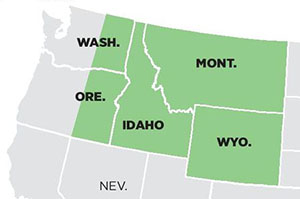
  • When it comes to safety buffer zones from liberal cities, there are three distances that matter. First is the walking distance from your nearest liberal city. In other words, how long would it take the zombies to reach you if they are on foot? 25-50 miles away is generally considered to be sufficiently far away from the majority of walkers, although such distances are considered quite small for military veterans. The second distance to consider is the driving distance, which means how far someone might get on one tank of gas. This is roughly considered to be about 400 miles, although in a collapse scenario, even the zombies won’t have much success driving anywhere since the roads will likely be either jammed up or rigged as ambush points. The distance of 400 miles means there is practically no place along the East Coast that is a safe distance away from a liberal city. You have to head West — into Texas, Oklahoma, Colorado, Utah, Arizona, Idaho, Wyoming, etc. — to get away from the cities. Along the Left Coast, you of course have to head inland, getting yourself situation in Eastern California, Eastern Oregon or Eastern Washington rather than risking proximity to collapsing cities like Los Angeles, Portland or Seattle.
  • By the way, as a relevant side note, when it comes to cross-country fleeing via vehicles, stupid zombie liberals will drive their cars at night with their headlights on and tail lights functioning. Experienced veterans will pull the fuses for all their lights and drive using night vision, which is very dangerous but not as dangerous as running with your headlights at night, right into an ambush.
  • If you live far from the liberal “zombie” cities, your biggest issue will be collapsing infrastructure such as grocery deliveries, fuel deliveries, communications infrastructure, medical supplies and possibly regional power grid failures. Thus, the strategy for those who are not in close proximity to liberal cities is to stockpile supplies and prepare to ride out a period of chaos and disruptions. During this chaos, there will of course be local looting and crimes of desperation, but there will not be organized left-wing waves of communist lunatics trying to sweep across the geography.
  • This means the survival strategies are very different depending on your proximity to left-wing cities. To summarize, if you’re close to a city, you may be swept up in kinetic engagement initiated by the lunatic Leftists. If you’re in rural areas, your most likely challenge will be surviving disruptions of logistics, deliveries and essential services.
  • The biggest gap in the preparedness efforts of most people today is a lack of communications capabilities. Even many preppers don’t have radio skills to monitor frequencies, use repeaters or coordinate community defense or rescue operations when needed. Most people have no idea what frequencies are used by local police and emergency services, and they don’t even have practical radios to communicate with neighbors or family members who may be on patrol around their own property. Even the simple MURS or GMRS radios can be incredibly useful, but acquiring and learning to use radios that can listen to a far large spectrum of frequencies is strongly recommended.
  • One website that’s been recommended to me is ForwardObserver.com, which will soon be indexed by Censored.news as well. Forward Observer is written by individuals with impressive real-world skills in intelligence gathering and action responses to incoming intel. The mission statement of this website is, “Deliver high impact intelligence to shape a real-world, ground level understanding of America’s likely tumultuous future.” The site is largely written by U.S. Special Operations and Intelligence personnel, which explains how I came to know about this work (I know the people who know those people, in other words). As you’ll learn on this site, it’s also highly recommended that you acquire detailed topo maps for your local area so that you can navigate streams, roads, railroad tracks, etc., when needed.
  • All the standard preps such as food, emergency medicine, water filters, ammo, etc., are obviously needed no matter what happens. But beyond the bullets and band-aids, you need intelligence, communications and ground-level familiarity with your geographic reality if you hope to shore up your community defenses and resilience. We’ve got a decent selection of some preparedness gear at HealthRangerStore.com, including our ever-popular Ranger Buckets which are certified organic, lab-tested storable food pails that come with bonus survival gear items. We can barely keep these in stock, but we’ve recently added more personnel to our operations, so we hope to have more inventory over the next few months. If those are out of stock, we offer an alternative, which is sealed #10 cans packed with a variety of lab-verified freeze-dried fruits, vegetables, miso soup powders, spirulina and more.
  • The goal of rural communities that don’t have to deal with left-wing zombie waves will be to maintain the rule of law, re-establish barter and trade in a safe environment, and keep the roadways safe and usable so that citizens can engage in trade. From this, communities can survive and even thrive.
  • As recent attacks in Saudi Arabia revealed, key infrastructure in America are now highly vulnerable to drone attacks. In the United States, this includes power grid substations, oil refineries, communications towers and water delivery facilities. Drones enable an ease of attack that has previously never existed. For example, how hard would it be for domestic terrorists to fly a drone filled with some sort of high potency poison right into the water canals that feed a city like Phoenix or Los Angeles? There are essentially zero defenses against such acts, and similar vulnerabilities exist for power grid substations and power generation stations that feed the power consumption of large cities. Without power, large cities very quickly collapse into chaos.
  • If you do not yet own some sort of night vision device such as a PVS-14 (or something better), you are already behind the curve and are hopelessly out-geared from an equipment point of view. Such devices allow you to see the IR designation beams or IR illuminators of organized attackers. They also allow you to see and maneuver in low-light or nearly no-light conditions, especially if you have your own IR illumination device. 

During a SHTF situation, pain could become an annoyance for some, but unbearable for others.

If doctors are scarce and medicine becomes even scarcer, this one little weed, found all over North America and similar to morphine, could be a saving grace.

Your Weapon Is Only Tool to Survive: The Tactics of a Gunfight After SHTF-‘IF YOU KNOW THE ENEMY AND KNOW YOURSELF, YOU NEED NOT FEAR THE RESULT OF A HUNDRED BATTLES.’SUN TZU,CHINESE IMPLEMENTING THIS NOW AGAINST U.S.

Looking around I couldn’t find an important piece of information – how one should fight in a SHTF situation. I think this is an important topic to cover because it has several special circumstances that need to be considered.

  1. Ammo will need to be conserved – I don’t care how many rounds you have saved up, it won’t be enough and the long-term of a complete collapse of society (potentially 40+ years) means that from the get go every single shot will be precious.
  2. Due to the fact that it is almost a certainty that combatants will be intensely familiar with the area and possibly have been residing for a long period of time it rather changes the mechanics of combat.
  3. Due to limited manpower and the fact that any attrition will be felt heavily, patrols, night combat, and outposts will be nigh impossible to field with regularity.
  4. Expanding on the above, most medication has a limited shelf life and even minor wounds will start to become quite threatening (increased risk of disease and infection) – Medication will run out fast.

With that in mind, let us analyse why tactical considerations are always important and what style of fighting we will have to adopt. Due to the fact that ammo will always be a luxury, modern tactics which rely on the idea of expending more ammo in a gunfight at the foe over men or positioning is obviously not possible.

Now – every weapon you should use should focus on stopping power, the smallest cartridge in your arsenal should be 6.5mm (handguns excluded).

With that out-of-the-way – let us look at the overall thought process and things to identify before you engage in any situation.

  1. Manpower: Who has more bodies at their disposal – do they look weak and ill-trained or are their movements/positions well thought out and the men (and women!) well fed? Are they all moving armed or do they have the luxury of people dedicated to guard duties?
  2. Armament: What weapons are they using – are they rusted and in ill repair? Can you identify if they are carrying enough ammo for everyone to fight adequately?
  3. Maneuver: Who is in the better position? – do they have a path of pursuit and escape, do they have a height advantage? Importantly are they defending something valuable (like a base or stash)? If so you may have the luxury of being able to attack at will, the same thing goes if you are on the defensive.

From these 3 guidelines a threat level can be deduced, obviously there will be some situation where one advantage is so great that it will offset disadvantages – this is a rough guideline. If they check off none, then you are probably in a position to utilize a diplomatic approach and join groups. If they check off one of 3 then you should approach with caution, maybe attempt to surround them at night and make your intentions clear – again diplomacy may be the best decision here. If they check two of three than combat should be avoided until you are in a position to use your advantage to overwhelm them (attacking at night, in an ambush, etc). Do not attempt diplomacy at this threat level as you will not be in a position to make a fair deal and all emphasis should be placed on evening the odds or avoiding the threat. Finally if they check off all three do not engage at all, the goal is survival not heroic death and if worst comes to worst retreating completely or surrendering goods is preferable to a bullet in the brain. They still are people and unless you are absolutely sure that they are completely hostile they may be willing to work with you.

Now with the overall threat assessment done we may now talk about the five stages of combat (Recce, Skirmish, Combat, Push/Withdraw, Decisive Blow/Total Withdrawal).

RECCE

“IF YOU KNOW THE ENEMY AND KNOW YOURSELF, YOU NEED NOT FEAR THE RESULT OF A HUNDRED BATTLES.” – SUN TZU

Recce is often the most overlooked stage of combat but it is BY FAR the most important. Recce is the mode of thought that you should be on at all times, dispatching a scout if possible and identifying incoming threats. The more focus you place on recce the more forewarning you will have as to inbound threats, and more time to prepare/evacuate. Obviously you will be unable to have a complete recon net due to limited supplies but any extra hands should be trained for recce and dispatched when possible.

This is where you will identify your enemies capabilities on your threat checklist and decide whether to choose engagement/diplomacy/retreat. Just to outline how vital this is, 90% of a good tactician’s skill is how the deploy and utilize information from recce, with the other 10% being a good leader with good interpersonal skills and the ability to keep cool under pressure.

SKIRMISH

This is where you action your initial decision on engaging the enemy, it is the period where hostilities have begun but you are not locked into a fight. This will be the period where you harry the enemy with traps and marksman to attempt to pick off men before you attack or they reach your designated point of defense (usually your fortifications).

Some skirmishes may only last a minute or two and some may be the entire fight, note that your main focus should be leaders and sensitive targets (heavily armed fighters and if possible, medics). The goal of this will be to break your enemies organisation and morale when combat begins – that being said…

COMBAT

This will be the time when individual training counts. Communication will be close to impossible in this brief period and this is where the most casualties will be sustained – though despite this being the most calamitous point of a fight it will be the least important for you as the person in command. Your main role will be encouraging your men and stopping any obvious screw-ups.

What you should be watching closely is the movement of combat, are you making good progress towards your goal or are you sustaining casualties – are there hostile elements that you were unaware of?

Before I make my next point the thing to keep in mind is that in a ‘battle’ there may be multiple combats, intensive fighting between periods of skirmish, pushing, and retreat.

PUSH/WITHDRAW

This is as much a phase of combat as it is its own separate action, and the commands will have to be executed well and especially in the case of a withdrawal you need pre-planned points to ensure cohesiveness.

Really the most that can be said of pushing is that your enemy has begun to break or have thinned enough that they can no longer maintain the area their position demands, as I would expect almost all combatants to be ill-trained this will almost certainly result in a decisive victory as the enemy breaks completely.

However, keeping your men together in the case of a withdrawal is another issue. The things to watch out for: can you retreat to your designated point safely (if you have one – keep in mind most defense should take a multi layered approach), do you have enough manpower left to pursue another attack, is the enemy willing to pursue or are they holding position. If it is the latter the combat may switch to a skirmishing stance again.

TOTAL WITHDRAWAL/ DECISIVE BLOW

Decisive blow: Your enemy has completely shattered, this is the period encompassing cleaning up resistance before taking stock of supplies and beginning the process of recce again – re-assessing.

Total Withdrawal: This comes about one of two ways – Your force has broken and are fleeing in a blind panic, or it is (hopefully) an organised retreat to put some distance between yourselves and the enemy combatants and re-asses. You will again need to survey the situation and determine the next point of action for your group.

Something to note – Overall your group should always be prepared for a total retreat, even an easy fight could be a ruse and you always need to be prepared to move and maintain as many supplies as possible.

The Safest Zones In The US. Do You Live Near One? We live in a MASSIVE nation full of all kinds of opportunity. There are areas that are incredibly dangerous, but the reality is we have a lot of wide open spaces that can be whatever you want them to be!

You might be looking at your nation a little differently lately.

There have always been dangerous neighborhoods and boroughs. Places like Compton, Kensington, and Camden might come to mind when you think of places that have a reputation for crime. Some of these areas have actually improved from when I was child. However, there are lots of places all around this nation that have been dangerous and many that are getting worse.

The move towards lawlessness in many of our biggest cities has been brought on by the current attitude towards police and police funding. As states bandy about the issues and people worry about things like natural disasters and economic decline, many have moved or considered moving.

During a SHTF situation, pain could become an annoyance for some, but unbearable for others.

If doctors are scarce and medicine becomes even scarcer, this one little weed, found all over North America and similar to morphine, could be a saving grace.

What are the safest zones in the US?

Safest Cities

There are safe havens all around this nation. There are places that have historically had low crime and great community cohesion. The key in most of these cities and towns is ownership and loyalty. Most often transient places are dangerous, and people are more likely to commit crimes in these places.

Let’s look at some of the safest cities and towns in America:

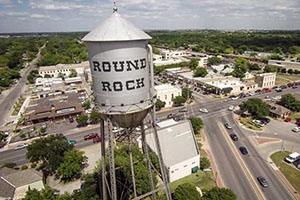
  • Round Rock, Texas
The Safest Zones in the US

With a population just over 100,000 this smaller town in Texas is a very appealing place for preppers to live. It is also a very safe place with a median income of $70,000.

The low poverty rate in Round Rock has much to do with the safety and security of this Texas town.

Round Rock has been dubbed a “super suburb” as a place just outside of Austin

  • Naperville, Illinois
The Safest Zones in the US

This Chicago suburb is a gem in an area that most people would not expect. The River Walk is an important part of Naperville, but it is hardly the only thing that this suburb offers. A population 144,000 people are a successful and well paid lot. The median household income is over $100,000.

The minimal crime rate, per 100,000 people, has much to do with the low poverty rate which is just over 4%. 77.6 violent crimes per 100,000 people is something to be proud of.

The safety of Naperville could also have to do with the tremendous outdoor opportunities. With over 130 parks and 2 public golf courses, there is nearly a park for every person!

  • Port St. Lucie, Florida
The Safest Zones in the US

If you are going to pick a new safe place to live, why not consider a place where the weather is wonderful! Along the southern coast of Florida Port St. Lucie is a beautiful tropical zone with $169,000 a year median income.

You will have to be prepared for hurricanes. An evacuation plan is needed as the southern coast of Florida is at risk during hurricane season, but we are preppers!

You will not have as much to worry about when it comes to violent crime as there are just 115 violent crimes per 100,000 people. You will love near breweries, botanical gardens, preserves and marinas. Great fishing on the coast, too!

Best Regions to Survive Disasters

Along with safe cities and towns America also features some great regions to setup a life that are far away from some of the biggest threats. Remember, people are only one threat. Mother nature can have a devastating affect on the North American continent and has done so in the past. From massive super volcanoes to devastating earthquakes

What are the safest regions to survive massive cataclysmic disasters?

  • The Cascades
The Safest Zones in the US

Deep enough inland and high enough up to counter things like flooding and tropical cyclones that affect the West Coast. The cascades are loaded with resources for survival like water, food, and wood. They are a beautiful backdrop to deal with the post-apocalyptic world and far enough away from southern California to inherit any of that mess.

The northernmost portions of the Cascades are even located in the American Redoubt, which we will discuss later in this article.

  • The Blue Ridge Mountains
The Safest Zones in the US

Another range of mountains that offer similar benefits as the Cascades. This east coast mountain range covers several states, has plenty of food, water, shelter, and game animals. Covering the land by food would not be easy but the seclusion from the chaos would be well worth it.

Because of elevation and distance from the coast there are almost no threats of flood, tsunami, or hurricane in this region. There is little seismic activity in the area.

West of some particularly important and sizeable cities, the Blue Ridge mountains could become a safe haven for millions of people in the very worst case scenario. That is the only weakness of this location.

  • Appalachia
The Safest Zones in the US

Further west still, on the other side of the blue ridge mountains in the region of Appalachia which runs from New York to Mississippi. This is another great region to consider because of its sparse population compared to the coasts. Its quick access to the Blue Ridge Mountains and safety from most major disasters.

Prepper Strongholds

Are you looking for even more benefits? Maybe you want the people and the safe places. There is nothing wrong with that. Around the nation there are several places that have not only been deemed safe and pleasant but are also filled with preppers!

Yup! The self-reliant and independent have taken up refuge in a few spots across the nation. They are often looking for more friends like them to build their prepper community. These areas are not just filled with preppers but are in rural areas where other people are as self sufficient as the prepper community.

  • Redoubt
The Safest Zones in the US

In 2011 James Wesley Rawles proposed Idaho, Montana, and Wyoming as the American Redoubt. The Redoubt also encompasses the eastern parts of Washington and Oregon. It is unclear how many people have moved to the American Redoubt with the intent of stockpiling, prepping, or homesteading for the long haul.

However, there is a small community of voices from Rawles, to John Jacob Schmitt, to the American Christian Network, that will align with much of what you believe. It has been estimated that thousands of people have moved to these areas as a safe haven from the growing turmoil of our world.

Because of its low population density and impressive access to resources, as well as low threat profile, as long as you can stay warm in the winter, the Redoubt has some tremendous benefits. You will also have plenty of wide open space so if you don’t align with everything Rawles proposed you can do your own thing and be just fine!

  • Ozarks
The Safest Zones in the US

The Ozarks are more of a plateau than a mountain range with some of its tallest peaks between 1-2000 feet tall. Because of its location in the nation and its elevation, it has a tremendous amount of benefits to the average prepper looking for a safe zone.

The Ozarks are not affected by things like floods because of the elevation, it has this elevation without snow because it is in the south. It does not face any kind of earthquake threat, hurricane, or forest fire. There is a long growing season that features lots of rain.

Pastor Joe Fox of Viking Preparedness has been expanding his Shofar mountain and influencing preppers for many years to make their way to the Ozarks. COOHMP or Come Out of Her, My People as taken from the book of Revelation. A growing prepper stronghold has taken root in the Ozarks making it a wonderful place to move and a very safe region.

Also, those who are not preppers in the Ozarks are looking to do their own things and basically be left alone. So, it is a sentiment we can all understand!

We live in a MASSIVE nation full of all kinds of opportunity. There are areas that are incredibly dangerous, but the reality is we have a lot of wide open spaces that can be whatever you want them to be!

Did you know there are even some places that will give you free land or pay you to live there! If you aren’t tethered to a location than you can take advantage of the areas, we mentioned. However, you should arrive there and become a part of the community. This is particularly important. You can never know the full potential of any area unless you integrate and become a member of the community.

Go forth and choose your destiny!

You might be living in one of America’s deathzones and not have a clue about it
What if that were you? What would YOU do?

In the next few minutes, I’m going to show you the U.S. Nuclear Target map, where you’ll find out if you’re living in one of America’s Deathzones.

This image has an empty alt attribute; its file name is untitled-1.png

6 Things To Do Immediately In An Extended Blackout- Plan for the worst, hope for the best… just in case S does HTF. (With Illustrations)

It is 12:30 am and suddenly I awake! It’s pitch black but I know the power is out because I always leave a bathroom night light on for the kids. The boys stumble into my bedroom, confused. They have already checked the outdoor breaker… still nothing. The neighborhood is dark… upon getting in the car and turning on the radio, I get a local station on generator power, explaining an EMP has gone off. Since we are a small town out in the desert, it may be 3-6 months before it is restored!

Thank God, with my limited budget, I have prepared as best as I could. What would your family need in an extended blackout? Start getting that stuff now, before it’s too late.

Food and Water

Always have enough food and water stored for at least 30-90 days. Just up your game for the long haul. There are many articles on how to store food, how to store food in order of expiration date. I have purchased a few emergency food supplies, but found my local dollar store and sales at Wal-Mart is nearly if not more efficient.

6 Things To Do Immediately In An Extended Blackout

Get some chickens. I know, in my city limits, we are only allowed one chicken, but this rule can be broken. I read how in New York City; people are getting chickens by asking their neighbors permission. If the neighbor agrees you can have chickens, you will share some of your eggs and they won’t report you. This has worked for me for the past several years.

Here are a few of our chickens which provide 1-2 dozen eggs a week.

6 Things To Do Immediately In An Extended Blackout

Water is harder here in the desert, but while pondering how to store thousands of gallons of water in the desert, I looked over at my son’s playing in their swimming pool. The pool box says 1074 Gallons. I purchased another pool and cover for double the water.

6 Things To Do Immediately In An Extended Blackout

In addition, I went to my local hardware store for 34 Gallon trashcans at 15$ a piece with lid. Every time I grocery shop, I buy 5 single gallons of water, 2 forty count bottled water, and fill my 5-gallon jugs. We have about 2500 gallons of water ready to go.

Light, Heat and Cooking

The lighting you use at first should be considered. If there is an earthquake or an explosion nearby, you must consider not lighting candles for the first week. There could be a gas leak.

There are alternatives to actual candles or oil lanterns, such as battery powered and solar lights. If they are LED lights, they should be kept in a faraday cage to be safe, either way, they come in handy regardless of the cause of an outage.

6 Things To Do Immediately In An Extended Blackout

Often the dollar stores sells the little solar lights. Mirrors can magnify your light. Here’s how one of my candle holders with a mirror looks in front of the bathroom mirror.

6 Things To Do Immediately In An Extended Blackout

Curio Cabinets with mirrors candles/lights also can light up a living room. Oil lamps and Candles are of course particularly useful when safe. Keep your batteries in your smoke detectors.

One of my kids collects oil lamps. He gets those and candles from thrift shops and yard sales.

6 Things To Do Immediately In An Extended Blackout

I can get candles from the dollar store cheap, along with emergency candles and votive candles.

6 Things To Do Immediately In An Extended Blackout

Heating- Make sure you have a cord+ firewood, depending on your area.

If you don’t have a fireplace, you must invest in something like a Kerosene Heater and a Gas/Smoke detector (battery powered). Buy your own container and Kerosene for a 10th of the cost.

6 Things To Do Immediately In An Extended Blackout

If you can afford clear plastic from the hardware store. Buy clear shower curtains at the dollar store. This will allow you to section off a room, while still seeing any movement of a predator.

Cooking should be easy if your ready. Coleman stoves, outdoor BBQ pits are nice. We have two grills. BUT you need to have plenty of propane, coal, or burning materials for cooking. My new grill has a thermometer. I was able to make the best homemade bread ever.

Have several extra propane bottles.

6 Things To Do Immediately In An Extended Blackout

If you cook outside, which you really have to with any gas, remember your food might smell. I suggest that if you cook rice, beans, noodles in boiling water then add sauce or meat after removed from burner to avoid ‘smells’.

Medicine and Back up Sources 

Always have a first aid kit fully stocked.

If you take regular medicine, or your child has asthma or something life threatening, you might to need to save extra medicine prescribed by a physician.

Have a Pill Book handy, in case you need to identify medication if a situation arises.

Bartering can also get you some of the medicine you may need. Stock up on all the medicine you can. Find health food/supplements that also may tackle your health issue.

I hear fish medicine can come in handy for anti-biotics, but I am not a physician. Something you will have to investigate yourself.

6 Things To Do Immediately In An Extended Blackout

If you have a Cpap, Pulse Ox, Blood Pressure Cuff, Sugar kits, or a Nebulizer you need to think ahead for power supplies; preferably solar. I have a few power sources for phone, laptop, and other chargeables. In addition, I have a small gas generator. However, gas will run out.

Small lithium battery sources and small gas generators can handle mild medical equipment. Keep these power sources and their solar panels in faraday cages when not in use. Here’s one of my three:

6 Things To Do Immediately In An Extended Blackout

Defense and Protection

You have all your food, medicine, wood, gas, medicine, and power sources. NOW you must defend it.

Ahead of time you can design faraday cages or use triple wrap foil and foil tape to protect power sources, laptops, phones, and medical equipment listed above.

I am writing for those sheltering in place. Make sure your doors, garage doors, and windows are secured. Remember if people you don’t know come to your front door, that back door better be secure as well.

I purchased outdoor LED motion lights for to place darker parts of my back yard. This will also work for the front door as well. It will look dark but if a vandal gets close the lights will go off and notify everyone.

We have a few shotguns, and the guns sold out before we could get more. I researched the best air rifles and air pistols that can become just as good of a defense if someone is rushing at you with a gun, bat, knife, or other weapon.

Practice with your family scenarios of intrusion.

One of my sons has sharp swords, sling shots with marbles and steel bits. Another author here suggested wasp spray that goes 20 feet.

There are traps you can also set up. Using 50 lbs. fishing line, lined across a fence to a wall on the sides of your house, about calf or knee height. Repeat about 18 inches each line; that with a solar motion light is sure to trip up any burglar at night while notifying you of incoming persons.

Remember too, that with all the locked doors and windows, you must be able to get out fast in an emergency. Have your family practice getting out quickly and avoiding traps.

Some of our weapon dry:

6 Things To Do Immediately In An Extended Blackout

Use your own discretion. And remember, if you are in a small town, not all people knocking on your door will be predators. Your neighbor’s children will get hungry, desperate parents do strange things. This can be handled with bartering.

Bartering

When your buying your food supplies, always add some things for family or close neighbors you trust.

When neighbors come knocking always act like you don’t have much either… but have a list handy of things YOU need like medicine, flour/ and firewood. You might be surprised at what they will find lying around if they get desperate.

6 Things To Do Immediately In An Extended Blackout

If you are in a smaller town where it is safer, you could consider opening up a small Trading Post till things improve nationwide.

You can create trade-able care packages in advance separate from your food for-seeing the future. That way you know how much you have. A 1$ spaghetti noodles/1$ spaghetti sauce, Two or three boxes of Mac n Cheese with a can of Chili (for Chili mac) is about 2$, Pancake Mix (add water only) with a Syrup is about 2$… etc.

One of my oil lamps with a container of oil might be worth someone’s tank of gas for my generator. It is all negotiable.

Common Sense

No one knows for sure what could trigger and extended blackout. This is designed for those sheltering in place. You will have to be logical about what you do, not emotional. Common sense for your circumstances will be vital to survival.

When the lights go out, you’ll also have to stay sane. That little bottle of anti-depressants in the cupboard might end up being needed. There may be some initial panic. Ration your food and water. Set up any traps to stop thieves from entering backyards, garages, or property to protect what you have.

Note where your first aid supplies are. Without physicians, even a small cut should be treated right away. Place different weapons in their best positions. In the long run if it gets dangerous out there, set up a person for guard duty in the best place for each time of the day.

A fun thing to make life almost seem normal from time to time would be to have board games and puzzles. Also, pre-load your laptops and phones with music and movies.

6 Things To Do Immediately In An Extended Blackout

Give everyone in your house daily tasks and perhaps guard duty. This will provide purpose, a schedule, and sanity.

Plan for the worst, hope for the best… just in case S does HTF.

Design a site like this with WordPress.com
Get started