Once upon a time, heading on down to the grocery store to fill the pantry whenever you needed to was not an option. Pioneers who traveled west in pursuit of religious freedom and a better life in the early days of U.S. settlement aimed to settle in areas where chances to buy supplies were few and far between.
This meant that they had to be self-sufficient, which required bringing along and preparing food that would last a long time, tending animals and hunting as needed, and eating what the land provided them.
While this self-imposed self-sufficiency is truly a measure of how passionate and hardworking the pioneers were, it’s also a glimpse into a future without the modern-day amenities we all enjoy in 21st-century America. If ever a situation arises that leads to the collapse of society as we know it, those pioneer foods may be more like our bread and butter (pun totally intended). Here are some foods that we’ll all have to become familiar with if doomsday happens.
Cornmeal
A favorite of Native Americans, cornmeal was often used in place of today’s more traditional wheat flour because it could be easily ground from whole corn while on the move. Bread, cakes, and pancake-like products were often made from cornmeal. It’s got the added bonus of a little sweetness that could be hard to come by in a SHTF situation.
Dried or Cured Meats
Without refrigeration, meat from large animals like cattle, pigs, deer, and so on will have to be handled differently than it is today. Smoking, salting, and drying were all techniques employed in the pioneer days to keep meat from spoiling, and they’d be a handy way to keep our families fed for the long haul if we lose access to refrigeration. While cured and dried meats are more a novelty today, you can bet they’d quickly become a staple in more trying times.
Wild Game, Especially Small Game
You don’t find a lot of people eating squirrel and wild rabbit these days. However, a squirrel or rabbit that was happened upon and harvested in pioneer times surely wouldn’t go to waste. Fresh meat was few and far between, with the bulk of protein coming from dried or cured meats, and taking large game wasn’t very practical if you were on the move as you’d likely wind up wasting much of the meat. Small game was perfect for feeding you for a day, though. That’ll be very important, especially as people are likely to take on more nomadic lifestyles post-doomsday.
This also includes fish and native shellfish. In many places, fish may be even easier to get your hands than rabbits and squirrels. Learning about the local varieties could make it much easier to add some protein to your dinner.
Animal Fats
Lard and other fats rendered from animals are definitely not the go-to these days, but they were far more readily available in pioneer society – and they were also a lot easier to process than the vegetable-based oils you’ll find in the average cabinet today. Because fat is a crucial part of our diets, animal fats are likely to make a comeback after doomsday.
Dried Fruits and Veggies
We know that drying produce is a great way to preserve it. People enjoy dried fruits and veggies even in modern times. However, if our society breaks down and leaves us with zero access to out-of-season produce and more modern preservation methods like canning and freezing, dehydrating fruits and veggies is likely to become common practice. You can even preserve produce this way using only the power of the sun.
Dried Beans
Beans tend to be fairly easy to grow, and dried beans can last a very long time. Pioneers packed dried beans to provide protein and fiber along the trail, and they’ll likely be popular for their high protein count and filling nature if ever the SHTF. You also don’t need much to prepare dried beans; a pan, water, heat, and a little patience is all it takes. Bonus: When you settle in somewhere, you can plant those babies and get a whole new crop ready for the next year.
Squash, Tubers, Onions, Garlic, and Apples
What do all of the above have in common? Aside from being fairly commonplace now, all of these produce items can be stored for fairly long periods in cool, dark places. As long as a little care is taken in storage, these will last through most of a winter. You commonly see references to these items in all sorts of literature written in earlier days, and root cellars were commonplace up until a few decades ago. If fresh produce was out of the question, wouldn’t some delicious fried squash or potatoes be an absolute treat?
Maple Syrup and Honey
While we as a society are pretty dependent on modern sugar, it was much harder to find in the days of the pioneers. In fact processed sugar was an expensive luxury for most people. Instead, they used other sweeteners like honey and maple syrup to help sweeten their dishes. Those items will likely become much more common in a SHTF situation because they’re easier to process than white sugar. With a little knowledge, and very minimal equipment that could be improvised easily, the common man can get syrup from tapping trees. A little bravery would certainly be necessary to collect honey, but it’s not impossible.
Foraged Foods
Obviously the foods you’d be able to forage vary from region to region, and the same was true for the pioneers, too. They’d forage local berries, greenery, wild fruits, mushrooms, and herbs to supplement their diets and add variety. If the SHTF it’ll pay dividends to be aware of the edible plants found in your region and have an idea of where to find them. These wild foods may also be propagated for home gardens if seeds and plants are unavailable for planting the more common gardens we see today.
If society collapses, you can bet that the foods the pioneers ate will become dietary staples. Those foods were wholesome, nutritious and, most importantly, available. Do yourself a favor and learn a little about how to find, prepare, and store these foods now, so that you’ll be prepared to feed yourself and your family in a SHTF situation.
Yes, I am going there. One of the most hotly debated questions in prepper/survival/firearm enthusiast circles is around the best survival rifle. For all intents and purposes, there are only two in competition in the US and those are the AK-47 and the AR-15. I will add that there are variants of both and I am lumping all of those into these two categories. This question of what is the best survival rifle is one that I asked myself when I was considering my first rifle purchase so I wanted to take some time to hash out what I see are the differences and to give you my opinion as to which rifle is better when it comes to the AK-47 vs AR-15.
House cleaning
I know that this subject is insanely controversial, even though it shouldn’t be. It’s the same as getting upset over Ford versus Chevy. If this post makes it to some of the firearms forums out there I know I will have some people who will disparagingly call me an “Internet Expert” implying that I have no idea what I am talking about. So be it. I am not an expert, but I don’t think anyone else is an expert either in this subject. I don’t think anyone out there is more qualified to determine what rifle is best in my opinion, for me, than me. I don’t really care if you are active duty police, 20 year military veteran, or mercenary for hire. This is my opinion based upon my belief and requirements, you are entitled to yours, but that doesn’t mean mine is invalid. It also doesn’t mean you are smarter than anyone else that disagrees with you. It simply means we have different opinions.
Additionally, I will throw out some facts that should be pretty easy to agree on and some opinions based upon my personal experience which may not be. Just because your experience is different, that doesn’t make it a law of science or anything. If you have a different experience, by all means, please comment down below but I would ask you to keep the debate civil as that is what I am going to try to do. If you would like to make your case for the opposite of what I recommend, please do so in the comments and we can all judge whether what you are saying makes sense.
History
Very briefly, the The AK-47 is a selective-fire, gas-operated rifle that fires 7.62×39mm ammunition. The AK-47 was developed in the Soviet Union by Mikhail Kalashnikov. Design work on the AK-47 began in the last year of World War II (1945). In 1949, the AK-47 was officially accepted by the Soviet Armed Forces and used by the majority of the member states of the Warsaw Pact. It is still widely used today.
If you are going to count on a rifle, you should know how to take care of it.
The AR-15 is a lightweight, magazine-fed, air cooled rifle with a rotating-lock bolt, actuated by direct impingement gas operation or long/short stroke piston operation that fires 5.56 mm/.223-caliber ammunition.
The AR-15 was first built by ArmaLite as a small arms rifle for the United States armed forces. Because of financial problems, ArmaLite sold the AR-15 design to Colt who made some modifications and the redesigned rifle was subsequently adopted as the M16 rifle which was the main rifle used by US Armed Forces. Colt then started selling the semi-automatic version of the M16 rifle as the Colt AR-15 for civilian sales in 1963 and the term AR-15 has been used to refer to semiautomatic-only versions of the rifle since then.
For the purpose of this comparison we are only going to be discussing semi-automatic weapons available for purchase in the US by a non FFL carrying person, not their fully automatic counterparts.
The Facts
You can quickly see some of the facts below about each rifle on this excellent info graphic from TacticalGear.com , but I will list what I see are the important differences between the two rifles.
The AR-15 can effectively shoot 200 yards further than the AK-47.
The AK-47 shoots a significantly larger bullet than the AR-15.
The AR-15 weighs 2 pounds less (not counting a lot of hardware we add after the fact) than the AK-47
The AK-47 usually costs less than an AR-15.
The AR-15 has a higher (30% more) accuracy than the AK-47
The AK-47 is more widely used globally by a long shot than the AR-15.
The Debate
There are really only 3 main arguments that proponents of the AK-47 use as their rationale for saying that the AK-47 is the better survival rifle so I want to list and address each below.
AK-47 rounds penetrate better and do more damage – This is true generally speaking, let’s move on to the next point.
AK-47 Costs less – This is true generally, let’s move on to the next point.
AK-47 will keep working no matter how dirty it gets – This is also true to an extent, but with a caveat. The point to this argument is that if the AR-15 gets too dirty, you will have firing problems. I can tell you from personal experience that I have never had a single problem with any AR-15 or it’s fully automatic cousins that I have ever shot. However, I clean my rifles usually after every time I shoot them. Sometimes, I will wait, but they never go too long without a thorough cleaning, so what is this point supposed to be saying to us? Well, what if you are in a firefight and you have to shoot 300 rounds through your AR-15 rifle; will it jam then? No, at least not in my experience. Maybe if you shot 10000 rounds through it without cleaning the rifle you could see some issues, but if you are in a firefight so bad that you have shot 10000 rounds, you have bigger problems. What if you drop it in a vat of guacamole? Not a valid point in my book.
For more information and my opinion on which rifle is best, please read below the graphic.
Which Rifle is the Best Survival Rifle?
I will tell you that in my opinion, the best rifle is the one you have with you when you need it. That sounds well and good, but if I was going to buy one rifle, and I lived in America, it would be the AR-15. Why? For me this comes down to 4 simple points.
Accuracy – The AR is simply more accurate at further distances than the AK-47. If I wanted to shoot a rifle up in the air when I was mad, riding in the back of a Toyota truck with 20 of my friends, or happy, or just plain stupid then I might get an AK-47. One of my goals is to be able to engage targets at up to 500 yards and the AR-15 does that better than the AK-47. The AK might use a heavier round that will go through more solid objects, but if you are able to kill the person holding the AK 200 yards before he can hit you, does that matter?
Range – Speaking of range, the AR-15 shoots further effectively, so that just adds to what I was saying above. Range is also important to me because I want to be able to take people out as far away as possible. I don’t want you getting so close that your AK-47 can hit me. I would rather you and your AK be far away and I will take care of you way out there. I don’t mind walking out there to pick up your rifle when I am finished.
Parts – The AR-15 is like the Barbie doll of the firearm world. There are so many accessories! And yes, the military version of this rifle (M16/M4) has a majority of parts that are fully compatible with the AR-15. The AR-15 is also the same weapon used by police, DHS, and NASA. If anything bad happens, there should be plenty of opportunity for spare parts to be acquired. I can’t say the same for the AK-47 unless we are invaded by Russia. So, even if your AK is able to fire with some mud in it, what if something breaks? That is why you buy spare parts you say. No, that is why you buy what everyone else is using including our government.
Ammo – Same as above, this is the ammo our police and military use as well as quite a large number of my countrymen, so I have the advantage of a very common caliber in my favor.
OK, that is my rationale and those are my reasons. The AR-15 does cost a little more on average, but you can find really good deals out there if you look and the price difference would be much lower. Does this mean I wouldn’t own an AK-47? No, not at all. I would love to have one, but I do think that for the reasons I listed above, if you can only choose one and you live in the good old US of A, the AR-15 is the better option in my opinion. I know for a fact people will disagree with me, so please let me know what you think in the comments below.
If the grid were to collapse and America turned into an apocalyptic zone, where would you go? In North America, some places are easier to survive in than others.
There are obvious hotspots that should be avoided at all costs. For example, the major cities along the east and west coasts, which not only would be obvious enemy targets but would also turn into total chaos if the grid were to go down.
But there are many other places that would be dangerous, too. For example, northern California and eastern Oregon and Washington may seem like ideal locations, but where do you think everybody else is going to flee to when the cities are hit or become shut down? Exactly.
As Canadian Prepper explains in this video, there are a few areas that will be safer when the SHTF. Here’s his list:
Appalachian Mountains
The Appalachian Mountains are teeming with natural resources and agricultural land. Granted, they are relatively close to the east coast, and you could argue that hundreds of thousands of people would flee from the coastal cities towards the Appalachians.
However, as a mountain range, there are numerous places to hide and where you can be well secluded. Preferably stick to the western side of the Appalachians away from the eastern coastal cities as much as possible.
Idaho and Montana
Idaho and Montana are located right in the middle of the Rocky Mountains while also being a good distance away from hot spots such as Seattle, Portland, and Denver. A lot of people who flee those cities would likely spread throughout Washington, Oregon, and Colorado, but Idaho and Montana would likely remain a bit more sparsely populated.
Already, there are vast swathes of land throughout these two states that are very sparse and packed with natural resources, agricultural land, rivers and lakes, and wildlife. As an added bonus, both states are pretty conservative in comparison to the rest of the country (especially Idaho) which means taxes and regulations are low and gun rights are respected.
The Dakotas
With Idaho and Montana, the Dakotas are both sparsely populated and come packed with natural resources. They’re also far away from any major urbanized hubs that could be targets of an EMP attack or nuclear strike. Just like Idaho and Montana, both of the Dakotas are conservative with low taxes and low regulations.
Arizona and New Mexico
Contrary to what many people think, not all of Arizona and New Mexico are deserts. The southern halves of these two states are dry, arid, hot, and near major urban centers such as Phoenix.
You’ll be wise to avoid those places during SHTF, but the northern regions have more forests and closely resemble the Rocky Mountains in many ways. Here there are fewer people and an abundance of natural resources and agricultural land.
Maine, Vermont, and New Hampshire
Last but not least, the woods of Maine, Vermont, and New Hampshire are also viable options to outlast an SHTF scenario. They have solid agricultural land, dense woods packed with natural resources, and are relatively well secluded.
The biggest negative to them is that they are pretty close to the east coast and the hot spots that are there, especially in Massachusetts and New Jersey. But still, when it comes to the Northeastern regions, the woods of Maine, Vermont, and New Hampshire are arguably the safest places to be.
Mention a dystopia to most people and they’ll probably think of Nineteen Eighty-Four, the Thought Police and Big Brother. That’s understandable, because there are worrying hints of it in our own society – are ideas like no-platforming, safe spaces and misgendering really so different from wrong-thinking and thought-crime? – but there’s a different kind of dystopia that’s a lot more common. Unfortunately it’s just as scary.
The word dystopia itself just means a society that’s unpleasant or frightening. That can mean a brutal, highly centralized authoritarian state like the one ruled by Big Brother’s Party (Orwell modeled it on the Soviet Union under Stalin) – but it can also mean a society where the rule of law has broken down (WROL – without the rule of law), and that’s a lot more common in the world today. For every North Korea there are half a dozen collapsed societies like Somalia or Pakistan. And, while it’s difficult to impose a one-party state and organize things to the point where you have absolute control over what people do and even think, it’s easy for a society to collapse. A natural disaster can do it – think New Orleans after Hurricane Katrina.
Of course, that didn’t last; New Orleans is one city in a big, advanced country and the rule of law was quickly restored. But what if the government was weaker, or society was less stable to begin with? Or what if it isn’t one single event that causes the collapse, but years of neglect? Many countries are a disputed election or an economic crisis away from collapse – and there are even parts of the USA where the rule of law is too fragile to be taken for granted.
First Things First: Social Breakdown
If there’s one thing guaranteed to reduce a society to chaos, more or less instantly, it’s a sudden absence of cops. It doesn’t matter what kind of society it was to start with. For example, Canada is famously peaceful and friendly. What happened when the cops walked out? Nothing good:
“As a young teenager in proudly peaceable Canada during the romantic 1960s, I was a true believer in Bakunin’s anarchism. I laughed off my parents’ argument that if the government ever laid down its arms all hell would break loose. Our competing predictions were put to the test at 8:00 A.M. on October 17, 1969, when the Montreal police went on strike. By 11:20 A.M. the first bank was robbed. By noon most downtown stores had closed because of looting. Within a few more hours, taxi drivers burned down the garage of a limousine service that competed with them for airport customers, a rooftop sniper killed a provincial police officer, rioters broke into several hotels and restaurants, and a doctor slew a burglar in his suburban home. By the end of the day, six banks had been robbed, a hundred shops had been looted, twelve fires had been set, forty carloads of storefront glass had been broken, and three million dollars in property damage had been inflicted, before city authorities had to call in the army and, of course, the Mounties to restore order.”
Unfortunately, police strikes are more likely than they’ve ever been, especially in the USA. Cops are under a lot of strain, and the media are against them right now. What happens if there’s an officer involved shooting, and under pressure from the media and far-left activists like BLM the officer is arrested? Is it that hard to believe the police could snap and walk out? And as soon as criminals realize the cops have gone home all hell would break loose.
In Montreal in 1969, the main problem was simple crime. Now there are political extremists to worry about, too. “Anti-fascist” protesters like Black Bloc are saying it’s acceptable to use violence against Nazis, and their definition of “Nazi” includes pretty much anyone right of Bernie Sanders. If you have a Trump 2016 bumper sticker, and suddenly the law isn’t being enforced, there are people out there who’ll take the chance to have a go at you – and your car, and your home, and maybe your family too. They’ll see this as the perfect chance to get revenge for all the imaginary wrongs you’ve done them, and maybe “redistribute” your property to “the people” – meaning themselves.
So, what can you do if law and order suddenly disappears and your area becomes a free for all?
What you can’t do is tool up and go on a mission to clear the streets of crime. There’s a good chance the law will be re-imposed at some point and people will be called to account for what they’ve done – and, as a law-abiding citizen, you’re more likely to get caught up in that net than someone from a gang or a far-left group.
What you need to do is take steps to protect yourself and everything that matters to you, but make sure that you can justify them later. That means your aim is to avoid confronting the lawless elements, but be ready to defend yourself if a confrontation is forced on you.
#1 Blend In
The first thing is try to blend in. If you and your home don’t stand out you’ll attract a lot less attention, and that can be all it takes to avoid being attacked. If there are leftist mobs rioting in the streets they’re going to focus on any home that looks like conservatives live there, so at the first hints of trouble you should do an outside check to make sure you aren’t being conspicuous. It might be tempting to make a visible show of support for the cops, president or whatever, but is that worth the risk of attracting attacks?
#2 Bug In
Another good way to avoid confrontations is to just stay at home as much as possible while the crisis is going on. This is one of the best arguments for being a prepper – you should already have the food supplies and other resources you need for this. If you don’t, now is a good time to start. There’s no point leaving it until a crisis is developing, because the stores will be full of people panic buying. Joining the last-minute shopping frenzy is actually a good way to get into trouble, because tempers will be flaring and you can expect outbreaks of violence as people fight over the last stocks of food. You’re much better off sitting that out in a well-stocked home.
The same applies to all the other essentials of life. If you already have medical supplies and plenty of ammo at home, you can fall back on those reserves and avoid the disintegrating outside world. If you have a generator and a water source you won’t need to worry about failing utilities (but keep the generator inconspicuous).
#3 Self-defense
In the worst case, though, you’re going to have to defend yourself. Don’t trust to luck on this; be prepared. Firstly, plan things out. Decide on a safe room for your family in the event of a home invasion or a riot outside. The best option for this is a room with solid walls and only one way in – a room at the end of a corridor is ideal, because you can cover the approaches. Clear the corridor of any heavy furniture that attackers can use as cover. Also try to choose a room that has one way in but an extra way out – for example a second-floor room with a rope ladder fixed below the window. If attackers set fire to your home that gives you a quick escape route.
Stay aware of what’s happening in your home. Keep the family together as much as you can, and do regular security checks to make sure windows and doors are secure – especially if you have kids.
#4 Carry A Gun At All Times
When rule of law has gone carry a firearm everywhere – even if you’re just going to the restroom. If a mob breaks down the front door you don’t have time to go pick up the handgun you left in the kitchen, so it needs to stay on your belt. If you need to go outside, carry at all times – but not openly. That will just mark you out as a target. Have a concealed handgun on you, and a long gun hidden but easily accessible in your car – under a jacket on the floor works.
#5 Comply With The Rules
Even though the rule of law has broken down, try to keep within the rules as much as you can. That could make your life a lot easier when order is restored. If your home was attacked and you used deadly force to defend it, that shouldn’t cause you much trouble – but forming a posse and hunting down the bad guys might be a bit harder to explain.
Be Ready!
Like most disasters, civil disorder is easier to survive if you’re ready for it. For most preppers this shouldn’t be a huge challenge. Just be prepared to fall back on your own resources, keep your head down and wait it out.
If the grid were to collapse and America turned into an apocalyptic zone, where would you go? In North America, some places are easier to survive in than others.
There are obvious hotspots that should be avoided at all costs. For example, the major cities along the east and west coasts, which not only would be obvious enemy targets but would also turn into total chaos if the grid were to go down.
But there are many other places that would be dangerous, too. For example, northern California and eastern Oregon and Washington may seem like ideal locations, but where do you think everybody else is going to flee to when the cities are hit or become shut down? Exactly.
As Canadian Prepper explains in this video, there are a few areas that will be safer when the SHTF. Here’s his list:
Appalachian Mountains
The Appalachian Mountains are teeming with natural resources and agricultural land. Granted, they are relatively close to the east coast, and you could argue that hundreds of thousands of people would flee from the coastal cities towards the Appalachians.
However, as a mountain range, there are numerous places to hide and where you can be well secluded. Preferably stick to the western side of the Appalachians away from the eastern coastal cities as much as possible.
Idaho and Montana
Idaho and Montana are located right in the middle of the Rocky Mountains while also being a good distance away from hot spots such as Seattle, Portland, and Denver. A lot of people who flee those cities would likely spread throughout Washington, Oregon, and Colorado, but Idaho and Montana would likely remain a bit more sparsely populated.
Already, there are vast swathes of land throughout these two states that are very sparse and packed with natural resources, agricultural land, rivers and lakes, and wildlife. As an added bonus, both states are pretty conservative in comparison to the rest of the country (especially Idaho) which means taxes and regulations are low and gun rights are respected.
The Dakotas
With Idaho and Montana, the Dakotas are both sparsely populated and come packed with natural resources. They’re also far away from any major urbanized hubs that could be targets of an EMP attack or nuclear strike. Just like Idaho and Montana, both of the Dakotas are conservative with low taxes and low regulations.
Arizona and New Mexico
Contrary to what many people think, not all of Arizona and New Mexico are deserts. The southern halves of these two states are dry, arid, hot, and near major urban centers such as Phoenix.
You’ll be wise to avoid those places during SHTF, but the northern regions have more forests and closely resemble the Rocky Mountains in many ways. Here there are fewer people and an abundance of natural resources and agricultural land.
Maine, Vermont, and New Hampshire
Last but not least, the woods of Maine, Vermont, and New Hampshire are also viable options to outlast an SHTF scenario. They have solid agricultural land, dense woods packed with natural resources, and are relatively well secluded.
The biggest negative to them is that they are pretty close to the east coast and the hot spots that are there, especially in Massachusetts and New Jersey. But still, when it comes to the Northeastern regions, the woods of Maine, Vermont, and New Hampshire are arguably the safest places to be.
Some of you might be thinking, “I’m a prepper, I won’t have to scavenge for supplies. I already have everything I need.” Maybe, maybe not. Even if you’ve been prepping for years, it’s still possible you forgot a few things. But even if you didn’t forget anything, you could still end up in a situation where you need something you never thought you’d need.
What if you have to take in a pregnant woman or a parent with a small child? You may have to go looking for baby formula. What if your mother’s prescription medications are lost or destroyed? You may have to go looking for replacement meds. What if a crucial piece of gear is damaged? What if you need parts for your shelter or vehicle? These are just a few possibilities off the top of my head. There are dozens of situations you won’t think of until you’re in them.
The point is, you might have to scavenge for supplies after the shit hits the fan. If someone’s life is on the line, you’ll have no choice. But before I explain how to scavenge, I want to clear up some confusion about the difference between scavenging and looting.
Scavenging is Not Looting
After hurricane Katrina, we all saw videos of people running down the street with arms full of jewelry and electronics. Were they scavenging or looting? I think that’s pretty clear. Looters are not looking for things they need to stay alive; they’re just taking advantage of the situation.
Looters know someone is going to miss the stolen items. They know the owner will eventually return and find out what’s missing. For these reasons, looters are no different from common thieves.
Scavengers are completely different. They only search for things after the end of the world as we know it, and they only take things that have been discarded or are unlikely to be missed.
There could be a situation where you have to take food or medicine that will be missed, but I believe this is justified if someone needs it to live. Taking food or medicine right out of someone else’s hands is another matter.
I know of some legalists who insist that stealing is stealing no matter the circumstances, but in my opinion, morality is not a simple list of do’s and don’ts. And frankly, people who are squeamish about morally gray areas will not do well after the SHTF.
Moving on, here’s how to scavenge after the SHTF.
Send a Scout
If you know the area you want to search, it’s a good idea to send a scout with binoculars, a radio, and a gun.
Scouts should use their binoculars to watch the area for a few hours and make sure no one is living there and that there are no bandits lying in wait. It might sound paranoid, but some people become very dangerous when there are no police to keep them in check.
The last thing you want is to get robbed or possibly killed while scavenging for supplies.
The radio is so your scout can stay in touch. If the area is compromised or not worth the trouble, the group’s leader can instruct the scout to return or to check another area. If you lose contact with your scout, you’ll know something is wrong and can send reinforcements. But the reinforcements need to be careful not to wander into a trap.
The purpose of the scout’s gun should be obvious.
When surveying the area, the scout needs to note any obstacles that might make the area more trouble than it’s worth. Examples include barbed wire fences, high walls, ditches, streams, and so forth. All these things might make it too difficult or dangerous to lug back supplies.
The scout should also note whether any buildings in question have been damaged by things such as bombs or earthquake. You don’t want the stairs you’re climbing to collapse or a ceiling to fall on your head while you’re digging through the rubble.
If you have local maps, you should study them carefully to figure out all the ways in and out of the area you want to search. Plan your route carefully, and know alternate routes in case your main route gets cut off.
You and your group will have to weigh the costs versus the benefits and the risks versus the rewards before searching an area. Is the thing you want to search for necessary to save someone’s survival, or is it just something that would make you slightly more comfortable?
Make a Plan
Once you’ve decided where to go and what to look for, you’ll have to decide who to send. Never send someone alone. He or she could twist an ankle or something and need help returning to camp. Also, there could be heavy obstacles or supplies that require at least two people to move.
And remember, one person is far more likely to be robbed or killed than two or more people. Ideally, you would send several people, but that depends on how many you can spare. You don’t want to leave children alone at your camp.
Your group should take a vulture toolkit with them. This is a kit with things you might need for scavenging, such as bags, cordage, lock picks, cutting tools, a siphon, water jugs, and so forth. I also recommend bringing respirators and goggles in case the location’s air is full of dust or smoke.
If you have several areas to search, you’ll have to decide the order in which to search them. It’s better to start further out and work your way back toward camp so you don’t waste energy carrying supplies farther than necessary.
If you know the heaviest items are going to be in a particular place, go there last. If scavenging your area is going to take several days or weeks, you should get a map and mark the locations you search so you don’t accidentally visit the same place twice.
Where to Look
Pretty much everywhere! Here are some possible targets and what you may find within them.
1. Automotive Shops – You have a better chance of finding the part you need here than in a department store. It’s true now, and it will be true after the SHTF, too.
2. Cars – You’ll want to check the glove box, under the seats, and in the trunk for snacks, tools, and other useful items. Parts of the car itself might prove useful, too. The mirrors could be used for signaling, the wiring for cordage, the upholstery for bedding and insulation, the battery for power (if someone in your group is mechanically inclined), and of course the engine parts if you need them for your own vehicle.
3. Churches – I know, stealing supplies from a church is pure evil, right? But again, it’s not stealing if you’re in an end-of-the-world type scenario and the church has been completely abandoned. Churches that give food to the needy might have lots of canned food in the kitchen and closets.
4. Distribution Centers – Most people will hit grocery stores first, so it will be a little longer before the warehouses are picked clean. Even then, there may be a few things that were overlooked. Also, check the semi-trailers. You may find non-perishable foods and other supplies.
5. Dumpsters – It won’t be fun, but you might find some hidden treasures in dumpsters. There’s a book worth checking out called The Art and Science of Dumpster Diving.
6. Fire stations – You may find food, supplies, and clothing. Plus, the fire engine has a tank with hundreds of gallons of water. It will need to be filtered, though.
7. Gas Stations – These will probably be picked clean, but you never know. It’s worth a look.
8. Government Buildings – Most federal installations have commercial grade solar panels. You may also find backup lighting and emergency supplies.
9. Grocery Stores – These will probably be picked clean, too, but you may find food in less obvious places such as under shelves, behind displays, and beneath cash registers. Also check the bathrooms, the offices, the stock room, and the loading dock.
10. Hospitals – Obviously these should have lots of food, clothes, and medical supplies. Check every single closet and every single drawer.
11. Houses – Check everywhere–rooms, garage, basement, attic, backyard, storage sheds, the garden if there is one, etc. The water heater has up to 70 gallons of drinking water. Better yet, look for houses with swimming pools. Also keep an eye out for metal mailboxes which can be converted into wood stoves.
12. Manufacturing Facilities – They may have fuel, batteries, tools, first aid supplies, and all kinds of useful items.
13. Marinas – Check abandoned boats. They usually have supplies like emergency rations, communication equipment, fishing equipment, and possibly guns.
14. Office Buildings – Check break rooms for vending machines and check desks for snacks and small tools. There should be fire extinguishers in most rooms and cleaning supplies in the janitor’s closet.
15. Pawn Shops – If you’re lucky you’ll find weapons, ammo, and other miscellaneous gear. You might even find some working electronics such as walkie-talkies or a ham radio.
16. Pet Stores – If your pets are still okay, a pet store might make it possible for you to keep feeding them without giving up any of your own food. You could also eat it yourself, but I wouldn’t recommend that unless you’re very desperate. There are no FDA regulations on pet food and it could make you sick if you eat too much.
17. Restaurants – These will probably be empty, but check anyway. There may be a few cans or bags of food that were overlooked. Anything that was in the freezer will have gone bad, though.
18. Retail Stores – See “Grocery Stores” above. Consider grabbing some non-electric entertainment such as books, cards, board games, sports equipment, etc.
19. Schools – There’s a lot to be found in schools–tools, fire extinguishers, first aid kits, cleaning supplies, and possibly food in the cafeteria. If you have time and can get them open, you might want to check the lockers as well. There may be some snacks with a long shelf life in them.
20. Self-storage Facilities – If you have time to pry open all of them, it might be worth it. You probably won’t find any food or perishable items, but there’s a chance you’ll find some clothes or useful gear and equipment.
When comes to a SHTF scenario, you need to have a reliable survival rifle. However, picking the right gun can be overwhelming especially with the many guns in the market.
If you need a rifle for target shooting or hunting, of course with attractive looks, then you have come to the right place. This guide provides you with important weapons for survival. The guns ate not only reliable but also durable. Check out these 12 best survival rifles for SHTF scenarios that you need in your company where survival is at stake.
A) Rifle Types and Calibers
Although there are several types of rifles and calibers, each is best suited for a particular SHTF scenario. This means that owning more than one rifles is unnecessary unless you have a large family who can handle the guns.
To help you make a great selection, this guide is focused on the four major categories of SHTF scenarios and the best rifles and calibers in each category. In short, the survival firearms you need depend on the task required as well as the nature of the survival situation. So, what do you intend to use the survival rifle for? Here is a breakdown of the main survival tasks in four broad groups:
1) Wilderness Survival Small Game
When confronted with a wilderness survival situation, there is a high chance that you might need to live off the land. This means that you need a firearm that is effective in a small game. The good thing is that there are several small game animals including possum, rabbit, squirrel and more that can see your family through this situation.
Regardless of the hunting expedition, bringing down small animals can be quite tricky. Luckily, there are many excellent rifles suitable for the small game arena, and each can fire different types of calibers.
The 17HMR cartridge is quite famous for good reasons. It has a remarkable velocity and uses a variety of varmint rounds. The .22 magnum is also great due to its extreme power that supersedes the .22LR. However, the .22LR is the best for survival. It offers incredible performance and is highly rated for various reasons.
Firstly, it is versatile, desirable and affordable round. Secondly, you can pack them in your pockets and don’t feel any burden. They are quite light weighted providing the merits of your survival needs. The Scoped Ruger 10/22 takedown is our best pick in .22LR. While a Remington 597 is a great alternative, but the internal parts of the Ruger are more impressive compared to this Remington’s delicate internal parts.
2) Wilderness Survival Big Game
So, you want to bring down a ten point buck just 300 yards away. Which rifle do you need? Well, you definitely need a strong, stealthy long-range rifle. A cartridge that remains deadly even 300 yards distance or more is the most suitable. You don’t want just to wound and lose him. The shot has to be precise. Even if the shot is poor and hits the leg, it should blow it clean off.
Basically, the important thing here to emphasize is the accuracy, power and speed. In this case, the mid-sized cartridge won’t be practical anymore. However, the best would be 170-220 grain region in.30 calibres. Other great alternatives include .30-06. 300 Win Mag or. 308 Winchester. The Remington 700 is also an ideal choice. It features an innovative design that never runs out of date. In fact, it’s considered the mainstay of bolt action sniper rifle and a super deadly rifle great for hunting large game.
3) Self Defense Long Range (250 Yards+)
Killing intruders at long range is no joke. You need to have the ultimate rifle and rounds designed for that particular purpose. Having effective signage can keep the enemies away, but you don’t want to scare them by firing in their direction only to miss them. That implies the rifle and rounds of ammunition used must possess excellent accuracy and lethality.
One of the best to use is Remington 700. This survival rifle can kill a rifle at 250+ yards away, which means it can also take down your enemy. However, the advantage of the bolt action of the rifle on accuracy can also be a liability when the situation calls for follow up of a shot. While a dear might hang around for some time figuring out what’s happening, humans will realize immediately.
In this case, a semi-automatic option would be best if the target is human. To this regard, the AR-15 in 5.56 NATO, scoped AR-10 in .308 NATO is great options. The AR 10 boasts an outstanding knockdown power. However, the AR 15 has a high-quality buffer to reduce the impacts of recoil, so there are no chances of missing the target.
4) Self Defense Short Range (Under 250 Yards)
To understand the best rifles for close range defense, you need to understand your environments. If you live in a dense forest, then your needs are quite different from someone who lives in a plain area. This means you require different rifles for self-defense.
However, you need a firearm with enhanced reliability and accuracy in either case. You need to focus on a weapon with excellent accuracy to hit a less than 200 yards away target. The challenge with close range is that there is a possibility of being shot back by the enemy. For this reason, every round must be precise and in no instance should the weapon jam.
The AK 47 can blend well in such a situation. The only disadvantage is that accuracy of this weapon reduces once on full auto mode. But, the “Americanized”, a semi-automatic AK-47 variant is a great firearm that can serve the purpose in this case and many other situations.
You can choose to pick the standard 30-round magazine or go for the large option with 75 round drum magazines for your AK. Although the large one can offer more rounds, they seem heavy adding to the already heavy AK which makes the weapon extremely heavy. Furthermore, you might be tempted to spray and pray instead of aiming carefully with 75 rounds available.
B) The Best Rifles for Wilderness Survival Small Game
1. Ruger 10/22 Take-down
Ruger 10/22 Take-down is a wonderful choice if you want the best rifle for the small hunting game. It features a rugged and easy to clean design. Thus, it is best for going deep into the jungle and engaging in hunting the small animals that hide in thickets. This rifle is closely competed by the Remington 597, but there is still something special about this gun.
It boasts a sturdy construction both in external and internal parts. With the incredibly durable design, the Ruger 10/22 Takedown rifle can serve you for decades. Apart from the rugged and weatherproof design, this rifle boats ultimate shooting power and accuracy. Hence, it is the best rifle for hunting small game.
2. Henry Classic Lever Action .22
If there is a must have rifle for small game hunting then it’s the Henry Classic. It’s an amazing .22 LR which is the favourite firearm for many hunters than anything else. What makes this rifle one of the most famous .22 rifles available in the market today is its clear shoots and reliability. Besides, Henry Lever Action is remarkably affordable than other competitors’ rifles.
The Henry Lever Action is designed with a good-looking American walnut stock. This exceptional quality is usually a feature of weapons which are double or thrice its price. Its action is extremely smooth such that most first timers are tempted to believe that the rifle has internal parts. This rifle is a great deal and can guarantee success in small game haunting when you find yourself in an SHTF scenario. It’s a reliable refile that you can pass on to your grandchildren.
3. Kel-Tec Sub-2000 Rifle 40 S&W 16.1″ 15+1
If you want a powerful rifle which you can easily hide, this the most practical option to have. It features plenty of plastic composite. Thus, it is very lightweight with only 4.25 pounds. It measures about 30.5 inches when unfolded, and 16.5 inches once folded. So, you can conceal it in a bag and travel with it as a self-defense machine.
Besides, it offers a lot of power and can accommodate heavy rounds to suit your short-range shooting. The KEL-TEC Sub-2000 Rifle gives a great punch thanks to its 40 S&W ammo. Perhaps this is why most small game hunters prefer this weapon. It’s a suitable choice for SHTF scenarios that demands an effective rifle for survival.
C) The Best Rifles for Wilderness Survival Big Game
4. Browning BLR Lightweight ’81
The ’81 is outstanding among other types of models in the Browning BLR lightweight series. It’s a carbine length lever-action rifle is built with an aluminium alloy stock, 20-inch barrel, rotary bolt locking system and a detachable 4 round box magazine which drops free when you press the release.
It is available with a curved pistol-grip or a straight-grip. You can also find a take-down version that allows easy transportation and shipping. The long-action and short-action model ’81 can accommodate various hard-hitting calibres to suit a big game survival situation. They include 450 Marlin, 358 W, 308W, 300WM and 270 WSM.
The advantage of having this weapon is that doesn’t only pack a punch, it is also easy to carry around. Besides, this firearm is designed with a short barrel that allows you to shoot in the timber, ground blind and from a tree stand. It comes with an easy loading magazine which enables you to get fast follow-up shots. In summary, if flexibility and durability are your concerns then this is gun will make a good investment.
5. Winchester M70 Super Grade
M70 Super Grade is one of the world’s most respected bolt-action big game rifle for solid reasons. It features enhanced pistol grip stock, fixed extractor, controlled feed, and MOA trigger mechanism for excellent performance. These features together with its classic Mauser action that has a 90-degree bolt lift and the two front locking lungs. It comes with a 24-inch barrel, weighs over 9 pounds and chambered for .30-06 loads.
The incredible weight increases its shooting accuracy making it ideal for the wilderness survival big game. With this rifle, you get an easy time carrying it, and you don’t have to worry about being knocked over by recoil. Besides, its new MOA trigger can be adjusted, and its receiver makes loading much easier and quicker.
6. Kimber Model 84M Classic
Kimber 84M is another bolt action rifle that will give you an impression that it’s customised to fit your needs. It is chambered in short-action .308 Win, 7mm-08 Rem, and 43 Win including .338 Federal and a 5-round magazine. The weapon also has an adjustable trigger designed t release at 3.5-4 pounds. The overall length of Kimber 84M is 41 1/4 inches and has a 22-inch light contour barrel. Together with its scope and mount, the firearm weighs 7 pounds.
This rifle is ideal for the big game offering you easy loading, steady balance, short barrel-length, lightweight which makes it a great bolt-action rifle. Its light weight is critical because it carrying it won’t trouble you. Its adjustable trigger is an outstanding feature that has earned this hard-hitting ultralight weapon respects for its accuracy.
D) The Best Self Defense Long Range (250 Yards+)
7. AR-15
AR-15 is designed in different styles, and it’s one of the widely used rifles across the world. This semi-automated AR-15 emerged to become a favourite weapon used by civilian communities, law enforcement and in the military as well. Its popularity can be attributed to its reliability and accuracy with many levels of customisation due to its two-piece receiver and the modular design. The rifle can fire .233 or 5.56x44mm calibre rounds delivered from a 30-round magazine.
A great rifle in the AR-15 series for self-defense in long range is the DPMS Sportical. It has a lightweight and comes with ready-to-shoot carbine-style AR that has an adjustable stock and a 16-inch barrel. Just like most Ars, this rifle can be upgraded and accommodated various accessories to suit your needs in an SHTF survival situation.
8. Armalite AR-10
The stopping power is an important aspect of consideration in a survival rifle. The Armalite AR-10 is designed to work well for defense in long range situations. It features impressive features, and its light weight won’t burden you when you need to move.
The rifle is also gas-operated, magazine-fed, air-cooled and uses a piston within the bolt carrier that has a rotary bolt locking mechanism. It conventional layout entails a buttstock, handguard, reinforced fibreglass pistol grip, aluminium alloy receiver and an in-line stock.
It features high speed and remarkable striking power which makes it a suitable rifle when you are confronted by enemies such as bears or angry mob at some distance. The weapon delivers amazing stopping power with detrimental damage to the target whether in close or long range. It’s no doubt why the rifle was a key battle rifle in the US military at some point in time.
9. Remington 700
If you are looking at getting accurate shots over long distances for defense, then you will want to consider Remington 700. It is designed by a well-known and respected firearms producer, Remington. This means that its quality is exceptional and satisfaction is guaranteed.
The rifle uses powerful 7 mm Remington Magnum rounds which enables it to punch hard even at long ranges. The 7mm magnum rounds enhance the rifle’s accuracy in great distances due to the boost in muzzle velocity they deliver. You will be astonished at the extreme level of damage they leave upon hitting the target.
Besides, Remington 700 can be used in various types of weather. It is built using the outstanding Bell & Carlson M40 synthetic tactical stock. Its reliable bolt action round chambering also makes maintaining the rifle much easier. If you expect to find yourself in an SHTF environment, then you can count on this rifle for survival.
E. The Best Self Defense Short Range (Under 250 Yards)
10. “Americanized,” semi-automatic AK-47 variant
For long term use, it seems like the AK-47, with it’s loose tolerances and rugged dependability should be the winner hands down. The AK-47 has been battle tested and proven. It has been buried in mud, filled with sand, picked up out of rivers and in almost every case, has worked without flaw.
This rifle is specially designed to hit the target at 200 yards range. It does so with great precision and knockdown power. This long calibre rifle can help you survive a disaster more than another tremendous tactical firearm. It features a sturdy design but is lightweight. It offers little kickstand or recoil. Thus, it is great for those guys who are not used to guns. It can be a great option for kids and young adults who want to master the art of shooting. It features a tough and over-engineered design. Also, it is easy to customise with various accessories to increase its convenience.
However, the extra accessories may increase the overall weight. It uses 7.62×39 mm round which is lethal and travels at outstanding speeds. It has a high level of accuracy and leaves impactful damage. Aside from its ease of use and training, this firepower can be significant for the close and medium range. The carbine rifles usually come with 10 round rotary magazines that fit flush in the gun.
It is easy to change magazine even for the beginner and is great. Thus, it is ideal for self-defense at short range like 100 yards due to accuracy, ease of use and speed. In addition, it features a threaded nozzle. Therefore, you can mount a silencer to eliminate excess noise.
The problem with the AK-47 for your SHTF rifle is the availability of the 7.62×39 ammunition. After the apocalypse, imports of ammo will likely stop, and all the AK-47 ammo will get snatched up quickly.
11. Ruger Mini-14 Ranch 18.5″
Despite having a wooden stock design, this gun is a real defensive weapon. It is small, lightweight and incredibly versatile. It can be a good hunting rifle as well as short and medium range defense weapon.
Besides, it features an ergonomic design that allows you to outfit it with a scope easily. With the scope on top of this gun, your target has zero chances of surviving. Using the gas operated chambering its rounds are quickly chambered.
Thus, it gives you added advantage if your enemies are already responding. Amazingly, this rifle only weighs 7.5 pounds when fully stocked with accessories. So, it is a great deal for defense as long as you won’t overload it with additional peripherals. Moreover, you can release up to 21 rounds before you need to pick another clip. In addition, it can readily use the Remington 223 rounds which are pretty easy to find.
12. M1 Carbine As old as it may sound, this rifle is one of the best for combat. Although it has not been active on duty since the Vietnam War, it was and is still considered a lethal weapon. The design was intended to be lightweight and compact as an improvement of the M1 Garand, and this rifle offers amazing speed and accuracy. This makes this weapon one of the versatile rifles for hunting game.
Apart from its versatility, it is affordable and uses.30 calibre rounds. The standard version comes with 15 round magazines, and the gun is extremely maneuverable during close-range operations. However, it is becoming increasingly hard to get the original m1 carbine. But once you get one, the rifle is battle ready, and no one can mess you up in the hunting game.
But, the modern version of the M1 carbine is the AOM130 and is readily available at a considerable price. This rifle weighs as little as 5.4 pounds and features 18 inches barrel and a traditional walnut stock. The .30 calibre rifle is becoming increasingly very hard to find and is very expensive once you are lucky. However, this is the only demerit that the rifle has but performance is exemplary especially as a hunting rifle.
F) Top 4 Popular Types of Rifles Not Ideal for SHTF
Selecting a good rifle to protect your family, property or for hunting is quite important as you prepare for an SHTF scenario. But you don’t want to spend months preparing only to experience challenges with the rifles when the time for survival arrives.
While many rifles are perfect for hunting and home defense in such a scenario, there are also many rifles that are not suitable. They have limitations such as lack of reliability, poor reload times, limited ammo capacity or poor stopping power among others. However, you can use some of these rifles for backup but never entirely rely on them for help in SHTF situation because they are not smart.
Here are some of the worst rifles in each category:
1. Wilderness Survival Small Game
Single Action Revolvers
Single action revolvers like Ruger Vaquero and Colt Peacemaker are not just beautiful; their accuracy is superb. However, that alone is not enough to make them a favorable choice for an SHTF situation. If we compare them with semiautomatic pistols and double action revolvers, single action revolvers lack reliability and power.
Besides, slow reload time another disadvantage of these firearms. This is because you will need to remove every shell casing after firing manually. The fact that cocking the hammer for every single pull of the trigger is done manually makes these weapons unfit for an SHTF gun.
2. Wilderness Survival Big Game
Oversized Revolvers
Generally, revolvers in this category such as .500 Smith & Wesson Magnum, .454 Casull, and .44 Magnum are typically designed for hunting. However, the big challenge is that they can be excessively noisy and controlling them when firing is also difficult due to excessive recoil. This means that if you miss your first chance, then you will have lesser chances of hitting your target.
You might also be blinded by the increased muzzle blast and flash when in a low light situation. The many drawbacks of these revolvers make them unsuitable for use during an SHTF scenario. For a wilderness survival big game to work, you need a highly reliable rifle with no flaws. You don’t want to harm yourself in SHTF situations, something which could happen when using these guns.
3. Self Defense Long Range (250 Yards+)
Single Shot Shotguns or Rifles
Most of Single Shot Shotguns and rifles are designed with chambers for .22 LR cartridges or 20-gauge shells for shotguns. Due to this feature, they don’t deliver the stopping power that is necessary for self-defense on long range especially when confronted with multiple targets.
They are also built to accommodate only one shot which means that you will need to reload after every shot. This prevents you from aiming carefully at a moving target since you need to reload after firing each time. During a SHTF scenario, everything needs to be perfect, and you don’t want to waste any single chance of taking down the enemy. This is why you shouldn’t rely on these weapons for primary defense.
4) Self Defense Short Range (Under 250 Yards)
Pocket Pistols
Pocket Pistols such as Ruger LCP are increasingly becoming trendy due to their small size allowing users to keep them in their pockets. If you need a gun that you can hide without it getting noticed by anyone, then you may find these firearms appealing. However, these class of guns are not suitable for SHTF scenario due to poor power. They also have high recoil that will limit your firing rate and accuracy and the stopping power is not sufficient for self-defense on short range.
In short, you don’t just pick a gun for use in a SHTF simply because it can fit in your pocket. Finding a rifle that you can rely on to defend yourself or your family means looking beyond concealability. It should be able to deliver perfectly. This is guns in this category might not be the best to have for a SHTF scenario.
G. Ammunition Availability
Here in the USA you can pick up .223 or .308 Winchester ammo almost every place. You can head down to the hardware store in some small towns and purchase it, you can get it at Wal-mart, someone you know has some sitting in their garage.
With ammunition availability as a serious and primary consideration, I personally like the AR-15 due to it’s ammunition and part availability. In some area’s though, the scary looking AR-15 is regulated or outlawed, but no one would bat an eye at your a Mini-14 Ranch rifle, also chambered in .223
There is also the bonus of the “Reach out and touch someone” of the .308 (7.61×51 NATO) round. The .308 is serious round with an effective range of more than 800 meters. An AR10, Cetme or HK G3 with some optics would really extend your reach.
Obviously there are other choices, this is based on my research and my personal preference. Remember to keep ammunition availability in mind when choosing your SHTF rifle!
G) Accessories That Make Using A Rifle Easier
1. New-Era Shooting Vest
Apart from protecting you from misfires and recoils, this bulletproof vest allows you to carry important rifles accessories. You can now go to the range and keep your gear ready for use and secure. The design of this vest features a contoured right armhole which delivers a rigid and natural shooting motion.
It also features a removable shooting pad at the right shoulder. This is an important feature that ensures recoil is greatly reduced to a tolerable and safe level. Also, Cabelas men’s shooting vest features a zippered media pocket. This pocket is uniquely designed and secures your device during the extended shooting process. For additional storage, this men’s shooting vest features flapped pockets for storing additional accessories.
Additionally, it has bellow pockets which are for storing shotshells. It’s top-rated design also features side panels made of polyester material. Thus, the shooter enjoys comfort due to increased airflow. Besides, this vest makes you stylish when you are in the field. In fact, it features shock-corded loops. Hence, it is pretty easy to organise earplugs, sunglasses and other functional accessories.
2. MTM Tactical AR-15 Magazine Can
Are you looking for the best magazine carrier? The MTM Tactical AR-15 offers the best features for anyone looking for the safest and convenient way of storing or transporting magazines. It features a sturdy design and has a capacity of 15 AR-15 magazines. It is incredibly versatile since it can hold both 20 and 30 round 223/5.56 magazines.
It keeps you stash secure due to the generously padded interior walls. It features pre-cut foam, and the nicely designed ridge keeps the magazine secure and safe from bumps. It also eliminates scratching and sliding when the cargo is on the go. The can is designed to offer safe storage and transportation of magazines and ammo. However, the product doesn’t include the ammunition. It is only storage can for ammunition.
Besides, it offers perfect closure to ensure antitheft and safety. Thanks to the O ring seal design with dual side latches which play the role of the tight closure of the can. For added safety and security, they can also feature three padlock tabs and four ties down points which increase the peace of mind. Featuring moulded in ridges, the can is stackable, and therefore you can carry several in a limited space.
3. Quake Claw Rifle Sling System
This is one of the best rifle sling system available today. It features an innovative design that makes it very quiet and efficient in the field. Quake Claw uses a unique concept that is quite new to the market. It features Hush Stalker swivels designed to eliminate squeaking and sliding. In addition, it has a rubber claw pad that has excellent nonslip features to grip your shoulders comfortably.
Furthermore, this pad stays securely on the shoulder without bouncing and sliding. This is very important when you’re in the field since you won’t have enough time. Besides, the unique pad material is designed to stay excellently flexible even when the temperature is extremely low. This flexibility is perfect because you will need a high degree of maneuverability in the field.
Also, the pad material is UV stabilised. Hence, it can resist cracking and fading as a result of prolonged exposure. Another advantageous feature of this sling is that it doesn’t retain water. This means that this it performs in all weather conditions, unlike the foam and leather slings.
4. Caldwell DeadShot FieldPod
Are you training to have perfect shots without success? The Caldwell Deadshot Field pod offers a rock solid bench stability to ensure the best balance of your sniper rifles and other arms. This innovative cast aluminium hub is incredibly lightweight enabling it to boasts excellent portability so that you can position it anywhere you want. It features an ergonomic design that enhances easy rotation and tilting. Therefore, this ergonomics ensure quick and stable target acquisition.
This aluminium Gun rest bench also has a high strength extruded construction. The incredible strength and corrosion resistant properties make it one of the most durable shooting benches which are compatible with a variety of rifles. The design is also unique since it features rear and front supports which independently adjust in height. This increases the maneuverability of the gun depending on the shooting trick and target.
Additionally, the upper frame is adjustable and also the pivot point. That being said, you can have a perfect balance adjustment and incredible stability. The gun rest also features a robust dual tube frame design to ensure perfect stability when loading and shooting. Moreover, the one-piece design allows you to collapse easily and fold to facilitate hassle-free storage and transportability.
The innovative concept of this shooting rest doesn’t end there. The legs are independently adjustable between 20 to 42 inches. This adds the ability to mount and use it on uneven surfaces. Besides, the feet of this rest are rugged and provide excellent grip on various surfaces.
Final Thoughts
It is evident that not any great weapon is suitable for any situation. Every rifle best performs in a particular SHTF situation. This means that you should be prepared with a rifle that fit the SHTF situation that you anticipate. When making a selection, never forget that the rifle you pick could be the lifesaver for you and your family. Always go for one that is reliable with excellent performance. The purpose of these 12 best survival rifles for SHTF scenarios alongside the worst rifles for each situation is to give you insights on which best suits the survival situation. If you make your selection, then your survival until the order is restored can be guaranteed.
If there is one thing that 2020 has taught us, it is that life is unpredictable. Society has been on the brink for a better part of the year, prompting preppers to become even more prepared for what is ahead. If and when SHTF, we all want to be ready for it.
One great way to ensure your family will have enough to eat is by growing your own food. In order to grow a produce garden, you will need quality seeds. Instead of paying your hard-earned money for seeds, you can harvest seeds from store-bought fruits and vegetables, as well as garden-grown produce.
Selecting non-hybrid, heirloom, or open-pollinated produce for seed harvest improves their chances of viability when planted. In addition to harvesting, drying and seasonal storage are also vital when seed harvesting and storing.
How To Harvest Your Seeds
Before harvesting, be sure to select your healthiest plants for their seeds. Any disease or abnormalities in the produce will transfer to the seeds and therefore, the new plant.
Also select heirloom or open-pollinated plants, as they keep producing every year. Hybrid plants are more seasonal and will not continue to yield a reliable crop after one season.
Pick a fully matured fruit to harvest. Healthy, mature, and productive plants will give off the best seeds and grow into the healthiest plants.
Slice the produce open with a clean, sharp knife.
For dry seeds, such as bell peppers, shake the seeds into a bowl. For wet seeds, such as tomatoes, scoop the seeds into a bowl.
Cover any pulpy or wet seeds with water. Allow them to sit in the water for 2-4 days, stirring daily. This will allow the seeds to sink to the bottom of the bowl, while the pulp floats on top of the water.
Rinse all seeds with clean water before laying out on a paper towel to dry. Be sure to layer in one single layer so the seeds dry properly.
Place the seeds in a well-ventilated area to completely dry. Turn the seeds with your hands every day to ensure they are drying evenly on all sides.
Once the seeds are fully dry, store them in a sealed glass jar, away from light. This environment should be very cool and dry. Seeds will last up to one year if stored this way.
Issues That Can Arise When Seed Harvesting
Disease
Any disease that the plant had previously will pass on to it’s seeds and eventual new plant. Choose very healthy produce to extract all seeds from for the best chance at plant survival.
Improper Storage
Storage is everything once the seeds are harvested. Seeds need to be kept in an airtight container, away from light and moisture once dried. Seeds will not be viable if they are not stored properly.
Residual Moisture Content
Seeds need to be fully dry, without any moisture whatsoever in order to be ready for storage. Any residual moisture will invite disease and bacteria into the seeds. Moisture can also cause the seeds to germinate, rendering them useless for planting season.
Best Home Seeds for Harvesting
Tomatoes
You should harvest your tomato seeds because it is one of the most nutritious fruits, and tomatoes grow easily in many environments. One of the most popular produce items in anyone’s kitchen, tomatoes are one of the easiest fruits to harvest seeds from.
Since it is a plant with pulpy seeds, they will need to be harvested with the water method. Choosing tomato plants that are not hybrid will yield the best crop. Heirloom tomatoes are excellent for harvesting and growing each year.
Bell Peppers
One of the fruits with the most dry seeds inside is the bell pepper. Harvesting bell pepper seeds is great because it will yield a large number of seeds, and you will have more than enough peppers for your family, friends, and neighbors.
Simply slicing a pepper in half and shaking it will give off tons of seeds. The seeds then simply need to be dried and stored before planting. Easy!
Cucumbers
Cucumbers are another fruit with pulpy seeds. Harvesting them in a similar fashion to tomato seeds will yield the best results for replanting.
Cucumbers grow in abundance and are great for pickling. Before harvesting, cucumbers need to be yellowing and past ripe in order to harvest viable seeds.
You should harvest cucumber seeds because cucumbers can be used in many different ways once fully grown. They are delicious as a snack, in a salad, or as a pickle. Pickling your cucumbers will allow them to last a long time and develop a delicious, briny flavor. Use some of your cucumber harvest to harvest more seeds, and use the excess fruits to pickle or preserve.
Beans
You will want to harvest beans to add fiber and nutrients to your diet in a dire situation. Harvesting beans is slightly different to the aforementioned methods.
Allow the pods to dry on the plant until they are hard, dry, and brown in color. Remove the pods from the plant and lay them out in a single layer to dry indoors. Leave them for 2 weeks before shelling the beans. You can also wait until planting season to shell the beans and then immediately plant.
Fresh Herbs
Many herbs are self-seeding, so their seeds will drop in the fall and grow on their own when the season changes to spring. You may want to collect the seeds before they germinate, however, to better control where the crop grows.
Allow the seeds to dry on the plant for as long as possible. Then, remove the whole flower to a paper bag. Harvest the healthiest looking seeds from the flower and dry/store the seeds as discussed. Fresh herb seeds are important to harvest because they will add flavor to your dishes, and can be dried to last a long time.
Both dried and fresh herbs from the garden not only add flavor, but nutritional value as well.
Seed Tips:
Do your best to rotate where you plant your produce in the garden. Changing up the location of your plants each year will help enrich the soil. For example, do not plant your tomatoes where you always plant your tomatoes. Change up the layout and your soil will gain nutritional benefits.
Label your seeds. Fall season is seed season, so you may be harvesting many seeds at once. When laying out to dry, label each seed group as to not confuse yourself later on. Also label the jars when storing so there are no surprises come planting season.
By not harvesting seeds from your produce each year, the cost of purchasing new seeds will rise each season. Harvesting seeds from your own produce will keep your garden afloat if and when SHTF. By using these simple, effective methods, your garden will continue to yield beautiful, delicious crops year after year. Seeds that have been harvested have the ability to last one year in a cool, dry, dark place, allowing you to grow your own food virtually for free.
Having seeds on hand will only benefit your tribe during a crisis situation.
A Year Ago, It Seemed Like a Prepper’s Footnote. But What About Now?
Martial law is a solution of last resort. It occurs when local law enforcement authorities are overwhelmed by any occurrence or combination of disastrous events, whether natural or manmade.
It sounds like something that could only happen in a third-world country, but it has been declared in the United States twice on a national basis and on numerous occasions on a state and regional basis.
Today I’d like to share with you a “3-second survival hack” you can use to skyrocket your chances of protecting your loved ones during ANY crisis.
“The ranking military officer in command of the force on the ground will become the head of civilian government for the duration.”
The assumption is that local government and law enforcement are incapable of handling the crisis, so the military is called upon to assume that role. Martial law can be declared by the President or by an act of Congress on a federal or national level using federal troops, and by the Governor on a state level using the national guard of that state as the military force.
Posse Comitatus
There is one law that limits the President’s ability to declare Martial Law called Posse Comitatus. In 1878, Congress passed the Posse Comitatus Act, which forbids U.S. military involvement in domestic law enforcement without congressional approval.
Habeas Corpus
A significant clause in the application of Martial Law is the suspension of habeas corpus. Habeas corpus is a right requiring a person under arrest to be brought before a judge or into a courtroom if they feel they’ve been unlawfully detained.
Under Martial Law, a U.S. citizen may be detained with no explanation for why, and no recourse through a typical court of law.
A Brief History
Martial Law occurs with some frequency around the world, but its occurrence on a national level is relatively rare in the U.S, although it has been declared on a local and state level 70 times between 1847 and 1945.
The most extreme imposition of Martial Law occurred during the Civil War. At that time, Abraham Lincoln enacted the following:
He suspended the writ of Habeas Corpus without the consent of congress.
He shut down newspapers whose writers displayed any dissent to Union policy or spoke out against him.
He raised troops without the consent of Congress.
He closed courts by force.
He imprisoned citizens, newspaper owners, and elected officials without cause and without a trial.
As an historical precedent, it has led to many of the current fears surrounding the concept of Martial Law.
What Could Motivate Martial Law in Today’s Environment
Historically, Martial Law has been declared in the United States as a result of significant natural and manmade disasters, widespread rioting, or terrorism. To date, Martial Law has never been instituted as a result of a pandemic, but time will tell.
The fact of the matter is that societies around the world are quite fragile now due to the pandemic, economic stress, and constant potential for unexpected events.
For example, the result of an explosion in Beirut has been compared to detonation from a small nuclear device, although all evidence points to an explosion caused by the improper storage of a volatile fertilizer known as Ammonium Nitrate.
Regardless, the combination of current events in Beirut may quickly result in a declaration of martial law.
The 5 Rights You Surrender Under Martial Law
Under Martial Law, the Bill of Rights in the United States is essentially revoked for as long as the declaration is in place. Here are the basic rights are no longer in place under Martial Law:
1st Amendment – Freedom of Speech, Assembly and the Press
The degree to which the 1st amendment is affected under Martial Law is proportionate to the threat. A significant natural disaster has less effect on the 1st amendment and in fact, open communication through the press is encouraged to communicate status and steps taken to help people manage and survive the disaster.
Civil unrest is another story, and it’s not just about newspapers and broadcast news. The Internet, social media, blogs, and webpages may all find varying degrees of censorship and even suspension if it’s felt that those platforms are being used to incite further unrest.
It’s quite possible that the confiscation of firearms could take place under Martial Law, especially if civil unrest is the root cause of the declaration. There are reports of this occurring in the aftermath of Hurricane Katrina, although the confiscation was overstated. Reports indicate that weapons were confiscated from people attempting to board buses for evacuation while armed, and those weapons were confiscated for the safety of other people on the buses.
But there is a possibility that those measures could be implemented if the use of firearms becomes a widespread threat during periods of rioting or looting. There’s nothing that can be done about it under Martial Law. If the military chooses to confiscate weapons, they will.
3rd Amendment – Freedom from Housing Soldiers
This right goes back to the revolutionary war when the British took possession of homes and farms to house and feed their soldiers. It’s unlikely that the U.S. Military is going to come to your home and move in, although in a worst-case scenario they may decide to set up a tent city on your property to house soldiers or the homeless if you own a large tract of land.
Even then, they would probably use public parks, school gymnasiums, and large parking lots before setting up in your front yard. But under Martial Law, they could do just that if they needed to.
4th Amendment – Protection from Unreasonable Search and Seizure
This is another unlikely event under most circumstances under martial law. It wasn’t widespread following 9/11, although anyone who was suspected of being involved in the attack on the Twin Towers was subject to exactly that. And that’s the point.
If you, for any reason, are connected to any event that has led to Martial Law, there’s a good chance you may be subject to search and seizure without a warrant. Even something as simple as a traceable Facebook post could put you in that category.
In actual fact, people have been arrested or investigated because of their social media activity related to crimes and civil unrest. Those instances usually occurred as a result of a lengthy investigation. Under Martial Law, things often happen much more quickly.
5th Amendment – Protection to Life, Liberty, and Property
At the beginning of the coronavirus pandemic, various people around the U.S. were engaged in the hoarding of face masks and reselling them for significant markups. Many of those people found their hoards (or property) confiscated. The general consensus is they got what they deserved. Under Martial Law, that can happen regardless of the circumstances.
This isn’t about armed soldiers breaking down your front door and taking cans of soup out of your kitchen pantry. It’s more likely to affect local businesses that have an inventory of goods deemed necessary for the emergency. There will probably be eventual efforts to compensate those businesses, but there’s no guarantee in writing to that effect under the laws that define Martial Law.
Life and liberty will also be highly monitored and restricted. “Stop travel” bans will often be in place in addition to enforced curfews and roadblocks to prevent travel to or from “hot zones” with significant threat levels.
If you feel that’s a violation of your rights, it is. That’s the whole idea of Martial Law. In a dire emergency, the assumption is that any restriction of activity is for the greater good of the community, as interpreted by the local military authorities. Not by you.
However, Posse Comitatus also prohibits federal troops from carrying out domestic law enforcement actions such as searching and seizing property and dispersing crowds. National Guard units, as they operate under state-rule, are exempt from the Posse Comitatus Act.
Common Sense Preparation for Martial Law
1. Understand How Martial Law Might Affect You
There are a variety of factors that would affect the degree to which your life and liberty might be affected by Martial Law.
Are you a person of interest for any reason?
If you are active in any group that might be associated with civil unrest or are known in your community as someone with a visible, public presence for any movements or activities associated with unrest, you may find that authorities are very interested in talking to you and assessing your intentions. Where this could lead is hard to determine.
Common sense dictates that you should moderate any activities that would cause you to stand out as a person of interest, and if questioned, to remain as calm and reasonable as possible.
Are you essential to the functioning of your community?
In the same way that some people may find themselves subject to questioning and investigation, people performing essential services during an emergency or disaster are often granted exemptions from newly imposed rules or regulations affecting travel, curfews, or even the right to bear arms.
This could apply to healthcare professionals, local fire and emergency services, law enforcement, public officials, and business owners and employees deemed essential, similar to what we’ve seen during the pandemic with pharmacies, grocers, and gas stations.
If you feel you perform an essential function, you should inquire about identification or other ways to identify yourself and what exemptions from regulations are allowed.
2. Audit Your Supplies and Preparations
This isn’t about stocking up on toilet paper. When travel is restricted, you will need to shelter in place, and that could require a supply of everyday items you’ll need while Martial Law is in place.
Fortunately, many people have some new experience with stocking up due to the effects of the coronavirus pandemic. We’ve all become fairly good, if not experts at stockpiling food and medical supplies to varying degrees, but the extreme events leading to Martial Law could result in some new if not unexpected challenges beyond food, water, and medicine.
Power/Batteries/Recharge Capability
Power outages are always a possibility following natural disasters, but in extreme cases of civil unrest, terrorism, or economic collapse, power outages can occur just as frequently.
Think about any power needs you may have and assess your ability to provide the basic power you need to function in your home or apartment.
Communication Options
It seems extreme, but there are instances in some countries where even fundamental communications like the Internet and cell phone service have either failed or been intentionally halted.
Think about who you need to communicate with, how you can communicate, and assess whether or not you can keep in touch when conventional communication fails for any reason.
Cities will be the most severely restricted location due to population density and the increased likelihood of unrest, looting, arson, and violence due to the breakdown of local law enforcement due to the disaster.
Rural areas will be less affected due to smaller populations and the simple fact that even the military can’t be everywhere all at once.
Neighborhood
Even small towns can attract unwanted interest from the military if a neighborhood or area has a reputation or demands attention in terms of crime or violence.
Family Situation
Do you have kids in college or living far from you? What about parents and grandparents? Is someone in a nursing home? These are the people you’ll want to communicate with on a regular basis to assess their condition and safety.
Take the time to agree with critical family members about how and when you will stay in touch and what you can do if someone needs assistance.
Bug Out Options
If you have an established bug out location, you’ll definitely want to consider relocating, especially if you live in an area where Martial Law may be enforced with greater severity.
If you don’t have a bug out location, you could inquire with family members and friends who live in a safer location and reside with them until the situation de-escalates.
Regardless of where you travel, you’ll want to make the move sooner rather than later. As stop-travel restrictions and curfews are imposed, the ability to travel anywhere may be greatly limited or simply impossible.
4. Stay Informed
Situations resulting in Martial Law evolve and change with time. So do rules, regulations, and restrictions. Make sure you stay informed and communicate that information to immediate family and friends.
A radio is a good, reliable option, and you can always sit in your car in the garage if you’re wondering where to find a radio. It’s quite possible that basic services like the Internet will still function—and there’s always the TV—but in a power outage, your car radio may be your best bet.
5. Be The Gray Man
In other words, keep a low profile. Stay Home. Don’t break the law or any other rules and restrictions like curfews, travel, or joining large gatherings that have led to any kind of trouble in the past.
Moderate your social media usage. Martial Law is a bad time to get too public with hostile or antagonistic opinions. It’s a good time to mind your own business, try to be polite, and just keep to yourself.
Don’t brag about your preparedness. If you have enough food, medical supplies, and water to last a year, keep it to yourself. If it’s common knowledge that you have food stockpiled floor to ceiling in your garage and basement, you’re going to attract all sorts of unwanted attention you don’t need.
If you own weapons, keep a lower profile. Don’t go hunting. Walking around with a hunting rifle with nervous military men expecting trouble is a bad time to hunt.
If you own firearms for self-defense, don’t stand in your front yard holding a rifle to show everyone you can defend yourself. Military training assumes the worst when confronted by anyone with a weapon.
Keep them locked up and hide them if you must, but remember that the name and address of the owner of any registered firearm (and they should be registered) are on file and easily accessed by local authorities.
Chances are good they won’t be going house to house to confiscate guns unless gunfire in the streets becomes a common occurrence. It may seem like that’s the time when you would want a firearm more than any other, but the military approach to guns and gunfire is simple and fatal.
That may be another good reason to bug out before the situation devolves. And take the guns with you.
Take A Deep Breath
It’s tempting to assume the worst when the subject of Martial Law comes up. That’s no surprise. Martial Law means that a very bad and desperate situation has grown to proportions that only the military can handle. But it doesn’t automatically equate to the end of the world as we know it.
Martial Law is supposed to be implemented to correct and stabilize a serious situation. The result is that serious measures are imposed in an effort to restore some semblance of the order we expect to see in everyday society.
Most people can get through it without too much pain and grief. With any luck, the event or events will pass or subside; Martial Law will be lifted and a new normal will take its place.
The only real challenge is how you prepare and manage yourself during the situation. With proper preparation, appropriate actions, and a good dose of common sense you should be able to ride it out and look back on it as an experience not worth repeating.
During a SHTF situation, pain could become an annoyance for some, but unbearable for others.
If doctors are scarce and medicine becomes even scarcer, this one little weed, found all over North America and similar to morphine, could be a saving grace.
Disclaimer: Although this article is being published during a time of great upheaval, this is by no means an endorsement by the author or publication of any of the actions described in this article. This article is purely for academic purposes and to allow law-abiding citizens to make more informed choices regarding the defense and security of their communities.
Guerrilla warfare has been the bane of empires since the beginning of recorded history. When conventional forces fail or cannot be reasonably employed, and when a will to fight remains amongst the people, it can be expected that irregular warfare, or guerrilla warfare, will occur.
For Americans, the concept isn’t new. Americans have spent the better portion of the last fifty years fighting against guerrillas in Vietnam and the Middle East. The overwhelming firepower of the United States military has forced modern insurgents, terrorists, and revolutionaries to almost exclusively employ guerrilla tactics.
At the same time, The United States was forced to utilize guerrilla warfare in order to combat the British and likely wouldn’t exist if such tactics didn’t prove so effective.
While the terminology we use for guerrilla warfare originated in the early 19th century with Napoleon’s occupation of Spain (in Spanish it means, “little war”) and subsequent uprising of irregular forces to oppose him, records of such warfare can be found as far back as Alexander the Great’s campaigns in Afghanistan.
Learning about guerrilla warfare is the next logical step for those who understand the importance of utilizing their second amendment rights when it is constitutionally called for. If you can understand why the second amendment and training with your firearm are necessary, you should also understand the necessity of learning to employ your protective weaponry in more complex scenarios.
For any SHTF scenario, you will need an understanding of employable tactics. Since you will likely be operating with a small group of like-minded community members, guerrilla tactics will be the ones that you can employ to best defend your neighborhoods.
To this end, we are going to explore guerrilla warfare and the tactics involved. This will be a two-part piece, with the first piece (this one) covering the goals, methods, and stages of guerrilla warfare. The second part will spend more time looking at specific tactics and techniques utilized in guerrilla warfare.
TABLE OF CONTENTS:
Why Should All Citizens Have a Basic Understanding of Guerrilla Warfare?
What is Guerrilla Warfare? What are Guerrilla Tactics?
Realities Vary By Conflict, But Similarities Remain
Are Guerrillas Terrorists?
Guerrilla Warfare has Political Goals
Food for Thought: Is It Worth It?
The Stages of Guerrilla Warfare
Propaganda Stage
Growth Stage
Assault Stage
A Guerrilla Warfare Case Study: 1969 Belfast
WHY SHOULD ALL CITIZENS HAVE A BASIC UNDERSTANDING OF GUERRILLA WARFARE?
An understanding of guerrilla warfare allows well-drilled groups of the local populace to defend against organized militaries, as well as react against groups of militarized criminals.
While most of us understand the first scenario, like Red Dawn, where a scrappy militia fights back against soldiers, the latter is just as likely for us in North America if things collapse. Gangs taking over chunks of territory is nothing new, and the cartels are often well-armed and well manned.
For example, in 2014, drug cartels had more or less dominated a large portion of Mexico. Luckily, after the government proved inept, the local populace rose up and began to push the drug lords out of their towns.
Sadly, the Mexican government took control of the militias, and they once again became ineffective, but the example is still a good one. From this case study, we can see that in the Americas, these cartels are capable of dominating swathes of territory, but also that organized populaces are capable of resisting them with the right strategies.
As we stated earlier, if you can understand why the second amendment is necessary, you should also understand the necessity of learning to effectively employ your weaponry for any SHTF conflict that goes beyond your personal property.
By understanding guerrilla tactics, you can better understand how to defend your community and how bad actors may be planning to work against you.
The military and police need to understand these tactics for much the same reasons. In the Marine Corps Manual: The Guerrilla and How to Fight Him the Marines emphasize the importance of learning how to deal with constant hit and run tactics and how devastating they can be to both life and morale when left unchecked.
WHAT IS GUERRILLA WARFARE? WHAT ARE GUERRILLA TACTICS?
“Two weapons today threaten freedom in our world. One is the 100-megaton hydrogen bomb; it requires vast resources, technology, effort, and money… The other is a nail in a piece of wood buried in a rice paddy.” – The Guerrilla and How to Fight Him, USMC Manual
Guerrilla warfare is a form of war that is indirect. Guerrilla warfare is ‘irregular,’ it involves small groups of armed personnel (often not official soldiers, though soldiers can fight as guerrillas) who utilize tactics such as ambushes, booby-traps, hit-and-runs, assassinations, and more to maximize damage with minimized risk and the minimal resources on-hand.
These tactics allow a small and less organized force to deal with more substantial and more traditional militaries. As far back as the biblical age and the Roman conquests of Judea, you can see the use of guerrilla tactics to strike back at an overpowering military.
The organization of a guerrilla unit has some similar characteristics, whether you are talking 19th century China or 1st century Judea. The guerrilla unit may originate in any the following ways:
From the people upset at the law or an occupation.
Regular army soldiers put behind enemy lines for that purpose.
Combination of A and B, with groups of A typically being trained by elite units of B.
From the local militia.
Deserters from the ranks of the enemy.
REALITIES VARY BY CONFLICT, BUT SIMILARITIES REMAIN
Every conflict is informed by the culture and weapons of the age. The guerrillas who fought against Napoleon in Spain looked and thought quite differently from the ISIS fighters who took over sections of the Philippine Capital. However, many of the methods, strategic goals, and tactics will remain quite similar from conflict to conflict.
“The guerrilla band is an armed nucleus, the fighting vanguard of the people. It draws its great force from the mass of the people themselves. The guerrilla band is not inferior to the army which it fights simply because it is inferior in firepower. Guerrilla warfare is used by the side which is supported by a majority but which possesses a much smaller number of arms for use in defense against oppression.” – Che Guevara
ARE GUERRILLAS TERRORISTS?
The simple answer is: sometimes. In my opinion, you should think of guerrillas as a force designation, like a militia or cavalry, and terrorism more as a set of tactics. Terrorism is the act of spreading terror, typically through violence, in order to further political goals.
Guerrilla forces specialize in hit-and-run tactics that go after supply lines and symbolic targets; this often overlaps with terror tactics. While some guerrilla forces may utilize terrorism, others may not.
When Che Guevera talked about terrorism, he noted that killings of enemies of ‘small importance’ would typically gain noting and only lead to reprisals. Rather, he emphasized strategic sabotage when possible—though history shows his forces were the cause of much terror.
Regardless, in almost all cases, guerrilla forces will be labeled as terrorists by the government they oppose. This is typically done as a public relations move rather than due to any precise definitions.
GUERRILLA WARFARE HAS POLITICAL GOALS
The circumstances that lead to guerrilla warfare, an armed sector of the populace against a much larger force, will 99% of the time be a political fight on some level. Traditionally, guerrilla leaders have spent as much time on instruction, agitation, and propaganda as they have on fighting, “for their most important job is to win over the people.”
Guerrilla warfare is typically not conducted in an effort to defeat the opposing force, but to either make the occupation too expensive or too politically untenable—and these goals often overlap. More supplies, information, and ultimately victory can occur when you can make your efforts are politically popular.
Even the FARC (Revolutionary Armed Forces of Colombia), who have a multi-step plan for controlling large areas of drug production (and have spent decades operating mainly as a drug cartel and hostage-taker), plan to eventually rely on a popular general uprising to overthrow the government. All guerrilla wars eventually need to engage in politics to succeed.
To this end, Mao made some interesting points regarding how his guerrilla forces should act and how this benefits them. Basically, Mao said that guerrillas must train to be polite and courteous to the people. Shut doors after yourself, pick up things you knock over, replace items and pay for food, etc.
By doing this, guerrillas can operate behind enemy lines for extended periods since their presence isn’t disruptive or upsetting to the local people. If you are the local people, these acts keep you in the good graces of your community.
FOOD FOR THOUGHT: IS IT WORTH IT?
If you are employing guerrilla warfare in defense of your community, that means a superior military force is currently dominating your community. Deciding to engage in this form of combat means you must think of your goals in the long-term (i.e., eventual freedom) because immediate actions will likely increase the violence and danger in your community.
Engaging in guerrilla warfare to protect your neighborhood will often be counterproductive as it will likely ensure a more extensive response. However, large-scale guerrilla warfare on multiple fronts and protracted long-term resistance have all proven to be effective at combating even the most potent forces in the modern age.
THE STAGES OF GUERRILLA WARFARE
This is a simplified summary of works published during the Vietnam war, a paper by Che Guevera, and a thesis by an American general.
PROPAGANDA STAGE
Goal: Raise Awareness, Gain Sympathy, and Gain Resources.
In this stage, symbolic attacks and attempts to obtain weapons or money are the most common. Attacking foreign embassies and emblematic buildings, as well as symbolic assassinations, are standard methods. The terrorists we see launch attacks from time to time are usually attempting some sort of propaganda message via their attacks, although reckless violence will often turn a populace against you.
These may not need to be violent attacks at all. The internet can be very useful, and you can see during the Syrian civil war how multiple groups used various forms of propaganda to grow their cause and gain recruits.
The surrounding culture and nature of the supposed conflict will typically dictate what the propaganda stage looks like as it is less about being tactically efficient and more about winning over ‘hearts and minds.’
GROWTH STAGE
In this stage, the guerrilla forces are able to put enough pressure in one area (let’s say we are working with a rural and urban sector) to draw troops from another. If the guerrillas can put enough pressure on the urban area, they can draw enemy soldiers away from the rural sector.
Once they can move in and dominate one of the sectors, the guerrilla forces are able to increase their supplies and recruits exponentially. Or, if they do not intend to stay and occupy, the guerrilla forces can at least ensure that the one sector is no longer aiding their opposition.
You can see during the occupation of Afghanistan how roadside bombs and ambushes were done in an attempt to isolate American outposts and occupied cities so that insurgent forces could draw attention away from other areas and soften them up for a more significant assault.
By doing so, the Taliban was able to occupy U.S. built power plants and other infrastructure and even began to tax the surrounding area.
ASSAULT STAGE
Attacks move from symbolic to strategic. Attacks on police stations or barracks force government troops out of more areas. In many cases, guerrillas will begin to take over sections of government in the areas they have started to control. Radio stations and media points are often targeted in an attempt to take control o the airwaves.
From here war is fought over territory, equipment, and messaging for control of the state.
Sometimes, the goal may not be to overthrow an existing state, but to establish a separate one or to simply survive (as we saw with the Jews in the Warsaw Ghetto and in the Russian forests). In either case, the end goal is to hold off government forces long enough to make conflict no longer tenable for them, not to necessarily dominate on the battlefield.
A GUERRILLA WARFARE CASE STUDY: 1969 BELFAST
This is a summary of a piece in the U.S. Army’s Urban Operations Handbook.
During the Irish uprisings against the British, Belfast became a hotspot full of explosions, shootings, barricades, petrol bombs, and other tactics that challenged the British forces. The British were able to defend infrastructure targets, which opened more military targets up to attack. These relatively isolated soldiers made for easy targets and were more legitimate targets for violent attacks in the public eye.
In response, the British were forced to increase the armor and armaments their soldiers were equipped with, which in turn made them look even more like a brutal occupier. As force-protection increased, the region’s stabilization decreased, and guerrillas were then offered better targets for attack.
The lesson here is that guerrillas can take advantage of this defense/public-relations balancing game and force the hands of the security forces to further their long-term goals.
Next week we’ll talk about guerrilla tactics and strategies.
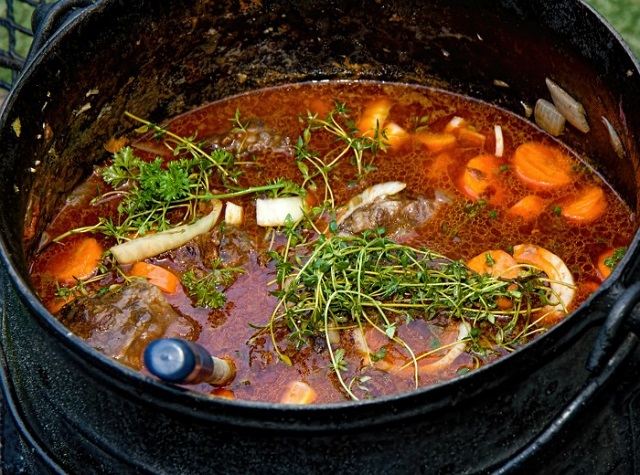
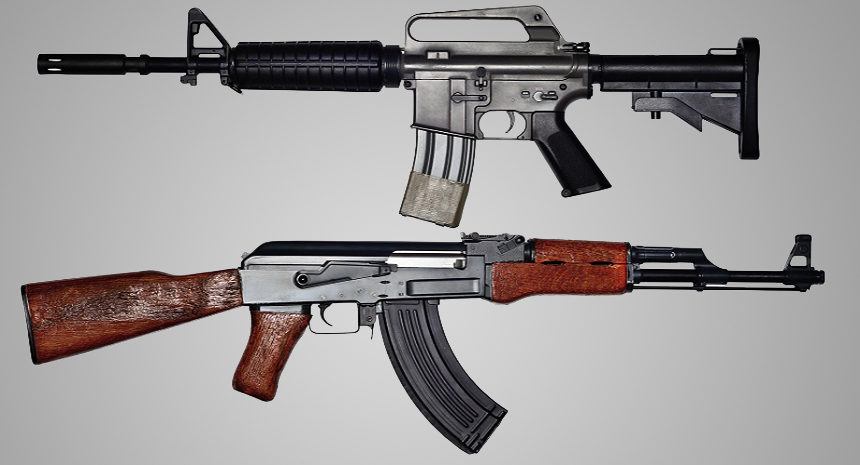

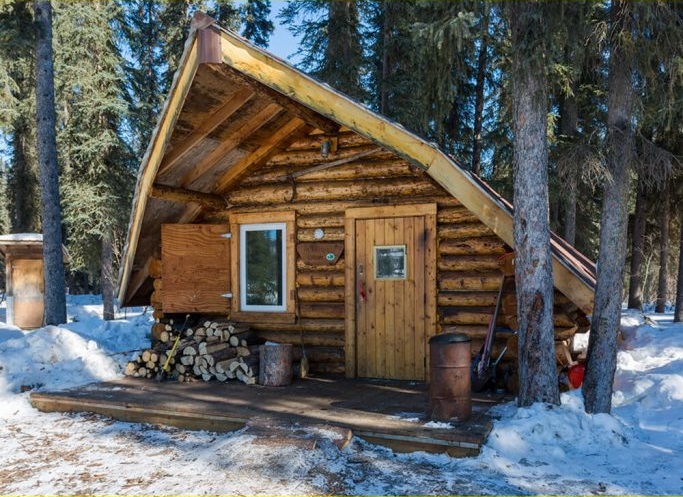
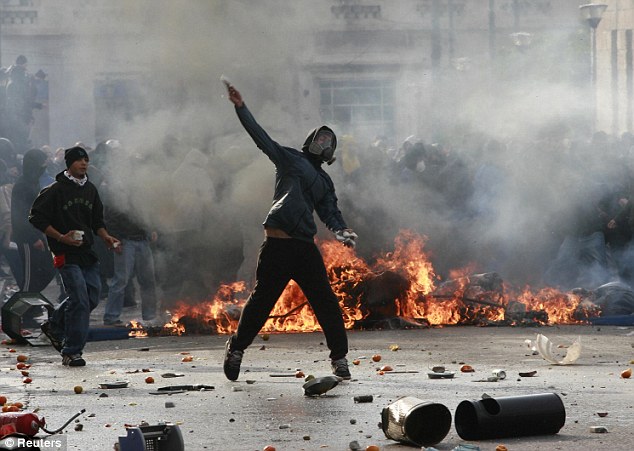
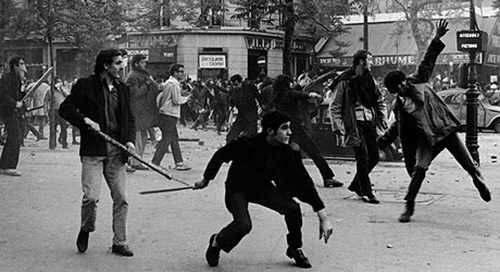
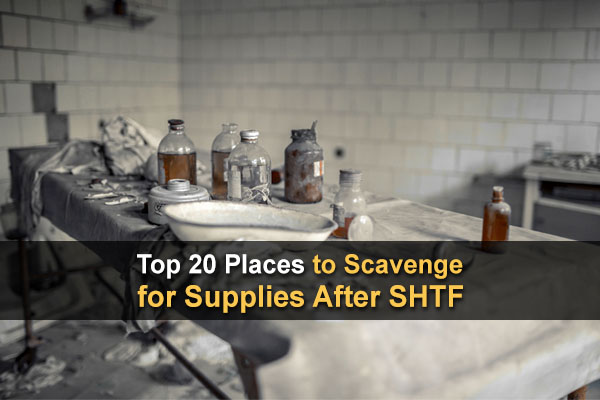



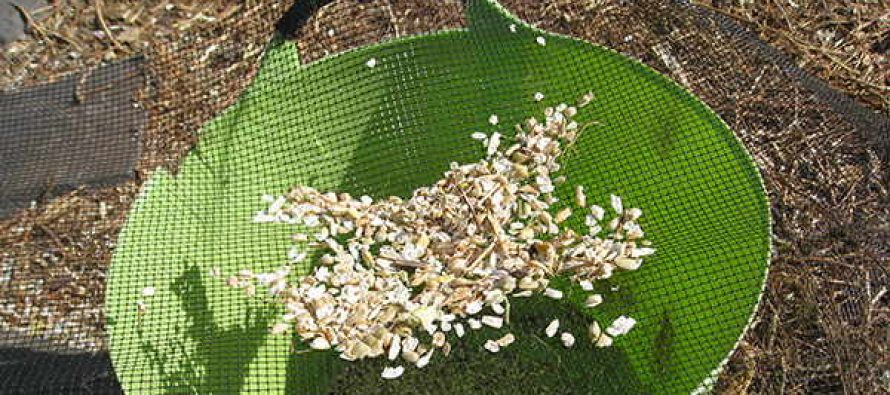




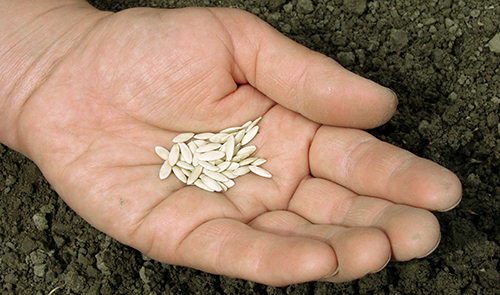





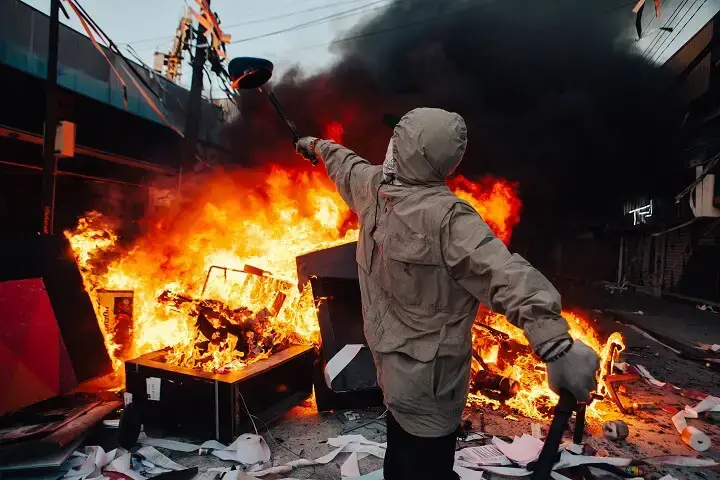

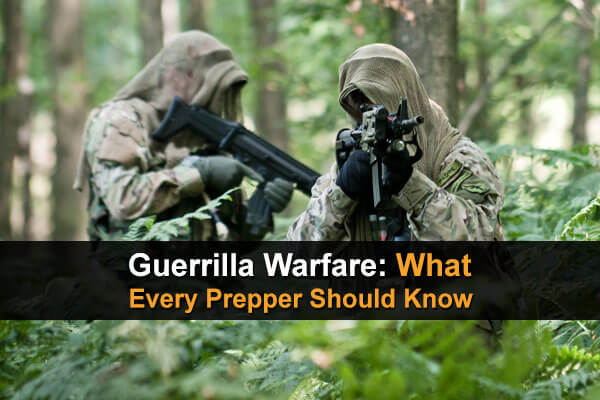

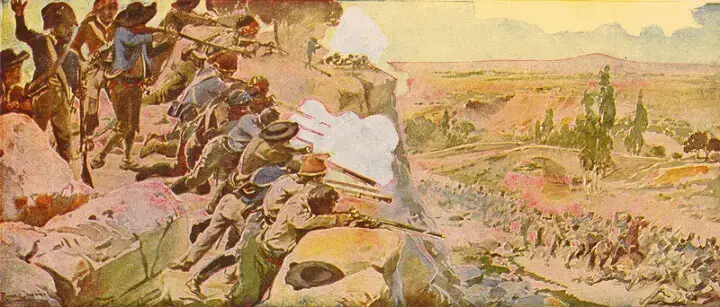
 SHTF
SHTF 