How Generals Fueled 1918 Flu Pandemic to Win Their World War- Just like today, brass and bureaucrats ignored warnings, and sent troops overseas despite the consequences

Just like today, brass and bureaucrats ignored warnings, and sent troops overseas despite the consequences.

The U.S. military has been forced by the coronavirus pandemic to make some serious changes in their operations. But the Pentagon, and especially the Navy, have also displayed a revealing resistance to moves to stand down that were clearly needed to protect troops from the raging virus from the start.

The Army and Marine Corps have shifted from in-person to virtual recruitment meetings. But the Pentagon has reversed an initial Army decision to postpone further training and exercises for at least 30 days, and it has decided to continue sending new recruits from all the services to basic training camps, where they would no doubt be unable to sustain social distancing.

On Thursday, the captain of the aircraft carrier USS Theodore Roosevelt, on which the virus was reportedly spreading, was relieved of command. He was blamed by his superiors for the leak of a letter he wrote warning the Navy that failure to act rapidly threatened the health of his 5,000 sailors.

Secretary of Defense Mark Esper justified his decision to continue many military activities as usual by declaring these activities are “critical to national security.” But does anyone truly believe there is a military threat on the horizon that the Pentagon must prepare for right now? It is widely understood outside the Pentagon that the only real threat to that security is the coronavirus itself.

Esper’s decisions reflect a deeply ingrained Pentagon habit of protecting its parochial military interests at the expense of the health of American troops. This pattern of behavior recalls the far worse case of the U.S. service chiefs once managing the war in Europe. They acted with even greater callousness toward the troops being called off to war in Europe during the devastating “Spanish flu” pandemic of 1918, which killed 50 million people worldwide.

Itwas called the “Spanish flu” only because, while the United States, Britain and France were all censoring news about the spread of the pandemic in their countries to maintain domestic morale, the press in neutralist Spain was reporting freely on influenza cases there. In fact, the first major wave of infections in the United States came in U.S. training camps set up to serve the war.

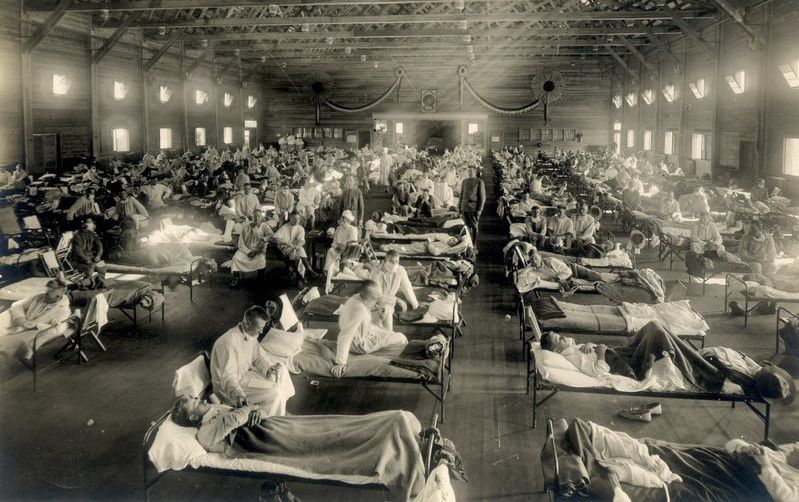
Abundant documentary evidence shows that the 1918 pandemic actually began in Haskell County, Kansas, in early 1918, when many residents came down with an unusually severe type of influenza. Some county residents were then sent to the Army’s Camp Funston at Ft. Riley, Kansas, the military’s largest training facility, training 50,000 recruits at a time for the war. Within two weeks, thousands of soldiers at the camp became sick with the new influenza virus, and 38 died.

Recruits at 14 of 32 large military training camps set up across the country to feed the U.S. war in Europe soon reported similar influenza outbreaks, apparently because some troops from Camp Funston had been sent there. By May 1918, hundreds of thousands of troops, many of whom were already infected, began boarding troopships bound for Europe, and the crowding onboard the ships created ideal conditions for the virus to explode further.

In the trenches in France, still more U.S. troops continued to be sickened by the virus, at first with milder illness and relatively few deaths But the war managers simply evacuated the sick and brought in fresh replacements, allowing the virus to adapt and mutate into more virulent and more lethal strains.

The consequences of that approach to the war became evident after the August 27 arrival in Boston harbor, when visitors brought a much more virulent and lethal strain of the virus; it quickly entered Boston itself and by September 8, had appeared at Camp Devens outside the city. Within ten days, the camp had thousands of soldiers sick with the new strain, and some of those infected at the camp boarded troops ships for Europe.

Meanwhile the lethal new strain spread from Camp Devens across the United States through September and October, ravaging one city after another. From September onward, the U.S. command in France, led by Gen. John Pershing, and the war managers in the War Department in Washington, were well aware that both U.S. troops already in Europe and the American public were suffering vast numbers of severe illnesses and death from the pandemic.

Nevertheless, Pershing continued to call for large numbers of the replacements for those stricken at the front lines, as well as for new divisions to launch a major offensive late in the year. In a message to the War Department on September 3, Pershing demanded an additional 179,000 troops.

The internal debate that followed that request, recounted by historian Carol R. Byerly, documents the chilling indifference of Pershing and the military bureaucracy in Washington to the fate of American troops they planned to send to war. After watching the horror of lethally-infected soldiers dying of pneumonia in the infected camps, acting Army Surgeon General Charles Richard strongly advised Army Chief of Staff Peyton March in late September against sending troops from the infected camps to France until the epidemic had been brought under control in the surrounding region, and March agreed.

Richard then asked for stopping the draft calls for young men heading for any camp known to be already infected. March wouldn’t go that far, and although the October draft was called off, it was to resume in November. The War Department acknowledged the heavy toll the pandemic was taking on U.S. troops in October 10, informing Pershing that he would get his troops by November 30, “if we are not stopped on account of Influenza, which has now passed the 200,000 mark.”

Richard then called for troops to be quarantined for a week before being shipped to Europe, and that the troopships carry only half the standard number of troops to reduce crowding. When March rejected those moves, which would have made it impossible for him to meet Pershing’s targets, Richard then recommended that all troop shipments be suspended until the influenza pandemic was brought under control, “except such as are demanded by urgent military necessity.”

But the chief of staff rejected such a radical shift in policy, and went to the White House to get President Woodrow Wilson’s approval for the decision. Wilson, obviously recognizing the implications of going ahead under the circumstances, asked why he refused to stop troop transport during the epidemic. March argued that Germany would be encouraged to fight on if it knew “the American divisions and replacements were no longer arriving.”Wilson then approved his decision, refusing to disturb Pershing’s war plans.

But the decision was not carried out fully. The German Supreme Command had already demanded that the Kaiser accept Wilson’s 14 points, and the armistice was signed on November 11.

The disastrous character of the U.S. elite running the First World War is clearly revealed with the astonishing fact that more American soldiers were killed and hospitalized by influenza (63,114) than in combat (53,402). And an estimated 340,00 American troops were hospitalized with influenza/pneumonia, compared with 227,000 hospitalized by Germans attacks.

The lack of concern of Washington bureaucrats for the well-being of the troops, as they pursue their own war interests, appears to be a common pattern—seen too, in the U.S. wars in Vietnam, Afghanistan and Iraq. Now it has been revealed once again in the stunningly callous response of the Pentagon to the coronavirus pandemic crisis.

In the 1918 war, there was no protest against that cold indifference, but there are now indications that the families of soldiers put being at risk are expressing their anger about it openly to representatives of the military. In a time of socio-political upheaval, and vanishing tolerance for the continuation of endless war, it could be a harbinger of accelerated unraveling of political tolerance for the war state’s overweening power.
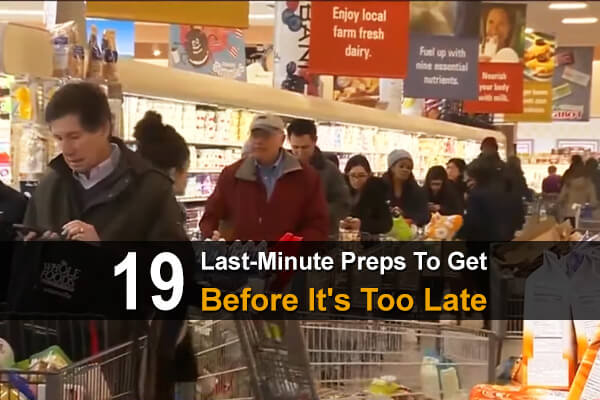
19 Last-Minute Preps To Get Before It’s Too Late

The whole point of preparedness is to be ready when a disaster strikes. If a hurricane is heading your way, you don’t want to be in line at the store with hundreds of other people buying whatever supplies are left. You want to be at home with your family, secure in the fact that you have all the supplies you need.

But what if it’s too late? Imagine you’re one of those people who likes the idea of preparedness but never really got into it, and now a disaster is looming and you only have hours left to prepare. What should you do?

Again, you don’t want to let yourself end up in this situation. But in case you are, here is a list of last-minute preps to do/get before it’s too late.

1. Fill Your Gas Tank And Propane Tanks

It’s a good idea to fill a few gas containers to have on hand as well. If you use a wood-burning stove, refresh your supply of wood.

2. Charge Batteries for Your Phones and Other Electronics

Also, get extra batteries for radios, flashlights, and other essentials that cannot be re-charged. If you don’t have car chargers for your phones and tablets, get some.

3. Do Your Laundry

Avoid letting dirty clothes and linens pile up. That way, you won’t be without clean clothes in the event of a power outage.

4. Wash Your Dishes

Ditto from number three for your dishes, pots, and pans. If water becomes a precious commodity, you’ll be sorry you didn’t take the time to clean what you could beforehand.

5. Check Your Supply of Non-Perishable Food

Many people stocked up on shelf-stable food for the first time this past spring. Do you still have enough canned soup, rice, beans, and pasta? How is your supply of canned and frozen vegetables? Keep a manual can opener nearby your canned goods. Pay particular attention to foods that you can eat without cooking.

6. Visit Your Pharmacy

Refill your family’s prescriptions and restock your first aid kit with antibiotic ointment, bandages, and pain relievers.

7. Think About Other Health-Related Essentials

Medicines are not all we need to maintain our bodies. Here’s a checklist of some of the other items you may need to purchase.

  • Contact lenses and lens solution
  • Feminine hygiene supplies
  • Soap
  • Shampoo
  • Body lotion
  • Toothpaste
  • Baby needs
  • Vitamins
  • Tissue and toilet paper

8. Go To The Bank

Having cash on hand can be a lifesaver if banks close and ATMs shut down. Keep a good supply of bills in small denominations at home in a safe location.

9. Stock Up On Candles, Lighters, and Matches.

These inexpensive items can be worth their weight in gold during an extended power outage.

10. Remain Hydrated

Fill the water bottles you have and keep a supply of store-bought jugs and bottles of water on hand. If a disaster is imminent, fill your sinks and bathtubs with water too.

11. Replenish Your Supply Of Ammunition

If you have firearms, check your amount of ammo.

12. Assemble a Bug out Bag for Each Family Member

The contents of each backpack will vary somewhat depending on the age of the person. Store your filled bags in a convenient location, such as near the back door or in the garage, where they are easy to find and grab. Think about including survival items to last for three days. Here is a list to get you started.

  • Water bottle and water purification device
  • Long-lasting foods such as jerky, trail mix, energy bars, and instant noodles
  • Extra set of clothes, including socks
  • Blanket
  • Firestarters (lighter or matches)
  • First-aid supplies
  • Medications
Shopper in Store With Empty Shelves
  • Hygiene items
  • Tarp or tent
  • Pocket knife
  • Plastic bags (trash bags and small zippered ones)
  • Flashlight
  • Pen and paper
  • Deck of cards, crosswords or other small games

13. Purchase Cleaning Items

Many stores ran out of wipes and cleansers as part of the COVID-19 shutdowns. People are already hardwired to stock up on these items again. Don’t wait to purchase bleach, anti-bacterial wipes, and other cleaners you’ll need in an emergency. It is not necessary to hoard these items, however.

14. Collect Essential Documents

Place your important papers in an easy-to-grab large envelope. Pull together your family‘s passports, birth certificates, marriage license, and insurance policies. Then place the paper envelope inside a zippered plastic bag for added safety.

15. Fill In Freezer Gaps

If the power goes out, the items in your freezer will stay frozen longer if your freezer is full. Fill in any gaps with sealed plastic bags filled with water. Keep the freezer door closed as much as possible.

16. Prepare For Fire

Fires can result from many emergencies. Make sure you have working fire extinguishers and hook up water hoses for easy access. Sand buckets and fire blankets also are a good idea.

17. Prepare For High Winds

Clear away branches and debris that could cause a hazard in a storm. Secure your outdoor furniture, grills, and other large items that could become dangerous projectiles. Clear out gutters, downspouts and storm drains.

18. Check Your Tools

See that your tools are in good working order. For example, is your chain saw ready to go if you need to cut fallen trees in the driveway? When was the last time you sharpened your ax? Don’t forget to include versatile items such as duct tape and fishing lines in your preparations.

19. Prepare An Emergency Contact List

When a crisis strikes, the mind can go blank. Have a written list of who to contact in case of an emergency. Your list can include family members, doctors, and insurance personnel. In the unlikely event that you get separated from your children, place emergency contact information in their bugout bags.

Remember that there is a difference between preparing for a crisis and panic-buying. During the COVID-19 pandemic, we witnessed many people hoarding items because they let fear take over their minds.

Buying massive supplies of toilet paper or bleach may make you feel as if you have some control over things. But the shortages that result may hurt others who need those items. When you purchase only what you need, you help your family while not endangering others.

10 Professions To Learn From To Survive The End Of The World

Maybe that’s because those really scary disasters motivate us more or maybe it’s just that in preparing for a true “the end of the world as we know it” (aka TEOTWAWKI) event make us ready for anything else we might encounter.

Regardless of the reason, there are enough of these major catastrophes in the world’s history to show us that they really can happen.

While most people who have lived on the face of this earth haven’t had to deal with anything more than a regional natural disaster, some have had to deal with much worse. To the people of Europe who survived World War II, that was a life-changing event. The same can be said for those who lived through the Great Depression or the Black Plague.

Real disasters happen. What skills would help you survive?

When I was growing up, the biggest risk we faced was that of thermonuclear war. The Cuban Missile Crisis, in 1962, was probably the closest we came to total annihilation back then. I was as glad as anyone when the Berlin Wall came down and the Cold War ended.

But we are now in another cold war and it is looking much more like it’s going to turn into a hot war that that one ever did. Should that happen, or even worse, turn out to be an EMP attack, we could easily find ourselves living in a post-apocalyptic world; a world in which we’re going to have to do everything without the benefit of electric power.

In such a case, people will be scrambling to learn the necessary skills to survive. But even more than that, they’ll have to learn how to do the things necessary to rebuild society. We are too accustomed to our technology and our comforts to just give up on them. People will be wanting things the way they are used to, or at least as close to that as they can get them.

With that in mind, it only makes sense to learn the necessary skills for living in a world without electricity. This doesn’t just mean surviving for ourselves, but helping others to survive as well; something that is normally outside of our plans as preppers.

I realize that most of us live and operate under the philosophy of taking care of ourselves, our families and our survival team. If all we’re concerned about is survival, that makes sense. But if we want our children to have a better life than that, enjoying some of the benefits we have today, we’re going to have to do more than just survive. We’re going to have to be ready to rebuild our world and as much of the technology that drives it as we can.

That job will probably fall to us, rather than to others, simply because we are the ones who are going to survive. So, we not only should be learning survival skills, but others which will help us to make things work.

Native American Doctor

Medicine is going to be one of the biggest problems in a post-apocalyptic world. While most people would die of starvation, many will also die for lack of medicine.

Today’s pharmaceutical industry depends on supplies that come from all over. Without transportation, they won’t have the materials they need to make the medicines that modern society depends on. Even if they could, without transportation those medicines wouldn’t get to you and me.

When the medicines that are locally stocked in hospitals and pharmacies are used up, there will be no more. The only medicines that will exist will be those that nature provides. The doctors of the American Indians knew those medicines and some still use them. If you can find one of them, and learn their craft, you’ll have one of the most useful skills that exist.

Even if you can’t find a Native American doctor, you could still learn about their medicine. There is a growing movement of people who believe in herbal medicine, which is based to a large part of the same roots as those Native American doctors’ medicine.

While you probably wouldn’t learn everything that a Native American Doctor could teach you, you’ll end up a whole lot better off, with a whole lot more information, than what you have now.

Chemist/Pharmacist

Pharmacists are actually trained for much more than just counting out pills, they are highly trained chemists. More than doctors, they know how different medicines interact and how they react once in our bodies.

Some pharmacists even know how to make medicines. That’s what you’re looking for: a pharmacist who can show you how to make your own penicillin, ether and chloroform will be giving you information that can save lives.

In addition to medical chemistry, there are probably other things you can learn from these people, such as how to make biofuel and other useful chemical substances.

Midwife

Everyone knows what the “world’s oldest profession” is; but I’ve never heard agreement on what the second and third oldest are.

Personally, I think that the midwife has to be pretty high on that list, as the “oldest” would necessitate midwifery. So even if something like farming or shepherding would beat it out (Able was a shepherd and Cain a farmer), midwives have been around for a long, long time.

As long as babies are being born, there will be a need for midwives. This will be especially true in times when there aren’t enough doctors to help women through childbirth. In a post-apocalyptic world, there’s a much greater possibility of women using midwives, than doctors.

Amish Farmer

Modern farming has become industrialized, with massive corporate farms and lots of expensive equipment. Even smaller farms depend heavily on equipment, with the tractor long ago having replaced the horse or oxen.

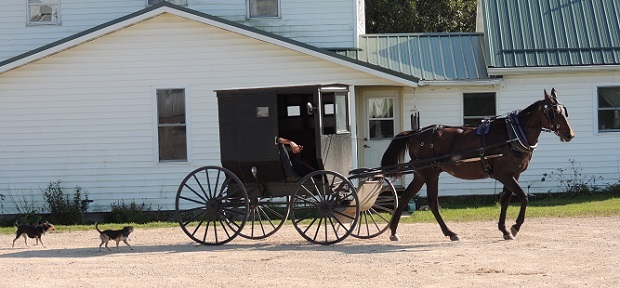
But the Amish never made that transition. Today’s Amish farmers largely do things the way their ancestors did them, still using horses as the main source of power on the farm. This gives them an incredible advantage over the rest of us, who don’t have the slightest idea of how to do things without gas engines and electric power.
Should we find ourselves on the receiving end of an EMP, the Amish will be less affected by it than any other group of people in our country. That’s basically because they don’t depend on electricity or the modern electronics that the rest of us use.

Their communities will thrive, while the rest of the country is dying. Spending time with one of these farmers and learning the methods and tools they use, would prepare you to be able to feed your family and many more, once the brown stuff hits the rotary air movement device.

Rancher

Ranching and farming aren’t the same thing. Throughout the time of the Old West, these two groups of people fought for the use of the land. That’s because the best farmland was also the best land for raising cattle, or should I say the best ranchland was often the best land for farming.

Of all the animals that mankind has domesticated through the years, cattle give us the most meat per animal.

Another way of putting that is that cattle give us the most meat for effort expended. That makes them the perfect sort of animal to raise for meat, assuming you’ve got enough land to raise them.

Snake-Eater

In the military, all “special action groups” are collectively known as “snake eaters.” It doesn’t matter if you’re talking about the Navy’s SEALs, the Army’s Special Forces or any other group, they all fall into the same general category.

Snake eaters are the best of the best. In the Army, Special Forces is not only the group that is called upon for unconventional warfare (guerrilla warfare), but they are the ones who are sent to other countries, in order to train their militaries. In fact, Special Forces got their start that way, first as the Jedburgh Teams in World War II and then as advisors in Greece and elsewhere.

Many people think of these snake eaters as expert survivalists. But that depends largely upon the environment you are talking of. They aren’t experts in the sense that you and I are trying to be, but rather in surviving any combat action. Their superior training makes them the best soldiers to have on your side, should things become violent.

Spending time with any snake eaters, learning their combat skills, will greatly increase your chances of not falling prey to the two-legged predators that will be out in force after a disaster strikes.

Hunting Guide

Hunting may not be the most efficient way of finding food after a collapse, but it may still be a very necessary part of our survival. But what most people consider hunting today is sitting in a deer blind, waiting for deer to start munching on the seed corn they put out.

While this may be an efficient way of hunting, it’s highly dependent on having the right equipment and the right place. I don’t think that’s something that any of us can count on in a post-apocalyptic world. Rather, we’re going to have to go hunting the old-fashioned way, tracking animals, learning their habits and then laying wait for one alongside a trail.

Skills like that aren’t something you can learn from just any hunter, as they probably don’t know them either. Rather, you’re going to need someone who started hunting before people used corn and deer blinds to hunt.

That’s why I recommend a hunting guide, rather than just any hunter. They’re more likely to know the skills you’ll need.

Blacksmith

If you’ve ever read any of my other post-apocalyptic articles, you know that I believe strongly in the profession of blacksmithing.

Before the dawn of the industrial age, the blacksmith made just about anything that could be made out of metal. From armor and weapons to shoeing farmer’s horses, the blacksmith was the man to see.

There are few blacksmiths in the world today; mostly because modern industry has replaced them. But when industry is taken away, then what? Who will be able to make the tools and other things that we need? It will have to be blacksmiths, or someone with very similar skills.

My father learned how to be a blacksmith, once he retired; apprenticing with a lifelong blacksmith who was a true artist of the trade. Unfortunately, I only learned a little of it from him, and don’t have a forge and anvil to practice on. If I could find one around where I live, I’d love to spend some time in his shop, learning what I could.

Mr. Fix-It

You probably know someone who can fix just about anything; a Mr. Fix-It (or perhaps a Mrs. Fix-It). These are some of the world’s most useful people and will probably be the true leaders of rebuilding society after a major disaster.

What makes these people so special is that they aren’t limited to just one trade, like many people are. Rather, they’re comfortable with any number of trades and even with fixing things that don’t fall within any particular trade. Whatever you need designed, built or repaired, they can find a way to do it; often a rather imaginative way.

I consider myself to be one of these people. Earlier in my career, I was a manufacturing engineer. Rather than just working in one engineering discipline, this forced me to do both mechanical and electrical engineering. I also took the time to learn how to be a machinist, mechanic and made many of my own prototypes.

On the side, I had a small construction company, along with a buddy of mine. So I’ve learned how to do a wide variety of things; becoming what we used to call, a jack of all trades.

Today I build a lot of my own survival gear. You can find countless examples of my work around my house. My garage hasn’t had a car in it since I painted one of them. Rather than being a garage, it’s actually my workshop. I figure that will serve me well in a post-apocalyptic world.

The Old Survivalist

Survivalism has changed since I got started in my youth. Back then we weren’t so focused on equipment, as methods. There just wasn’t that much equipment available; at least not compared to what we have available to us today.

So, you had to know how to do things yourself, rather than depending on having some sort of gadget to do it for you.

What this means is that those old survivalists were often trained much better than we are today, simply because they had to be. So they’re a fountain of useful information, if you can find them and get them talking.

Fortunately, most are willing to share what they know; so the real problem is finding them.

The Best Places in America to Outlive the Upcoming Economic Depression- As COVID-19 continues to ravage our nation, the economic toll is racing to outstrip the toll in lives taken

As COVID-19 continues to ravage our nation, the economic toll is racing to outstrip the toll in lives taken. While there is clearly no way of comparing the two, the millions of people who have lost their jobs due to the pandemic are the ones who are suffering the brunt of shutting down our country. Many of those people will never get those jobs back, because the companies who laid them off have gone bankrupt.

We have yet to see the full impact that COVID-19 will have on our country and the world.  Even so, it’s surprising that we haven’t yet entered into a time of economic depression. Many financial gurus are predicting that it’s just around the corner, so we’re clearly not out of danger yet. Probably the only way we’re going to see the end of that risk, is by going through the depression and coming out the other side.

Some people have been a bit too quick to dismiss the effects of the pandemic, forgetting that it has been worldwide, not just here in the United States. While there are those who may be trying to use it for political gain, they can’t be making up the disease or its effects; doing that would require creating the conspiracy of all time.

So, as we are navigating the waters of the remainder of this pandemic, we also need to be preparing ourselves for the rough financial times to come. For those who can, moving to one of these areas might just be a good idea, as it could minimize the impact of the depression on their lives.

Today I’d like to share with you a 3-second survival hack you can use to skyrocket your chances of protecting your loved ones during ANY crisis.
This technique is so powerful it can give you almost superhuman powers during the ugliest nightmares imaginable….
From natural disasters like earthquakes or tornadoes…
To explosive situations like mass shootings or even nationwide martial law.
And It doesn’t matter if you’re out of shape…
Or have no equipment…
Or even if you’re disabled living in a wheelchair.
This technique has been tested and proven by elite soldiers and real world “miracle” survivors from around the world.

The Least Impacted Communities

The Best Places in America to Outlive the Upcoming Economic Depression

If we want to look at this question from the viewpoint of general areas, then rural farming communities are some of the least impacted by any recession or depression.

People will always need to eat, so if you’re working in the agricultural industry, chances are pretty high that you’ll keep your job.

The problem with this is that the actual number of jobs available in those communities isn’t really all that high. If you lose your job, there may not be a whole lot of others to choose from. So you’ll want to make sure that you pick a job which will guarantee you some security. Avoid any sort of luxury food items, as those will be one of the first places where people will make cuts to their budgets.

Besides that, rural communities are less likely to be affected by the rise and fall of economic tides, because many of the things impacted by them aren’t affected so much. Housing prices don’t suffer under population pressures and there aren’t so many economically fragile service industry jobs. So if you’re self-employed, working over the internet, where you could live anywhere, a rural community might be just the place for you.

The City with the Lowest Unemployment Rate

The Best Places in America to Outlive the Upcoming Economic Depression

For a large city, Oklahoma City has the lowest unemployment rate in the country, according to information from the US Bureau of Labor Statistics.

While this can change, and will most likely go up during a depression, chances are that even at its peak, the unemployment rate in OK City will be lower than it will be within the high-population coastal areas.

Oklahoma’s economy is based largely upon oil and gas production, which will probably remain fairly high, even during times of economic hardship. While there will be some reduction in gasoline usage, most of the oil and natural gas produced in this country is used for purposes that won’t just stop due to a downturn in the economy.

The Recession-Proof City

The Best Places in America to Outlive the Upcoming Economic Depression

Frisco, Texas is rated as the most recession-proof city in the country.

This ranking is based upon a combination of their unemployment rate, percentage of income spent on housing, and the percentage of the population who rely on social assistance.

With an economy that stable, the impact of any economic downturn will be lessened, compared to other parts of the country.

This envious ranking has been verified by various different groups, not all of which use all of those criteria. Nevertheless, the city ranks high for employment and housing, no matter what scale is being used.

Experts predict that an EMP strike that wipes out electricity across the nation would ultimately lead to the demise of up to 90% of the population. However, this figure begs an important question: if we were able to live thousands of years without even the concept of electricity, why would we suddenly all die without it?

The City with Plenty of Jobs

The Best Places in America to Outlive the Upcoming Economic Depression

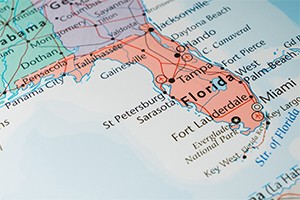
Leigh Acres, Florida is the fastest growing city in the US, ranking very high in its jobs and economic rank, as well as its socio-demographic rank.

The high growth can very easily translate to a lower overall financial impact from any recession or depression.

Of course, to take advantage of this, you’d want to beat the rush and get there before the depression starts. Once things turn bad, there will be a lot of people looking to move to someplace where there are plenty of jobs. This will change the statistics for Leigh Acres, as well as other cities which currently rank very high for job growth.

One of the Fastest Growing Regions

During the 2008/2009 housing crash, the Rio-Grande Valley area of South Texas was one of the least impacted in the country. Where housing starts in much of the country dropped to near zero, this region was still growing, with new homes being built. It has continued to grow and has remained one of the fastest growing regions in the country.

The Rio Grande Valley is a major crossing point between the United States and Mexico, with hundreds of maquiladora factories located on the Mexican side of the border. This has boosted commerce in the area, not only due to products coming across the border, but also in providing goods and services in support of those factories.

Many of the upper management live on the US side of the border, especially in the cases of management people from other countries who have factories in Mexico.

Be Self-Sufficient

The Best Places in America to Outlive the Upcoming Economic Depression

No matter what happens, your best bet is to be living an independent lifestyle, preferably in a cabin in the mountains.

If you are self-employed and can manage to pay off that property, perhaps from the sale of your current home, you might be able to live quite inexpensively, helping you to weather any financial storm.

During the Great Depression, some of the people who were impacted the least were people living in such areas, as well as those living in rural communities. The less that people were dependant on others for their income, the easier it was for them to survive. Chances are pretty high it will be the same this time around as well.

Watch Out for These

Probably the worst place to be living with the coming economic depression is in any of the major cities, especially those along either coast. The high number of people living in those areas will mean that available aid and resources will have to be spread out over a larger number of people. While large cities generally have more resources, the amount of resources per person is generally lower.
Every job that is advertised in a large city already has a long list of applicants. That will only get worse, as the economy gets worse. Chances of finding a job will become harder, as the competition increases. There will also be more jobs lost because they are “non-essential”, leaving those people without another option, as whole industries see massive declines.

It’s also impossible to live off the land in the city. While it is not easy to live off the land anywhere, living out in the country or even in the suburbs, allows you to plant a garden and raise a few chickens, to help feed your family. That’s hard to do when living in a high-rise condo or apartment.

You might be living in one of America’s deathzones and not have a clue about it
What if that were you? What would YOU do?

In the next few minutes, I’m going to show you the U.S. Nuclear Target map, where you’ll find out if you’re living in one of America’s Deathzones.

This image has an empty alt attribute; its file name is untitled-1.png

These Are The Best Self-Defense Firearms For Urban Survival- Prepare your guns and practice your shooting skills, so you could survive the disaster!

No matter how many times it is said, it can never be said or heard enough: “The best self defense firearm for you is the one you are proficient with, feel confident with, and are carrying in a time of need.”

In an urban environment, you have to defend yourself at close, intermediate, and long ranges. This is why you need to develop proficiency with at least one weapon in each of the three main categories of firearms: handguns, shotguns, and rifles.

For each of these groups, there are questions to think about and answer for yourself in order to decide which weapon will best meet your needs.

Since .22 Caliber handguns and rifles are often underestimated as defensive rounds, I created a category just for them. In most cases, as a beginner, you will be starting with a .22 and then moving onto higher powered weapons.

Handguns

This is the weapon you should always carry and have on hand when a rifle or shotgun is impractical. Choose a defensive handgun that is comfortable to shoot under any circumstances and feels comfortable to carry all day.

While those questions are a matter of personal taste, reliability and stopping power (should be powerful enough to put an attacker down with the first or second shot) are much easier to gauge via known facts about specific handgun models.

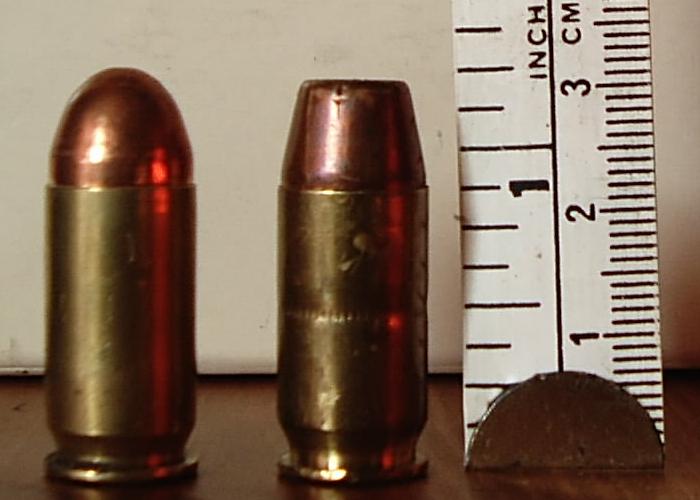
In pistols, the most popular defense calibers are the 9mm, .40 S&W, and .45 ACP. All are good choices, but I prefer the 9mm for its larger magazine capacity and the .45 ACP for its knock down power with lighter recoil than the .40 S&W. For open or concealed carrying, I prefer to carry a full-size pistol at all times.

Today I’d like to share with you a 3-second survival hack you can use to skyrocket your chances of protecting your loved ones during ANY crisis.
This technique is so powerful it can give you almost superhuman powers during the ugliest nightmares imaginable….
From natural disasters like earthquakes or tornadoes…
To explosive situations like mass shootings or even nationwide martial law.
And It doesn’t matter if you’re out of shape…
Or have no equipment…
Or even if you’re disabled living in a wheelchair.
This technique has been tested and proven by elite soldiers and real world “miracle” survivors from around the world.

My recommendations for pistols are the following:

  • In the 9mm – the Glock 17 with it’s 17 rounds per magazine. This pistol is safe to be use by adults and older teenagers after instruction.
  • In the .45ACP category – the Springfield XD-M with it’s 13 rounds per magazine. This pistol is to be used by adults only who can handle the heavier recoil.

Revolvers are an excellent option, and a good choice for inexperienced shooters since they are a rather simple handgun to operate. They are also very reliable and do not require buying and using spare magazines. I would choose the Ruger stainless steel GP100 in .357 magnum/.38 Special with a four inch barrel. I would recommend this revolver for adults and older teenagers that can safely handle them after training.

If you live in a dangerous area, or want a handgun that might be used against bears or big cats, a S&W 629 .44 magnum revolver would be suitable. I would recommend this revolver for adults only because of the heavy recoil.

In a time of social unrest it’s to your advantage to use the same caliber ammunition as the police and the military do. This makes it easier to scrounge up extra ammunition in your calibers during and after these periods of unrest.

For most modern pistols and revolvers, it is easy enough to get spare parts or repairs. However, as laws continue to change, these options may become limited. Now is the time to buy parts kits, accessories, and any tools you might need to make basic repairs or manage deeper cleaning.

Experts predict that an EMP strike that wipes out electricity across the nation would ultimately lead to the demise of up to 90% of the population. However, this figure begs an important question: if we were able to live thousands of years without even the concept of electricity, why would we suddenly all die without it?

Shotguns

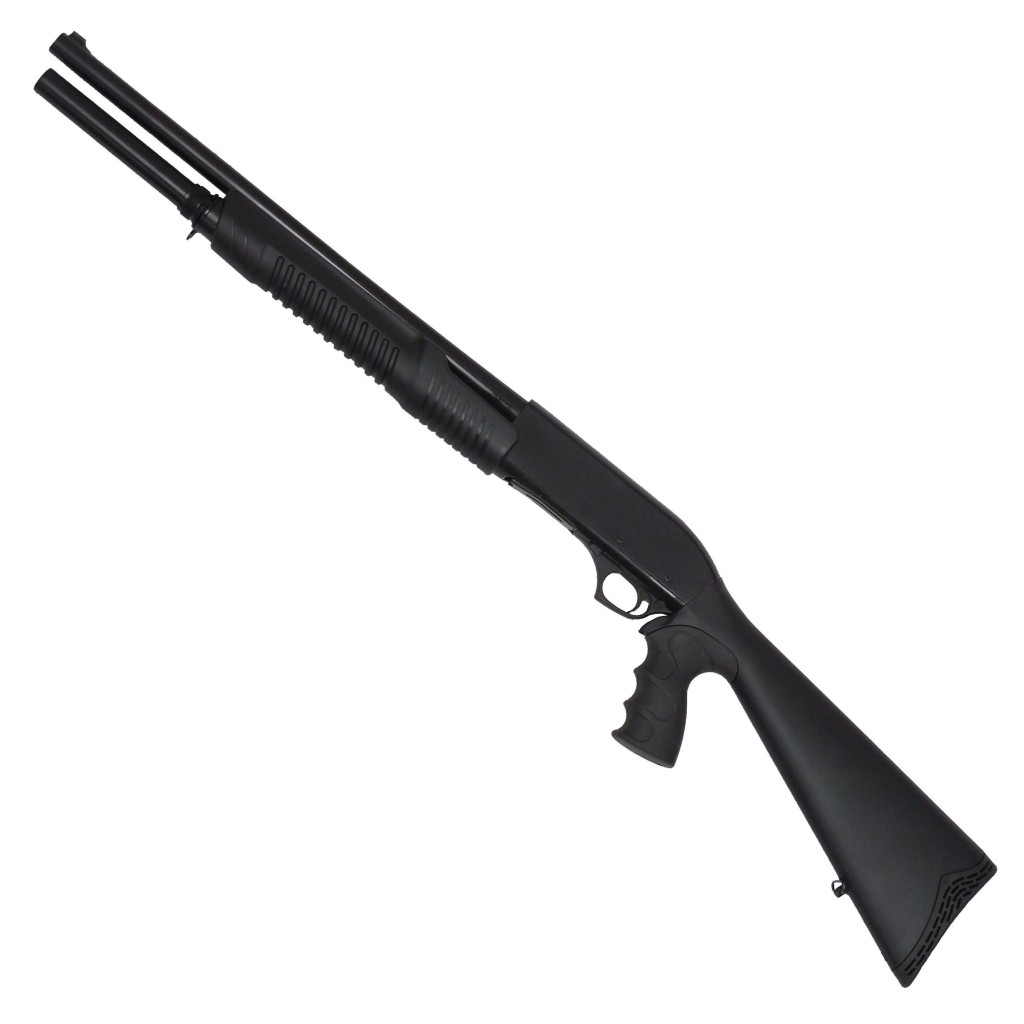
The shotgun is an excellent and formidable home and personal defense weapon. Shotguns come in pump action, semi-auto, double barrel, and single barrel.

My personal preference is the pump action because of the distinctive sound it makes when being racked. If there is one gun in this group that will act as a deterrent that reduces the need to open fire, the pump action models can do the job. If they can’t, you will still have an excellent weapon to resolve the matter with.

Pump action shotguns are rugged, reliable, simple to operate, and best of all easy to learn and teach.

Shotguns can be concealable if it is done right. The first thing that you must consider is how to make the shotgun a more compact weapon. To shorten the overall length, I would use the shortest legal tactical barrel and stock combination possible. The standard stock would be replaced with either a cruiser or a folding stock that folds over the top of the shotgun. Finally to help support the weight and add control ability I would attach a single point sling.

For a shotgun to be concealed properly you must be wearing clothing that can cover the shotgun without standing out. Here, loose fitting clothing and a long cold weather or rain coat would help, but the clothing must fit the season and temperatures.

One of the things I like most about a lot of the pump shotguns is that changing barrels is very easy. To make the most of your pump action shotgun, you should have at least two barrels for it. This gives you two guns for the price of one.

The first one should be a field barrel with multiple choke tubes. This one is your hunting and varmint control barrel. The second barrel should be a shorter tactical barrel in the 18-20 inch range. This one is for home defense purposes. It is quicker handling in tight quarters and gives a wider shot spread at short ranges. The tactical barrels come either rifled or smooth bore.

What to choose from so many pump action shotguns?

For adults and older teenagers that will not have any problems with recoil or operating a pump action shotgun, the Parkerized Mossburg 590-A1 in 12 Gauge should work well. This shotgun was designed for the military and is a very heavy duty shotgun that holds 9 rounds of 3 inch shotgun shells. If need be a M-7 or M-9 bayonet can be mounted under the tube magazine for further self defense.

For smaller framed adults, teenagers, and older children that can operate a pump action shotgun, I would recommend the Remington 870 Shotguns in 20 Gauge. An 18-20 inch barrel can still be used for defense and a 26-28 inch barrel for hunting.

For individuals that can’t operate either pump action or semi-auto shotguns, the double barrel shotgun may be a viable answer. If you can handle the recoil of a 12 Gauge shell, but can’t work the pump action or semi-auto action, the 12 Gauge double barrel shotguns should work fine. The same is true for those individuals who can handle the 20 Gauge recoil, but can’t work pump or semi-auto actions.

My recommendation in this group is the Stoeger Double Defense over/under double barreled shotgun for adults and older teenagers that have no issues with 12 Gauge recoil. This shotgun comes with a fiber optic front sight and a picatinny rail for your optics or rear sights. It shoots 2 3/4” or 3” shells. These shotguns are well made and very reliable. It is easier for most people to aim and shoot an over/under shotgun, because of it’s similarities to shooting a rifle. Most people prefer it over the side-by-side double barrel shotguns, because they are more accurate and are easier to aim.

Smaller framed adults, teenagers, and older children that can handle the 20 Gauge recoil and would rather not shoot an over/under double barreled shotguns can try the Stoeger Coach double barreled shotguns with a 20” barrel. These are well made and very reliable shotguns that can shoot 2 3/4” or 3” shotgun shells.

As with handguns, in a time of social unrest it’s to your advantage to have and use the same Gauge shotgun ammunition as the police and the military do. This makes it easier to scrounge up extra shotgun ammunition in your gauges during and after these periods of unrest. Now is a good time to find out what is most commonly being used in your area.

For most shotguns today, it is very easy to get repair or spare parts. You can get them today by ordering direct from the shotgun manufacturers or from firearm part dealers. In a time of social conflict, repair or spare parts will not be available on the open market. It is best to purchase extra kits now while you can.

You might be living in one of America’s deathzones and not have a clue about it
What if that were you? What would YOU do?

In the next few minutes, I’m going to show you the U.S. Nuclear Target map, where you’ll find out if you’re living in one of America’s Deathzones.

This image has an empty alt attribute; its file name is untitled-1.png

Centerfire Rifles

As with any other weapon, it will be a matter of personal preference in terms of which one feels most comfortable and easy to carry. You will still need to choose a rifle that is reliable and can put down an attacker with the first shot, if you have to face the aftermath of a disaster in your urban location.

If you need a few recommendations for semi-autos and bolt action rifles in today’s popular calibers, here are some options. As with the other categories, each of these models has a long standing reputation for reliability and has suitable stopping power for most situations.

The Springfield Saint (Military Spec) AR-15 in the 5.56×45 can also shoot the .223 Remington. This gun is very easy to shoot and works well with high capacity magazines or drums. Because of its low recoil, I recommend it for adults, teenagers and slender built individuals after proper training.

In the 7.62×51, the Springfield M1A would be an excellent choice. I highly recommend the M1A for it’s knock down power, durability, an reliability. It shoots very accurately from 20 round magazines, and is an excellent hunting or battle rifle. I would recommend this rifle for adults and older teenagers that can take the recoil after proper training.

In 7.62×39, the AK-47 is my hands down favorite weapon. This weapon is a proven warhorse rifle that has stood the test of time. It is extremely reliable, low recoiled, shoots high capacity magazines and drums, and has good knock down power. I would recommend this weapon to all shooters except young children after proper training.

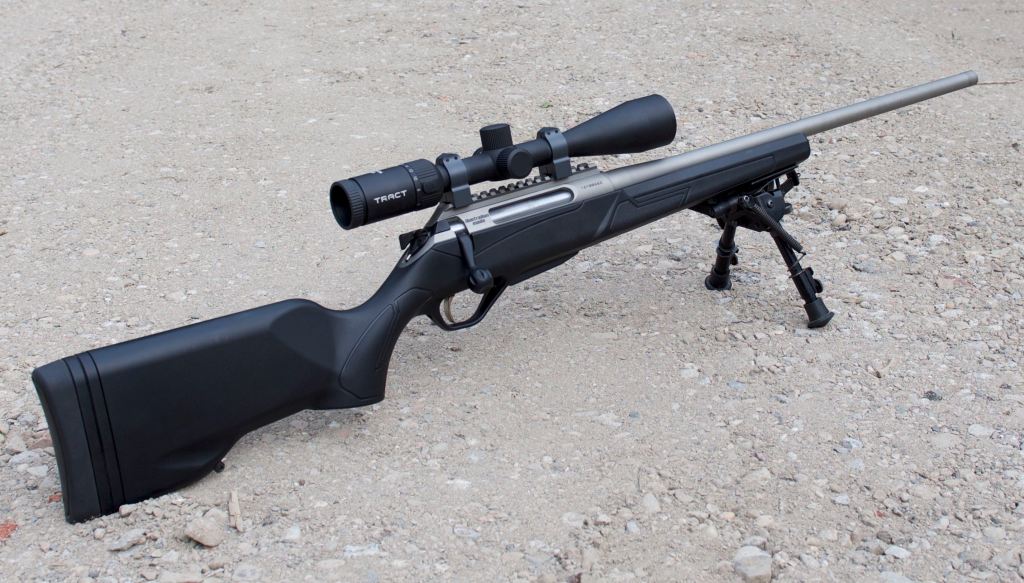
My choice for a bolt action rifle is the Ruger Gunsite Scout in .308. This is a well built rifle that is very accurate, reliable, has an 18 inch tactical barrel, and uses ten round magazines. This rifle can be scoped two ways; by a regular scope, or by using a scout scope on the picatinny scope rail. If you don’t wish to scope this rifle, it comes standard with front blade and rear aperture sights. This rifle has a bit of a recoil, so it is best for adults and teenage shooters that can take it after proper training.

For those individuals that would like to shoot semi-auto rifles, but have recoil issues, I would recommend an AR-15 that shoots the 9mm pistol round. This AR could be a companion rifle to anyone that is carrying a Glock 9mm semi-auto pistol. Both of these weapons can use the large capacity Glock magazines when needed. This rifle is safe to use by all shooters after proper training.

If you choose a gun that uses ammunition other than what the local military, police, or sheriffs use, it would be to your advantage to stock up on them now.

For most centerfire rifles of today, it is also easy to get repair or spare parts. You can get them by ordering direct from the manufacturers or from firearm part dealers. Get them now while they are still available and easy to get with relatively little effort.

AR-15s with a folding stock or a collapsible stock and AK-47 rifles with a side folding stock or an under folding stocks can be concealed. It will depend upon the climate, time of day, and the type of clothing being used. Concealing other full sized centerfire rifles will depend on their size and weight. Some are very hard or impossible to conceal.

What About .22 Caliber Rifles and Handguns?

.22 caliber rifles and handguns are great learning and practice tools for shooters of all skill levels. It is also an underestimated defensive round, and will put down attackers quite well with good shot placement.

Swing the barrel

Training and practice are the keys to being a good marksman and with these firearms. Ammo for these weapons is also cheaper than for higher powered guns, so you will find training and practice more affordable.

I recommend the following .22 caliber rifles and handguns for training and defense:

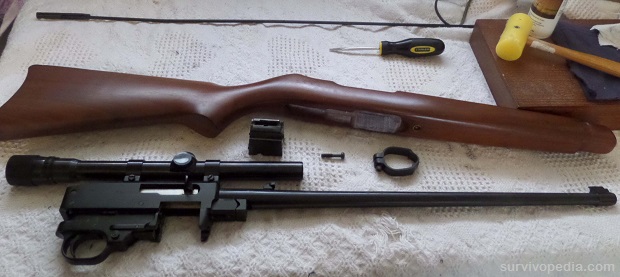
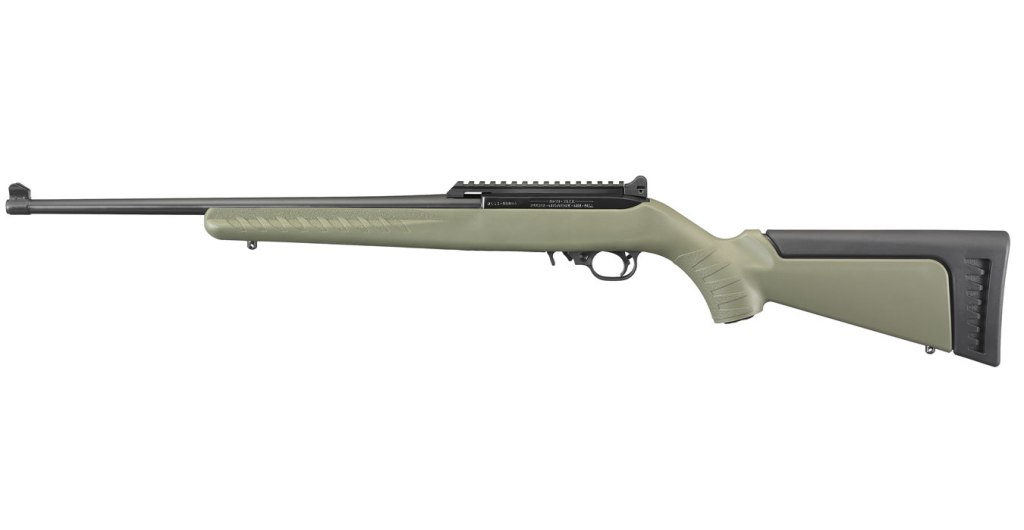
  • For a semi-auto rifle – Ruger 10/22 in stainless steel with a black synthetic stock. This rifle can be scoped or use the metal adjustable sights. The 10/22 is a tough, reliable little rifle with a lot of accessories. Upgrades are also available. If taken care of, this 10/22 will last a life time.
  • For a lever action rifle – Henry Lever Action .22 caliber. This is a very well made and dependable rifle that shoots .22 LR, .22L, and .22S.This rifle has adjustable sights or can be scoped.
  • For a semi-auto pistol – Ruger Mark III Hunter. This is a .22LR very well made, reliable, stainless steel pistol with adjustable sights, and a 10 round magazine.
  • For a .22 caliber revolver – Taurus Tracker in .22LR. This is a very well made and dependable SA/DA stainless steel revolver, with a 4 inch barrel, and a 9 round cylinder capacity.

Typically, .22RL ammunition is not used by most local military, police, or sheriffs. It would be to your advantage to stock up on this ammo now because it will disappear very quickly in time of need. At this time the ammunition is priced reasonably, but you never know when the next shortage will come.

For most .22 caliber handguns and rifles today, it is easy to get repair or spare parts by ordering direct from the manufacturers or from firearm part dealers. It is best to buy extra parts now while you can get them at a reasonable price on the open market.

In a time of social conflict, you have to defend yourself at close, intermediate, and long ranges in an urban environment that goes crazy. Proficiency with handguns, shotguns, and rifles will go a long way to helping you achieve that goal.

Each of these weapon types have their advantages and disadvantages, as do specific models in each category. Regardless of how many models you try out, the best one is always going to be the one you are comfortable with and actually have on hand in a time of need.

Prepare your guns and practice your shooting skills, so you could survive the disaster!

During a SHTF situation, pain could become an annoyance for some, but unbearable for others.

If doctors are scarce and medicine becomes even scarcer, this one little weed, found all over North America and similar to morphine, could be a saving grace.

Pioneer Foods We’ll Be Eating A Lot After SHTF- If society collapses, you can bet that the foods the pioneers ate will become dietary staples

Once upon a time, heading on down to the grocery store to fill the pantry whenever you needed to was not an option. Pioneers who traveled west in pursuit of religious freedom and a better life in the early days of U.S. settlement aimed to settle in areas where chances to buy supplies were few and far between.

This meant that they had to be self-sufficient, which required bringing along and preparing food that would last a long time, tending animals and hunting as needed, and eating what the land provided them.

While this self-imposed self-sufficiency is truly a measure of how passionate and hardworking the pioneers were, it’s also a glimpse into a future without the modern-day amenities we all enjoy in 21st-century America. If ever a situation arises that leads to the collapse of society as we know it, those pioneer foods may be more like our bread and butter (pun totally intended). Here are some foods that we’ll all have to become familiar with if doomsday happens.

During a SHTF situation, pain could become an annoyance for some, but unbearable for others.

If doctors are scarce and medicine becomes even scarcer, this one little weed, found all over North America and similar to morphine, could be a saving grace.

Cornmeal

A favorite of Native Americans, cornmeal was often used in place of today’s more traditional wheat flour because it could be easily ground from whole corn while on the move. Bread, cakes, and pancake-like products were often made from cornmeal. It’s got the added bonus of a little sweetness that could be hard to come by in a SHTF situation.

Dried or Cured Meats

Without refrigeration, meat from large animals like cattle, pigs, deer, and so on will have to be handled differently than it is today. Smoking, salting, and drying were all techniques employed in the pioneer days to keep meat from spoiling, and they’d be a handy way to keep our families fed for the long haul if we lose access to refrigeration. While cured and dried meats are more a novelty today, you can bet they’d quickly become a staple in more trying times.

Wild Game, Especially Small Game

You don’t find a lot of people eating squirrel and wild rabbit these days. However, a squirrel or rabbit that was happened upon and harvested in pioneer times surely wouldn’t go to waste. Fresh meat was few and far between, with the bulk of protein coming from dried or cured meats, and taking large game wasn’t very practical if you were on the move as you’d likely wind up wasting much of the meat. Small game was perfect for feeding you for a day, though. That’ll be very important, especially as people are likely to take on more nomadic lifestyles post-doomsday.

This also includes fish and native shellfish. In many places, fish may be even easier to get your hands than rabbits and squirrels. Learning about the local varieties could make it much easier to add some protein to your dinner.

Animal Fats

Lard and other fats rendered from animals are definitely not the go-to these days, but they were far more readily available in pioneer society – and they were also a lot easier to process than the vegetable-based oils you’ll find in the average cabinet today. Because fat is a crucial part of our diets, animal fats are likely to make a comeback after doomsday.

Dried Fruits and Veggies

We know that drying produce is a great way to preserve it. People enjoy dried fruits and veggies even in modern times. However, if our society breaks down and leaves us with zero access to out-of-season produce and more modern preservation methods like canning and freezing, dehydrating fruits and veggies is likely to become common practice. You can even preserve produce this way using only the power of the sun.

Dried Beans

Beans tend to be fairly easy to grow, and dried beans can last a very long time. Pioneers packed dried beans to provide protein and fiber along the trail, and they’ll likely be popular for their high protein count and filling nature if ever the SHTF. You also don’t need much to prepare dried beans; a pan, water, heat, and a little patience is all it takes. Bonus: When you settle in somewhere, you can plant those babies and get a whole new crop ready for the next year.

Experts predict that an EMP strike that wipes out electricity across the nation would ultimately lead to the demise of up to 90% of the population. However, this figure begs an important question: if we were able to live thousands of years without even the concept of electricity, why would we suddenly all die without it?

Squash, Tubers, Onions, Garlic, and Apples

What do all of the above have in common? Aside from being fairly commonplace now, all of these produce items can be stored for fairly long periods in cool, dark places. As long as a little care is taken in storage, these will last through most of a winter. You commonly see references to these items in all sorts of literature written in earlier days, and root cellars were commonplace up until a few decades ago. If fresh produce was out of the question, wouldn’t some delicious fried squash or potatoes be an absolute treat?

Maple Syrup and Honey

While we as a society are pretty dependent on modern sugar, it was much harder to find in the days of the pioneers. In fact processed sugar was an expensive luxury for most people. Instead, they used other sweeteners like honey and maple syrup to help sweeten their dishes. Those items will likely become much more common in a SHTF situation because they’re easier to process than white sugar. With a little knowledge, and very minimal equipment that could be improvised easily, the common man can get syrup from tapping trees. A little bravery would certainly be necessary to collect honey, but it’s not impossible.

Foraged Foods

Obviously the foods you’d be able to forage vary from region to region, and the same was true for the pioneers, too. They’d forage local berries, greenery, wild fruits, mushrooms, and herbs to supplement their diets and add variety. If the SHTF it’ll pay dividends to be aware of the edible plants found in your region and have an idea of where to find them. These wild foods may also be propagated for home gardens if seeds and plants are unavailable for planting the more common gardens we see today.

If society collapses, you can bet that the foods the pioneers ate will become dietary staples. Those foods were wholesome, nutritious and, most importantly, available. Do yourself a favor and learn a little about how to find, prepare, and store these foods now, so that you’ll be prepared to feed yourself and your family in a SHTF situation.

You might be living in one of America’s deathzones and not have a clue about it
What if that were you? What would YOU do?

In the next few minutes, I’m going to show you the U.S. Nuclear Target map, where you’ll find out if you’re living in one of America’s Deathzones.

This image has an empty alt attribute; its file name is untitled-1.png

SHTF Preparedness: How to Mask Noise and Light Signatures- In a true shtf event, you must exercise noise and light discipline in order to avoid being obsequious and potentially to evade a pursuer.

This article is an introduction on how to mask the signatures of light and noise that are given off if not controlled.  We are talking primarily about a scenario taking place in the forest, but the techniques can also be applied to an urban setting.  The tougher one of the two to overcome is the noise; however, each poses a challenge that if not handled can lead to a problem when you wish to remain incognito in the field.

How to Diffuse Light in SHTF Environments

First let’s deal with light.  The reason light poses a problem is we need light to see optimally, but in using it at night, the light can be seen by others, giving our position away.  Flashlights and any kind of hand-held lantern, battery powered or otherwise are the main problems here.  There are a few simple ways to cut down on these signatures, and all of them take practice.

  1. No white lenses with movement: you need to obtain a red lens for your flashlight. This will not defeat NVD’s (night vision devices), but it will cut down on being compromised by the unwanted naked eye considerably.
  2. When using the flashlight, cover it up: preferably a poncho over top of yourself and the flashlight, to perform whatever task you need to accomplish when moving at night, such as checking your position on the map, or fooling with equipment of some kind. Keep that light covered.
  3. Adjust your eyes and learn to move in the dark without a flashlight: this will take some practice, and some people may not have the night vision abilities to perform it, especially those with eye problems. For everyone else, practice makes perfect.  Most nights have a little illumination and are not pitch dark (except for the New Moon and a day before and after).
  4. Smokers: you must hide the signature of the end of your cigarette. Through NVD’s it appears to be a flare going off from a distance.  Either cup it within your hands, or inside of an aluminum pouch, such as found with MRE’s (Meal Ready to Eat).  When you light that cigarette you also tend to give off a big signature.  Best thing I can tell you is to quit smoking and really nip it in the bud.  Not to mention the fact that you can smell a cigarette from several hundred feet away.

How to Minimize Noise Levels in Dangerous Situations

Noise is an entirely different animal.  We make noise as we walk.  We can’t help it.

What we can do, however, is control the amount of noise we make…and reduce the amount that would give away our position.  You must practice noise discipline in order to perfect it!  Looking where you walk and where you take your next step is key.  Be keenly observant of where you are moving and through what.  Are you facing a large area covered in dry leaves, with dry weather?  Are there dried branches and twigs strewn all over the place?

How about sticker bushes and nettles in the summertime?  If you’re not crushing them underfoot, how about if one of them whips you across the face?  Unless you are prepared to take the pain of it, you may yell, curse, or cry out.  You should practice moving through all of these different types of substances.  In addition, how about the noise made just as a consequence of your movement?

Many people carry so much stuff, such as keys, change in their pockets, etc., that they mimic a tambourine when they walk.  Let’s not forget our happy, singing, laughing, chirping tracking devices…our cell phones.  Your cell phones: I don’t use one.  You can believe when Uncle Ed tries to reach you or you get a call from Gram-gram, or some other family member, and you’re out in the woods?  The whole world (animal, vegetable, and human) will hear that ringtone.  Clattering gear that is rattling around, the sounds of trampled branches and vegetation, the occasional grunt in fatigue or pain…all of these will give you away.

Any and all of your rattling gear needs to be silenced.  Everything that is loose must be tied down and secured.  This is not just prudent: this is survival.  “What is the situation?” you may ask.

Choose the situation.  The situation is unimportant.  What is important here is that you ensure noise and light discipline in order to avoid being obsequious and potentially to evade a pursuer.  Practice walking at night in the woods, and listen to yourself.  When you’re stationary, practice listening to the things that are around you.  If you’re patient and open your eyes, ears, and mind, the woods will come alive for you. Your senses will experience what your normal Western-Consumer marketing environment deadens them to.

Learn to pace yourself by the amount of noise you make and also practice leaving fewer tracks and/or a trail.  Practice negotiating close (thickly-vegetated) terrain and making as little noise as possible.  Skills need practice in order to master them.  Now that the weather is warming up, try some training that won’t cost you anything except time and effort to master these skills.

U.S. Hegemony Could End In A Swarm Of Cheap Chinese Missiles- While we were fighting lesser opponents, major powers have been constraining our military primacy elsewhere at a rapid pace

For roughly the last ten years, military analysts from across the political spectrum and around the world have warned about the growing vulnerability of one of the foundations of  U.S. military power that underwrites its global hegemony: the ability to forward deploy forces anywhere on the planet relatively unchallenged. 

That matters for a very simple reason, as a retired senior U.S. intelligence analyst explained to TAC: “If America can’t get to the fight, is deterred from fighting, or if its forces are destroyed on the ground before Washington can fight, the days of America being called a superpower are over.” 

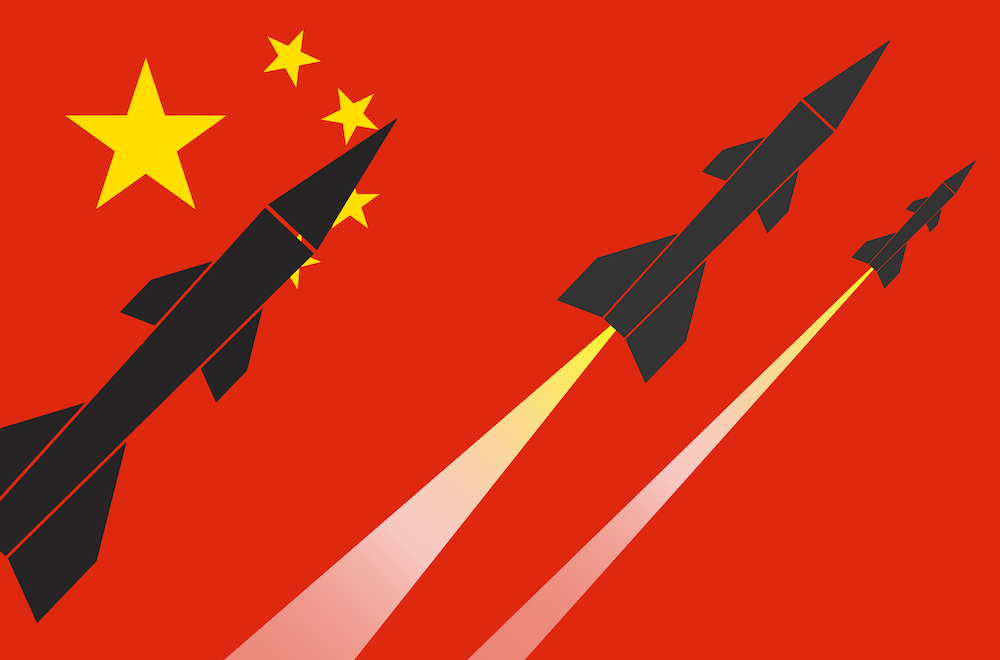
Thanks to a proliferation in stand-off weapons—such as various types of Chinese missile platforms—the ability to utilize key aspects of U.S. military power abroad is slowly and effectively being constrained, whether it be stationing forces, traversing the high seas, or flying high in the sky. 

Thanks also to the relative difficulty and expense in negating what are cheap, highly-accurate and now relatively easy systems to build, the United States for the first time in decades could find itself militarily defeated by peer-competitors such as China, Russia, or taking heavy losses from regional opponents such as North Korea, Iran, or others in select military scenarios.

In short, U.S. hegemony—regionally or even globally—could one day be challenged or swept away by a salvo of cheap Chinese, Russian or Iranian ballistic missiles.

The warning signs have been apparent for a long time now. However, this budding challenge has been lost as America has taken on foes that have no ability to challenge U.S. military buildups or overseas operations, masking the problem. For example, the U.S. military invasion of Afghanistan in 2001, various so-called war on terror campaigns using drone technology, the military campaign against the Islamic State, various air strikes against Syria—all showcase a U.S. military whose deployments were unchallenged or utilized weapons platforms where defenders did not have the range to strike back.

And yet, that false sense of military security fades away quickly when one looks at the U.S. military strategic situation in the Asia-Pacific. Here, Washington’s abilities to contest Beijing’s growing power in areas like the East and South China’s Seas as well as any potential struggle over Taiwan, are clearly in relative decline. China has developed its armed forces with the specific goal of negating the military value of U.S. bases around the region. They’ve made major investments in various ranges, levels of sophistication, and sheer numbers of cruise and ballistic missiles, part of a military strategy called anti-access/area-denial, or A2/AD. U.S. bases in Okinawa all the way to what was recently thought of as the relative safety of Guam in the mid-Pacific Ocean, are all now in range of Chinese rocketeers.

As a former senior Pentagon official told TAC: “Most, if not all, U.S. military bases in a conflict with China would be made inoperable for long stretches of time in any sort of protracted war—and perhaps damaged to such an extent that they could be rendered unusable.” 

In fact, a recent demonstration of Chinese military muscle should serve as a stark warning. Beijing last week demonstrated its so-called ‘aircraft-carrier killer’ missiles—the DF-21D and DF-26B, splashing them down in the hotly contested South China Sea. The missiles, firing from different locations in China, are highly mobile and have ranges of roughly 1,800 to 4,000 kilometers, respectively. And while the missiles were not tested against non-cooperative maritime targets, the test did show that such weapons are operational, ready for combat operations, and have, at the very least the necessary command and control, logistical and operational knowhow to work in a testing environment. 

Even more worrying, the DF-26 can be used to attack land and sea targets—with either conventional or nuclear weapons. 

The U.S. military faces a similar, although less dire, situation in the Middle East with Iran. Tehran, while it does not have the resources, technological base, or sheer capability to copy China’s anti-access/area-denial strategy, has built up a potent force of offensive ballistic and cruise missiles to challenge U.S. military superiority over the last several decades, like it did effectively in Iraq.

In fact, in a war game I was a part of some years back, Iran was able to sink multiple U.S. warships and an aircraft carrier in the opening hours of a conflict thanks to the ability to overwhelm U.S. missile defense systems with an overwhelming amount of ordinance.

The good news is that the U.S. military for some time has been aware of the problem—a challenge that is now front and center in the Pentagon’s strategic thinking, as was made clear in the recently launched 2020 China Power Military Report. Over the last few years operational concepts like Air-Sea Battle, JAM-GC and big increases in military spending have laid the ground work to ensure America can relearn how to fight in contested military environments, a skill that has clearly atrophied thanks to a focus on terrorism and counterinsurgency doctrine. 

However, with China and other investing in new generations of now-hypersonic ballistic missiles, I would argue it is an open question whether U.S. military forces will have the same ability to deploy wherever and whenever they wish—especially in Asia, the Middle East or even in Europe. And that can only mean that the days of U.S. hegemony are clearly under threat.

Buy Lots Of Food And Store It Some Place Safe, Because Very Difficult Times Are Approaching

I’m just going to be very blunt with you. Things have already gotten quite crazy, but they are going to get even crazier.  Global food supplies have already gotten tight, but they are going to get even tighter. When even the UN starts using the word “biblical” to describe the famine that the world is facing, that is a sign that the hour is very late.

Thankfully, we are not facing famine in the short-term here in the United States, but “temporary shortages” of certain items have already been popping up, and food prices are aggressively shooting higher.

Guns have been referred to as “the great equalizer,” and there’s no weapon which can come close to them in that regard.

A lot of the popularity of firearms is due to the fact that anyone can use them effectively, not only the strong and agile. The young, the old, men, women and child can take up firearms in defense of home and family and do so effectively.

But what do you do if you can’t use a gun – or if you don’t have a gun — to protect yourself?

Earlier today my wife stopped by the grocery store to pick up a couple of things, and one particular item that used to cost about 12 dollars was now 20 dollars instead. But thanks to the Federal Reserve, this is about as low as food prices are going to get. The Fed seems absolutely determined to crank up inflation, and that is going to have very serious implications during the times that are ahead.

Right now, we have a window of opportunity before the next wave of trouble comes along, and I would greatly encourage you to use this window of opportunity to buy lots of food and store it some place safe.

Some people seem to think that if they have stored up a couple months’ worth of food that they will be just fine.

Unfortunately, that is not the reality of what we are facing. The truth is that you should have enough food to feed every single person in your household for an extended period, and many of you will need much more than that. Because when things get really crazy, many of the friends, neighbors and extended family members that neglected to prepare will come knocking on your door asking for help.

There are some people that would turn away those friends, neighbors and extended family members, but I couldn’t do that. Yes, they are at fault for refusing to get prepared, but I just couldn’t turn them out into the street.

If you also plan to assist those around you that are in need, that just makes your job even bigger. In the end, there is a limit to what any of us can do, and so we will do what we can with what we have, and we will leave the rest to God.

Buy Lots Of Food And Store It Some Place Safe, Because Very Difficult Times Are Approaching

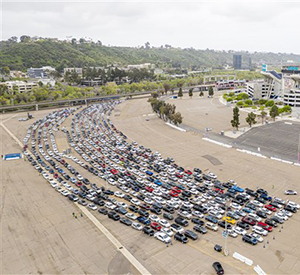
The overwhelming demand that we are witnessing at food banks around the nation right now gives us some clues about what we can expect as economic conditions get even worse. In Alameda County, vehicles are lining up “as early as seven in the morning” just to get a little bit of food from the local food banks.

They start lining up as early as seven in the morning and this will run for six straight hours – said Altfest.

Hundreds of cars slowly snake their way through the parking lot across from the Acura dealership on Interstate 880. Folks from all walks of life driving everything from Toyota’s, BMW’s, to Mercedes, all coming to get food. Folks are grateful for the charity.

When I read that quote from a local CBS news report, it struck me that it sounded almost exactly like what Heidi Baker said when she saw people waiting in line to get food.

And I saw all these people and they had beautiful cars, 4 by 4’s and Lexus, Mercedes, BMW’s, Toyotas. There they were with fancy shiny cars, but they were standing in line.

On the east coast we are seeing similar things happen.

In fact, there was a quarter-mile line at the break of dawn at a food bank in Queens on Saturday…

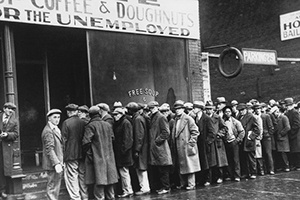
The line stretched a quarter mile before the sun was barely up Saturday, snaking around corners like bread lines in the 1930’s. But the hungry in Queens are today’s New Yorkers, left jobless by the corona virus.

Until the pandemic struck the city, La Jornada food pantry used to hand out groceries to roughly 1,000 families a week. Now, the figure tops 10,000. And volunteers serve lunch every day to 1,000 — many of them kids with growling stomachs. Across the five boroughs, the hungry number in the hundreds of thousands, the Food Bank of New York estimates.

Buy Lots Of Food And Store It Some Place Safe, Because Very Difficult Times Are Approaching

I found it quite interesting that the New York Post is comparing what is happening now to the “bread lines in the 1930’s”.

This is the reality of what we are facing people. So many people are already in desperate need, and this “perfect storm” is just getting started.

In the Richmond, Virginia area things are even worse. According to one recent report, vehicles have been lining up at one food bank “as early as six hours” before it opens…

Every Friday, cars line up as early as six hours before the food bank on Iron Bridge Road opens the drive thru. At noon, the first 20 cars or so are allowed to park in the parking lot where they wait another three hours. Once 3 p.m. hits, the operation begins with a slew of volunteers working in the warehouse to fill grocery carts with fresh fruits and vegetables, dairy products, meat, prepared foods, and non-perishable items.

Can you imagine sitting in your vehicle for six hours waiting for a food bank to open?

This is how desperate some people in America have already become.

And as I noted at the beginning of this article, the United Nations is using the word “biblical” to describe the famine and starvation that are coming all around the world.  The following comes from CNBC.

Famines of “biblical proportions” are becoming a serious risk as the corona virus crisis threatens to double the number of people nearing starvation, a U.N. body has warned.

In projections released Tuesday, the UN’s World Food Programme (WFP) predicted that the number of people facing “acute food insecurity” stood to rise to 265 million by the end of this year, up from 135 million in 2019.

Buy Lots Of Food And Store It Some Place Safe, Because Very Difficult Times Are Approaching

I don’t know about you, but I find that warning to be quite sobering.

In a “worst-case scenario”, the UN projects that “about a tenth of the world’s population won’t have enough to eat this year”.

Initial United Nations forecasts show that in a worst-case scenario, about a tenth of the world’s population will not have enough to eat this year. The impact will go beyond just hunger as millions more are also likely to experience other forms of food insecurity, including not being able to afford healthy diets, which can lead to malnutrition and obesity.

Sadly, even though we have already seen so many crazy things happen in 2020, most Americans are still not prepping.

And so, when things really start to unravel in a major way, most of them are going to be short on food and supplies very rapidly.

The other day I was interviewed by Dr. Steve Greene, and we discussed some of the reasons why the troubles that we have experienced so far are just the tip of the iceberg.

So much more is coming, but most people do not want to hear that.

Most Americans still want to believe that the future is going to be just wonderful, and so they see absolutely no need to prepare for the chaotic times that are approaching.

You might be living in one of America’s deathzones and not have a clue about it
What if that were you? What would YOU do?

In the next few minutes, I’m going to show you the U.S. Nuclear Target map, where you’ll find out if you’re living in one of America’s Deathzones.

This image has an empty alt attribute; its file name is untitled-1.png

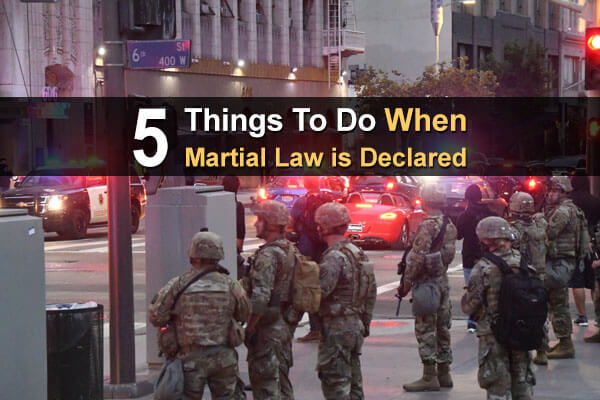
5 Things To Do When Martial Law is Declared- A Year Ago, It Seemed Like a Prepper’s Footnote. But What About Now? Martial law is a solution of last resort

A Year Ago, It Seemed Like a Prepper’s Footnote. But What About Now?

Martial law is a solution of last resort. It occurs when local law enforcement authorities are overwhelmed by any occurrence or combination of disastrous events, whether natural or manmade.

It sounds like something that could only happen in a third-world country, but it has been declared in the United States twice on a national basis and on numerous occasions on a state and regional basis.

What is Martial Law?

Here’s how Martial Law is defined:

“The ranking military officer in command of the force on the ground will become the head of civilian government for the duration.”

The assumption is that local government and law enforcement are incapable of handling the crisis, so the military is called upon to assume that role. Martial law can be declared by the President or by an act of Congress on a federal or national level using federal troops, and by the Governor on a state level using the national guard of that state as the military force.

Posse Comitatus

There is one law that limits the President’s ability to declare Martial Law called Posse Comitatus. In 1878, Congress passed the Posse Comitatus Act, which forbids U.S. military involvement in domestic law enforcement without congressional approval.

Habeas Corpus

A significant clause in the application of Martial Law is the suspension of habeas corpus. Habeas corpus is a right requiring a person under arrest to be brought before a judge or into a courtroom if they feel they’ve been unlawfully detained.

Under Martial Law, a U.S. citizen may be detained with no explanation for why, and no recourse through a typical court of law.

A Brief History

Martial Law occurs with some frequency around the world, but its occurrence on a national level is relatively rare in the U.S, although it has been declared on a local and state level 70 times between 1847 and 1945.

The most extreme imposition of Martial Law occurred during the Civil War. At that time, Abraham Lincoln enacted the following:

  • He suspended the writ of Habeas Corpus without the consent of congress.
  • He shut down newspapers whose writers displayed any dissent to Union policy or spoke out against him.
  • He raised troops without the consent of Congress.
  • He closed courts by force.
  • He imprisoned citizens, newspaper owners, and elected officials without cause and without a trial.

As an historical precedent, it has led to many of the current fears surrounding the concept of Martial Law.

Troops During Martial Law

What Could Motivate Martial Law in Today’s Environment

Historically, Martial Law has been declared in the United States as a result of significant natural and manmade disasters, widespread rioting, or terrorism. To date, Martial Law has never been instituted as a result of a pandemic, but time will tell.

The fact of the matter is that societies around the world are quite fragile now due to the pandemic, economic stress, and constant potential for unexpected events.

For example, the result of an explosion in Beirut has been compared to detonation from a small nuclear device, although all evidence points to an explosion caused by the improper storage of a volatile fertilizer known as Ammonium Nitrate.

Regardless, the combination of current events in Beirut may quickly result in a declaration of martial law.

The 5 Rights You Surrender Under Martial Law

Under Martial Law, the Bill of Rights in the United States is essentially revoked for as long as the declaration is in place. Here are the basic rights are no longer in place under Martial Law:

1st Amendment – Freedom of Speech, Assembly and the Press

The degree to which the 1st amendment is affected under Martial Law is proportionate to the threat. A significant natural disaster has less effect on the 1st amendment and in fact, open communication through the press is encouraged to communicate status and steps taken to help people manage and survive the disaster.

Civil unrest is another story, and it’s not just about newspapers and broadcast news. The Internet, social media, blogs, and webpages may all find varying degrees of censorship and even suspension if it’s felt that those platforms are being used to incite further unrest.

2nd Amendment – Right to Bear Arms

It’s quite possible that the confiscation of firearms could take place under Martial Law, especially if civil unrest is the root cause of the declaration. There are reports of this occurring in the aftermath of Hurricane Katrina, although the confiscation was overstated. Reports indicate that weapons were confiscated from people attempting to board buses for evacuation while armed, and those weapons were confiscated for the safety of other people on the buses.

Dangerous Protests In Portland

But there is a possibility that those measures could be implemented if the use of firearms becomes a widespread threat during periods of rioting or looting. There’s nothing that can be done about it under Martial Law. If the military chooses to confiscate weapons, they will.

3rd Amendment – Freedom from Housing Soldiers

This right goes back to the revolutionary war when the British took possession of homes and farms to house and feed their soldiers. It’s unlikely that the U.S. Military is going to come to your home and move in, although in a worst-case scenario they may decide to set up a tent city on your property to house soldiers or the homeless if you own a large tract of land.

Even then, they would probably use public parks, school gymnasiums, and large parking lots before setting up in your front yard. But under Martial Law, they could do just that if they needed to.

4th Amendment – Protection from Unreasonable Search and Seizure

This is another unlikely event under most circumstances under martial law. It wasn’t widespread following 9/11, although anyone who was suspected of being involved in the attack on the Twin Towers was subject to exactly that. And that’s the point.

If you, for any reason, are connected to any event that has led to Martial Law, there’s a good chance you may be subject to search and seizure without a warrant. Even something as simple as a traceable Facebook post could put you in that category.

In actual fact, people have been arrested or investigated because of their social media activity related to crimes and civil unrest. Those instances usually occurred as a result of a lengthy investigation. Under Martial Law, things often happen much more quickly.

5th Amendment – Protection to Life, Liberty, and Property

At the beginning of the coronavirus pandemic, various people around the U.S. were engaged in the hoarding of face masks and reselling them for significant markups. Many of those people found their hoards (or property) confiscated. The general consensus is they got what they deserved. Under Martial Law, that can happen regardless of the circumstances.

This isn’t about armed soldiers breaking down your front door and taking cans of soup out of your kitchen pantry. It’s more likely to affect local businesses that have an inventory of goods deemed necessary for the emergency. There will probably be eventual efforts to compensate those businesses, but there’s no guarantee in writing to that effect under the laws that define Martial Law.

Life and liberty will also be highly monitored and restricted. “Stop travel” bans will often be in place in addition to enforced curfews and roadblocks to prevent travel to or from “hot zones” with significant threat levels.

If you feel that’s a violation of your rights, it is. That’s the whole idea of Martial Law. In a dire emergency, the assumption is that any restriction of activity is for the greater good of the community, as interpreted by the local military authorities. Not by you.

However, Posse Comitatus also prohibits federal troops from carrying out domestic law enforcement actions such as searching and seizing property and dispersing crowds. National Guard units, as they operate under state-rule, are exempt from the Posse Comitatus Act.

Common Sense Preparation for Martial Law

1. Understand How Martial Law Might Affect You

There are a variety of factors that would affect the degree to which your life and liberty might be affected by Martial Law.

  • Are you a person of interest for any reason?

If you are active in any group that might be associated with civil unrest or are known in your community as someone with a visible, public presence for any movements or activities associated with unrest, you may find that authorities are very interested in talking to you and assessing your intentions. Where this could lead is hard to determine.

Common sense dictates that you should moderate any activities that would cause you to stand out as a person of interest, and if questioned, to remain as calm and reasonable as possible.

  • Are you essential to the functioning of your community?

In the same way that some people may find themselves subject to questioning and investigation, people performing essential services during an emergency or disaster are often granted exemptions from newly imposed rules or regulations affecting travel, curfews, or even the right to bear arms.

This could apply to healthcare professionals, local fire and emergency services, law enforcement, public officials, and business owners and employees deemed essential, similar to what we’ve seen during the pandemic with pharmacies, grocers, and gas stations.

If you feel you perform an essential function, you should inquire about identification or other ways to identify yourself and what exemptions from regulations are allowed.

Burned Van After Civil Unrest

2. Audit Your Supplies and Preparations

This isn’t about stocking up on toilet paper. When travel is restricted, you will need to shelter in place, and that could require a supply of everyday items you’ll need while Martial Law is in place.

Fortunately, many people have some new experience with stocking up due to the effects of the coronavirus pandemic. We’ve all become fairly good, if not experts at stockpiling food and medical supplies to varying degrees, but the extreme events leading to Martial Law could result in some new if not unexpected challenges beyond food, water, and medicine.

  • Power/Batteries/Recharge Capability

Power outages are always a possibility following natural disasters, but in extreme cases of civil unrest, terrorism, or economic collapse, power outages can occur just as frequently.

Think about any power needs you may have and assess your ability to provide the basic power you need to function in your home or apartment.

  • Communication Options

It seems extreme, but there are instances in some countries where even fundamental communications like the Internet and cell phone service have either failed or been intentionally halted.

Think about who you need to communicate with, how you can communicate, and assess whether or not you can keep in touch when conventional communication fails for any reason.

3. Assess Your Situation

  • Location

Cities will be the most severely restricted location due to population density and the increased likelihood of unrest, looting, arson, and violence due to the breakdown of local law enforcement due to the disaster.

Rural areas will be less affected due to smaller populations and the simple fact that even the military can’t be everywhere all at once.

  • Neighborhood

Even small towns can attract unwanted interest from the military if a neighborhood or area has a reputation or demands attention in terms of crime or violence.

  • Family Situation 

Do you have kids in college or living far from you? What about parents and grandparents? Is someone in a nursing home? These are the people you’ll want to communicate with on a regular basis to assess their condition and safety.

Take the time to agree with critical family members about how and when you will stay in touch and what you can do if someone needs assistance.

  • Bug Out Options 

If you have an established bug out location, you’ll definitely want to consider relocating, especially if you live in an area where Martial Law may be enforced with greater severity.

If you don’t have a bug out location, you could inquire with family members and friends who live in a safer location and reside with them until the situation de-escalates.

Regardless of where you travel, you’ll want to make the move sooner rather than later. As stop-travel restrictions and curfews are imposed, the ability to travel anywhere may be greatly limited or simply impossible.

4. Stay Informed

Situations resulting in Martial Law evolve and change with time. So do rules, regulations, and restrictions. Make sure you stay informed and communicate that information to immediate family and friends.

A radio is a good, reliable option, and you can always sit in your car in the garage if you’re wondering where to find a radio. It’s quite possible that basic services like the Internet will still function—and there’s always the TV—but in a power outage, your car radio may be your best bet.

5. Be The Gray Man

In other words, keep a low profile. Stay Home. Don’t break the law or any other rules and restrictions like curfews, travel, or joining large gatherings that have led to any kind of trouble in the past.

Moderate your social media usage. Martial Law is a bad time to get too public with hostile or antagonistic opinions. It’s a good time to mind your own business, try to be polite, and just keep to yourself.

Don’t brag about your preparedness. If you have enough food, medical supplies, and water to last a year, keep it to yourself. If it’s common knowledge that you have food stockpiled floor to ceiling in your garage and basement, you’re going to attract all sorts of unwanted attention you don’t need.

Protester Attacking Bank With Fire

If you own weapons, keep a lower profile. Don’t go hunting. Walking around with a hunting rifle with nervous military men expecting trouble is a bad time to hunt.

If you own firearms for self-defense, don’t stand in your front yard holding a rifle to show everyone you can defend yourself. Military training assumes the worst when confronted by anyone with a weapon.

Keep them locked up and hide them if you must, but remember that the name and address of the owner of any registered firearm (and they should be registered) are on file and easily accessed by local authorities.

Chances are good they won’t be going house to house to confiscate guns unless gunfire in the streets becomes a common occurrence. It may seem like that’s the time when you would want a firearm more than any other, but the military approach to guns and gunfire is simple and fatal.

That may be another good reason to bug out before the situation devolves. And take the guns with you.

Take A Deep Breath

It’s tempting to assume the worst when the subject of Martial Law comes up. That’s no surprise. Martial Law means that a very bad and desperate situation has grown to proportions that only the military can handle. But it doesn’t automatically equate to the end of the world as we know it.

Martial Law is supposed to be implemented to correct and stabilize a serious situation. The result is that serious measures are imposed in an effort to restore some semblance of the order we expect to see in everyday society.

Most people can get through it without too much pain and grief. With any luck, the event or events will pass or subside; Martial Law will be lifted and a new normal will take its place.

The only real challenge is how you prepare and manage yourself during the situation. With proper preparation, appropriate actions, and a good dose of common sense you should be able to ride it out and look back on it as an experience not worth repeating.

Design a site like this with WordPress.com
Get started