There is a mantra within the hallowed halls of prepper knowledge, lore and opinion that goes something like this. The only way to survive TEOTWAWKI is to find a hidden retreat far away from any city of significant size and live there as self-sustainably as possible year round. This idea of the survival retreat has been around for years and it is actually a lifestyle I aspire to for myself and my family. I dream of a fortified home in the woods, streams rolling through my mountain location, solar arrays, livestock in fences, wild game aplenty and wood burning stove goodness all around me. There is one major problem with this mantra though and that is the prospect of moving everything we have and living in a cabin in the woods is nearly impossible for the large majority of us.
If you accept the argument that the hinter boonies are your best chance of survival, then the flip-side of the mantra and conventional wisdom is that everyone living in or near the cities will die. It can give you the idea that you are doomed unless you are living in Northern Idaho, chopping wood for your stove and tending to your garden every day of your life. Is that the only choice we have? Does ultimate survival come down to either living in a small handful of states or you are screwed – no matter what? Is Urban Survival an oxymoron? If you aren’t one of the lucky ones who lives 2 hours away from the nearest Walmart are you doomed to die a horrible death? The real question for the majority of preppers is this; is Urban Survival possible?
The problem with surviving in urban environments
I will readily concede that you have problems living in urban environments that will make survival tougher. Larger cities have a higher population of people living in closer confines. This makes any available resources like food and fuel deplete much faster in times of crisis just because there is greater demand for these resources. Sheer numbers overwhelm the system more quickly and the panic associated with a larger mass of people spreads faster, it is more chaotic and violent. It would be like a swarm of locusts.
Urban environments are a larger risk for terrorist attacks because of the higher concentration of people and media attention. If you blow up a few buildings in New York you will cause a much bigger stir (and kill more people most likely) than blowing up the same number of buildings in Steamboat Springs CO. It is the same with virus or disease in that it spreads much faster in higher concentrations of people. Larger cities pose a larger risk to a numerically higher number of lives so risk to your life is higher.
Additionally, urban environments for the most part have limited natural resources unless you consider buildings, parking lots and concrete or asphalt natural resources. Sure, there are trees in cities, even New York has Central Park, but can you imagine how long it would take for Central Park to have every single one of its trees chopped down if some catastrophe happened and people needed wood fires to keep their families alive? Some major cities are built along rivers, but the water is usually so polluted you wouldn’t want to bathe in it much less try to eat anything that lived in there. Along with that lack of natural resources, there is not an abundance of good soil for growing food, at least not in quantities sufficient to support the populations of those cities.
I am not saying that you have a better chance for survival in cities, but I think we should be looking for options in every prepping scenario.
Are there any advantages to urban environments?
Yes, there are definite problems with urban survival chances, but do cities offer any advantages at all? I think you could find some benefits if you know what you are looking for. For starters, cities offer much more secure buildings than rural environments. Large concrete buildings are much better at stopping bullets than the walls of any suburban home. I think cities would offer you a greater supply of materials to use in a worst case scenario as well. If things got so bad you had to outfit your vehicle, Ala Mad Max, all of those spikes and metal would be much easier to find in cities.
Scrap metal, fencing, chains, wires and building materials as well as spare auto parts (batteries and tires) would be much easier scavenged in a city. Try building a fence out of trees or a coconut battery… Yes, this is a worst case scenario but I wanted to at least discuss some of the potential upsides as opposed to simply saying if you live in the cities you will die. Cities offer a lot of advantages in the form of security and observation simply because you have tall, semi-hardened structures. You can position look outs on 4 buildings a few blocks apart and using simple FRS radios, command a huge area.
What do you need for urban survival?
So now we have discussed some of the drawbacks and possible resources you could take advantage of, what is really needed for urban survival? The simple fact is that you need the same things for survival in the cities as you do in the suburbs. The difference is finding some opportunities you might be able to use to your advantage if you find yourself stuck in the city after a disaster.
Food
Food is a constant survival need and I recommend stocking up as much food that you normally eat as possible and augment that with some amounts of long-term storable food like freeze-dried food or MRE’s. What will you do when your food supplies are gone? You will need to do what the people in the burbs are doing and that is bust up some ground and get your food growing as soon as possible. As a backup I recommend having a supply of Heirloom seeds with which to do this, but starting now will give you the best chance of long-term urban survival. That is assuming your city wasn’t nuked of course.
In a grid-down scenario rooftop gardens may be necessary for urban survival.
Food co-ops are a great idea, but you will have to rely on yourself for food in a survival situation. Roof gardens would be one way to grow vegetables. Could this feed a whole building? I don’t know but it is an option you have in the city that could allow for food production within the safety of your higher vantage point. Another option that the city affords is a high number of homes in a relatively small area. Each of these homes may have food or supplies after a collapse (assuming of course nobody is living in there) that could be available for scavenging. Scavenging is a polarizing subject I understand, but would be a possibility in a worst case scenario.
Water
Rainwater collection might be a little harder in the city as most buildings have flat roofs that house equipment, but if you have a flat surface that collects water that can be diverted into tanks, it should work the same as anywhere else. Another aspect of city living is that almost every building has water sprinkler systems and these can hold many thousands of gallons of water that should be safe for drinking or can be filtered with a good gravity filter. The trick would be to find the main drain valve which is commonly found in a stairwell on the same floor as the fire sprinkler heads that it supplies. The water may be draining outside so don’t turn that knob unless you know where the water will be coming out. Optionally, some buildings have water tanks right on the roof.
Fire hydrants also are a good source for water and if you find a low hydrant (lower elevation) you may be able to get millions of gallons from that source alone.
Shelter
This to me seems to be one of the benefits of urban environments that of course is weighed against the risks. There should be an abundance of shelter options for you but safety will be an issue here. In a TEOTWAWKI scenario, many people will leave, many could die. There should be available shelter that you can find. I would try to get up as high as possible and work on fortifying my entryway so that I could really make it difficult for anyone to get in. I would look for warehouses with heavy metal doors before shops with glass windows, but you may have to look at several places before you find a suitable location.
It aint pretty, but it could keep you alive.
Shelter in this regard is primarily going to be focused with keeping you out of the elements initially. For something more permanent, I would be looking to live with a larger group of people for common defense and shared work duties. Could these be the people currently living in your building? Could you control access to your building now or after some fairly simple fortifications?
Security
Safety of the people in your group will be extremely important and this will rely on having observation at all times, a good communication system and a plan to deter threats. Solar panels situated on the roof of buildings could keep your power supply from being noticed (unless there is someone in a higher building) from the ground and reduce the risk of theft.
Access control to stairwells could prevent attackers from sneaking up unannounced. Barricades could be easily constructed from old furniture or equipment, even sections of fence. The height of the buildings will give you vantage points and could allow you to funnel any traffic into one location that could be manned by a couple of people with radio access to a spotter on the roof.
Would all of this be possible? It would depend on the disaster, where you are, what you have with you and a lot of other things. Would urban survival be more difficult? Maybe, but I don’t think it is hopeless. Unless there was some serious issue driving you out of the city, it may be safer to stay while everyone leaves and tries to survive on the road or in the woods.
I don’t think cities will be completely devoid of people in a SHTF event. I think some will find a way to survive as humans have for a long time.
Stockpiling necessary supplies is at the very core of prepping. Most of us start out by trying to build a stockpile of food to see us through an emergency and will probably still be stockpiling food when the SHTF. But stockpiling food isn’t all there is to be ready for a disaster. There are many other things we need and use on a day-to-day basis.
Stockpiling food, without bothering to stockpile these other necessary items might not guarantee our death, but it will sure make our lives more uncomfortable. Too much of that discomfort could lead to death; perhaps not directly, but by permitting weakness and disease to bring us to an end.
There are literally hundreds of things that we could use in a post-disaster world; more than can fit in this list. But the items I’ve listed below are probably the most important things to include in your stockpile, either for your own personal use or to use as barter goods.
Disposable Butane Lighters – Fire is one of the things we use the most in a survival situation. Even though it is not considered one of the top three survival needs, it is useful for all three of them. It’s much easier for people who aren’t skilled at starting fires to start them with a disposable lighter than to try and do it any other way.
Waterproof Matches – The waterproof match is the standard fire starter for use in a survival situation. While many people have switched over to butane lighters, matches are still useful. Be sure to get the strike anywhere kind.
Fire Accelerants – Commonly referred to as “fire starters,” chemical fire accelerants or tinders work to get the fire from your matches or lighter into the larger kindling, so that your fire can keep burning. Make sure you have a good stock, as this is essential with damp wood.
Water Filters – Water purification is essential to survival, as water that has microscopic pathogens can spread disease and even kill us.
If you use a filter for purifying water, be sure to have plenty of them.
Firewood – Many preppers are planning on heating their homes and cook with a wood fire in a post-disaster world; but few have enough firewood to do that. It takes four to six cords of firewood to heat a home through the winter.
Salt – Salt is not only essential for survival, it’s nature’s number one food preservative. Yet it can be extremely hard to come by. if you’re going to preserve food in a post-disaster world, you’d a better plan on having plenty of salt on hand.
Canning Jar Lids – I’m assuming you have canning jars; but how many lids do you have? They’re not considered reusable, so you’d better have plenty.
Batteries – Ok, batteries aren’t really a survival necessity; but we’ve got lots of things we use every day, which are battery operated.
Stocking batteries, especially AA and AAA sizes, will make your life in a post-disaster world much better.
Toilet Paper – If you want to see something that people will kill for in a post-disaster world, I think this is it… especially women. Do you have any idea how much TP your family goes through?
Personal Hygiene Supplies – While we’re talking about TP, we don’t want to forget things like soap, toothpaste, and shampoo. Cleanliness in a post-disaster world is important as a means to help combat the spread of disease.
Plastic Bags – Nobody is going to be making plastic, let alone plastic bags in a post-disaster world. Yet they are something we use all the time. If you are planning on using a bucket toilet, you’re going to need a lot of bags just for that. But you’re going to need them for a lot of other things too.
Ammunition – This is probably one you’ve already thought of, but it’s so important, it bears mentioning. Make sure you’ve got enough for all the calibers you use, as well as the most common calibers out there.
Alcohol – Probably the best barter item there is.
Tobacco –The second-best barter item there is.
Antibiotics – If you want to keep your family healthy, I’d recommend putting in a good stock of the most common antibiotics. You can buy these over the counter in Mexico, without a prescription. Make sure you print out information on dosages and to tell you which antibiotics are the best to use in different situations.
Over the Counter Medicines – Self-diagnosis and treatment is dangerous; but sometimes it’s all we have available to us. Having a good assortment of over the counter medicines will make it possible to treat at least the symptoms of common ailments.
Prescription Medicines – If you have family members that need maintenance doses of prescription medicines for chronic conditions, you need to have a stock of those on hand for them. If you can’t get that stock, then look for natural alternatives which will keep them going.
First-aid Supplies – If you ever want to see an environment ripe for injuries, just look at any place that has been hit by a disaster. You and your family will be doing things you normally wouldn’t do, many of which can lead to serious injuries. Be prepared for more than scraped knees and cut fingers; be prepared for treating major injuries.
Seed – If the situation continues, you’re going to have to start producing your own food. That means growing a vegetable garden, amongst other things. Have lots of seed on hand, so that you can plant a big garden.
Gardening Chemicals and Fertilizer – There are a number of common chemicals used for gardening, as well as common fertilizers. You’ll need all of that if you’re hoping to get a bountiful harvest.
Fishing Gear – Fishing is probably the easiest way of harvesting food from nature. There’s just one problem with it, I have yet to meet a fisherman who doesn’t lose hooks, lures and other gear on a regular basis. So that means you’d better have plenty, so that you can keep on fishing, even after losing your favorites.
Fuel – Ok, this one is a bit tricky, as gasoline doesn’t store easily. It tends to lose its potency pretty quickly. But then, even less potent gasoline is better than no gasoline. And there are additives you can get, which will help that gasoline to last longer.
Repair Parts – If you’ve got gear that you are going to use to survive, you had better have some way of repairing it. That includes parts for just about anything you are planning on using as part of your survival. For example: If you’ve got some of those old Coleman lamps, which can burn gasoline, you should have rebuilt kits for the air pump.
Hand Tools – We are so used to using power tools for just about everything, that many people don’t have hand tools anymore. Do you have a crosscut saw? How about a hand-crank drill? You’re going to need them, if you can’t connect your power tools.
Honing Stones – To keep knives and other sharp tools sharp.
Rope – Always useful. We tend to stock paracord, which is excellent; but you might want some heavier rope as well.
Sewing Supplies – There probably won’t be any shortage of clothing lying around in a post-disaster world, but there will be of sewing supplies. You’re going to need to be able to fix clothing, as well as taking it in as you lose weight.
Sturdy Shoes – Good shoes are important, and by good I mean something that is rugged and will hold up, giving your ankles support. Most of the shoes we wear today won’t do that; they’re more decorative than anything else.
Rugged Clothing – Rugged jeans, flannel shirts and other work clothing are going to be useful as well. The stuff you wear to the office just isn’t going to make it when you’re chopping wood.
Work Gloves – This is one thing you don’t want to try sewing yourself. Nor do you want cheap work gloves to try and do hard work in. Get several pair for each member of the family, especially those who do the hard physical work of survival.
Vitamins – Your diet probably won’t be well-balanced in a post-disaster world. It will be mostly carbohydrates and fats, with a little bit of protein thrown in. The micronutrients that nutritionists tell us we need will be notoriously absent. Good vitamins can help overcome this problem, helping you to remain healthy.
Reading Glasses – Even if you don’t wear glasses now, that doesn’t mean you never will. Keeping a variety of reading glasses around, in different magnifications, may help you to be able to do things as you age, that you wouldn’t otherwise be able to do.
Antibacterial Hand Cleaner – This is a good one to help prevent the spread of disease. Clean hands aren’t going to contaminate food or contaminate other people.
Spices – One of the best ways of getting the most out of the food that you do have available to you is to change its flavor. This can be especially good when you have children, who can be notoriously difficult when it comes to unfamiliar foods. Disguising what it is and making it taste similar to something they like is one of your best ways of dealing with this.
Bullion (also known as soup stock) – Anything can be turned into a soup or a casserole, if you have soup stock to go with it. Generally speaking, having beef and chicken flavors is enough, as they go with everything else.
Flashlights – There’s no such thing as enough flashlights. They don’t last forever and you really can’t fix them.
Leather and Leather Stitching Supplies – Our ancestors used leather for a wide variety of things, like making shoes and harnesses. We’ll need it for making a variety of repairs, like resoling shoes.
Lime – This is one of those things that people forget about. Lime is used in outhouses to help keep the odors down, as well as reducing the population of insects.
Wicking – If you’re going to make candles, you’re going to need wicks for them. While just about any cotton string can be used for that, a cotton string isn’t all that common anymore. A few yards of wicking doesn’t cost all that much and it will allow you to make your own candles.
Candles – Speaking of that wicking, it would be a good idea to have a bunch of candles, already made, on hand.
I prefer making mine in spaghetti sauce jars and using multiple wicks.
That produces more light, so I can work by candlelight if necessary.
Oil-burning Lamps – A good oil-burning lamp will work off of just about any flammable liquid, providing you with light. The best is oil, of any sort; but if you have something else, they’ll burn that too. Just try it outside first, to make sure it’s not going to blow up the lamp.
Insect Repellant – Nobody likes becoming the mosquito’s dinner. Yet there are more of them in the world than there are of us. Good idea to be ready to deal with them and keep them off your body.
Pest Control – Speaking of dealing with insects, it’s a good idea to be able to kill them too, as well as trapping mice and other pests. Don’t skimp, as you won’t be able to run back to the local store for more.
Cleaning Supplies – Yeah, who thinks about stockpiling cleaning supplies? But if you want to keep the cockroaches and ants out of your home, you’re going to want to have the necessary cleaning supplies to keep your home clean. This is important for fighting disease as well.
Aluminum Foil – We talk about using aluminum foil for cooking in a survival situation and most people include it in their survival kit. But how many of us have extra aluminum foil back home, to use for cooking food in the wake of a disaster?
Charcoal or Propane – Whatever fuel your barbecue grille runs on, be sure to have plenty on hand.
That grille is going to be your first alternate stove.
You may move to a fire pit later; but in the first month of surviving in the post-disaster world, that grille is it.
Cast-iron Pots – Okay, this really isn’t a supply; it’s more like gear. But if you’re going to cook on your barbecue grille, it would be a good idea to have cast-iron cookware on hand. That grille is going to be a bit rough on your Teflon cookware.
Wind-up Mechanical Clock – Maybe you won’t care about what time it is in a post-disaster world and maybe you will. Either way, it might be a good idea to have a clock that you can count on running when there aren’t any batteries to run it.
Chlorine Bleach – Not only is bleach good for cleaning, it’s the easiest means of purifying water. Just add 8 drops of standard (non-scented, non-color safe) bleach to a gallon of water, stir it and allow it to sit for 20 minutes. That will kill all the microscopic pathogens, making it safe to drink.
Hard Candy – Everyone likes something sweet; but unless you’re keeping bees, that’s going to be pretty scarce in a post-disaster world. Hard candies will keep for a long time, can be eaten slowly, extending the enjoyment and can also be used to soothe a sore throat.
So, there you have it; my “top 50” list. However, much you think you need, try to stockpile more; lots more. If you don’t use it yourself, you can use it as barter goods, getting things that you need.
When planning for a SHTF Survival situation, there is really only one thing that you can be absolutely sure of: Survival is going to be a much bigger and tougher challenge than you ever thought possible. While there are some things you can do to prepare yourself for the chaos ahead, the reality of the situation is that when things go bad, there are going to be things happening that none of us prepared for or could have ever imagined.
What is SHTF?
SHTF has multiple survival meanings, but the acronym itself means Shit Hits The Fan. The meaning is pretty straight forward, but basically, it’s just a prepper/survivalist’s way of saying that during a long term survival crisis or collapse of society things are going to get bad, real bad! How bad none of us really know, and what dangers we will face is only speculation at this point, but one thing we do know for sure is that most people have no real clue to the dangers they will face during a collapse scenario.
Prepping for SHTF Scenarios
It’s not hard to imagine things going bad during a long-term disaster or collapse situation; all you have to do is look at how quickly things turn south during normal yearly disasters to get a sense of how bad things could get. Even during somewhat predictable events like summer storms, flooding and hurricanes we see a large section of the population turn desperate. From people who failed to prepare totally losing their shit in the grocery store when they find the shelve empty to the assholes who take advantage of every disaster to hit the streets looting and attacking innocent civilians, you can find plenty of examples that should at least get you thinking of what you need to be prepared to face.
10 Realistic SHTF survival situations that most people Don’t Prepare or Plan for!
While many of the threats you will face can be easily predicted by looking at recent events, we wanted to look at some very likely SHTF scenarios that very few think about, and almost nobody prepares for. These are threats they may present themselves during short-term disasters, but in all likelihood, these threats will be the ones that start to pop up during those extreme long-term situations where people lose hope and become desperate.
SHTF Law Enforcement Issues
1. No Law Enforcement
During an extreme SHTF scenario, it is very likely that law enforcement and emergency responders will be pretty hard to find; in fact, I would go even further and say that they will become nonexistent. Even during small-scale disasters, law enforcement officers often leave to take care of their own families first. When things go bad (empty grocery stores, no utilities, mass riots, violence, etc.) you are more than likely going to have to defend and take care of yourself.
2. Fake Law Enforcement
In a SHTF Scenario, you need to be on the lookout for everything including people impersonating law enforcement and military personnel. During a catastrophic event, you will most likely see criminals preying on the innocent by pretending to be either police, firefighters, emergency personnel, or military officers. In fact, almost every time a natural disaster hits we see criminals posing as some type of first responder in order to gain easy access to areas where they can then take advantage of the situation and loot homes and businesses.
You have to be able to quickly determine who are the real law enforcement officers or be prepared to stay away from people at all costs.
3. Law Enforcement and the Military Will Try to Take Your Guns.
Think it can’t happen? It already has!
In the aftermath of Hurricane Katrina, New Orleans Police Superintendent Eddie Compass ordered all local law enforcement, including the U.S. Marshalls office and the National Guard, to seize all civilian firearms.
Without warrants, armed National Guard troops and New Orleans law enforcement officials forcibly confiscated over 1,000 legal firearms from law-abiding citizens. The New Orleans gun confiscation should serve as a warning to how the government and law enforcement officials will react during a large-scale national disaster.
It’s very high on the probability list that they will come for your guns!
SHTF Personal Safety Issues
4. Gangs & Raiders
When things go bad, there will likely be more people who mean to do you harm than there will be people who are prepared. This is something that you must accept and learn to deal with. The fact is, most people have no idea what it really takes to survive, and once their safety net is removed, they will become increasingly desperate and unpredictable. Even your once jolly neighbor will become a threat when he is faced with surviving without knowledge or supplies.
Let’s face it, even during the good times there’s a certain segment of our population that’s just downright insane. From the idiots who go nuts and riot after their team loses a game to the violent criminals and gangs who are already terrorizing big cities throughout America, there’s little doubt that a total collapse will make urban living almost impossible.
5. You need to be able to Defend Yourself.
During an extreme emergency situation, the lunatics of the world are going to be roaming the streets looking for easy victims to target. If you’re serious about survival, you need to train yourself in multiple self-defense styles and techniques. This means arming yourself with not only weapons but also with the knowledge of how to defend yourself without them.
These are things you should be doing now to ensure you can protect yourself during a SHTF situation:
It Starts with Developing your Situational Awareness: This is probably the single most important self-defense skill you can have. It will allow you to defuse most dangerous situations before they can become a threat to your safety.
How to Protect Yourself from Violent Mobs of Criminals: The really scary thing about situations like this is when people start to mob up and form groups. You need to be prepared to take on multiple attackers, and you need to know how to quickly get out of hotspots and trouble zones.
Surviving Active Shooter Situations: Sadly this is a SHTF situation that we have to deal with now, in our everyday lives. Imagine how bad things will get during an actual crisis!
SHTF Sanitation Issues
6. Garbage will become a Killer.
This is another survival topic that’s not often thought about or discussed, but it’s one that will probably become one of the biggest problems you will face during any long-term disaster situation. If the gangs and criminals don’t get you, the real danger might actually come from something that you already have in your home: GARBAGE!
You need to have a serious plan on how to deal with it and how to make sure your general sanitation doesn’t become a threat. Check out our article on how to deal with Garbage during a SHTF disaster.
7. You have to Stock up on Sanitation Items
When planning to survive a long-term disaster or collapse, one thing that’s often overlooked is the danger associated with a lack of adequate sanitation. It’s certainly not a pleasant thing to think about, but this one issue has the potential to kill more people than any other survival issue we can talk about.
Even today, because of liberal policies that are destroying big cities throughout our country, we are starting to see Medieval diseases reemerge because of unsanitary living conditions in homeless and immigrant populations in these urban hell holes. In fact, in California multiple disease outbreaks are running through these populations including Typhus.
Mental & Physical Health Issues
8. Maintaining a Positive Mental Attitude during a Survival Situation
The ability to maintain a positive mental attitude during a survival situation is something that needs to be taken seriously. It’s also something that you need to start working on now, before disaster strikes.
Making it through a survival scenario often comes down to how well you can control your emotions. Keeping a positive frame of mind in the face of an unthinkable threat will help you process what’s happening and will help you respond to the situation without giving into fear.
9. You must be prepared to face a number of physical and mental challenges.
From dealing with a lack of sleep and inadequate hydration to coping with hunger pains and other stressors, survival can take a huge toll on your body. One of the best things you can do to ensure your survival, in just about any situation, is to make sure your body and your mind are trained to survive. This means motivating yourself to get off your butt and get in shape before it’s too late.
SHTF Communication Issues
10. You will be cut off from the outside World.
In a survival situation, knowledge is going to be a critical factor in determining the ultimate outcome of your situation. The ability to be able to predict what will happen during a survival situation is an important part of being prepared and often comes down to your ability to send and receive information.
When the power lines go down, and the radio stations stop transmitting, there’s one line of communication that will still be alive and well.
Having a good Multiband Ham Radio will allow you to send and receive critical emergency information during a disaster. It’s also a great way to find alternative news sources from around the world.
So you are hunkering down. Now what? Here are 7 things you need when hunkering down when the SHTF.
We always talk about bugging out when the SHTF. It’s a necessity with certain disasters. But sometimes, it is best to stay where you are.
What happens when there is no need to evacuate where you are?
Going out may be dangerous…. then what?
Today we’ll focus on just that. What things you should focus on first if you need to hunker down.
Shelter
You need to check to make sure your home is secured enough for you to be safe. Things like sliding doors are particularly vulnerable to intruders as is unlocked windows and doors. Make sure your shelter is as safe as it can be.
Also, try to keep items out of the way to keep a clear line of vision around your home, if possible. Secure garages and make sure it will be hard for intruders to break into.
Lastly, keep your prepping supplies in an area where you can get to it easily. If you have your prepping items in an area that could be completely closed off such as a detached garage or a climate controlled storage shed, move them quickly inside if possible.
Food
Preppers are notorious for their food storage because it’s one of the biggest and most important concerns when the SHTF. Of course, we want to feed our families.
But I added this because a lot of preppers like myself forget to rotate my food out so it becomes expired or my wife needs something while cooking dinner and I give it to her out of my stockpile instead of driving to the store when I’m tired. (Come on guys, i know we’ve all probably done it!)
Remember to replenish what you have taken from your food storage, Keep up with expiration dates. Rotate them out. Do an inventory of your food to see what you are lacking.
Water
Storing water is super hard to store because is heavy and you will need so much of it for each family member. Because of this, I lean more towards water purification.
One of my favorite is the Lifestraw from Vestergaard products. They are compact and the ultimate in water purification. Read the fine print however because even though most Lifestraw products remove viruses, some don’t. (Lifestraw Personal & Lifestraw Go do NOT). For prepping purposes, I recommend you use a larger water purification device that meets the standard EPA standard for removal of bacteria, parasites, and viruses.
Medicine
OTC drugs will be few and far between when the SHTF. Buy up a stock of OTC drugs for pains, cold, allergies, and whatever else you think you may need while you can. Prescription drugs can often be gotten in a 90 supply just by talking to your doctor.
As a reminder, keep all medicines in a safe place where children, teens and persons with questionable judgement cannot get to them.
Protection
Have a way to protect yourself if needed. For some that may mean having a gun or even multiple guns and for others in may mean a knife, or a bow & arrow. Hopefully you have multiple ways to defending yourself.
But just make sure you have at least one way of protecting yourself and your loved ones. If you have guns, make sure you have plenty of ammunition stored. Make sure again to keep these in a safe place away from children!
Light
You need some form of light. It could be an LED or a rechargeable flashlight. It’s important for security such as it’ll help you keep an eye out at night around the perimeters of your shelter.
Entertainment
One of the most overlooked things by preppers. You don’t want to just survive. You want to thrive in a SHTF scenario. The means having a way to unwind, some refreshment.
Play cards. Read a book. Play UNO or Monopoly. Play charades. There are several things you can do to get your mind refreshed and relaxed.
Final Thoughts
Remember to keep any harmful items such as medicines and weapons away from children and in a safe place.
Dealing with this subject has been quite difficult for me. Both the concept of the state stripping you of everything and the SHTF concept have as many backgrounds as diverse interpretations, so trying to approach this from a single point of view is a complicated task.
In my country, Venezuela, after 20 years of “revolution,” we have bottomed out and learned to live in situations we never imagined (so much so that I was able to write an article on survival techniques I never imagined myself using on daily basis).
It’s not that the governments before Hugo Chavez were much better. But there was a much more stable political and economic situation with access to the international market.In 1999, when Chávez’s government was instated, oil prices were the highest in Venezuela’s history. The newly born Communist policy in the country was hardly felt and had very few repercussions on the professional citizens who lived on a monthly salary.
During a SHTF situation, pain could become an annoyance for some, but unbearable for others.
If doctors are scarce and medicine becomes even scarcer, this one little weed, found all over North America and similar to morphine, could be a saving grace.
That’s probably why those first few years didn’t really feel like something was taken away from us. In addition, the newly elected president had a 60% popular approval rating and promised endless opportunities for the neediest people.
One of the first economic policies was the implementation of exchange control, currently in effect. Any operation with foreign currency was managed by the state. Later came the control of the prices of basic products, which caused the disappearance of those items and initiated a black market that is also very much in force to this day.The real problem began in 2004 with the accelerated decrease in oil prices that translated into a lower income for the government. Remember that we are talking about an oil-reliant country.
The decay was soon seen in many aspects. There was no longer maintenance on public roads, and public services failed often until reaching the point of constant failures of electric service, even for days.
The public health situation is also getting worse and worse. As a health professional, I have seen this deterioration for the last 10 years.
I am an oncologic breast surgeon. In Venezuela, breast cancer is the main cause of death from cancer in women. However, in the hospital where I work, the most important hospital in Caracas, there are no basic services for this issue. No chemotherapy, the radiotherapy equipment has been inoperative since 2015, and surgical procedures are suspended every week.
For me, as a doctor, it is frustrating not to be able to help my patients in any way. Just last week two breast cancer patients who were going to the operating room were suspended for the fourth time in a row. This time the anesthesia machine was failing.
The purchasing power of the Venezuelan citizen also decreased. It seemed to have happened from one day to the next, but if you look at the political situation since 1988, the decline took a long time; all that was left was to hit rock bottom.
Finding ourselves in extreme situations makes our defense system act in a primitive way. This means activating the fight or flight response at any time within any context—and yes, the state takes advantage of that.
The state will rip you off, but it doesn’t happen all of a sudden. There are a lot of logistics; it takes a long time to develop the kind of policy that makes citizens totally dependent on the state.
You start by losing something unimportant, like some kind of monetary bonus now given to you as government-run grocery store credits, and you end up losing your freedom and all kinds of rights, including freedom of speech and protest, but these issues are so extensive that they require an article of their own to explain them properly.
The state has taken charge, with great success I must say, and you are now living in fear of the so-called public authorities, meaning police and military police, since they serve as pro-government forces of repression.
Many of us have lost the incentive to go out and protest. We did it for more than 10 years. However, I have seen the evolution of the manifestations before and now.
I remember 2003 when repression was minimal, almost non-existent. Today many friends who still have the strength to continue have gotten gas masks in order to defend themselves from the hundreds of tear gas grenades used by the authorities that should be defending people.
In any public protest, savage repression is a constant. That violence is what we Venezuelans have become used to.When there is no public or social security, when the devaluation of the currency is occurring on a daily basis, and when you don’t know if the bakery on the corner is going to be broken into tomorrow, at that moment, the debacle has already occurred.
Defending oneself from these kinds of problems is as difficult as trying to explain them. Many have chosen to leave and seek a future in other countries. That way the state even strips you of your own country by causing you to become self-exiled.
I don’t blame them. We all have more than one family member or close friend who has been kidnapped or stolen from violently, and sadly, all we can say is “You should be thankful you weren’t killed”.
Personal security becomes a problem of epic proportions, to the extent that going out on the street is considered a risky activity—a risk to which, unfortunately, you have to get used to in order to live a normal life.Living in that state of continuous stress in which your rights are violated, in cities where, despite paying high taxes, everything seems to be in ruins, is part of that hopelessness that the state achieves in the individual.
Living in a place where a good monthly salary fora top executive, for example, does not reach $100 a month, is not easy, especially taking into consideration that a basic shopping list for a family of four can cost up to $140 monthly.
So the mismanagement of incompetent and corrupt civil servants results in the deep separation of three social classes: extreme poverty, which represents more than 80% of the population and is totally dependent on the government; the working middle class, which manages to subsist through one or two basic incomes plus the economic help of family members abroad; and those who do business with the government and can live in a very comfortable, ideal world that has nothing to do with reality.
Of course, there are exceptions to this, and some people have high incomes without being involved in dubious businesses.
It is sad to see how fourth-level professionals, trained in the country, must leave in order to provide for their families.
I know it is not a unique situation in the world—it has happened and will continue to happen—but it is very different to read about it than to see it sitting in the front row or even being the leading character.
Nowadays it is the common denominator, and more and more qualified professionals and technicians step into the international airport in search of a better quality of life.That’s why there is a whole generation that has no kind of roots in their country and only waits for the opportunity to leave.
I think the worst part of all this is the desolation sown in all of us. It seems to be an endless story, with the political disqualification of opposition leaders, political prisoners, and many more vexations.
Writing all this is not easy, but it makes me reflect. It is an exercise in introspection. Without a doubt, the state strips you of everything in its eagerness to stay in charge. That’s the way they do it.
There comes a point at which the only thing in your mind is to know if you will return home alive. Everything else is secondary. At that point, the state has already massacred you internally. You can never be the same again. I’m sure I am not.
Even if you are a person who is not involved in politics, an “apolitical” citizen, in this state of anarchy, you have to fix your position.
As Desmond Tutu said, “If you are neutral in situations of injustice, you have chosen the side of the oppressor.”
Preparedness Hacks: Once a nuke is heading your way, you might think that there isn’t much left to do, but you would be wrong!
Ammoland recently ran an article by a fake prepper group that claims you don’t need to stockpile ammo, since you can’t fight a national military invasion anyway. The group — which is obviously a front run by the anti-American intelligence community — claims to cite scientific evidence that “proves” you don’t need to stockpile ammo. Among this sketchy evidence is the claim that police officers in New York City “fire an average of only two point nine shots per [shooting] incident.”
So there. You don’t need any ammunition. Cops only fire fewer than 3 rounds per shooting incident, see?
Anyone who thinks they can survive an assault on their country home by firing merely three rounds of 9mm ammunition is not merely delusional; they’re dead.
By the same argument, maybe these preppers think you should only have a 3-round magazine, too. I’m sure Eric Swalwell, Nancy Pelosi and Joe Biden would agree. Who needs more than three rounds, anyway?
Ammoland also ran a rebuttal article to this, which explains why you can never have too much ammo. The rebuttal article is a good start, but I didn’t see it covering the far more powerful arguments for why stockpiling ammo makes so much sense to any thinking person. (Dare I say “rational” person?)
So I decided to share these very compelling reasons here. What qualifies me to talk about any of this? In addition to being a published food scientist and patent holder, I’m an accomplished tactical shooter with thousands of hours of training and hundreds of thousands of rounds of ammunition expended on the range and during training scenarios. I’ve trained with former special forces, former Navy SEALs and former law enforcement. I’ve trained in executive protection, clearing structures, “tubular assaults” (in airplanes and buses, for example), long-range target shooting, NV-equipped night shooting and much more. And even though I’m more accurate in my shooting than perhaps 99% of gun owners, I also know that even the best shooters are useless if they run out of ammo.
During a SHTF situation, pain could become an annoyance for some, but unbearable for others.
If doctors are scarce and medicine becomes even scarcer, this one little weed, found all over North America and similar to morphine, could be a saving grace.
If you don’t stockpile ammo, you’re a fool.
Reason #1: In a world where everything is virtual bullshit, ammunition needs no software updates to function
Everything in the world, it seems, needs a software upgrade to function. This includes your car, your DVD player and of course your silly mobile phone. Nothing works without constant software upgrades, and if you’ve seen the recent news about Boeing aircraft, in many cases nothing works even with the software upgrades.
Software will probably be the downfall of modern society, as nearly every modern system is so dependent on a long supply line of sketchy code that the complexity itself is a recipe for disaster. I’ve seen the United States Postal Service real-time postage calculation systems go offline twice in the last month, and the FBI background check system seems to crater with disturbing regularity. NASA crashed an orbiter into Mars a few years back after writing bad software code, and one of their Mars landers couldn’t transmit photos without a remote software upgrade transmitted from Earth (because the geniuses at NASA forgot to test the code here on Earth… oops).
Rest assured the U.S. military’s equipment is also heavily dependent on software updates and techno-crap that fails more often than it works. The average U.S. soldier has been turned into a walking battery transport burro, now carrying so much electronics gear that the original purpose of being a soldier in the first place seems to get lost in all the tech.
But there’s one thing that almost never fails a soldier: Their rifle. Ever wonder why? Because rifles don’t need software to function. That’s because ammunition works based on the laws of physics, not based on some hare-brained programmer who showed up to work stoned and suffering from a sleep deficit.
I don’t trust software to work. But I do trust ammo. It works almost without fail, and even the few “click” failures in pistols, for example, are usually slide cycling problems rather than primer failures. With modern ammo, primers have a failure rate of less than 1 in 100,000 if properly struck with a firing pin.
In a collapsing world, stuff that reliably works has tremendous value. What’s the value of an iPhone in a grid-down scenario? Zero. What’s the value of a GPS unit after a devastating solar flare? Zero. What’s the value of insulin that gets too hot because the pharmacy refrigerators went offline? Zero.
What’s the value of ammunition that goes bang every time? PRICELESS.
Reason #2: Ammunition is EMP-proof
For reasons explained above, ammunition (and firearms) work even after an EMP attack or solar flare / Carrington event. Sure, your super high-tech red dot sight might stop functioning, but you did zero in your iron sights, right?
Unlike almost everything else in society that fails at the slightest disturbance, guns and ammo keep working during floods, volcanoes, superstorms, civil unrest, power outages, financial collapse events, nuclear war and even invasions of space aliens.
If you don’t think that’s priceless, you haven’t really thought much about survival and prepping.
Just wait until all those people who said prepping is a “waste of time” try to dial 911 on their dead Android phones to report that a gang of looters has entered their home. Dialing 911 doesn’t work when the power grid is down, you numbskull. But a handy dandy AR-15 doesn’t need public infrastructure to function.
Just try to remember which end goes bang.
Reason #3: Every human being has a body, and every person wants to defend their body, giving ammunition near-“universal demand”
If I were in a barter situation, I would want to have something to barter that virtually everyone wanted. That’s called “universal demand,” and ammunition is about as close as you can get to the perfect barter item.
That’s because ammunition has a multitude of uses, including gathering food (hunting) and defending yourself (or your family) against violent attackers.
Since law enforcement is likely to collapse in almost any SHTF scenario, self-defense becomes a personal affair. And that means ammunition has near-universal value to any person who wants to live.
Ammunition is even more valuable than gold in one sense because it is immediately practical. Gold is only a means of exchange in a SHTF scenario, since there’s not much real-world practical use for gold in a collapsed society other than a store of value. But ammunition that’s acquired can be immediately loaded into a magazine and used to bolster personal defend, mere seconds after the barter transaction. Ammo is practical and real.
If you don’t follow my reasoning here, ask yourself this question: If you’re sitting in a house during an EMP collapse, and three armed bad guys break down your front door, which would you rather have in your hand? 1) A gold bar. 2) A loaded AR-15. 3) A cell phone.
If you didn’t answer #2, then you may need to have your head examined.
Reason #4: Basing your ammo strategy on the tactical behavior of cops is sheer lunacy
I don’t know anyone in the realms of tactical shooting or hard core survival prepping who bases their strategies on the behavior of cops. With apologies to all the courageous men and women in blue, cops are almost universally considered the least proficient firearms operators around. It’s no fault of their own, as cops are given almost no training, no ammunition, no body armor, no range time and are usually handed crappy pistols with heavy triggers that are almost impossible to operate with finesse. This is especially true among East Coast cops where the guns are deliberately designed with super heavy triggers precisely to discourage cops from ever using them. And when those cops do deploy their pistols in crowded cities, they more often than not end up shooting civilians or each other.
It’s also worth noting that U.S. courts have repeatedly ruled that police officers have no legal duty whatsoever to protect citizens from violence committed by others. This truth was recently reiterated by yet another federal judge in this recent court case.
Cops, in other words, have no duty to protect you. That’s an irrefutable fact.
Even worse, most cops (with a few exceptions, noted below) are barely capable of protecting themselves from violence, as they have very poor gun skills. When I’m at a gun range and cops are nearby, they almost always come to me asking for advice. “How do you learn to shoot with your left hand alone?” they’ll ask me. One time a highway patrolman asked me to take a look at his AR-15 and tell him how to improve it. I opened the action and the thing was bone dry, having never been lubed… ever. (I told him to buy some axle grease, for starters. And put a red dot sight on it. My current recommendation is the Sig Romeo series.)
I rarely meet cops who demonstrate much in the way of shooting proficiency. The exception to this is former Marines, Navy SEALs, etc., who become cops. These individuals are very proficient. I’ve never met a U.S. Marine who wasn’t highly competent with a rifle and a pistol. The Marines will not “graduate” a soldier who can’t shoot straight, and that’s to their credit. If you are in a collapse scenario, hurry up and make friends with a U.S. Marine veteran…
One of the things the authors of the original “you don’t need ammo” story failed to point out is that nearly all ammunition fired by cops MISSES the intended targets. I don’t know what the actual number is, but it’s almost certainly greater than 80%. One reason cops fire so many shots in actual firefights is because they almost never hit what they are trying to hit.
If you study the numbers, you’ll see shooting incidents where cops fired 100+ rounds (in aggregate) and maybe hit their intended target with only 10 rounds. And a lot of those hits aren’t even center body mass or anything that stops bad guys. Shooting some doped-up lunatic in the arm with a 9mm round doesn’t stop them, by the way. To really bring them down, you have to aim for the pelvis and structurally halt their ability to ambulate. Good cops know this already, but poorly trained cops can’t even hit the pelvis anyway, so they just spray and pray.
Don’t believe me? Watch this video of a Las Vegas cop shooting through the windshield of his own cop car, flinging rounds down a busy street where any civilian could be walking around or sitting in their own car, all while driving with one hand. The shooting begins at around the 1:58 mark:
This cop is firing rounds all over the place, into buildings, other people’s cars, into the air, etc. At one point he’s driving with no hands on the steering wheel while firing his gun through his windshield. If you have an IQ above 50, you’ll notice that almost every shot misses the intended target, which is the driver of the vehicle.
Preparedness Hacks: Once a nuke is heading your way, you might think that there isn’t much left to do, but you would be wrong!
At the 2:28 mark, this genius police officer tried to load a magazine into his pistol backwards. As this is happening, the suspect is still driving away and appears to be fully functional.
Eventually, after at least two full magazines emptied by this police officer, he apparently manages to nail the bad guy and shut him down. This is after dozens of other rounds were drilled into who knows how many other vehicles, buildings, pedestrians and tree squirrels along the way.
And this isn’t even the most telling video. This next video shows L.A. cops chasing a suspect who flees into a convenience store on a crowded street. To the surprise of no one, a whole group of cops opens fire at the convenience store, completely oblivious to the fact that there might be innocent civilians working there or shopping at the store.
See the 1:57 mark of this video:
Just as you might suppose would happen, one of the rounds kills the store manager. The manager’s name was Melyda Marciela Corado and the store was none other than Trader Joe’s.
What you’re seeing here is the genius L.A. cops opening fire on a retail store, completely oblivious to the other people inside. Why do cops engage in this behavior? Because they aren’t properly trained, that’s why.
But these are the same cops that are going to respond when you dial 911 and beg for help. And even if they do respond — which is unlikely during a SHTF collapse event — they will probably shoot your dog while approaching your house.
If you design a self-defense strategy around the shooting skills of cops, you’re just begging to fail
My point is that anyone trying to reach an informed conclusion about the usefulness of ammunition by examining the horribly bad shooting habits of most cops is just wasting time chasing irrelevant statistics. SHTF survival scenarios and modern-day cop scenarios are wildly different, too. Trying to equate them in some way is worse than comparing apples to oranges. Cops have tough jobs, by the way, and I honor their courage and duty. I’m just being honest: Most cops are not very proficient shooters. And they end up killing a lot of innocent people because they don’t practice fire discipline or shooting skills.
Interestingly, cops are held to a much higher legal standard than civilians when it comes to where their rounds go. You wouldn’t know it from the videos above, but cops are taught they they are legally responsible for every round that leaves their gun. (And technically, you are too.)
But civilians who are being assaulted by criminals, armed gangs or apocalypse zombies need not practice the same sort of fire discipline that would be reasonably expected in a peacetime cop scenario. When being assaulted in a SHTF scenario, you’re basically in a “fire at will” scenario, and it’s a bad day to be named “Will,” by the way.
In such a scenario, you will wish that you had more ammo, by the way. The good cops that I know carry four spare mags for their pistols. Some cities limit the ammo capacity of cops to just two mags, which is intended to encourage cops to shoot less. I think it’s a suicide rule, since cops should be allowed to carry all the ammunition they want, in my view. And you should have multiple mags and ammo cans available for your home defense, too.
Soldiers very often carry 10 mags, each with 30 rounds. That’s 300 rounds of ammo, or slightly less if they’re loading their mags to only 29 rounds each. Ever wonder why soldiers don’t carry just 3 rounds of ammo? Because that would be suicide.
Throwing rounds downrange with accuracy is the name of the game here. Even if you’re not hitting your target with precision, you’re probably causing a barrage of flying chunks of bricks, concrete, glass or whatever you’re hitting that’s near the intended target. Most likely, he’s not wearing eye pro, so he’s already half-blinded by the time you get to your second mag. And since most bad guys are morons who think car doors block bullets (since they saw that in a movie once), your second mag goes right into (and through) both sides of the car, taking out your target.
Better yet, carry a .308 ultralight rifle that fires 7.62 NATO rounds. You’ll only get 20 rounds per mag, but all 20 of those rounds do a whole lot more damage than the 5.56 most guys carry. 2A Arms sells the XLR-18 ultralight .308 rifle, which I recently acquired (but haven’t put through the paces yet).
The bottom line: If you want to live, stockpile some ammo… the RIGHT ammo
In summary, I suppose you could conform to the anti-prepping advice circulating online and decide you don’t need guns or ammunition to survive. Or you can choose to be effective and alive. If you want to be effective, you’ll need a lot of ammo, a lot of training and some reliable gear. Your pistol is a joke compared to your rifle, remember, since force equals one-half mass times velocity squared. In other words, your puny 9mm that’s pushing 1050 fps is a spitwad compared to a 62 grain 5.56 round moving at 2700 fps. It’s the velocity squared that translates into kinetic energy. (Personally, I prefer the 168-grain 7.62 rounds traveling at closer to 3000 fps.) But of course that only counts if the bullet transfers the energy into your target, which is why you shouldn’t load your survival rifles with FMJ ammo.
Try the “Controlled Chaos” or “Maximum Expansion” bullets machined by Lehigh Defense. Underwood Ammo sells loads suitable for AR rifles. This is what I load into my ranch defense AR rifles for the simple reason that if you’re going to shoot someone in self-defense, don’t be polite about it. If you’re not using ammunition that deliberately causes maximum trauma, then why do you own a rifle for self-defense in the first place?
If you run suppressors on your rifles or pistols, a company called Discreet Ballistics makes subsonic, expanding rounds that are said to offer excellent expansion even at subsonic velocities. I’ve tried this ammo and found it to have a lot of trouble cycling in AR-style rifles due to the non-rounded shape of the bullet nose. Even after using a Dremel tool on the feed ramps of the barrel, I still couldn’t get the rounds to work very effectively, but you might have better luck. I’ve found a lot more success using rounds that have a polymer tip, such as the Barnes VOR-TX line, which is excellent. Their 300 blackout bullets are my current choice for subsonic 300 blackout rifles.
See, it’s not just about stockpiling ammo… it’s about stockpiling the correct ammo. Tactical ammo. Ammunition that expands. If you don’t have that ammo — and if you haven’t made sure it cycles in your firearms — then you’re really just carrying around “practice ammo” that isn’t really very effective in a survival scenario. FMJ rounds go right through people all the time and do minimal damage.
The shocking thing that a U.S. Army combat medic who treated over 20,000 gunshot victims learned about ammunition
FMJ ammo in the 5.56 caliber merely “punches straight holes” through people’s limbs, accomplishing nothing. Remember, 5.56 ammo is only the diameter of a pencil eraser. Poking pencil eraser-sized holes in people who are trying to kill you is a tragic mistake. If they’re trying to harm you, and you’re invoking your right to self-defense, you need to be punching massive holes that rip their bones apart and cause them to completely stop their attack on you due to the laws of skeletal physics. If you merely punch tiny holes in people, you’re only encouraging them to rethink why they decided to be there at that moment, but you haven’t forced them to stop. Yes, you might motivate them to change their mind and go away, but you haven’t really solved the problem until they’re involuntarily forced to stop attacking you.
As the former combat medic explains in the above article — which you will find astonishing and perhaps unbelievable — shooting people with pistols almost never kills them. Here’s why:
On the civilian side, I saw only one single-shot kill from a pistol ever, and that was from a .357 magnum, within a living room, probably not more than five yards. The round entered the sternum and exited the spine. In fact, within the US, the vast majority of people that I saw shot lived after receiving medical treatment. That includes attempted suicides. I even had a patient live after a self inflicted shotgun wound to the face. He died of the cancer he was attempting to flee from, months later.
Beyond that, I do have recorded kills with a 9X19, but they all required multiple shots or they all took time to die. Time enough to return fire or flee far enough to have to search for them. I don’t mean seconds of life, either — I mean minutes or hours. I have seen people shot that had to traverse long distances that still got away.
I’ve seen a lot of pistol shootings, much more than US police would ever see, and much more than experienced by most medics deploying solely with US personnel. And yet, I have zero, not one single experience, where a single gunshot wound from a 9X19 NATO round killed someone prior to them being able to return fire or flee. This includes people shot in the chest, back, back of the head (one hit behind the left ear) the neck and the face. None.
He even explains that standard AR-15 rounds (5.56 NATO) aren’t very effective, either:
Unfortunately, the same goes for the 5.56 NATO round. I have yet to witness a single shot quick kill with this round. I even recorded a patient shot from less than three feet away, square in the back of the head, who lived. The round did not exit his body. Yes, he was immediately rendered unconscious and required (might I say exceptional) medical treatment. He was comatose for at least six months after that, but he lived.
But more importantly, in every experience, at ranges from zero (negligent discharges) to 35 yards (my closest, and worst-placed, shot on a person) to 400 yards (our average initial engagement distance in Afghanistan) individuals shot with a single 5.56 NATO round had time to fire, maneuver, or both. Did I see single shots that killed eventually? Yes. Does that matter in combat? Not one damn bit if you are the one they are still shooting at.
In my experience, the standard NATO combat round pokes 5.56mm holes in both bones and flesh, shattering nothing. It creates minimal bleeding. I know people say it tumbles and yaws, but that isn’t my experience at all. I saw it poke tiny holes in humans and rarely induced hemorrhaging sufficient to cause unconsciousness or uncompensated shock, which is the only result that matters.
On the flip side, having a patient who was shot by a 7.62X51 NATO or larger round was a rarity. Dead people aren’t patients, they are a supply issue.
… Take from that what you will. For me, what I learned is, when it comes to combat, shoot the heaviest rifle round I can, shoot at what I can hit, and then shoot it again if I can. I also learned that, in general, multiple organ damage shortens the time a patient is able to compensate for hemorrhagic shock far greater than the effect of a larger wound track in a single organ.
The bottom line? Yes, you need to stockpile ammo. But more importantly, you need to stockpile expanding ammo that will get the job done. This is especially for those of you who own AR-15s and you have nothing but standard 5.56 FMJ / NATO ammo, which flat-out doesn’t get the job done.
Whether you’re rolling a 9mm pistol or an AR with 5.56 ammo (or something bigger), it’s the ammo itself that determined the effectiveness of shots placed on target. Yes, you can practice with FMJ ammo, but you should carry something that’s far more effective.
Current firearms recommendations for people who wish to survive the chaos that’s coming
Stay informed. I also publish Gear.news for up-to-date news on self-defense and tactical firearms. Ammoland.com is also a good website, and TheGunFeed.com is sort of like a Drudge Report for gun-related news.
Here are my current recommendations for those of you who wish to survive the coming chaos:
Best pistol: Sig P320 RX (compact) with ROMEO red dot sight and night sights. After running the Glock 19 for years, I switched to Sig P320 for a whole host of reasons. The link for the actual model I recommend (and carry myself) is.
Best rifle for first-time rifle buyers: Sig M400 Tread. Don’t even think about it. Just buy it. There is no debate about a starter rifle.
Best rifle for experienced gun owners: Bravo Company USA. I like the 14.5″ RECCE. The Sig MCX Virtus series is also outstanding for different reasons.
For long-range shooting, I may do a review later about the best rifles, ballistics systems, rangefinders, etc., for defending your country home or ranch against long-range threats (500 – 1500 yards).
Bottom line: Keep it legal. Follow all local gun laws. I personally do not own anything that is “fully automatic” (there’s no need), and don’t own any SBRs. Everything I buy is 100% legal, and I encourage you to keep it legal, too. If you live in a city that does not allow you to legally purchase and own rifles, pistols, standard-capacity magazines and thousands of rounds of ammunition, then you are living in the wrong city.
Maybe you should think about leaving before the zombie apocalypse arrives at your doorstep.
A lot of the popularity of firearms is due to the fact that anyone can use them effectively, not only the strong and agile. The young, the old, men, women and child can take up firearms in defense of home and family and do so effectively.
When you first realize that you are in a SHTF scenario, it can be mind-blowing. You fear for your life and the lives of your family. Even with the best training, survival can be a daunting task. However, there are things you can do to give yourself the best odds of surviving and protecting your family. Remember the differences between yourself and everybody else around you, and you will realize that you are already way ahead of the game. In this article, we will cover the first 60 minutes and the actions you should immediately take to get out alive.
It is important to note that the most important task for your first 60 minutes is always to avoid panic. Keeping a cool head so often make the difference between life and death. The human body allows for so many more mistakes with the adrenaline is flowing. Keep yourself calm, make rational decisions, and keep everybody in your group calm as well.This man can boost any electricity source into 5 times more… instantly and apart from taking the panels out once in a while to charge them… they won’t need any intervention…for a minimum of five years.
That means that if you gain 68% more electricity… you’ll pay only 32% of how much you’re paying today.
Early Warning Signs
I am not saying that you need to become a conspiracy theorist. However, keeping an eye out for the threats that affect your area is important. Pay attention to any government or military actions. Watch for any reports regarding diseases or pandemics. Pay attention to social unrest or riots in your area. Look for any weather or seismic warnings. You may even want to pay attention to the domestic and foreign markets for potential collapse. These are all warning signs of large-scale disasters that could affect your area. The point of this strategy is that by staying aware of these concerns, you can find out hours or even days before the general public. This head start can be huge for your family while everybody else is walking around unaware of the threat.
Have a Plan
Anything you can do in advance to prepare for SHTF scenarios is going to make a huge difference in your ability to survive. Of course, you cannot prepare for the event after it is already happening. You must have supplies set aside and have a plan with your family to get to safety. This plan should be practiced as much as possible so that the whole family knows what to do. In fact, you should have several different plans depending on the type of emergency and the severity.
Gather your Family
If you have any family or friends as part of your survival plan, you must get everybody together before you can make a move. You may have both mom and dad at work, kids at school or daycare, or even extended family to gather. There is no reason that you should not have everybody together within 60 minutes if you have the right plan. For example, my wife works about 20 minutes from our home and I work from home. My son is under 15 minutes from our home at daycare, but the distance would add another 15 minutes to my wife’s drive. Our plan is for me to pick up our son and meet back at our house about 5 minutes after my wife arrives. Travel time from start to home is roughly 25 minutes for the whole family. Then we can take further action.
If the majority of your family is more than 30 minutes from your home, you should have a plan to meet at a secondary location. If I worked downtown roughly 30 minutes north, I would switch our plan to meet at my son’s daycare. We would then decide if we need to leave one of our vehicles behind to better handle traffic. You also want to have a location like this in case somebody from your group is cut off by gridlock or a military road block. All adults need to be prepared to ditch their vehicle and move on foot if needed.
Pick a Plan
Once you gather together, you must quickly make a few vital decisions. You should be thinking about your options well before you get to your family so that you can have a short conversation. If you are meeting outside of your home, decide if you need to go home before making a move. It may be best to take what you have and leave the area immediately. If you decide to head home, you need to decide if you want to bug in or bug out. This may be subject to change as you get more information on your way home. Traffic, weather, phone calls, and radio announcements may all change your plan on a dime. You may also want to call any family or friends that are not part of your survival plan to warn them about the scenario and get more information.
Execute the Plan
If you plan to bug in, there are a few tasks that should be handled immediately. Windows and doors should be secured. Inventory for food, water, ammunition, and other vital products should be checked. This may include batteries, lighters, medical supplies, and toiletries. The inventory ensures that you are not surprised when you run out of a certain product. If you feel it is needed and you think you have time, you can make a fast run to a store to supplement your supplies. This should only be done if you have no other choice.
If you decide to bug out, get your bug out bags together. Gather as much food and water as you can comfortably carry. Grab any weapons you need and prepare to head out. You may want to board doors and windows to keep damage from looters to a minimum. You should also hide any valuables that are too bulky to carry with you. You will need to decide whether to bug out on foot or in a vehicle. If the roads are clear, the vehicle will help you cover more ground. However, if the roads are backed up or blocked then you need to be on foot.
In Conclusion
If you have planned in advance, prepared for these scenarios, and taken the right action then 60 minutes is plenty of time. If we do not have any blocked roads to deal with, there is no doubt in my mind that my family could be bugged in or bugged out within an hour. In addition, I am confident that I would recognize a SHTF situation well before the average person. This all adds to our ability to make it through safely. If you take action, stay calm, and follow these steps then you should come out safely as well.
A survivalist homemade booby trap is a device intended to automatically detect, scare, injure or kill.
To protect your homestead from unsuspecting threats.
For our purposes, a threat is anyone trying to enter our property or homes without your permission.
Thieves, bandits, gangs, etc.
During times of normalcy, it’s essential to keep the booby traps to the non-lethal, non-threatening sort. Simple alarm trip wires and such.
Yet, when SHTF…all bets are off…
So we will first cover 2 alert based traps.
Then several outdoor homemade booby traps and finally share a few home entrance booby traps.
Remember: In order for any of these booby traps to work, they must be discreet and out of sight of its intended victim.
Alarm Trip Wires and Booby Traps
Your current focus should be on traps that alert you to intruders.
Traps that allow you to either hide, fight or get away.
1 – The Air Horn Trip Wire Booby Trap
First up is an air horn alarm tripwire.
This is a perfect setup to detect if anyone is attempting to sneak onto your property.
2 – The Explosive Trip Wire Booby Trap
Next up is another alarm based booby trap but uses explosives to create both noise and a flash.
3 – The Sound Grenade Booby Trap
And here’s a third way to set up a perimeter alarm system.
This one is my personal favorite and extremely simple to set up.
First, pick up a few of these new Sound Grenades.
Tie a thin natural colored tripwire to either end and then around nearby trees. This setup will pull the pin on the Sound Grenade. Once the Sound Grenades pin is pulled it will emit an ear piercing 130 dB siren.
Half the battle to defending your home is to be aware when a threat is present.
One of the biggest challenges to SHTF home defense is getting sound sleep. This is no easy task with the constant threat of an ambush.
Placing these tripwires around your property will allow you some much-needed sleep. Because you can rely on them to wake you at the first indication of a trespasser.
Now that you’ve got your alarm booby traps set…it’s time to plan the next level of traps.
NOTE: SETTING UP ANY OF THE FOLLOWING TRAPS IN AND AROUND YOUR HOME IS HIGHLY ILLEGAL. THESE EXAMPLES ARE FOR ILLUSTRATIVE PURPOSES ONLY TO PREPARE YOU FOR SHTF.
Property Booby Traps
4 – The Swinging Log Trap
This booby trap is ideal if you own property with mature trees to work with.
You should use natural obstacles on your properties perimeter to channel threats into a single location (using tall fences, bushes, etc) then add this trap at that location.
5 – The Spring Spear Trap
You can hide this booby trap in a lot of locations on your property.
It can be made much larger if so desired. Obviously, a larger device would create more damage and harm.
6 – The Rock Swing with Spikes Booby Trap
The rock swing with spikes is a simple booby trap to make and would be effective.
Hang this booby trap up high on a tree branch with a tripwire trigger. This device will swing down with speed and injury anybody in its path.
Even if it doesn’t hit its intended target, it would be an excellent deterrent.
Why? Because when someone sees this booby trap swing past them they will think twice about continuing.
7 – The Log Swing With Spikes Trap
Similar to the previous booby trap we covered, but even more lethal.
The wider the log, the less chance of missing the intended target.
8 – The Spike Pit Booby Traps
You can dig hidden pits in strategic locations on your property. These can be either large or small.
Smaller pits would injure feet when stepped in while larger ones could be deadly.
Home Defense Booby Traps
If it’s truly SHTF and an intruder makes it past the alarm trips wires.
If he somehow avoids your property booby traps, then you’ll need to rely on some home defense traps set up on your home entrances.
9 – The Simple But Effect Nail Spikes
Nail spikes are easy to make burglar traps and can be used at every entrance location.
These work best when hidden from plain view and can be set up on front porches or outside beneath lower level windows.
10 – Electrocution Window Sills and Door Knobs
Using large batteries and a bit of copper wire you can electrically charge anything metal.
If you set this booby trap up correctly, then anyone who grabs the doorknob or metal window sill will get a nice shock.
The more electrical juice, the bigger the shock.
Here’s a video of this concept done as a prank, but its application for home defense purposes is legit.
Main Entrance Homemade Booby Traps
11 – The Chemical Bucket Drop
Here’s another simple booby trap to set up.
Use a bucket (or old paint can) and add some nasty chemicals to it.
Then position the can above a door on a floating shelf with a wire tied to the can. When the door opens, the can tips, and the chemicals fall onto the intruder.
12 – The Shot Gun Booby Trap
The trigger of a shotgun is set up with the action of opening a door.
The shotgun must be mounted securely for this to work. This is an extremely illegal and deadly booby trap.
It’s not something you should set up under normal circumstances.
Obviously, you won’t find any videos of this setup in action.
However, here’s a good prank video that gives you an idea of how this booby trap setup would work.
13 – The Ear Piercing Door Stop Alarm
Everyone should have alarm systems at their main entrance locations; front door and back door.
But nobody wants to spend a crazy amount of money on an alarm system and that’s before the monitoring fees.
14 – The Guard Dog
While not technically a homemade booby trap, having a loyal guard dog is another badass way to deter intruders.
The sight and sound of an attacking German Sheppard will keep most sane people away.
Action Steps To Setting Up Your Homemade Booby Traps
Research: Familiarize yourself with what makes a good booby trap and easy to make booby traps. Learn how to make booby traps out of household items.
Materials: You can get the alarm materials. Purchase the best materials for your homemade booby trap to make them more effective.
Layout: Locate the ideal placements for your booby traps.
Practice: Practice making several of these booby traps and test them to ensure they work correctly.
Every survivalist should be prepared to make these homemade traps, but don’t stop there. When SHTF there will be millions of people looking for food, water, and shelter. You need to be prepared to defend what’s yours.
But not only should you booby trap your property, it’s also essential that you learn all the home security and defense measures.
I know the booby traps we covered today are some of the best and most effective ones to defend your property and your home. Yet, that’s only the beginning.
To truly protect and defend what’s your’s you need a comprehensive home security game plan.
A plan that robbers, thieves, and enemy assailants hope you never learn.
How to protect your front door so no man can ever break it down.
85% of home invasions take place at the front door and this simple system will give you 5 simple ways to turn your front door into a hardened barricade.
And an inexpensive trip to your local hardware store will give you everything you need.
A simple flick of a hammer is all it takes to for an intruder to break through your window. You’ll discover the skills to turn your windows into nearly unbreakable panes of “transparent steel.”
One of the easiest places for thieves and intruders to gain access to your home is one that almost no one ever considers a risk. A few simple hidden screws will completely remove this point of entry.
The one place in your home that is made to be broken into by design. Thousands of home invasions happen here but no one thinks to just remove the opportunity for intruders. You can remove this access point completely with a single snip of your scissors if you know where and what to snip.
How to keep criminals and any unwanted visitors from ever sneaking up to your house without you knowing, this is one of my favorite parts.
How to keep a SWAT team from smashing through your doors, walls, and windows whenever they please. And at the same time help law enforcement if you do need them.
What’s the right kind of surveillance equipment and how to use it to actually deter criminals rather than just record them.
How to protect an apartment. Apartments can be difficult to protect by their very nature, you’ll discover the system steps to solve this problem
When it comes to being prepared for a SHTF event, preppers are focused on threats from natural disasters to nuclear wars, EMPs, and devastating cosmic events. The situations that people can focus on and become obsessed with preparing for and unpredictable and vary widely. There’s no way that one person or family could be completely prepared for every single type of event. So, most people choose one or several related events they believe are imminent and prepare as best they can for those.
But the less talked about threat that will be overwhelming no matter what the situation is that arises, is population density. For example, according to this map of population density by county shows that roughly two-thirds of the U.S population is located in the Eastern half of the United States. In fact, according to recent reports by the U.S. Census Bureau (2010 data), approximately half the population resided in just 146 counties out of 3000 counties in the United States.
That’s right. The biggest threat to your safety and the safety of your family is in fact, other people. They aren’t “bad” people out to get you. Some of them would likely give the shirt off the back to help others in normal circumstances. But in a SHTF situation, people just like you who are doing what they need to do to provide for their families can be a threat. Scared, and willing to do anything to get away from immediate danger, large numbers of these people can be the difference between life and death for your family.
So, when SHTF, how do you mitigate population density to increase your ability to keep yourself and your family safe? The easiest way is to plan to avoid other people as much as possible. The problem that most people run into during an emergency or SHTF situation is they are unprepared, and they panic. When you sense danger, the first instinct for most people is to flee. Sure, some people will naturally react with fight instead of flight, but the majority of people will flee first and fight only when cornered.
During a SHTF situation, pain could become an annoyance for some, but unbearable for others.
If doctors are scarce and medicine becomes even scarcer, this one little weed, found all over North America and similar to morphine, could be a saving grace.
The best way to be prepared to avoid the crowds of desperate people is to know which places to avoid going when SHTF. We’ve listed some examples below:
1. Downtown
It goes without saying that downtown areas of any city should be avoided. This is especially true in mid to large cities where lack of regular sanitation services will create ideal conditions for diseases. The risk of rioting, looting, and violent attacks is also greater in downtown areas. City dwellers are statistically less prepared for a SHTF event as many families live paycheck to paycheck with very little stockpiled supplies.
In addition, because population density is highest in these areas, stores and other sources for supplies will be quickly cleaned out. Many city residents depend on public transportation on a daily basis and are less likely to have access to a vehicle to flee the city. Mass numbers of people in these areas will be desperately seeking food, water, and medical supplies, as well as transportation out of the city.
2. Main Roads, Intersections, and Freeways
If you are planning to bug out to an area outside of the city, or if you are caught away from home, it may seem like the shortest route is the best course of action. But, keep in mind that main roads and busy intersections will quickly become overwhelmed with people trying to flee just like you are.
Most people only know one or two ways to get out of the city and these are usually main roads. Those who are looking to steal supplies will see main roads and intersections as prime locations to ambush unwary travelers. Get a map of your area now and plan several routes out of the city and from work to home that use side roads rather than highways and state routes.
3. Bottleneck Points
A bottleneck can be any area that a majority of people must travel in order to get out of a cul de sac, neighborhood, city, county, or state. In most cases, this will be things such as bridges, overpasses, underpasses, freeway ramps, etc. If several hundred or thousands of people are fleeing the same area, and everyone must cross the same bridge to get out of town, that will quickly become a bottleneck point.
The same is true for any areas where there is only one road going in or out. Avoid these areas at all costs and look for alternative ways to get through or cross, even if it means taking a longer way around or traveling in a nontraditional way (motorcycle, private plane, bicycle, on foot, etc.).
4. Hospitals
It may seem weird to see hospitals on a list of places to avoid following a SHTF event because one would think this would be a place to find help. The reason to avoid hospitals if at all possible is because most people, especially those that are injured, will flock to them. Even people who aren’t injured may head for the hospitals to get help for family members who have been injured.
Emotions in this area will be high and the risk of violence is greater as people lose control. In addition, patients who are ill and/or patients dying from lack of resources will increase the risk of rampant infection and disease. The hospital and surrounding areas will be a petri dish environment for viruses and bacteria. With medical resources limited, you’ll want to avoid getting sick to increase your odds of long-term survival.
5. Prisons and Surrounding Areas
This one should be a no brainer. If there is a prison in your area or along the route to your bug out location (BOL), you’ll want to avoid the area as much as possible.
During a SHTF event, it’s likely that guards and staff may abandon their posts to care for their families which increases the likelihood that violent prisoners can escape and be on the roads. These prisoners will come out into the chaos without any supplies, they will be desperate to survive and could be more willing to use violence to commandeer your supplies or vehicle.
6. Police Stations and Military Bases
Like with hospitals, it may seem counterintuitive to avoid police stations and military bases following a SHTF event. Police and military are supposed to serve and protect citizens, right? But although it may seem like going to these locations would be a safer alternative, in most cases it will be a waste of precious time and may in fact get you killed or locked up instead.
Police stations and military bases will be among the most secure buildings. They will be heavily guarded, and they will not be opening their doors to the mass numbers of people who show up. Crowds outside these areas will be frustrated and angry at not being granted protection. The last thing you want is to step into the middle of that crowd with your BOB of supplies, food, and water.
7. Shelters or FEMA Camps
Although shelters are designed to help those people who find themselves without a place to sleep or food to eat, most shelters are understaffed and operating at or above capacity even in normal times. Homeless shelters and food banks will be quickly overrun by mass numbers of people. Some may be forced to close the doors to newcomers within days of a SHTF event.
These shelters and any publicized FEMA camps that spring up will have very poor conditions. Supplies will be rationed, tempers will be high, and violence will be rampant. As more people arrive, and conditions worsen, the buildings and surrounding areas will quickly become breeding grounds for infection and disease.
For people who are not prepared, their first instinct will be to find food, water, and supplies. Humans are creatures of habit and thus many will flock to local grocery stores and shopping plazas and begin looting for needed supplies.
These areas will be picked clean within less than 24 hours of a SHTF event. Those that are left there will be the most desperate and scared for their lives. These crowds are unpredictable and often violent.
9. Gas Stations, Auto Parts, and Convenience Stores
The reason to avoid gas stations, auto parts, and convenience stores is similar to that of other stores and shopping areas. Desperate people are going to flock to the first places they think of to find supplies to get out of the area. Those trying to get of the city will want to try to gas up and/or get.
For all but those people who were quick to get on the road, getting gas will be nearly impossible. Lines at these places will be long, tempers will be high, and violence will be much more likely, especially when pumps run dry and shelves are bare.
One thing that people will be searching for when SHTF is guns, ammo, and other items to use for protection. Since sporting goods and hardware stores carry a lot of these items, these stores will be hot spots for looting. If you don’t already have your weapons ready when SHTF, you’re better off to look around your home for items you can use, rather than try for a quick trip to a hardware or sporting goods store.
11. Banks, Check-Cashing, & Pawn Shops
One thing just about everyone who isn’t prepared in advance will be looking to get first is accessing to cash. For this reason, banks, check cashing or loan offices, and pawn shops should be avoided following a SHTF event. This is where large numbers of people will flock toward first.
Many people in these areas will become trapped, unable to access their money, either because computers are down or because cash reserves were already depleted. When desperate people can’t get access to cash that they believe will help them get needed supplies, things will get ugly.
12. Large Shopping Malls and Public Squares
When things get chaotic just before a SHTF event, the last place you will want to be is in a public square or large shopping mall. These places can quickly become a gathering place for desperate, angry people. Rioting, looting, and violence will be high in these areas so it’s best to avoid them if possible.
13. Large Social Gatherings and Public Events
If you even suspect that things around you are getting chaotic. If you sense civil or economic unrest or have recognized other precursors to a SHTF event, you will want to avoid large social gatherings and public events. These events draw large crowds of people on the same date and time. Events or gathering that are tradition or annual events that can be predicted or are widely publicized are more dangerous. These are prime target events for terrorists.
What to do Instead:
Now that you know what places to avoid going when SHTF, here are some things you can do to make sure you can avoid these places and still have a good chance of surviving:
Starting today, make it a habit to keep your gas tank at least 3/4 full at all times. Take steps to properly store additional gasoline in approved containers so that you can fuel up at home and skip the last-minute trip to the gas station on your way out of town.
Follow a regular maintenance schedule for your vehicle to keep it in top running condition at all times. Proactively make vehicle repairs so that your risk of a breakdown is less when SHTF. Stockpile spare parts such as belts, spark plugs, wiper blades, washer fluid, transmission fluid, antifreeze, brake fluid, and engine oil so you can replenish as needed without that trip to the auto parts store.
Create safe storage places where you can begin to stockpile emergency cash so that you have it on hand when SHTF and do not need to make any last-minute runs to a bank, ATM, or pawnshop for cash.
Conduct a weapons inventory of any guns, ammo, knives, and personal self-defense weapons (mace, stun gun, etc.). Be sure to consider any other potential items (ball bats, shovels, chains, etc.) that could be used for weapons and protection during a SHTF event. Know what you have on hand and train yourself and family in how to use it if needed for protection.
Clearly mark danger zones in advance on a map or maps of your local area and surrounding areas. Plan several different escape routes so that you can quickly change course if needed due to unexpected danger or obstacles. Identify and plan to use alternative routes out of town including logging roads, railroad tracks, and power line easements if needed to avoid danger zones.
Locate and clearly map out any sources of fresh water that won’t be the first thought for others such as small lakes, ponds, private or public swimming pools, creeks, and rivers. Include a hand water pump and collapsible water jug in your BOB as well as a way to filter and boil water from these sources.
Stockpile lightweight food, ways to filter water, and medical suppliesso that you won’t be tempted to make a last run to grocery or other shopping areas. Create a system of hidden supply caches along your routes to your BOL so you can replenish supplies that are used, stolen, or confiscated along the way.
Planning a bug out can seem overwhelming. But the more you plan and prepare in advance, the more likely you will remember which places to avoid going when SHTF.
Preparedness Hacks: Once a nuke is heading your way, you might think that there isn’t much left to do, but you would be wrong!
Looking around I couldn’t find an important piece of information – how one should fight in a SHTF situation. I think this is an important topic to cover because it has several special circumstances that need to be considered.
Ammo will need to be conserved – I don’t care how many rounds you have saved up, it won’t be enough and the long-term of a complete collapse of society (potentially 40+ years) means that from the get go every single shot will be precious.
Due to the fact that it is almost a certainty that combatants will be intensely familiar with the area and possibly have been residing for a long period of time it rather changes the mechanics of combat.
Due to limited manpower and the fact that any attrition will be felt heavily, patrols, night combat, and outposts will be nigh impossible to field with regularity.
Expanding on the above, most medication has a limited shelf life and even minor wounds will start to become quite threatening (increased risk of disease and infection) – Medication will run out fast.
With that in mind, let us analyse why tactical considerations are always important and what style of fighting we will have to adopt. Due to the fact that ammo will always be a luxury, modern tactics which rely on the idea of expending more ammo in a gunfight at the foe over men or positioning is obviously not possible.
During a SHTF situation, pain could become an annoyance for some, but unbearable for others.
If doctors are scarce and medicine becomes even scarcer, this one little weed, found all over North America and similar to morphine, could be a saving grace.
Now – every weapon you should use should focus on stopping power, the smallest cartridge in your arsenal should be 6.5mm (handguns excluded).
With that out-of-the-way – let us look at the overall thought process and things to identify before you engage in any situation.
Manpower: Who has more bodies at their disposal – do they look weak and ill-trained or are their movements/positions well thought out and the men (and women!) well fed? Are they all moving armed or do they have the luxury of people dedicated to guard duties?
Armament: What weapons are they using – are they rusted and in ill repair? Can you identify if they are carrying enough ammo for everyone to fight adequately?
Maneuver: Who is in the better position? – do they have a path of pursuit and escape, do they have a height advantage? Importantly are they defending something valuable (like a base or stash)? If so you may have the luxury of being able to attack at will, the same thing goes if you are on the defensive.
From these 3 guidelines a threat level can be deduced, obviously there will be some situation where one advantage is so great that it will offset disadvantages – this is a rough guideline. If they check off none, then you are probably in a position to utilize a diplomatic approach and join groups. If they check off one of 3 then you should approach with caution, maybe attempt to surround them at night and make your intentions clear – again diplomacy may be the best decision here. If they check two of three than combat should be avoided until you are in a position to use your advantage to overwhelm them (attacking at night, in an ambush, etc). Do not attempt diplomacy at this threat level as you will not be in a position to make a fair deal and all emphasis should be placed on evening the odds or avoiding the threat. Finally if they check off all three do not engage at all, the goal is survival not heroic death and if worst comes to worst retreating completely or surrendering goods is preferable to a bullet in the brain. They still are people and unless you are absolutely sure that they are completely hostile they may be willing to work with you.
Now with the overall threat assessment done we may now talk about the five stages of combat (Recce, Skirmish, Combat, Push/Withdraw, Decisive Blow/Total Withdrawal).
RECCE
“IF YOU KNOW THE ENEMY AND KNOW YOURSELF, YOU NEED NOT FEAR THE RESULT OF A HUNDRED BATTLES.” – SUN TZU
Recce is often the most overlooked stage of combat but it is BY FAR the most important. Recce is the mode of thought that you should be on at all times, dispatching a scout if possible and identifying incoming threats. The more focus you place on recce the more forewarning you will have as to inbound threats, and more time to prepare/evacuate. Obviously you will be unable to have a complete recon net due to limited supplies but any extra hands should be trained for recce and dispatched when possible.
This is where you will identify your enemies capabilities on your threat checklist and decide whether to choose engagement/diplomacy/retreat. Just to outline how vital this is, 90% of a good tactician’s skill is how the deploy and utilize information from recce, with the other 10% being a good leader with good interpersonal skills and the ability to keep cool under pressure.
SKIRMISH
This is where you action your initial decision on engaging the enemy, it is the period where hostilities have begun but you are not locked into a fight. This will be the period where you harry the enemy with traps and marksman to attempt to pick off men before you attack or they reach your designated point of defense (usually your fortifications).
Some skirmishes may only last a minute or two and some may be the entire fight, note that your main focus should be leaders and sensitive targets (heavily armed fighters and if possible, medics). The goal of this will be to break your enemies organisation and morale when combat begins – that being said…
COMBAT
This will be the time when individual training counts. Communication will be close to impossible in this brief period and this is where the most casualties will be sustained – though despite this being the most calamitous point of a fight it will be the least important for you as the person in command. Your main role will be encouraging your men and stopping any obvious screw-ups.
What you should be watching closely is the movement of combat, are you making good progress towards your goal or are you sustaining casualties – are there hostile elements that you were unaware of?
Before I make my next point the thing to keep in mind is that in a ‘battle’ there may be multiple combats, intensive fighting between periods of skirmish, pushing, and retreat.
This is as much a phase of combat as it is its own separate action, and the commands will have to be executed well and especially in the case of a withdrawal you need pre-planned points to ensure cohesiveness.
Really the most that can be said of pushing is that your enemy has begun to break or have thinned enough that they can no longer maintain the area their position demands, as I would expect almost all combatants to be ill-trained this will almost certainly result in a decisive victory as the enemy breaks completely.
However, keeping your men together in the case of a withdrawal is another issue. The things to watch out for: can you retreat to your designated point safely (if you have one – keep in mind most defense should take a multi layered approach), do you have enough manpower left to pursue another attack, is the enemy willing to pursue or are they holding position. If it is the latter the combat may switch to a skirmishing stance again.
TOTAL WITHDRAWAL/ DECISIVE BLOW
Decisive blow: Your enemy has completely shattered, this is the period encompassing cleaning up resistance before taking stock of supplies and beginning the process of recce again – re-assessing.
Total Withdrawal: This comes about one of two ways – Your force has broken and are fleeing in a blind panic, or it is (hopefully) an organised retreat to put some distance between yourselves and the enemy combatants and re-asses. You will again need to survey the situation and determine the next point of action for your group.
Something to note – Overall your group should always be prepared for a total retreat, even an easy fight could be a ruse and you always need to be prepared to move and maintain as many supplies as possible.
Preparedness Hacks: Once a nuke is heading your way, you might think that there isn’t much left to do, but you would be wrong!
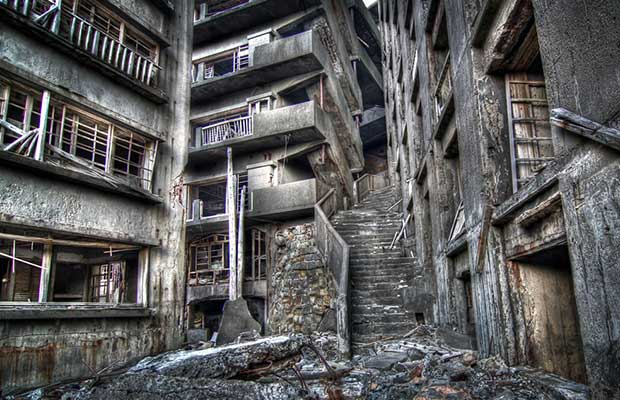


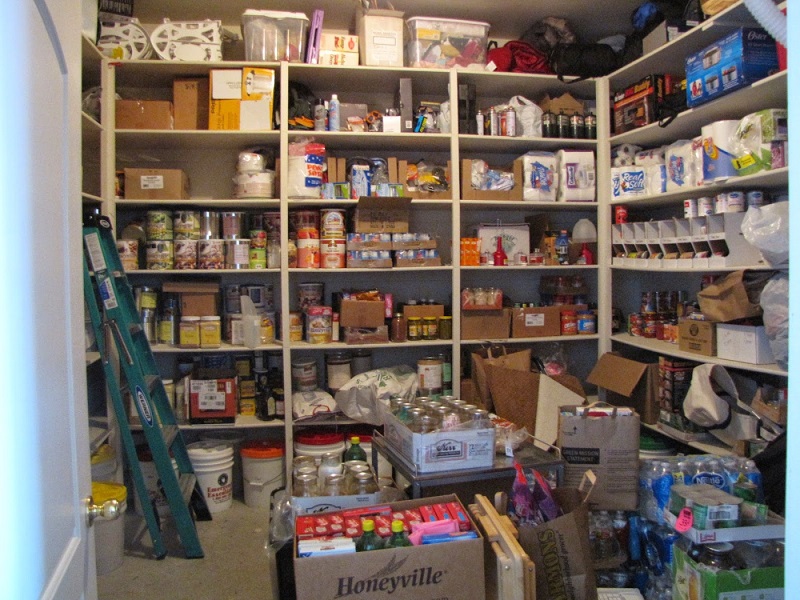
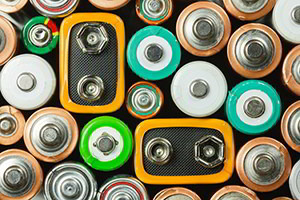
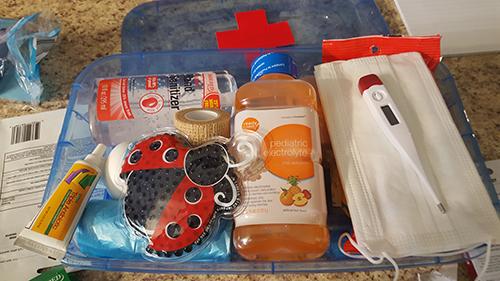
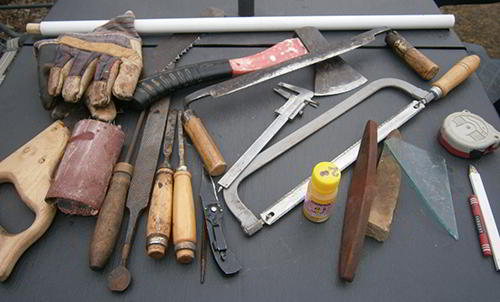
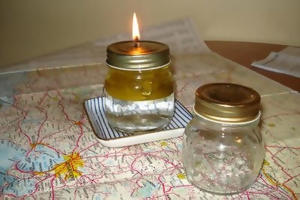
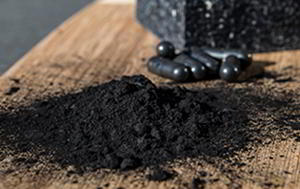

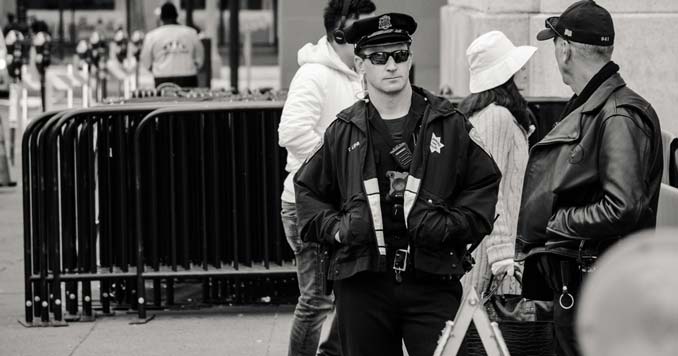



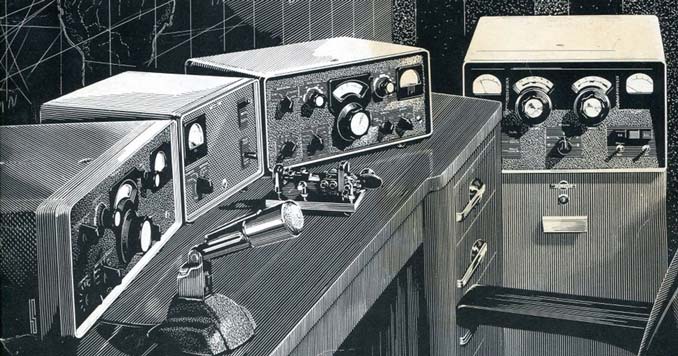

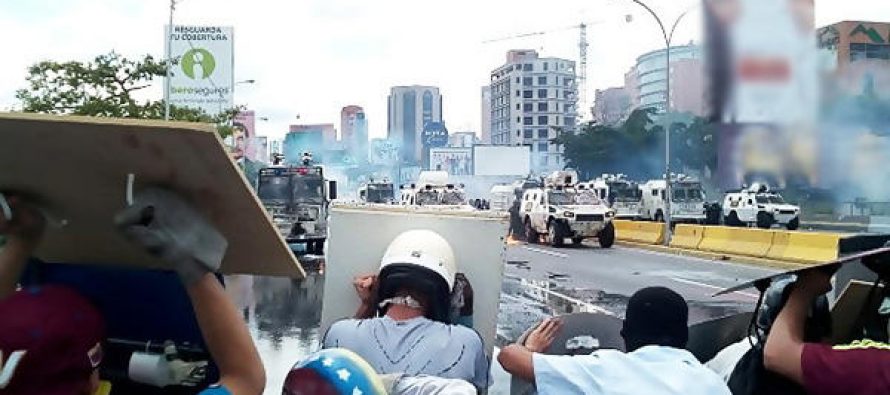


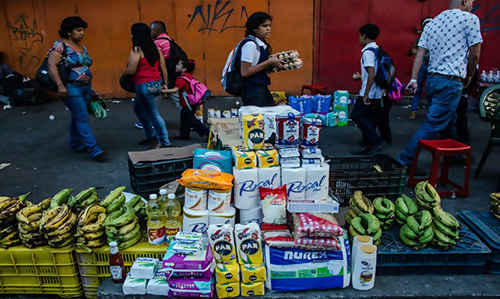

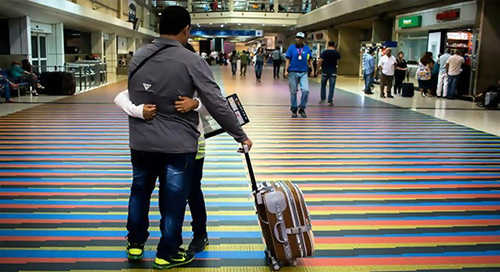


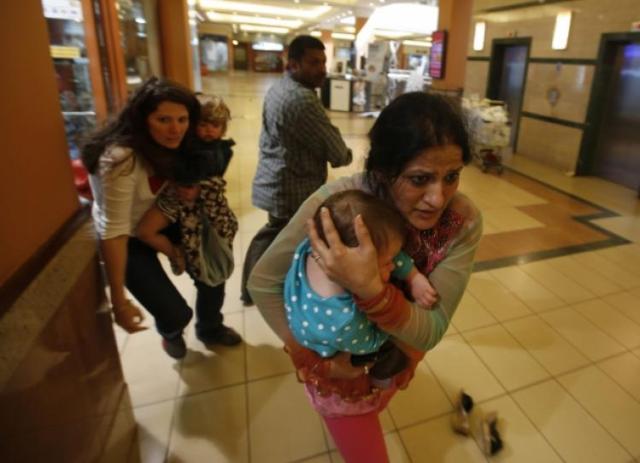
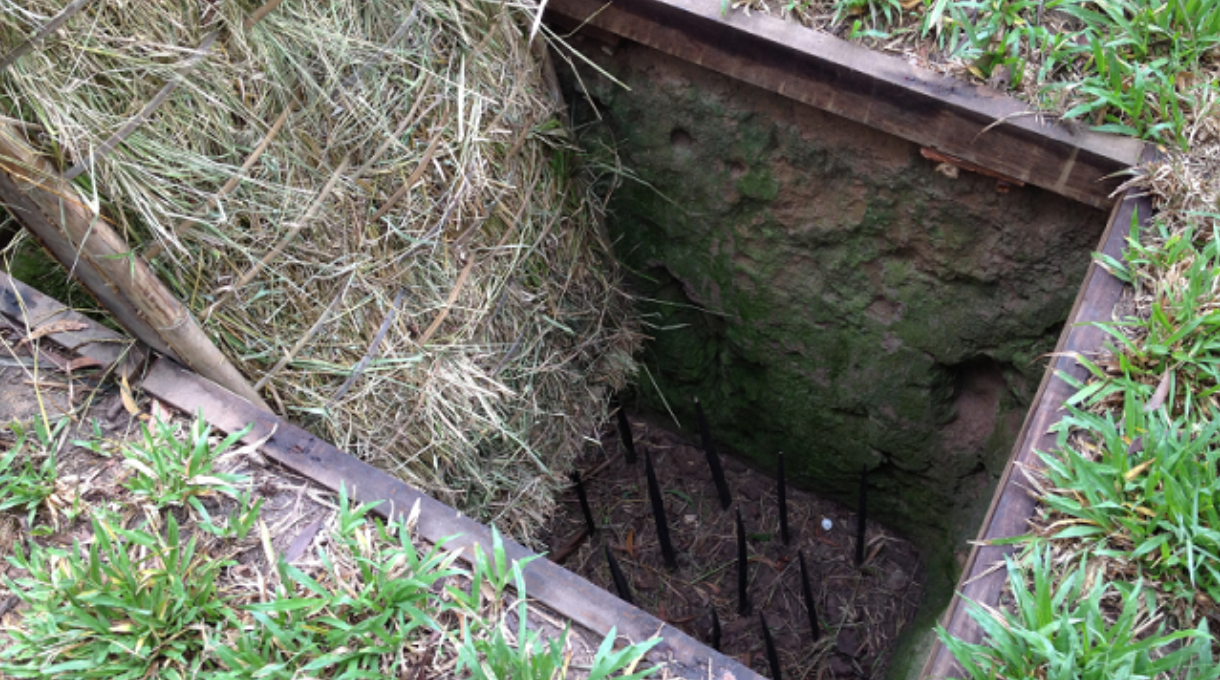


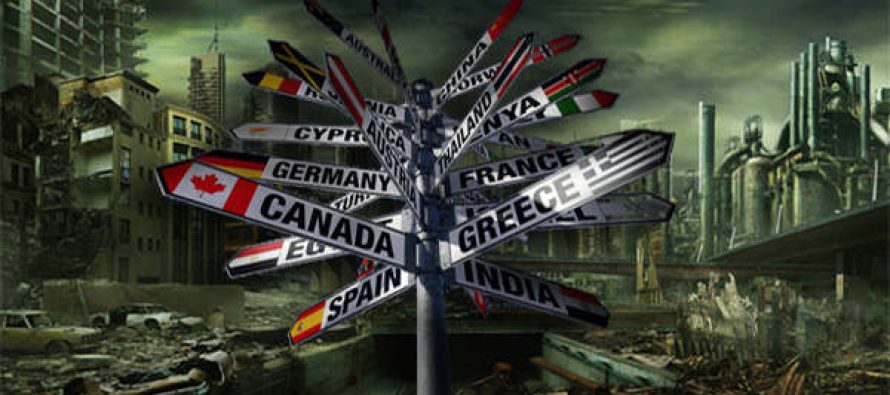
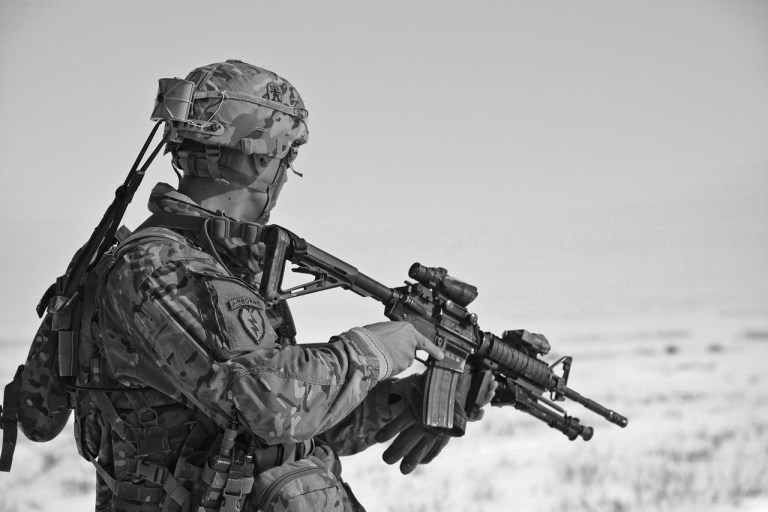

 SHTF
SHTF 