The simple truth of the matter is that if there actually is a major crisis or disaster that leads to a prolonged societal collapse in the US, there really isn’t going to be a “Good Place” to be. So, what we are looking for is the highest level of least bad we can achieve, and with careful planning and attention to certain factors it is possible to achieve a situation which is not only “survivable” but actually livable in even the worst case scenario. Obviously, where you choose to live will have an impact on your preparedness plans, so always keep that in mind.
First, you want to pick a place that allows you to maintain a normal, mainstream life before life as we know it comes crashing down. A lot of us are of the mindset that something catastrophic is inevitable, and history teaches us that this is indeed the case. I am becoming increasingly convinced that this is a sooner rather than a later probability, however it could conceivably still be years away. So in the meantime, you want to have reasonably convenient access to things like employment, education, cultural and extracurricular activities for your kids, modern medical facilities, shopping, and all the trappings of modern life. It is not yet time to run off and live in a cave isolated from the world (If that is your mindset, it doesn’t make you “Wrong”. But it doesn’t make you a prepper either. It makes you a hermit!).
However, when the fall arrives, large population centers are going to be rather dangerous on a number of levels. So it is wise to remove yourself from large cities. My suggestion in order to be able to have the best of both worlds is to choose a location in a rural setting between 70 and 100 miles from a small to mid-sized city. This distance allows you access to all the luxuries and conveniences, is within’ a manageable commuting distance if you are tied to a professional career, but it also provides a fairly substantial degree of insulation from the worst of the Urban Dangers that will crop up quickly once the balloon goes up.
You also want to choose an area where food is produced, and where you can start making food producing improvements to your property. In short, you want good soil and enough water to grow gardens and water live stock. You want an area where livestock is produced and sustained on natural grazing and not in feed lots. You also want to be absolutely certain that there is plenty of easily accessible water for your drinking, cooking, and sanitary needs. There are many isolated areas in deserts and high mountains, but there is a reason these places were never settled extensively. That reason is that it is hard to come up with enough water to grow things, and the climate in many cases is too extreme to live in comfortably year-round. In a prolonged survival situation, you don’t want to be dependent on cisterns and extremely deep wells, or on technology dependant delivery systems.
You will want to find an area where like-minded people live. This isn’t as hard as it sounds. Most rural areas still have core values of self sufficiency. They are also pockets of old school knowledge that has been lost in the larger world. In an area like this, if you have something to contribute it will be much easier to find a group to band together with for mutual defense and support when the time comes. You will also find that in such areas there is a strong gun culture, and you will neither stand out nor be the sole armed protector should the need arise, and you won’t be saddled with a bunch of suddenly armed newbies that don’t have a clue, country boys and girls know how to use their guns!
Another consideration is proximity to nuclear power plants, proximity to military installations, distance from potential targets in a nuclear attack, and things of this nature. As concerns the power plants, all I’m going to say is Fukushima. As to military installations, the concern is always martial law, confiscations, conscriptions and so on, all the FEMA camp nightmares we have envisioned and theorized about. I am not particularly concerned about nuclear war in the classic sense, and feel that EMP type weapons are a far more likely and devastating possibility, but terrorism is always a consideration and those guys are nuckin’ futs and very hard to anticipate, so being too close to potential targets detracts from an areas desirability.
So, where are the best places to be?
1.My personal favorite is the Ozarks region of Missouri, Arkansas, and Oklahoma. This region provides many areas that are about the right distance from cities, have a good water supply, strong rural and conservative traditions, agricultural activity in the form of farming and ranching, and a history of subsistence farming. I wound up in the Ozarks almost by mistake, but have found much to love about the region, and many positive attributes from a prepper’s perspective. There are a lot of preppers here, so finding likeminded folks to bond with is not difficult.
The Ozarks region, in green, is my top pick. Some of that is just personal preference, but there is much to commend the Ozarks from a prepper’s standpoint.
2. My second Choice isthe Appalachian region with a strong preference for the Great Smoky Mountains of North and South Carolina, West Virginia, Kentucky, and Tennessee. These regions offer up similar benefits to the Ozarks region, and offer up a lot of good choices to live a nice life today and weather the potential coming bad times. Again, be sure that a given location meets the other criteria, particularly the distance from major population centers. The portions of the Appalachians passing through the North East may be a less desirable idea due to proximity to many larger cities, but even here pockets of desirable location can be found.
The red areas are best, green and blue areas are pretty darn good, but I would steer clear of the yellow.
3. My Final top pick is the Cascade Mountains of Washington, Oregon, and California. Once again, there are plenty of spots in this region that meet the criteria. There are a lot of remnants of rural culture and heritage, and the climate is quite favorable for subsistence gardening. You have to be careful on the west coast though, there are large populations of liberals who won’t like your guns and have more of a dependence mentality than an independence mentality. If you are able to do so in advance, check out the attitudes and demeanor of local residents, if there is a core of “Old time Families” that is a plus, if there is a large population of relocated urban Californians, that is a big minus. If there is a large Hippy population, don’t write it off too quickly, many Hippy Types are pretty dialed in on the preparedness, self sufficiency, and Libertarian principals (It’s that old “don’t judge a book by its cover thing!).
My Final advice is to take a look at a precipitation map of the US. This will give you important clues to suitable locations. With adequate average rainfall, you need only look for oplaces that meet your other criteria to be fairly well assured that you have found as good a spot as any to weather the storm in a SHTF scenario.
All other criteria being met, the areas in greens and blues are your best bet in a SHTF scenario.
These are the best tips I can offer. Do you have another good option in mind?
Pick a spot and get prepared. BUT (all caps for a reason!), don’t let the prepping rule your life so that you are living out of fear! You can find a place that lets you live a normal, modern life but still allows you to be ready when things get really bad.
Preparing to survive in a post-SHTF world is challenging. More than anything, we have to realize that we’re preparing blind. We don’t know what sort of disaster we’re facing or what the post-disaster world is going to look like. With those two pieces of information missing, it’s hard to know exactly how people will react and what they will do. Therefore, we must prepare for the worst.
There is a wide-ranging assumption that public servants will abandon their posts. I would have to say that this assumption is totally unfair. We live in a hurricane zone and my wife is a city employee. She and her co-workers are required to agree that they will stay on the job, protecting the citizens of the city and keeping city services running, both during and after a hurricane. While a few might abandon their posts if things get bad enough, most seem to be people who will follow through on that requirement.
But what about a worst-case scenario? What about in the wake of an EMP or other grid-destroying event, which would result in a true breakdown of society and the banking system; a situation where they would no longer be paid to do their jobs?
That’s a difficult question. For some, like my wife, their positions probably wouldn’t exist anymore. But the real issue here is emergency workers and law enforcement officers. We would greatly need their services in the wake of such a serious disaster. Would they stay on the job or would they feel they had to abandon their posts to care for their families?
There’s really no way of knowing the answer to that question until the time comes. It is a very individual question, so I imagine that some will stay, while others leave. Whether they stay or leave will largely determine whether they are friend or foe.
The Cops Who Stay on the Job
Police officers tend to be highly disciplined individuals, much like soldiers. In fact, many start out as soldiers, then move to law enforcement when they get out of the military. As such, they are largely people with a high regard for the law. Oh, there are the few bad apples; but despite stories saying otherwise, there aren’t many of them.
Those who stay on the job will be concerned with maintaining law and order in the worst of circumstances. They will also be subject to the politicians who are still in place over them. This means that if those politicians declare martial law, they will most likely enforce martial law, unless they believe that to be an unlawful order.
This could get sticky. As we saw during Hurricane Katrina, declaring martial law would probably mean they would be confiscating guns as well. That would put the police in the position of appearing to be the enemy in the eyes of any Second Amendment supporter. Whether or not they actually became an enemy would depend on how you, I and other gun owners would react to them. If we use force to reject their orders to turn over our guns, they will use force in response. That makes them our de-facto enemies.
The Cops Who Abandon their Posts
Some police officers may choose to abandon their posts, especially if they feel that their families are in danger. In that case, the question is what they will do to protect and care for their families. While there are very few bad cops out there, there is always the possibility that a cop will turn bad in such circumstances, out of desperation to take care of their families.
These people will be dangerous, because they will be able to present themselves to the public as law-enforcement officers, when in fact they are acting like criminals. There could even be some cases in smaller communities, where the police take over, much as warlords take over in times of anarchy. Should that happen, the police in question would be extremely dangerous.
It would be our duty, in such a case, to stand up against the police. But here’s the problem. How do you tell if what they are doing is in the public interest, or just in self-interest? If they are acting in the public interest, our duty is to support them, so we need to be sure they are the enemy, before treating them as such.
The National Guard
If military forces are called out to help gain control, it will be the National Guard, not the active military. US law prohibits the use of US military forces within the borders of the United States. Even if politicians in high places wanted to use the regular Army, it is doubtful that Army officers, all of whom know that prohibition in the law, would allow it.
But state Governors can call out the National Guard to help law enforcement in maintaining law and order. It’s not unusual for this to happen in the case of natural disasters. I would say that we should expect it to happen in a true SHTF scenario.
National Guard forces are US Army reserve soldiers and formations, which are “owned” by the governors of the several states. They serve a dual role, both as state owned military forces and reserves for the federal forces. If called out in a disaster situation, they could serve either to support law-enforcement or to provide disaster relief. In either case, they would be armed.
Should martial law be declared, it is highly likely that the National Guard would be called out. If guns are confiscated, they are the ones who would most likely do the confiscation. They would probably be as polite as possible about it; but if they decided to obey that order, they would do their best to fulfill it.
However, the National Guard, like other military forces, is made up of predominantly conservatives. There’s a very good chance that they would refuse an order to disarm the population. Military officers swear an oath to uphold the Constitution and they would likely see the disarm order as a clear violation of the Second Amendment. As such, it would be their duty to refuse that order.
UN Troops
Of all these options, UN troops is the most dangerous. Any decision to use UN troops would have to be made at the federal government level. Were such a decision to be made, the troops which would be brought in to help maintain civil order would not be American troops. They would be unfamiliar with our culture (other than what they had seen in movies) and unfamiliar with our laws.
To these troops, a firearm confiscation order would seem perfectly reasonable, especially when you consider that they would probably come from a country where they don’t enjoy our Second Amendment protections. There would be no appeal to them on the grounds of our Constitution.
Should this happen, refusing an order to turn over your guns would be dangerous. The only thing that would protect any of us is the fact that there is no federal gun registration. Even so, there are states which require a permit to own guns, as well as concealed carry licenses which many of us have. That would give them a starting point for where to look.
Getting into a battle with armed troops is foolish. In such a situation, the only practical recourse is to hide all your guns where they won’t be able to find them, with the exception of a few, which you could then allow them to confiscate, making them think you’ve obeyed the order.
Regardless of the specific situation we would end up encountering, chances are that any police or military forces which were still in operation, would be there as part of whatever government managed to survive. Unless such forces decide to go rogue, we can count on them being there to help.
That doesn’t mean they’ll be our friends though. Unless you know them personally, they will look on you with suspicion, just like they will everyone else. Anyone carrying a weapon openly will be suspect. That doesn’t mean that they’ll hassle you, take away your weapons, fire upon you or arrest you; it just means that they will be watching to make sure that you aren’t a problem that they need to deal with.
The best thing you and I will be able to do in such a situation is to keep ourselves below the radar, so that we aren’t noticed. If we are not noticed, hopefully we will be left alone.
Should orders go out to confiscate any supplies that are stockpiled, it would probably be a good time to put our bug out plans into effect. Hopefully, we’ll all have a cache of supplies elsewhere, so that when we lose the supplies that we have stockpiled at home, we’ll still be okay.
Our panel of experts answers the age-old question “If you could only grab one gun when SHTF, what would it be?”
The question is pretty commonly heard at gun shops, barbecues and shooting ranges. Every shooter knows it, and every shooter thinks about it. What gun would you choose if you could only have one gun? It seems simple, but experts and enthusiasts alike know how difficult it can be.
The question gets a little trickier when we add a caveat: What if it’s during the apocalypse? Now you have to consider ammunition; if you run out of ammo, will you be able to scrounge some up? What about hunting and self-defense?
Answering this question can be difficult, but that’s why we’ve assembled an assortment of industry experts to offer their opinions. On top of learning more about each of these gurus, these answers can also help you formulate your own.
During a SHTF situation, pain could become an annoyance for some, but unbearable for others.
If doctors are scarce and medicine becomes even scarcer, this one little weed, found all over North America and similar to morphine, could be a saving grace.
Nick Collier
Affiliation: DoubleStar Corp.
Position: Senior Executive, DoubleStar, Training Academy Instructor
SHTF Gun: AR-15
I’d choose an AR-15 for an SHTF situation. That’s an easy choice. I have had this conversation many times with industry associates as well as family members and friends. With the thousands of variations available, the AR-15 is the best choice. My decision is based on the following: training, reliability, ease of use, size, and ammunition.
I have spent ample time training on this firearm. I feel like I would be able to handle the weapon in a variety of situations. Whether I am in a rural setting taking distant shots or a densely populated area, the AR-15 is capable of kill shots in excess of 300 yards, and it’s short enough to maneuver in urban terrain.
The reliability of the AR-15 is only as good as the sum of its parts. When built with quality components, the AR-15 will perform in almost any condition, as proven by our military and law enforcement over the years. I adhere to the “buy once, cry once” principle when buying gear. Go ahead and pay for the good stuff and you won’t have to buy it again.
Ease of use is another big factor. Not everyone is a trained firearms enthusiast, so you may encounter situations where you are unable to fire and need to teach someone in your group to return fire or hunt for food. The AR is very basic and easy to use. My 9-year-old son has been shooting one since he was big enough to hold it up, and in my training experience, it doesn’t take much to get the average person up to speed safely.
The size of the AR-15 makes it easy to carry. If you have ever covered a long distance on foot, you know every ounce you are carrying counts. Moving through obstacles also requires a small, compact firearm. Any hunter can tell you that climbing over fallen trees and rough terrain is easier with a smaller, shorter rifle, and the AR-15 can be made short to carry and adjusted for the correct length of pull with collapsible stocks.
The last and maybe biggest factor is ammunition. The AR-15’s standard 5.56mm cartridge is big enough to put down small- to medium-sized targets with well-placed shots. Whether it’s a zombie horde or a whitetail dinner that comes into the scope, the 5.56mm cartridge can handle it. Carrying six to ten 30-round magazines on your plate carrier or in your backpack still leaves room for things like water, food and medical supplies on your trek without adding too much bulk or weight. Other factors include caliber conversions for larger ammunition and parts availability. The AR-15 is the most popular rifle in America, and it should be easy to find ammunition and parts while scavenging. For these reasons, the AR-15 is the ideal SHTF firearm.
Mike Detty
Affiliation: Mad Dawg Global Marketing, Inc.
Position:President
SHTF Gun: AR-15 carbine
Guns are tools, and each of them has been designed to perform a certain job. Unfortunately, an event of apocalyptic proportions can limit our choices, so the selection of just one gun is extremely critical. To me, this means choosing a gun that has a great degree of versatility. My pick would be an AR-15 carbine.
For many years I competed in USPSA competition and considered myself an above- average shooter, and I own many nice, custom 1911 pistols. But I have enough experience behind a carbine to know that no matter how much I practice with my pistol, I will never be able to shoot one as accurately as one of my AR-15 carbines. AR-15s are accurate while the 5.56mm cartridge is light on recoil, making this combination especially effective and easy to shoot for all family members.
Besides the precision of a carbine, there is also the capacity factor. Thirty-round AR magazines are abundantly available at bargain prices. My own home-defense guns all use 40-round Magpul 5.56mm magazines.
Flattop carbines are especially versatile and offer the shooter the ability to use folding backup sights, reflex sights or a scope depending on the task at hand. Free-floating handguards make it easy to attach lights, lasers, and other accessories to aid the shooter.
The AR’s modular design also makes it easy to switch uppers—i.e., convert the gun from a short M4-style carbine to a long-range precision rifle with ease. Guns can even be converted to hard-hitting calibers like the .458 SOCOM or inexpensive .22 LR.
The ubiquitous of the AR-15 makes its choice a logical one in a doomsday scenario. Parts, magazines, and ammunition should be easier to find with such a popular gun. Unwanted parts or accessories should also make for good trading fodder.
My own choice for home defense is an AR-15 SBR with a 7-inch barrel, a flash suppressor, and a red dot reflex sight. In the event of an unimaginable catastrophe where I can only grab one gun before I leave my home, I would feel very well protected with my AR-15!
Mykel Hawke
Affiliation: U.S. Army Special Forces veteran, survival instructor, author, star of the Travel Channel’s “Lost Survivors”
Position: Founder and Director of SpecOps Adventures and Training
SHTF Gun: Scavenger 6 by Ralston Arms
Like any skilled person, I prefer to use the right tool for the task. However, sometimes you have to make do and improvise. As a survival guy, I live with a long machete, large, medium and small knives and a backup. The same principles apply to my weapons; I have sniper rifles, shotguns, AR-15s, pistols. But if I must choose just one weapon, I want the one that will give me the biggest bang for the buck, which means it has the most utility and versatility.
So, for me, the best all-around weapon to carry in a bug-out situation would be the Scavenger 6 by Ralston Arms. Designed by one of the most creative survival inventor/designer guys I’ve ever met, Tim Ralston, it’s a weapon that can shoot 21 different calibers. In a survival situation, you never know what kind of ammo will be available. It’s very likely you’ll sooner or later expend whatever ammo you have stored and you can’t always carry all the ammo with you, but if your weapon will shoot whatever is around, you’re well ahead of the power curve, and in a crisis, that could be the difference between surviving and pushing up daisies.
Jared Hinton
Affiliation: Vista Outdoor
Position: Communications Coordinator for Firearms & Ammunition
SHTF Gun: Savage 11 Hog Hunter
I’m a bolt-action fanatic, and a gunsmith first. Somewhere deep down inside me, I still believe that the autoloading firearm is a passing fad; lever actions, bolts, and revolvers are simple mechanical mechanisms that still rise to the top of my list if SHTF. Don’t get me wrong—I play with the AR platform, and I’ve assembled more ARs than I can count. The AR-15 is a great option if you expect a firefight. My primary concern is a simple rifle that anyone can operate and maintain should I become immobilized. Backup iron sights are mandatory. If anything happens to the optic, I can’t be stuck guessing where I am shooting. I need to be able to harvest game while having the ability to stop two-legged varmints. No excess hanging off the gun, waiting to get caught in the brush while moving. Simplicity.
I value the ability to make one shot matter, and believe the Savage 11 Hog Hunter rifle in .223 Remington would be tough to beat if things got bad in a hurry. The Model 11 Hog Hunter comes in at 7.25 pounds, so it’s no flyweight, but I’ll take the extra weight of the medium-contour barrel for better off-hand control on target. Pre-threaded for a suppressor, the medium-contour barrel won’t submit to point-of-impact shifts that a sporter-weight barrel will with a suppressor out front. I’d top the rifle with a Weaver Classic 1-3x24mm optic in Weaver rings. Light, simple, reliable and the adjustable LPA sights ensure I can hit what I’m aiming at no matter the situation. With an optic, I can keep the entire package under 10 pounds, which is a reasonable threshold for days on the move.
Moving parts and reciprocating mass are more likely to wear, raising concerns over long-term maintenance. Autoloaders have a tendency to make a person waste ammo with extra trigger pulls. The Hog Hunter is compact, made to be hauled through the stuff no one wants to move through, precisely where I’ll be lurking. The Savage action is extremely strong, and should I come across ammo that is questionable, I know that the chances of the action failing are all but nonexistent. The zero-headspace system of the Savage barrel nut and floating bolt head give me a 100-percent reliable lockup that guarantees maximum accuracy and safety.
By choosing the .223 Remington as my caliber, I can carry a high volume of ammo. I need to pack as much ammo on my person as possible. While we’re at it, make it 69-grain Federal Gold Medal rounds; I need to know I’m hitting exactly where I’m aiming. Federal’s Gold Medal Match ammunition is sufficient to engage targets out to 600 yards while I make evasive maneuvers. It also doesn’t hurt that I have a large stockpile of it cached at the farm. It’s not designed for expansion, so it doesn’t excessively damage rabbits, pheasants, and vermin that I may need to eat. I also have a decent supply of Fusion ammo stashed around; the 62-grain bonded bullet is more than sufficient for the biggest Minnesota deer I’ll encounter.
If SHTF, my goal is to avoid a close-range confrontation. I don’t need to eliminate most threats—I just need to slow them down long enough for me to get out of the area. Being discreet is my go-to plan, and getting to and holding our farm ground would be my top priority. The Model 11 Hog Hunter is versatile enough that I could trust my life with it when the going gets tough.
Preparedness Hacks: Once a nuke is heading your way, you might think that there isn’t much left to do, but you would be wrong!
If SHTF, I can assume that I’m not expecting a typical self-defense scenario, which our daily-carry pocket dump anticipates in these pre-apocalypse times. Instead, I have to assume that we can expect multiple encounters with multiple targets. Since my first choice, air support, isn’t an option, I’m reduced to choosing only one gun.
Whatever I choose has to accomplish three goals: have adequate stopping power against multiple targets, be easy to carry with lots of ammo and, given the likelihood of a target rich environment, be common enough in caliber to have a reasonable expectation of finding more ammo when necessary. The multiple-target expectation means that for me, I need the semi-auto capability. It also needs to be maneuverable both indoors and out. I think an SBR is just the ticket here. Assuming there is no government at this point, an SBR won’t require a tax stamp—just a hacksaw.
Caliber-wise, I like the .22 LR because I can carry lots of ammunition with me. Unfortunately, I have to find that ammo first and haven’t had very good luck doing that for several years. I know bunches of people are hoarding it in their basements, but if I try to scavenge it from there, I’m very likely to become one of their targets. Let’s say that the .22 LR won’t work due to ammo availability, and we don’t even need to consider stopping power for this one. The 5.56mm and 9mm calibers are going to be the most commonly encountered rounds. They are close enough to the same overall bullet weight that we can call choosing one over the other a draw. For stopping power though, the 5.56mm NATO has to get the nod, assuming I can come up with something other than FMJs, but that’s not a guarantee.
The 5.56mm gives me more range over the 9mm, but I’m more concerned with multiple close targets, so a 9mm carbine or submachine gun is probably going to be my go-to gun in this scenario. It’s got plenty of magazine capacity, good stopping power with the defensive loads most commonly found in the caliber, and it generates low recoil. The 9mm is lighter in weight than a 5.56mm carbine and with a folding stock, and it’s easily concealed. Some might accuse me of being a little biased here, but my top pick has to be the CZ Scorpion EVO for my SHTF gear bag. The Scorpion is fast and reliable. Add a red dot and a suppressor and it’s even better.
In the event of a true SHTF situation, we must accept that our “normal” day isn’t so normal. If I am limited to taking just one firearm to help me solve problems in an SHTF environment, it’s going to be a rifle.
In my eyes, it is hard to beat the all-around qualities of a good AR-15 carbine. My personal favorite for “the one” is a modern interpretation of the DEVGRU “RECCE” carbine. This upgraded AR-15 has a medium-contour, 16-inch, stainless steel, match barrel; a slim, 15-inch handguard; a muzzle device to accept a suppressor; a collapsible buttstock; and a match trigger. When paired with a good optic/ammo combination, you now have a very effective platform to deliver rounds accurately on target at any practical distance.
Topping off the carbine would be a Nightforce 2.5-10X riflescope, attached to a Nightforce Ultralite Unimount. This piece of glass is a perfect all-around optic that enables close/fast firing at low power, and up to 10X power for target identification and shooting at longer-range targets. Quality ammo with heavy 69- to 77-grain projectiles or a premium- the bonded bullet would be fed through the rifle for the best balance of accuracy and maximum terminal effect downrange.
The moderate weight and overall handiness of this package make it easy for such a combination to accompany me on many trips hunting for deer, ridding fields of prairie dogs, competing in field/action rifle matches and countless trips to the range. The carbine is not too heavy to carry in hand or in a sling and is a good size to stash in a vehicle. I can deliver precision fire out to 600 yards with reliability (and a little farther on good days), but also engage targets at CQB ranges with ease. Other qualities to like about this setup are the plethora of magazines available, light recoil, ease of operation and perhaps most importantly, reliable operation. As higher-level maintenance or repairs become necessary; the parts availability and limited tools required make it an easy task for a competent person to handle.
Additionally, lights, lasers, bipods, night-vision devices and a whole range of other accessories can be added or removed to suit a particular use or environment. Chambered in 5.56mm NATO, this setup can also accommodate nearly any .223/5.56mm ammo one had stashed or had to scrounge.
If things go seriously wrong in my part of the world, my anticipated threat levels are going to go up, and my armament levels will go up to match. While a handgun provides an easy solution to carry all day, the energy on target, effective range, ammunition capacity and modularity of an AR-15 rifle cannot be ignored. My preference for an “accurized” carbine provides a balanced set of features for nearly any use, from hunting to defense or even limited offense if needed. I like having options to deal with problems, and my “RECCE” gun would be the one to grab.
Robin Sharpless
Affiliation: Redding Reloading
Position: Executive Vice President
SHTF Gun: Marlin 1894C
This is a very fun question to answer. It gives insight into both professional and personal preferences. Many will look at personal interest and or a favorite cartridge. Others will think about the sexiest gun to have during this time. For me, I’ll be driven by practicality.
As an avid hand loader, my decision will be driven by something that is effective on wild game for food and predators, be they two- or four-legged. But it also must conducive to being hand loaded and offer real versatility. Therefore, my choice is a .357 Magnum lever-action rifle, the Marlin 1894C. With its 18-inch barrel, it can generate enough energy to kill a deer, disable an attacker and handle coyotes but is also compact and convenient enough for easy carrying. Mine would sport a peep sight that works very well for my eyes, and the rifle’s overall handling characteristics make it a good choice for instinctive or point shooting when necessary.
From the reloading front, the choice of the .357 Magnum allows for the use of a variety of powders and, most importantly, the ability to simply and easily cast bullets for future use. Hopefully, I’ll have a large stock of good projectiles on hand, but if that’s not the case, this caliber is a simple one to cast bullets for, regardless of what that dark future may hold.
Recommended article:
Since the .357 Magnum has a straight-walled case, I won’t need to have lube for sizing. It is extremely easy to load for, and long case life is positive. Additionally, in a future where we may have to scrounge for components. With that in mind, .357 Magnum and .38 Special brass is going to be relatively easy to find. Through creative loading, we can create a range of offerings from quiet, low-velocity, low-flash defense loads to heavy-bullet loads capable of taking a deer-sized North American game for food. While I would not tackle a grizzly bear, I would have confidence with this rifle on a black bear, which, by the way, could produce lube for my cast bullets if needed, with a heavy bullet and slower powder.
Bill Wilson
Affiliation: Wilson Combat
Position: President and Founder
SHTF Gun: Wilson Combat Tactical Lightweight .308 (rural), Wilson Combat AR9B (urban)
I think there are two different answers to this question based on where I am geographical. If I’m living on my ranch in rural Texas when SHTF and I can only have one firearm for the foreseeable future, my pick would be a lightweight .308 Winchester AR with a 14.7-inch barrel. I’d hopefully also have two additional upper receivers—in 6.5 Creedmoor and .338 Federal—with 18-inch, crowned-muzzle barrels for longer-range defense and more killing power for hunting. I’d really feel pretty naked without a handgun on my side since I carry one 24/7, but the question was one gun, and a .308 Winchester AR would handle most any defensive situation I would likely encounter in rural Texas and still put meat on the table as needed. Also, .308 ammunition is pretty common in this neck of the woods—not that I don’t always have plenty on hand!
My setup would be as follows: I’d choose a Wilson Combat Tactical Lightweight .308 with a 14.7-inch barrel and a permanently attached Q-Comp flash suppressor. I’d add a top-quality optic like a Leupold 2-12x42mm VX-6 riflescope as well as a Streamlight TLR-1 HL weapon light and a sturdy Blue Force Gear Vickers two-point sling.
If allowed, my extra 6.5 Creedmoor upper would have a mid-weight, 18-inch, crowned-muzzle barrel and a Leupold 2-12x42mm VX-6 scope. The .338 Federal upper would have a light “Hunter” 18-inch, crowned-muzzle barrel and the same scope.
If I am in a large city on business (I would never live in a city!) when SHTF and I can only have one firearm for the foreseeable future, my answer changes. For this one, I’m assuming total society breakdown and chaos in the city. For that, the need for concealed carry is a thing of the past. That being said, I’d go with one of our new AR9B 9mm carbines that uses Beretta 92/M9 magazines, which I normally take with me when I travel. In a true SHTF situation in an urban area, I want to be prepared for multiple assailants at relatively short ranges.
A light and short carbine that is easy to carry and deploy in tight places would be very handy. A 9mm carbine would also allow me to carry a lot of ammunition, and use subsonic loads, it would be almost as quiet as a suppressed 5.56mm. An additional plus would be the very likely chance that eventually I would be able to acquire a 9mm pistol, and ammunition compatibility would be a good thing.
Wilson Combat AR9B
For this setup, I’d choose a Wilson Combat AR9B with a fluted, 14.7-inch barrel and a permanently attached Q-Comp flash suppressor. I’d use a Leupold 1-6x24mm VX-6 scope and an Aimpoint CompM4s, both in QD mounts, as well as a Streamlight TLR-1 HL weapon light and a Blue Force Gear Vickers two-point sling.
A lot of the popularity of firearms is due to the fact that anyone can use them effectively, not only the strong and agile. The young, the old, men, women and child can take up firearms in defense of home and family and do so effectively.
Dealing with this subject has been quite difficult for me. Both the concept of the state stripping you of everything and the SHTF concept have as many backgrounds as diverse interpretations, so trying to approach this from a single point of view is a complicated task.
In my country, Venezuela, after 20 years of “revolution,” we have bottomed out and learned to live in situations we never imagined (so much so that I was able to write an article on survival techniques I never imagined myself using on daily basis).
It’s not that the governments before Hugo Chavez were much better. But there was a much more stable political and economic situation with access to the international market.In 1999, when Chávez’s government was instated, oil prices were the highest in Venezuela’s history. The newly born Communist policy in the country was hardly felt and had very few repercussions on the professional citizens who lived on a monthly salary.
That’s probably why those first few years didn’t really feel like something was taken away from us. In addition, the newly elected president had a 60% popular approval rating and promised endless opportunities for the neediest people.
One of the first economic policies was the implementation of exchange control, currently in effect. Any operation with foreign currency was managed by the state. Later came the control of the prices of basic products, which caused the disappearance of those items and initiated a black market that is also very much in force to this day.The real problem began in 2004 with the accelerated decrease in oil prices that translated into a lower income for the government. Remember that we are talking about an oil-reliant country.
The decay was soon seen in many aspects. There was no longer maintenance on public roads, and public services failed often until reaching the point of constant failures of electric service, even for days.
The public health situation is also getting worse and worse. As a health professional, I have seen this deterioration for the last 10 years.
I am an oncologic breast surgeon. In Venezuela, breast cancer is the main cause of death from cancer in women. However, in the hospital where I work, the most important hospital in Caracas, there are no basic services for this issue. No chemotherapy, the radiotherapy equipment has been inoperative since 2015, and surgical procedures are suspended every week.
For me, as a doctor, it is frustrating not to be able to help my patients in any way. Just last week two breast cancer patients who were going to the operating room were suspended for the fourth time in a row. This time the anesthesia machine was failing.
The purchasing power of the Venezuelan citizen also decreased. It seemed to have happened from one day to the next, but if you look at the political situation since 1988, the decline took a long time; all that was left was to hit rock bottom.
Finding ourselves in extreme situations makes our defense system act in a primitive way. This means activating the fight or flight response at any time within any context—and yes, the state takes advantage of that.
The state will rip you off, but it doesn’t happen all of a sudden. There are a lot of logistics; it takes a long time to develop the kind of policy that makes citizens totally dependent on the state.
You start by losing something unimportant, like some kind of monetary bonus now given to you as government-run grocery store credits, and you end up losing your freedom and all kinds of rights, including freedom of speech and protest, but these issues are so extensive that they require an article of their own to explain them properly.
The state has taken charge, with great success I must say, and you are now living in fear of the so-called public authorities, meaning police and military police, since they serve as pro-government forces of repression.
Many of us have lost the incentive to go out and protest. We did it for more than 10 years. However, I have seen the evolution of the manifestations before and now.
I remember 2003 when repression was minimal, almost non-existent. Today many friends who still have the strength to continue have gotten gas masks in order to defend themselves from the hundreds of tear gas grenades used by the authorities that should be defending people.
In any public protest, savage repression is a constant. That violence is what we Venezuelans have become used to.When there is no public or social security, when the devaluation of the currency is occurring on a daily basis, and when you don’t know if the bakery on the corner is going to be broken into tomorrow, at that moment, the debacle has already occurred.
Defending oneself from these kinds of problems is as difficult as trying to explain them. Many have chosen to leave and seek a future in other countries. That way the state even strips you of your own country by causing you to become self-exiled.
I don’t blame them. We all have more than one family member or close friend who has been kidnapped or stolen from violently, and sadly, all we can say is “You should be thankful you weren’t killed”.
Personal security becomes a problem of epic proportions, to the extent that going out on the street is considered a risky activity—a risk to which, unfortunately, you have to get used to in order to live a normal life.Living in that state of continuous stress in which your rights are violated, in cities where, despite paying high taxes, everything seems to be in ruins, is part of that hopelessness that the state achieves in the individual.
Living in a place where a good monthly salary fora top executive, for example, does not reach $100 a month, is not easy, especially taking into consideration that a basic shopping list for a family of four can cost up to $140 monthly.
So the mismanagement of incompetent and corrupt civil servants results in the deep separation of three social classes: extreme poverty, which represents more than 80% of the population and is totally dependent on the government; the working middle class, which manages to subsist through one or two basic incomes plus the economic help of family members abroad; and those who do business with the government and can live in a very comfortable, ideal world that has nothing to do with reality.
Of course, there are exceptions to this, and some people have high incomes without being involved in dubious businesses.
It is sad to see how fourth-level professionals, trained in the country, must leave in order to provide for their families.
I know it is not a unique situation in the world—it has happened and will continue to happen—but it is very different to read about it than to see it sitting in the front row or even being the leading character.
Nowadays it is the common denominator, and more and more qualified professionals and technicians step into the international airport in search of a better quality of life.That’s why there is a whole generation that has no kind of roots in their country and only waits for the opportunity to leave.
I think the worst part of all this is the desolation sown in all of us. It seems to be an endless story, with the political disqualification of opposition leaders, political prisoners, and many more vexations.
Writing all this is not easy, but it makes me reflect. It is an exercise in introspection. Without a doubt, the state strips you of everything in its eagerness to stay in charge. That’s the way they do it.
There comes a point at which the only thing in your mind is to know if you will return home alive. Everything else is secondary. At that point, the state has already massacred you internally. You can never be the same again. I’m sure I am not.
Even if you are a person who is not involved in politics, an “apolitical” citizen, in this state of anarchy, you have to fix your position.
As Desmond Tutu said, “If you are neutral in situations of injustice, you have chosen the side of the oppressor.”
As a professional physician having always lived in a big city, I never imagined that at some point in my life, the social and economic situation of my country, Venezuela, would lead me to learn and use survival skills that I had read about but never even thought of applying.
Without being in a declared war or a formal armed conflict, we have experienced different situations of chaos for about 10 years in Venezuela. But in the last three years, the country has become a true SHTF scenario, where the only way to move forward is to learn how to survive.
I feel that the lack of food, clean water, and, at the lowest point of the situation, electricity, has given me new skills that have undoubtedly prepared me for any catastrophic situation.
After three years in this contingency, I can now share every situation that took me by surprise and the techniques I had to learn by doing.
There is no such thing as “too much” stored water
Water is one of the most important resources we need for life. Unlike other supplies, it is not interchangeable with another product, and to be ingested, it must go through a purification process.
I have never been prepared for a water shortage before. Now I know it is important to keep water stored safely in closed containers. If water is not drinkable, it must be purified before ingesting it since contaminated water can cause serious gastrointestinal diseases.
Water is not just for drinking but is used in many other activities, such as cooking and cleaning, so I had to learn some purification techniques that can be done at home.
One of the most popular techniques to decontaminate water is to boil it for three minutes. Purification tablets are also very useful, not that expensive, and easy to use.
Adding five drops of chlorine per liter of water as an emergency measure is another way to clean the stored water.
Grains are my friends
To eat properly, it is necessary to consume proteins, fats, and carbohydrates.
The moment I realized that animal protein was scarce—in addition to the fact that the electricity problems spoiled it—I had to investigate the nutritional content of other foods in order to keep myself well-fed.
Lentils are grains that are easy to store, non-perishable, and high in protein. Together with a cereal like rice, they make a complete meal that keeps us well-nourished and in good health.
Let there be light: candles, matches, flashlights, and batteries
After spending more than four hours without power, I began to worry. I had some candles saved, but I did not know where they could be. I also had a couple of flashlights, but I had removed the batteries to prevent them from being sulfated.
Candles and matches must be in several easily accessible places. Likewise, the batteries should be in the same place where the flashlights are kept, and we must be sure that they have a charge.
During this year, the country suffered the most serious electrical crisis. In several areas, there were blackouts of up to five days.
After a couple of days without electricity, the candles will not be enough, so learning to make oil lamps becomes a vital skill in this situation.
The lack of electricity can lead to a state of anguish that grows with the passage of time. It is important to do everything possible to minimize that effect.
Be prepared with medicines, but it’s better to learn from nature
Due to my profession, I am always very attentive about keeping basic medications, such as anti-inflammatories, analgesics, and antibiotics, in the cabinet.
When I had to live in an SHTF situation, my medical supplies became insufficient, and I couldn’t find any in the pharmacies or they were too expensive. So I had to learn a little more about natural medicine, its uses, and its benefits.
I must say that this is one of the most important things I learned during that time.
Many anti-inflammatory drugs and synthetic analgesics damage the stomach mucosa as a side effect. In situations of stress, there is a large production of acids in the stomach, so using drugs that further damage this organ is not the best idea.
Roots such as ginger and turmeric are excellent anti-inflammatories. They are easy to get and easy to store. Likewise, garlic is a potent analgesic.
In the case of presenting wounds or cuts and not having antibiotic ointments, honey, ginger, and cloves are foods that have scientifically proven antibiotic properties.
Chamomile and lavender are natural relaxants and help fight stress and insomnia.
No matter how big the supply of medicines we have, it will always be more economical, favorable, and easy to store the natural product, with equal and, in some cases, greater effects.
Cash
Banks have made life easier for us with the use of debit and credit cards. However, there are situations in which having a lot of money in the bank does not help much, and I learned it the hard way.
When there is an electrical fault, despite the fact that light and other electrical services have been restored already, the digital communication of the points of purchase become so affected that it is impossible to buy anything in this way.
For this reason, I understood that it is always important to keep some amount of cash for this type of contingency.
Take advantage of any time you get to replace supplies
Although during those years I did not have to be locked in a bunker without being able to leave, the feeling of confinement was quite similar. When, in spite of having the money, you can’t find what you need to eat or, despite having a private vehicle, you can’t move for lack of gasoline, the situation becomes desperate.I understood that in those moments in which there was an opportunity to replace the supplies I had at home, especially water and non-perishable food, I had to do it.
The situation in my country has improved. Although still not at the best economic and social level, and with many problems of scarcity and lack of some supplies, society has been regularized.
However, I appreciate the years that taught me these valuable lessons that I still apply.
The most important thing I learned was to be prepared for when an SHTF situation strikes again.
This guide below can help you in a survival situation
We do our best to prepare for the foreseeable future. Sometimes we even consider a future that is shrouded by the unknown. In doing so, preppers and survivalists have adopted the EDC or everyday carry modality that assures we have on hand all the things needed to address a crisis.
We have compiled a list of 12 survival items to carry with you at all times.
Virus Protection
Virus protection considerations are an EDC item that countries like Japan have long employed. During any seasonal disease, the Japanese people wear masks. This is culturally accepted there. It could become more normal here in the States.
Face Protection
After this pandemic we are going to see more of this in our own culture. Now, you should have a mask both to protect you from outside infection, and as well as to gain access to certain places.
It is likely that you will need a mask to access stores, office buildings, jobs, and state government buildings for months to come.
The 3-ply mask gives you great protection and allows you to slip in an activated charcoal filter. The other important benefit of wearing a mask is that it keeps your hands from your face and out of your mouth.
Hands Protection
While hand sanitizer might seem like something that has only been used during the virus, it is practical to carry. 80% alcohol hand sanitizer has been proven to protect against the virus.
It has been tough to come by, but we are seeing availability return. Small bottles are perfect to slip into a bag or pocket.
If not managed properly, rubber gloves can be worse than not wearing gloves. They do not protect you, unless you change them often and take them off properly. Still, most preppers have long had rubber gloves near or on their person.
Rubber gloves are most often part of a reasonable first aid kit. You might also carry an IFAK or Trauma Kit that will contain these gloves, too!
If you use them properly, rubber gloves can become a vital layer of protection between you and any germs that threaten to infect you.
Eye Protection
Touching your eyes, itching them, or even getting debris in them can be a serious problem. Eye protection is vital if you are dealing with a virus or disease.
Eye protection is also very helpful if you are dealing with things like a building collapse, high winds or other instances where dust and debris can enter the eye.
Even a simple pair of reading glasses in a hard case can be carried in your pocket or a small bag. If you anticipate being in an area where there are many infected people, lots of germs or the potential for debris and dust, goggles might be worth packing, as well.
Self Defense
There are many less than lethal methods of self-defense. However, a firearm is about the best single item you can carry to defend yourself and your loved ones.
After watching the London Bridge attack in the UK in 2017, where a van of knife wielding maniacs rammed people before emerging from the car and stabbing others, I realized it was time to carry a firearm. We would not be cornered and hacked to death.
Reload
If you do opt for a firearm and carry one that you practice with, than you should also carry a reload for that firearm. This is a magazine that is fully loaded for when you fire all the rounds in your primary magazine.
A reload for a handgun can be stored in a small bag, or even in the pocket of most pants.
Tactical pants are well made and designed for carrying reloads. Some can even carry 30 magazine reloads in the back and side pockets! Not my first choice, but a cool feature. Your reload is insurance so if you miss shots, are attacked by multiple targets or you are dealing with some other unforeseeable circumstance, you have more ammo on hand.
EDC Knife
I carry an EDC knife as a self-defense weapon, but I also use it as a tool.
Too many who are devoted to the concept of EDC, using your knife for utility purposes might as well be blasphemy. The argument is that the blade should be untouched and razor sharp, should you need to plunge it into someone.
Though I understand the concept, I still use my knife to cut things and open boxes. At the very least, you should carry a bladed tool as it can be very effective for a number of reasons, self defense being the rarest but most important.
Access
Access is one of the most overlooked aspects of prepping and survival. Access is particularly important when it comes to urban and suburban survival, but you could argue that the concept is important in all aspects of prepping.
At its essence, it is the question of getting in and keeping people out.
Multi Tool
The most notable tool for gaining access, as well as making simple repairs, is the multi-tool. The Center Drive by Gerber is a very interesting design with highly functional and durable tools. It is a tool that has really blown me recently.
Your multi tool will add a second blade to your EDC and give you the option to not use your EDC knife for utility purposes.
Pliers and bit drivers are also important for gaining and restricting access.
Multifunctional Utility Keys
The 11 in 1 utility key is one of the best tools on the market for access.
This is a collection of keys like the sillcock, that can open train and subway cars, open elevators, electronic control cabinets, electric meters and even aid in gas or water supply shut off.
These keys do much more, but those are some of the highlights. This key could be just what you need to have access to clean water in an urban environment, or to shut off gas in a leak. I carry one in my sling.
Lock
Another simple item to carry is a lock. A combination lock is perfectly fine and gives you the ability to turn a simple door or gate into a restricted area. I carry my combination lock mostly for my gym locker, but if needed I have a lock.
Light
Simply put, you gotta have light. As a warehouse inspector, having a flashlight was just part of daily business. However, I quickly realized that with light you can see an entirely different world, even in daytime.
Flashlight
When it comes to an EDC flashlight there are two criteria that you should consider: size and recharge.
Forget about dealing with batteries in your EDC light. About 6 years ago I decided I was going to recharge flashlights only.
USB compatible are the most convenient. They are still powered by batteries, but they are longer term rechargeable batteries. Trust me on this one!
I like a smaller flashlight. I am not looking to thump anyone in the head with my light.
First Aid
We simply cannot talk about survival items to carry all the time without mentioning first aid. First aid comes in handy even when you are not dealing with a survival situation. Sometimes people get hurt or don’t feel well and it’s good to be prepared for that.
Car Kit
The best thing to invest in is a quality first aid kit for your car. This can be an IFAK, a larger first aid kit or a trauma kit. I have created my own kit by piecing together:
Band-Aids
Pressure Bandages
Sheers
Gloves
OTC meds
Swat T
Activated Charcoal
Rolled Gauze
And some other odds and ends.
EDC Tourniquets
On your person, you might also want to carry a tourniquet. These are specially important implements that can be used to stop serious bleeding. Tourniquets will literally shut off the “valve” that is supplying the blood.
Tourniquets save lives and carrying one, and knowing how to use it, is an important piece of the EDC.
The items that you carry everyday should be tailored to your skills, needs and preparedness goals. Prepping is a very personal undertaking. Don’t take my list and make it religion. Rather, use it as inspiration for the development of your own.
I will warn you. Once you get used to carrying survival items, it’s hard to go back to the old phone, keys, and wallet program of daily carry.
Some of you might be thinking, “I’m a prepper, I won’t have to scavenge for supplies. I already have everything I need.” Maybe, maybe not. Even if you’ve been prepping for years, it’s still possible you forgot a few things. But even if you didn’t forget anything, you could still end up in a situation where you need something you never thought you’d need.
What if you have to take in a pregnant woman or a parent with a small child? You may have to go looking for baby formula. What if your mother’s prescription medications are lost or destroyed? You may have to go looking for replacement meds. What if a crucial piece of gear is damaged? What if you need parts for your shelter or vehicle? These are just a few possibilities off the top of my head. There are dozens of situations you won’t think of until you’re in them.
The point is, you might have to scavenge for supplies after the shit hits the fan. If someone’s life is on the line, you’ll have no choice. But before I explain how to scavenge, I want to clear up some confusion about the difference between scavenging and looting.
Scavenging is Not Looting
After hurricane Katrina, we all saw videos of people running down the street with arms full of jewelry and electronics. Were they scavenging or looting? I think that’s pretty clear. Looters are not looking for things they need to stay alive; they’re just taking advantage of the situation.
Looters know someone is going to miss the stolen items. They know the owner will eventually return and find out what’s missing. For these reasons, looters are no different from common thieves.
Scavengers are completely different. They only search for things after the end of the world as we know it, and they only take things that have been discarded or are unlikely to be missed.
There could be a situation where you have to take food or medicine that will be missed, but I believe this is justified if someone needs it to live. Taking food or medicine right out of someone else’s hands is another matter.
I know of some legalists who insist that stealing is stealing no matter the circumstances, but in my opinion, morality is not a simple list of do’s and don’ts. And frankly, people who are squeamish about morally gray areas will not do well after the SHTF.
Moving on, here’s how to scavenge after the SHTF.
Send a Scout
If you know the area you want to search, it’s a good idea to send a scout with binoculars, a radio, and a gun.
Scouts should use their binoculars to watch the area for a few hours and make sure no one is living there and that there are no bandits lying in wait. It might sound paranoid, but some people become very dangerous when there are no police to keep them in check.
The last thing you want is to get robbed or possibly killed while scavenging for supplies.
The radio is so your scout can stay in touch. If the area is compromised or not worth the trouble, the group’s leader can instruct the scout to return or to check another area. If you lose contact with your scout, you’ll know something is wrong and can send reinforcements. But the reinforcements need to be careful not to wander into a trap.
The purpose of the scout’s gun should be obvious.
When surveying the area, the scout needs to note any obstacles that might make the area more trouble than it’s worth. Examples include barbed wire fences, high walls, ditches, streams, and so forth. All these things might make it too difficult or dangerous to lug back supplies.
The scout should also note whether any buildings in question have been damaged by things such as bombs or earthquake. You don’t want the stairs you’re climbing to collapse or a ceiling to fall on your head while you’re digging through the rubble.
If you have local maps, you should study them carefully to figure out all the ways in and out of the area you want to search. Plan your route carefully, and know alternate routes in case your main route gets cut off.
You and your group will have to weigh the costs versus the benefits and the risks versus the rewards before searching an area. Is the thing you want to search for necessary to save someone’s survival, or is it just something that would make you slightly more comfortable?
Make a Plan
Once you’ve decided where to go and what to look for, you’ll have to decide who to send. Never send someone alone. He or she could twist an ankle or something and need help returning to camp. Also, there could be heavy obstacles or supplies that require at least two people to move.
And remember, one person is far more likely to be robbed or killed than two or more people. Ideally, you would send several people, but that depends on how many you can spare. You don’t want to leave children alone at your camp.
Your group should take a vulture toolkit with them. This is a kit with things you might need for scavenging, such as bags, cordage, lock picks, cutting tools, a siphon, water jugs, and so forth. I also recommend bringing respirators and goggles in case the location’s air is full of dust or smoke.
If you have several areas to search, you’ll have to decide the order in which to search them. It’s better to start further out and work your way back toward camp so you don’t waste energy carrying supplies farther than necessary.
If you know the heaviest items are going to be in a particular place, go there last. If scavenging your area is going to take several days or weeks, you should get a map and mark the locations you search so you don’t accidentally visit the same place twice.
Where to Look
Pretty much everywhere! Here are some possible targets and what you may find within them.
1. Automotive Shops – You have a better chance of finding the part you need here than in a department store. It’s true now, and it will be true after the SHTF, too.
2. Cars – You’ll want to check the glove box, under the seats, and in the trunk for snacks, tools, and other useful items. Parts of the car itself might prove useful, too. The mirrors could be used for signaling, the wiring for cordage, the upholstery for bedding and insulation, the battery for power (if someone in your group is mechanically inclined), and of course the engine parts if you need them for your own vehicle.
3. Churches – I know, stealing supplies from a church is pure evil, right? But again, it’s not stealing if you’re in an end-of-the-world type scenario and the church has been completely abandoned. Churches that give food to the needy might have lots of canned food in the kitchen and closets.
4. Distribution Centers – Most people will hit grocery stores first, so it will be a little longer before the warehouses are picked clean. Even then, there may be a few things that were overlooked. Also, check the semi-trailers. You may find non-perishable foods and other supplies.
5. Dumpsters – It won’t be fun, but you might find some hidden treasures in dumpsters.
6. Fire stations – You may find food, supplies, and clothing. Plus, the fire engine has a tank with hundreds of gallons of water. It will need to be filtered, though.
7. Gas Stations – These will probably be picked clean, but you never know. It’s worth a look.
8. Government Buildings – Most federal installations have commercial grade solar panels. You may also find backup lighting and emergency supplies.
9. Grocery Stores – These will probably be picked clean, too, but you may find food in less obvious places such as under shelves, behind displays, and beneath cash registers. Also check the bathrooms, the offices, the stock room, and the loading dock.
10. Hospitals – Obviously these should have lots of food, clothes, and medical supplies. Check every single closet and every single drawer.
11. Houses – Check everywhere–rooms, garage, basement, attic, backyard, storage sheds, the garden if there is one, etc. The water heater has up to 70 gallons of drinking water. Better yet, look for houses with swimming pools. Also keep an eye out for metal mailboxes which can be converted into wood stoves.
12. Manufacturing Facilities – They may have fuel, batteries, tools, first aid supplies, and all kinds of useful items.
13. Marinas – Check abandoned boats. They usually have supplies like emergency rations, communication equipment, fishing equipment, and possibly guns.
14. Office Buildings – Check break rooms for vending machines and check desks for snacks and small tools. There should be fire extinguishers in most rooms and cleaning supplies in the janitor’s closet.
15. Pawn Shops – If you’re lucky you’ll find weapons, ammo, and other miscellaneous gear. You might even find some working electronics such as walkie-talkies or a ham radio.
16. Pet Stores – If your pets are still okay, a pet store might make it possible for you to keep feeding them without giving up any of your own food. You could also eat it yourself, but I wouldn’t recommend that unless you’re very desperate. There are no FDA regulations on pet food and it could make you sick if you eat too much.
17. Restaurants – These will probably be empty, but check anyway. There may be a few cans or bags of food that were overlooked. Anything that was in the freezer will have gone bad, though.
18. Retail Stores – See “Grocery Stores” above. Consider grabbing some non-electric entertainment such as books, cards, board games, sports equipment, etc.
19. Schools – There’s a lot to be found in schools–tools, fire extinguishers, first aid kits, cleaning supplies, and possibly food in the cafeteria. If you have time and can get them open, you might want to check the lockers as well. There may be some snacks with a long shelf life in them.
20. Self-storage Facilities – If you have time to pry open all of them, it might be worth it. You probably won’t find any food or perishable items, but there’s a chance you’ll find some clothes or useful gear and equipment.
It’s one or two years after an EMP attack and you are safely tucked away in your retreat somewhere in the middle of nowhere. Your storage foods have mostly been used and your high tech electronics is useless. The really bad stuff is mostly past. Now it’s try to stay fed and alive and pray that civilization as you know it is coming back. You’re going to have to work your environment to live. Ever wonder what life might be like? What would it really be like to have no running water, electricity, sewer, newspaper or Internet? No supermarket or fire department close at hand?
I have a good imagination but I decided to talk to someone who would know first hand what it was like: my mother. She grew up on a homestead in the middle of Montana during the 1920s and 1930s. It was a two room Cottonwood cabin with the nearest neighbor three miles away. She was oldest at 9, so she was in charge of her brother and sister. This was her reality; I feel there are lessons here for the rest of us.
There was a Majestic stove that used wood and coal. The first person up at four thirty A.M., usually her father, would start the fire for breakfast. It was a comforting start to the day but your feet would get cold when you got out of bed.
A crosscut saw and axe was used to cut wood for the stove and after that experience, you got pretty stingy with the firewood because you know what it takes to replace it. The old timers say that it warms you when you cut it, when you split it, and again when you burn it. The homes that were typical on homesteads and ranches of the era were smaller with lower ceilings than modern houses just so they could be heated easier. The saw and axe were not tools to try hurrying with. You set a steady pace and maintained it. A man in a hurry with an axe may loose some toes or worse. One side effect of the saw and axe use is that you are continuously hungry and will consume a huge amount of food. Lights in the cabin were old fashioned kerosene lamps. It was the kid’s job to trim the wicks, clean the chimneys and refill the reservoirs.
The privy was downhill from the house next to the corral and there was no toilet paper. Old newspaper, catalogs or magazines were used and in the summer a pan of barely warm water was there for hygiene. During a dark night, blizzard, or brown out from a dust storm, you followed the corral poles-no flashlights.
There were two springs close to the house that ran clear, clean, and cold water. The one right next to it was a “soft” water spring. It was great for washing clothes and felt smooth, almost slick, on your skin. If you drank from it, it would clean you out just as effectively as it cleaned clothes. Not all clean water is equal.
The second spring was a half mile from the cabin and it was cold, clear, and tasted wonderful. The spring itself was deep – an eight foot corral pole never hit bottom- and flowed through the year. It was from here that the kids would fill two barrels on a heavy duty sled with water for the house and the animals. They would lead the old white horse that was hitched to the sledge back to the buildings and distribute the water for people and animals. In the summer, they made two trips in the morning and maybe a third in the evening. In the winter, one trip in the morning and one in the evening. They did this alone.
Breakfast was a big meal because they’re going to be working hard. Usually there would be homemade sausage, eggs and either cornmeal mush or oatmeal. More food was prepared than what was going to be eaten right then. The extra food was left on the table under a dish towel and eaten as wanted during the day. When evening meal was cooked, any leftovers were reheated. The oatmeal or the mush was sliced and fried for supper. It was served with butter, syrup, honey or molasses.
The homemade sausage was from a quarter or half a hog. The grinder was a small kitchen grinder that clamped on the edge of a table and everybody took turns cranking. When all the hog had been ground, the sausage mix was added and kneaded in by hand. Then it was immediately fried into patties. The patties were placed, layer by layer, into a stone crock and covered with the rendered sausage grease. The patties were reheated as needed. The grease was used for gravies as well as re-cooking the patties. Occasionally a fresh slice of bread would be slathered with a layer of sausage grease and a large slice of fresh onion would top it off for quick sandwich. Nothing was wasted.
Some of their protein came from dried fish or beef. Usually this had to be soaked to remove the excess salt or lye. Then it was boiled. Leftovers would go into hash, fish patties, or potato cakes.
The kitchen garden ran mostly to root crops. Onion, turnip, rutabaga, potato and radishes grew under chicken wire. Rhubarb was canned for use as a winter tonic to stave off scurvy. Lettuce, corn, and other above ground crops suffered from deer, rats, and gumbo clay soil. Surprisingly, cabbage did well. The winter squash didn’t do much, only 2 or 3 gourds. Grasshoppers were controlled by the chickens and turkeys. There was endless hoeing.
Washing clothes required heating water on the stove, pouring it into three galvanized wash tubs-one for the homemade lye soap and scrub board, the other two for rinsing. Clothes were rinsed and wrung out by hand, then hung on a wire to dry in the air. Your hands became red and raw, your arms and shoulders sore beyond belief by the end of the wash. Wet clothing, especially wool, is heavy and the gray scum from the soap was hard to get out of the clothes.
Personal baths were in a galvanized wash tub screened by a sheet. In the winter it was difficult to haul, heat and handle the water so baths weren’t done often. Most people would do sponge baths.Everybody worked including the kids. There were always more chores to be done than time in the day. It wasn’t just this one family; it was the neighbors as well. You were judged first and foremost by your work ethic and then your honesty. This was critical because if you were found wanting in either department, the extra jobs that might pay cash money, a quarter of beef, hog or mutton would not be available. Further, the cooperation with your neighbors was the only assurance that if you needed help, you would get help. Nobody in the community could get by strictly on their own. A few tried. When they left, nobody missed them. You didn’t have to like someone to cooperate and work with him or her.
Several times a year people would get together for organized activities: barn raising, butcher bee, harvest, roofing, dance, or picnics. There were lots of picnics, usually in a creek bottom with cottonwoods for shade or sometimes at the church. Always, the women would have tables groaning with food, full coffee pots and, if they were lucky, maybe some lemonade. (Lemons were expensive and scarce) After the work (even for picnics, there was usually a project to be done first) came the socializing. Many times people would bring bedding and sleep out overnight, returning home the next day.
A half dozen families would get together for a butcher bee in the cold days of late fall. Cows were slaughtered first, then pigs, mutton, and finally chickens. Blood from some of the animals was collected in milk pails, kept warm on a stove to halt coagulation and salt added. Then it was canned for later use in blood dumplings, sausage or pudding. The hides were salted for later tanning; the feathers from the fowl were held for cleaning and used in pillows or mattresses. The skinned quarters of the animals would be dipped into cold salt brine and hung to finish cooling out so they could be taken home safely for processing. Nothing went to waste.
The most feared occurrence in the area was fire. If it got started, it wasn’t going out until it burned itself out. People could and did loose everything. The most used weapon was the .22 single shot Winchester with .22 shorts. It was used to take the heads off pheasant, quail, rabbit and ducks. If you held low, the low powered round didn’t tear up the meat. The shooters, usually the kids, quickly learned sight picture and trigger control although they never heard those terms. If you took five rounds of ammunition, you better bring back the ammunition or a critter for the pot for each round expended. It was also a lot quieter and less expensive [in those days] than the .22 Long Rifle cartridges.
If you are trying to maintain a low profile, the odor of freshly baked bread can be detected in excess of three miles on a calm day. Especially by kids.
Twice a year the cabin was emptied of everything. The walls, floors, and ceilings were scrubbed with lye soap and a bristle brush. All the belongings were also cleaned before they came back into the house. This was pest control and it was needed until DDT became available. Bedbugs, lice, ticks and other creepy crawlies were a fact of life and were controlled by brute force. Failure to do so left you in misery and maybe ill.
Foods were stored in bug proof containers. The most popular was fifteen pound metal coffee cans with tight lids. These were for day to day use in the kitchen. (I still have one. It’s a family heirloom.) The next were barrels to hold the bulk foods like flour, sugar, corn meal, and rice. Everything was sealed or the vermin would get to it. There was always at least one, preferably two, months of food on hand. If the fall cash allowed, they would stock up for the entire winter before the first snowfall.
The closest thing to a cooler was a metal box in the kitchen floor. It had a very tight lid and was used to store milk, eggs and butter for a day or two. Butter was heavily salted on the outside to keep it from going rancid or melting. Buttermilk, cottage cheese and regular cheese was made from raw milk after collecting for a day or two. The box was relatively cool in the summer and did not freeze in the winter.
Mice and rats love humanity because we keep our environment warm and tend to be sloppy with food they like. Snakes love rats and mice so they were always around. If the kids were going to play outside, they would police the area with a hoe and a shovel. After killing and disposing of the rattlesnakes- there was always at least one-then they could play for a while in reasonable safety.
The mice and rats were controlled by traps, rocks from sling shots, cats and coyotes. The cats had a hard and usually short life because of the coyotes. The coyotes were barely controlled and seemed to be able to smell firearms at a distance. There were people who hunted the never-ending numbers for the bounty.
After chores were done, kid’s active imagination was used in their play. They didn’t have a lot of toys. There were a couple of dolls for the girls, a pocket knife and some marbles for the boy, and a whole lot of empty to fill. Their father’s beef calves were pretty gentle by the time they were sold at market – the kids rode them regularly. (Not a much fat on those calves but a lot of muscle.) They would look for arrow heads, lizards, and wild flowers. Chokecherry, buffalo berry, gooseberry and currants were picked for jelly and syrups. Sometimes the kids made chokecherry wine.
On a hot summer day in the afternoon, the shade on the east side of the house was treasured and the east wind, if it came, even more so. Adults hated hailstorms because of the destruction, kids loved them because they could collect the hail and make ice cream.
Childbirth was usually handled at a neighbor’s house with a midwife if you were lucky. If you got sick you were treated with ginger tea, honey, chicken soup or sulphur and molasses. Castor oil was used regularly as well. Wounds were cleaned with soap and disinfected with whisky. Mustard based poultices were often used for a variety of ills. Turpentine, mustard and lard was one that was applied to the chest for pneumonia or a hacking cough.
Contact with the outside world was an occasional trip to town for supplies using a wagon and team. A battery operated radio was used very sparingly in the evenings. A rechargeable car battery was used for power. School was a six mile walk one way and you brought your own lunch. One school teacher regularly put potatoes on the stove to bake and shared them with the kids. She was very well thought of by the kids and the parents.
These people were used to a limited amount of social interaction. They were used to no television, radio, or outside entertainment. They were used to having only three or four books. A fiddler or guitar player for a picnic or a dance was a wonderful thing to be enjoyed. Church was a social occasion as well as religious. The church ladies and their butter and egg money allowed most rural churches to be built and to prosper.
The men were required to do the heavy work but the ladies made it come together. The civilizing of the west sprang from these roots. Some of those ladies had spines of steel. They needed it. That’s a partial story of the homestead years. People were very independent, stubborn and strong but still needed the community and access to the technology of the outside world for salt, sugar, flour, spices, chicken feed, cloth, kerosene for the lights and of course, coffee. There are many more things I could list. Could they have found an alternative if something was unavailable? Maybe. How would you get salt or nitrates in Montana without importing? Does anyone know how to make kerosene? Coffee would be valued like gold. Roasted grain or chicory just didn’t cut it.
I don’t want to discourage people trying to prepare but rather to point out that generalized and practical knowledge along with a cooperative community is still needed for long term survival. Whatever shortcomings you may have, if you are part of a community, it is much more likely to be covered. The described community in this article was at least twenty to thirty miles across and included many farms and ranches as well as the town. Who your neighbors are, what type of people they are, and your relationship to them is one of the more important things to consider.
Were there fights, disagreements and other unpleasantness? Absolutely. Some of it was handled by neighbors, a minister or the sheriff. Some bad feelings lasted a lifetime. There were some people that were really bad by any standard and they were either the sheriff’s problem or they got sorted out by one of their prospective victims. These homesteaders had a rough life but they felt they had a great life and their way of life was shared by everyone they knew. They never went hungry, had great daylong picnics with the neighbors, and knew everyone personally within twenty miles. Every bit of pleasure or joy was treasured like a jewel since it was usually found in a sea of hard work. They worked hard, played hard and loved well. In our cushy life, we have many more “things” and “conveniences” than they ever did, but we lack the connection they had with their environment and community.
The biggest concern for our future: What happens if an event such as a solar flare, EMP, or a plague takes our society farther back than the early 1900s by wiping out our technology base. Consider the relatively bucolic scene just described and then add in some true post-apocalyptic hard cases. Some of the science fiction stories suddenly get much more realistic and scary. A comment out of a Star Trek scene comes to mind “In the fight between good and evil, good must be very, very good.”
Consider what kind of supplies might not be available at any cost just because there is no longer a manufacturing base or because there is no supply chain. In the 1900s they had the railroads as a lifeline from the industrial east.
One of the greatest advantages we have is access to a huge amount of information about our world, how things work and everything in our lives. We need to be smart enough to learn/understand as much as possible and store references for all the rest. Some of us don’t sleep well at night as we are well aware of how fragile our society and technological infrastructure is. Trying to live the homesteader’s life would be very painful for most of us. I would prefer not to. I hope and pray it doesn’t ever come to that.How long would it take us to rebuild the tools for recovery to the early 1900 levels? Beans? There was almost always a pot of beans on the stove in the winter time. Chickens and a couple of milk cows provided needed food to balance the larder. They could not have supported a growing family without these two resources.
No post-apocalyptic movie is complete without the stripped hulks of a few cars lying around. They’re the perfect disaster scene dressing, because, of course, when society collapses vehicles will get abandoned. People run out of gas, have a mechanical failure or meet a roadblock, so they ditch their car and walk away. And, obviously, the cars get stripped because switched-on preppers aren’t going to leave all that useful stuff lying around.
We take cars for granted, but they’re complex machines stuffed with a lot of material and technology. A typical modern car is more than a ton of metal, plastic and electrics – and even if it’s been disabled by an accident or an EMP there’s a lot of stuff in there you can salvage and put to use. If the SHTF and you find an abandoned vehicle, don’t think “Junk”. It’s really a treasure stash of materials .
Just for safety’s sake, make very sure a vehicle is abandoned before you get your pliers out and start ripping bits off. If the owner has just parked up and gone behind a bush to do his business, he isn’t going to be very happy when he comes back and finds you happily stripping his car down to a skeleton. Once you’re certain nobody’s coming back for it, though, start scavenging. Here are some suggestions:
1. Cabin clutter
Check the glove box, door pockets, console and under the seats. People keep all sorts of things in their cars, and if they abandon the vehicle in a hurry they might leave some useful stuff behind. Flashlights, maps – very useful if GPS is down – and food are all likely items.
Always check the trunk. Some people always keep emergency gear in their car and, depending on why they abandoned it, they might have left the gear behind. Others might have been trying to escape whatever disaster has happened, and loaded the car with possessions before they left. Trunks are a potential source of spare clothes, food, blankets, even camping gear.
2. Tools
Many cars come with tool-kits, so check the trunk. Pliers, screwdrivers and wrenches are always good to have. Even if you already have tools there’s no harm in picking up some spares. For example, here’s a list of tools that you will need when SHTF.
3. Fuel
In a disaster scenario a lot of the cars you find will be abandoned because they ran out of fuel – but others will still have some in the tank. With a length of hose and a pry bar you can get the filler caps off and siphon the remaining fuel out into a container. Just feed one end of the hose into the tank, suck on the other end until the fuel almost reaches your mouth – the almost is important – then quickly lower that end until it’s below the other one and let the fuel flow out into your canister. Even if you already have a fuel reserve for your own vehicle and generator, a bit more won’t hurt.
Never try to drain a gas tank by punching a hole in it. Real gas tanks aren’t as explosive as the Hollywood kind, but there’s still a risk of a spark setting off the vapor inside. If you’re nearby when that happens it’s going to ruin your day.
4. Fluids
If you carry a survival kit you should keep some potassium permanganate crystalsin it. This has a lot of uses, including water purification and as a disinfectant, but if you can drain some antifreeze from a vehicle you can also use it to start a fire. Mix the two 50:50 and in a few seconds it will ignite.
Oil, brake fluid and screen wash can also be drained from vehicles and used to top up your own. Screen wash also makes a useful disinfectant – it’s a mix of water and alcohol.
5. Battery
If you have solar panels or a wind turbine at home, and you know some basic electrics, you can rig a bank of car batteries to store excess power and use it when it’s dark or the wind isn’t blowing. The more batteries, the more power you can store; never pass up the chance to collect another one and wire it into your system.
6. Wiring
Copper wire has a lot of uses, and vehicles contain yards of it. An hour’s work with some basic tools will get you a collection of cables in various sizes. These can be used for electrical projects or stripped to get at the wire. Copper wire is a great material for making snares.
7. Hub caps
A lot of snow vehicle have alloy wheels, and the ones that do have hub caps often have plastic ones, but if you do find some old-fashioned metal hub caps they can be useful – for example, scrub one clean and use it as an improvised skillet.
8. Mirrors
A mirror is a good way to send distress signals, but the steel ones found in survival kits aren’t great. A salvaged rearview mirror will do a much better job. Wing mirrors are hard to get off the car, but the actual mirror can be pried out with a knife.
9. Upholstery
There’s a lot of fabric in a car, some of it very hard wearing. If you’re sleeping rough, seat covers will make a good waterproof groundsheet to keep the damp away from you. The headliner will make a light blanket – it’s not that warm, but a lot better than nothing.
10. Seat belts
Need straps? Lengths of seat belt are extremely strong. Pull them out to full extension then slice them off at the reel. Lengths of seat belt make ideal straps for an improvised rucksack, or for lashing loads on a wagon or sled. Multiple lengths fastened between two poles give you an effective stretcher. You can cut the belts lengthwise into narrower strips if you need more length and less strength, but check every so often to make sure it’s not starting to fray. If you have the time you can unravel the fabric to get tough fibers that work for fishing line, sewing thread or – after boiling – sutures.
11. Bodywork
If you can haul large chunks of steel around, you’ll find uses for them. Doors, trunk lids and hoods can be used to build lean-to(s) or animal enclosures. A hood will make a strong, weatherproof roof for a small shed.
12. Spare parts
Finally, and most obviously, look out for abandoned vehicles the same make and model as your own – and when you find one, strip out everything you can. If you can tow it home, or get a truck and chain-fall to it, that even includes the engine. The more parts you have, the lower the chance of your own one being terminally immobilized by a breakdown.
Look for generic parts as well. Air and oil filters, wiper blades, bulbs and fuses – anything that will fit yours and can be scrounged.
Abandoned vehicles can be a nuisance. They block roads, generally clutter the place up and can even be a fire hazard. They’re also a valuable resource, though. In an emergency situation you should never walk past an abandoned car without searching it for anything useful, and in the long term you should locate every hulk within range of your home and strip it bare. You might never need the materials you recover, but who knows? If you ever do need a dozen hubcaps in a hurry, it’s easier to get them from a stack in your yard than to try and remember where you’ve seen some.
How many of you believe that this country is plunging head-first into a state of revolution? How many of you believe that a planned currency collapse coupled with the implementation of a brutal martial law and gun confiscation will be the trigger events which will incite the coming revolution? In addition, nonsense climate change policies designed to bring America and most Americans to their knees will occur under a Democratic Party leadership. The Democrats are aligned with the UN troops in our country under the Kigali Principles of UN Peacekeeper intervention (ie invasion of the United States). As I have demonstrated, Nancy Pelosi and Beto O’Rourke are aligned with former Mexican President Nieto who took $100 million to leave the Sinaloa cartel alone. In part, I blame the deaths of these 9 American citizens on Pelosi, Eric “Fast and Furious” Holder and Obama. It was their open border, let-the-drugs-flow policies that led to these deaths. These horrific murders are just the beginning of what is coming to both sides of the border. What else can we expect than when we witness Pelosi and O’Rourke hanging out with Nieto?
The exit of California from the Union would devastate our economy and agricultural production. Key Democrats are aligned with this movement. Senators Kamala Harris and Feinstein and Governor, Gavin Newsome, are aligned with the Communist Chinese on a number of fronts. Many Democrats and even some Republicans are being blackmailed by the Epstein operation. I could go on, but the readers know where this is leading. We are a nation that has forsaken its rule of law just like Nazi Germany did in 1932. Adam Schiff is holding Soviet-style hearings with secret witnesses, hearsay evidence and outright liars. This is your judicial future America should the Democrats takeover. We would be witnessing the Obama administration on steroids.
Being a coach and former athlete, I know the feeling of a once-inferior opponent rising up to defeat my team. I know the feeling of underestimating an opponent. I have done that with the Democrats. The Kentucky Governor’s race is proof of what I am saying along with the fact that Texas is turning “blue”. We are all faced with the possibility that the Democrats could be running the country in the next several months. These are Democrats in name only. These individuals are Communists and I am not exaggerating when I say that many are demonically possessed and serve Satan. Then there are radicalized Democrats like AOC and Omar. They run their Congressional offices like a makeshift terrorist organization. They crawled out from underneath the rock we call the “Justice Democrats”. There is nothing that these people will not do to solidify their power. And I have just had the “aha moment” of my life when I have come to the final realization that they and their fellow servants of Satan could be running this country in a few months.
Many of us in the alternative media believe that this is the likely scenario that will very soon turn this country into the most dangerous country on the face of the earth. It might behoove us to look a little closer at the nature of revolution in order to predict where all of this is likely headed. In the present political climate, I see no way to stem the tide of unthinkable brutality and violence which seems imminent. It is in this mindset that I set about to research the topic of revolution and this series of articles reflects the results of the research. And as a result of past and common patterns of revolution, it appears as if a clear picture is beginning to emerge.
We already are in a civil war. The last thing to happen in a civil war is the piling up of bodies. And America, make no mistake about it, the enemy controls the media, the military industrial complex, the stock market and the banks. Guerrilla war will be the only viable form of resistance.
Four Levels of Warfare
Most military strategists identify four levels of conflict; (1) nuclear war is the trump card of all conflict; (2) conventional warfare; (3) guerrilla warfare; and, (4) terrorism.
It is safe to say that if our country does indeed descend into revolution, nuclear war will not come into play, for if it did, there would be nothing to rule over in the aftermath.
The United States has witnessed civil war of a conventional nature In the 1860’s as two mighty armies of that era locked horns in what proved to be the conflict in which America suffered her greatest loss of life. In the Civil War, both sides had equivalent weaponry and as a result employed conventional tactics. However, given the disparity of technology and resources between the people the globalist controlled forces of the new Democratically controlled government, a conventional war would prove to be a disaster for the rebel forces. If key elements of the military were to break away and support the people, perhaps a conventional war would unfold. However, it is not likely that the upcoming civil war will be conventional as it is not probable that the military will bifurcate and turn in on itself. The likely mode of the revolutionary war conflict facing the people of the United States is that it will consist of either guerrilla warfare or terrorism.
Guerrilla Warfare Or Terrorism?
Terrorism is the least preferred option by any insurgent group. With terrorism, there is absolutely no hope of final victory because territory is never occupied. For that reason, nobody aspires to engage in terrorism if they have a viable alternative and the American people do have a choice given how well armed we are. However, terrorism arising out a defeated guerrilla force is a distinct possibility as it would represent American guerrilla’s fallback position should they be defeated. Subsequently, does the MIAC Report which labeled Libertarians, Constitutionalists, Second Amendment Supporters, Ron Paul Supporters, Veterans and now Christians as domestic terrorists, make a little more sense as to why DHS made these bold proclamations? The DHS of the Obama years understood and demonstrated their understanding of these facts and has also prepared for what I just wrote about in the previous paragraph. Hillary was to be 2016 recipient of Obama’s work, but Donald Trump happened.
The Veterans Administration estimates that there are approximately 21.5 million veterans living in the United States. We also live in a country with over 300 million privately owned guns. These combined factors point clearly to a guerrilla war being the preferred and necessary mode of combat which will likely be visited upon this country.
What Is Guerrilla Warfare?
Guerrilla warfare, for most of human history, is not new. Tribal war, which traditionally pits one guerrilla force against another, is the oldest form of warfare. The new “conventional” form of warfare, which pits guerrillas against “conventional” forces, is more recent as it first arose in Mesopotamia 5,000 years ago.
The good news for future American freedom fighters is that guerrilla war has been getting more successful since 1945, but unfortunately guerrilla fighters still lose most of the time. An analysis of past conflicts featuring guerrilla war, reveals that only 25% of guerrilla forces, out of 443 such conflicts since 1775, were successful. The government prevailed almost 64% of the time with the remainder of the conflicts ended in a stalemate. Conversely, since the end of WWII, the percentage of success for guerrilla forces has indeed gone up to 39.6%. Yet that still means that government forces have continued to prevail 51% of the time. When the American people engage in a guerrilla war in the upcoming years, the people have less than a 40% chance of success.
Length of Guerrilla Wars
Guerrilla wars are rarely short and as a result do not favor the American culture and our collective psyche of instant gratification. When Americans flip the switch on the wall, we expect the light to come on. Will Americans set aside their entitlements as well as their entrenched soft lifestyle and rise to the occasion? Only time will tell.
The Vietnamese culture with an external locus of control predominating the people where the group is more important than the individual is the perfect mindset for guerrilla fighters. This could prove to be the American rebels biggest challenge because guerrilla warfare is not something that one does like driving over a speed bump. It is a way of life, a very hard way of life filled with misery, extreme sacrifice and unspeakable losses.
For my money, the best guerrilla fighters in the modern era were the Viet Cong in which Vietnamese people were involved in some form of guerrilla war from 1942-1975. After the Americans invaded Vietnam, the forces in the north had a saying, “born in the north, to die in the south.” There were nearly two generations of Vietnamese people in which war was an unavoidable part of life. What General Westmoreland and LBJ failed to recognize was that in order to defeat and totally subdue the Vietnamese people, the Americans would have had to have engaged in unspeakable genocide because despite the fact that the US won every single battle of the war, the Vietnamese rebels were never going to give up. Do we Americans have that same tenacity to persevere like the Vietnamese?
Prior to WWII, guerrilla wars lasted an average of seven years. Following WWII, guerrilla conflicts lasted an average of 10 years. Will Americans embrace the tenets and sacrifices of guerrilla war and can it ever become a way of life? I believe that conditions would have to be unspeakably horrendous for America to embrace a conflict under these conditions. I think that things would have to be so bad, so completely genocidal, that fighting and dying would be the only viable alternative for America in order to embrace guerrilla warfare as a way of life. What I am saying here is that we are a very soft people.
How Close Are We to the Inevitable Conflict?
Successful guerrilla leaders such as Lawrence of Arabia, Mao, Castro and Giap all concur that there are three phases of any guerrilla war. However, before the phases can unfold there are two preconditions which must be met.
The first condition which is a prerequisite for guerrilla war, is based upon the fact that there has to be a decisive battle for the belief systems of the people as a whole. The globalists have invested billions of dollars in order to dominate the mainstream media. On the other side is the alternative media. Both sides are vying for control of the belief systems of the country.
There are two very distinct ideologies playing out today in the court of public opinion. On one hand, the future rebels are adept at exposing the loss of national sovereignty and civil liberties every chance they get. Conversely, the globalist dominated media is spending billions of dollars to convince the masses that there is no such thing as a conspiracy theory and despite some governmental incompetence, the government loves and protects its people. And the globalists are being somewhat effective. Have you ever noticed that when you are describing a globalist inspired conspiracy such as what happened at Benghazi, and no matter how well documented your position is, that your audience frequently responds with “you must be one of these conspiracy theorists.” Our facts are rarely attacked because they are accurate, but the idea of the existence of any kind of conspiracy is what is challenged. This kind of programming coming from the media is brilliant and effective. Who is winning this war of words? The jury is still out, but the unmistakable conclusion is that the ideological battle lines for the upcoming conflict have clearly been drawn. One might argue that social media censorship will eventually beat down the alt media.
The globalists sell the sheep on the notion that we have to control you to protect you (from a threat of our creation), and the other side is saying “we will take our chances, give us freedom.”
The second precondition which must be met prior to descending into guerrilla war consists of both sides engaging in an arms race. In response to the Obama administration’s threat of seizing our guns for the false flag events of the Aurora Batman massacre and Sandy Hook, Americans went on a gun-buying frenzy which continues to this day. DHS has engaged in their own arms buildup as they have purchased 2.2 billion rounds of ammunition to go with 2700 new armored personnel carriers and that is not all. The federal government has invested in 730,000 drones, super soldier robots and intelligence gathering techniques which are mind-blowing. As an aside, Snowden’s public revelations related to the extent of the NSA’s illegal surveillance activities contained nothing that most of us in the alternative media did not already know. It is my belief that Ed Snowden knows a lot more than has been reported related to the reasons underlying the NSA spying and the media is refusing to report on it.
In summary, the American people and their government have engaged in an arms race very similar in nature to two rival countries preparing to go to war.
Conclusion
The preconditions for armed conflict and the likelihood that the conflict will be guerrilla is very likely. In Part Two of this series, an analysis of the commonalities between past guerrilla conflicts (e.g. Giap, Mao, Castro, etc.) will be offered. Emerging from the discussion in the next part in this series is the discovery of the fact that there three overlapping phases to guerrilla war and it will be a shocking surprise to all of us as to how far along this country is in relation to these three phases. All that is needed is the right trigger event and that will be discussed in the next part as well.
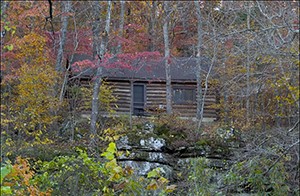
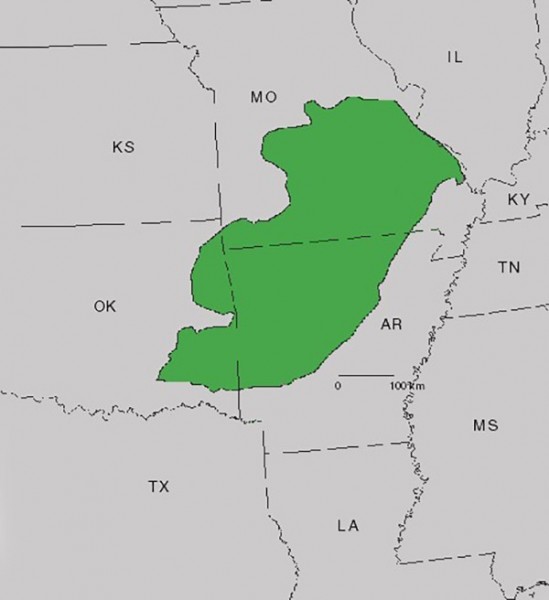
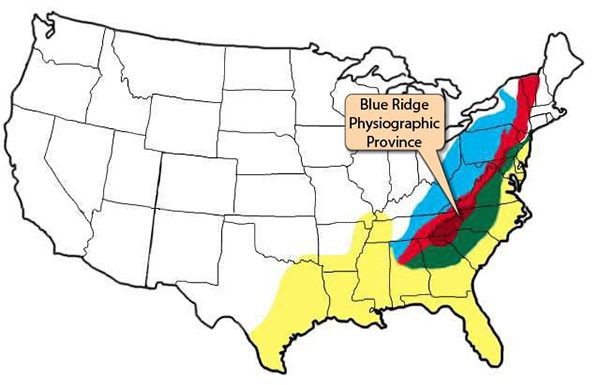
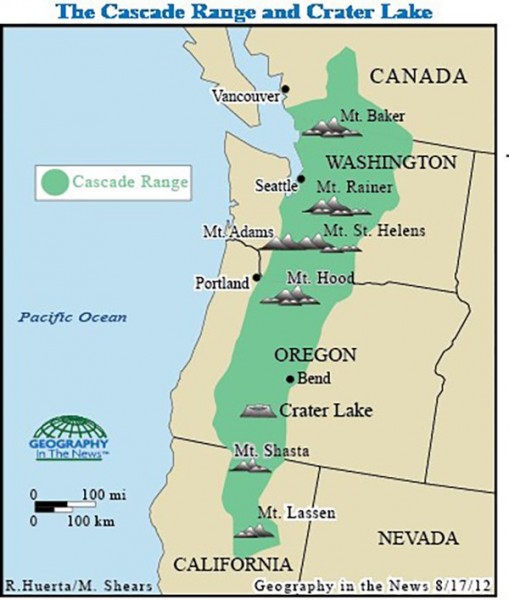
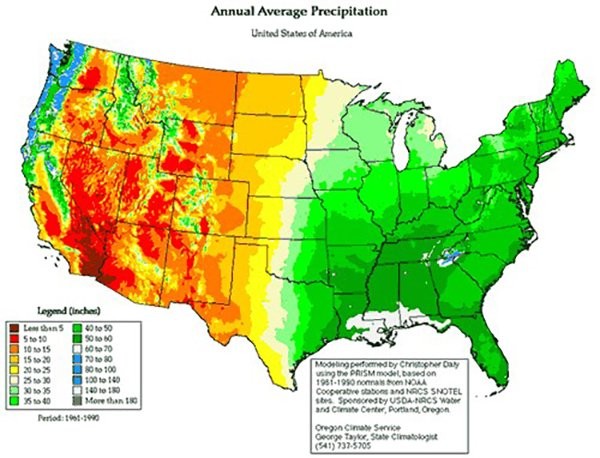
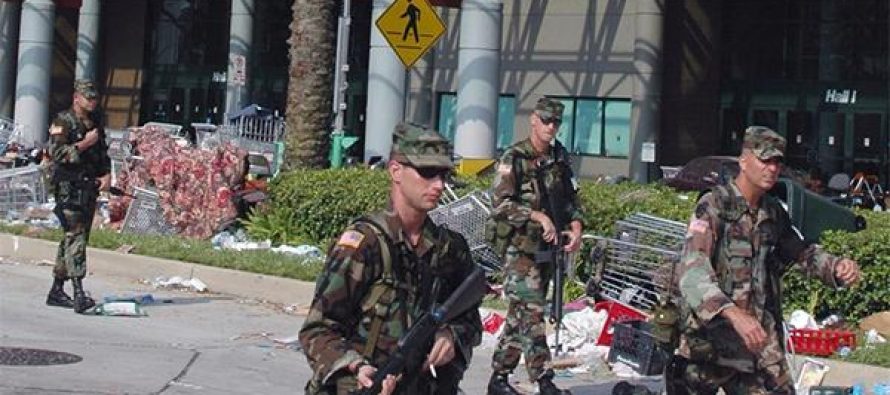
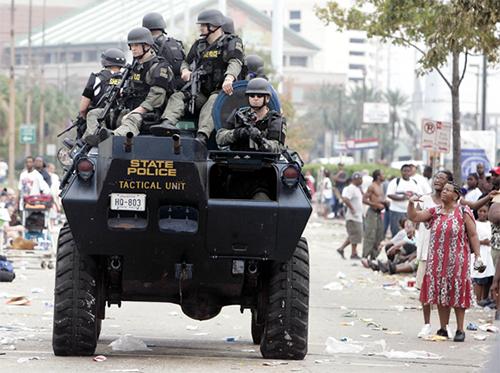
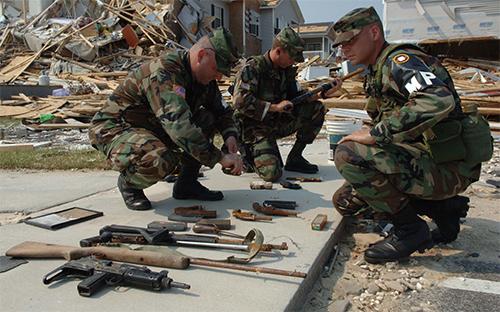
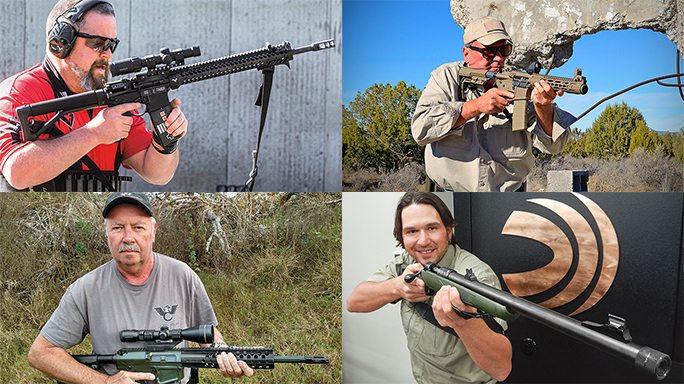



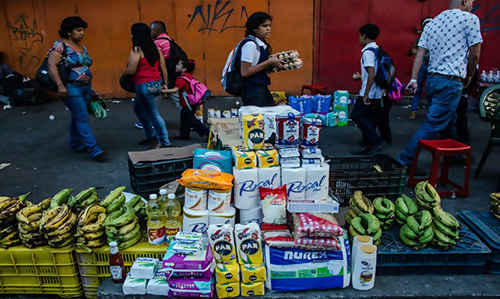
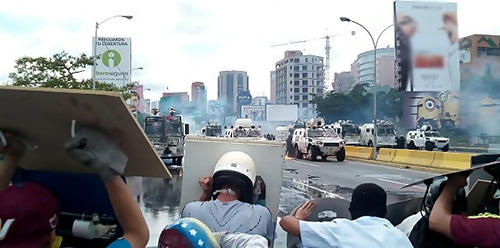
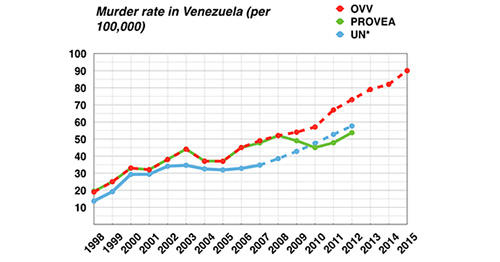
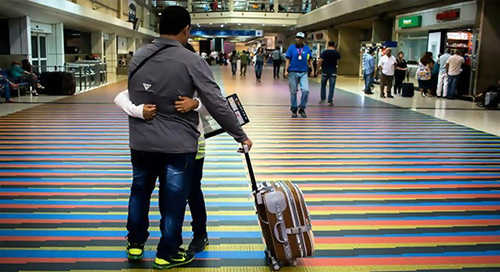
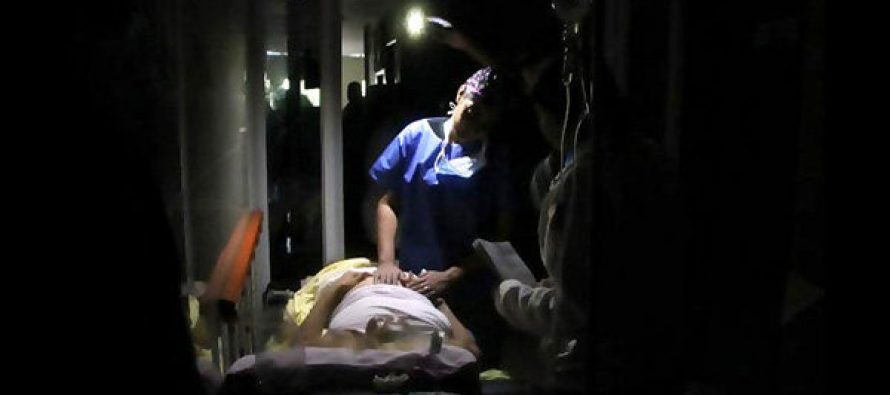
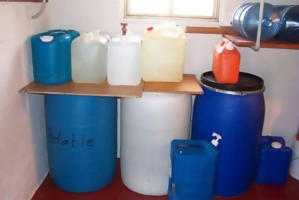
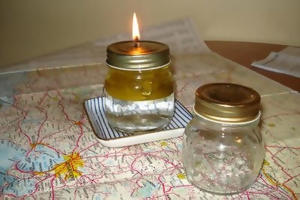
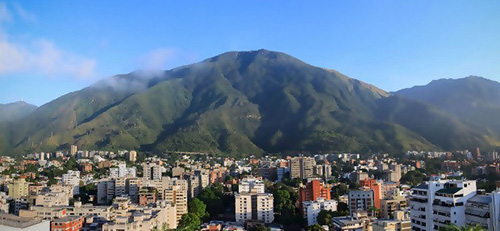

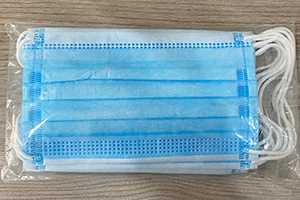
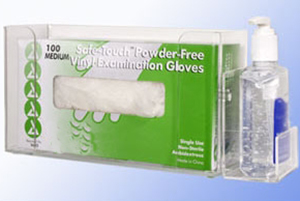
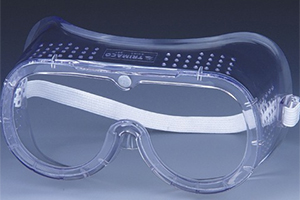
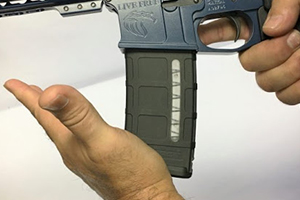
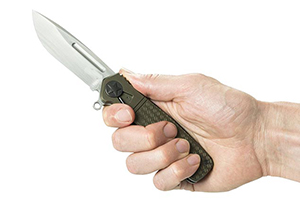
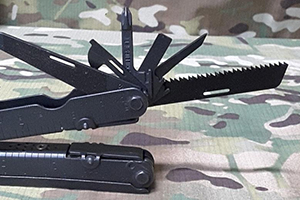

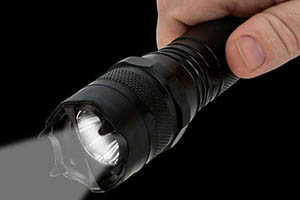
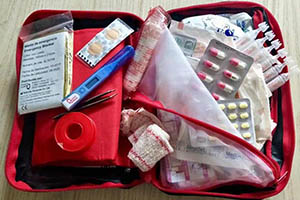
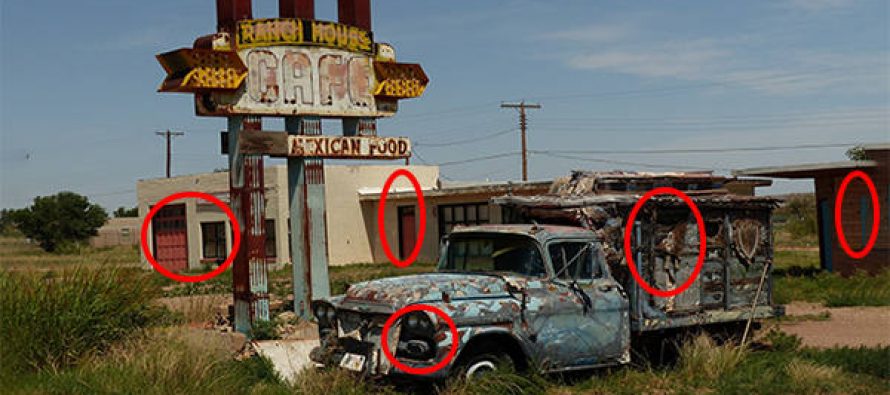


 SHTF
SHTF 