Will The United States Government Survive When the SHTF? Our government would crumble at every level if faced with a widespread disaster, and they may not be able to recover from it after the fact.

Tell me, if someone mentions “The United States of America”, what do you picture in your mind? The American flag? The White House? Mount Rushmore? Or perhaps you see a map of the Unites States, like this.

United States Map1

What you’re looking at is the sovereign territory that is both claimed and incorporated by the United States Federal Government. But in reality, that is not the United States. Would you like to know what it really looks like?

United States Map military bases

That’s more like it. What you’re looking at is a map of every military installation in the lower 48 (that we know of) according to Google Maps. There are a few more in Alaska and Hawaii, and hundreds more across the globe.  Now imagine a map of every police station, capital building, post office, courthouse, and every other federal and state agency. That, is the real United States.

To some of you that may sound obvious, but hear me out. Every government on Earth has a territory that they claim as their own. They have certain boundaries that legally exist as their jurisdiction. But then there are places that are disputed like Eastern Ukraine or the Senkaku Islands, and there are places that no employee of any state has ever set foot in like the depths of the Amazon Rainforest. They may legally belong to a government, but practically speaking is another story.

In truth, the government is not a series of lines on a map. It is the sum total of people who work for that government, and the areas where those people can successfully wield influence. I personally experienced this reality several weeks ago when I went hiking in a national forest. I was 15 miles away from the nearest cell reception, nobody knew I was there (long story) and there were small trees sprouting in the middle of the gravel road that led into the park. It was clear that not only had nobody been to my particular location in several months, but there had been no members of the park service there either in a very long time.

If you look at a map it would say that this place belongs to the United States Government, but the situation on the ground said otherwise. If someone attacked me in the park, my safety lies solely in my own hands, and what I do after the fact (if I survive) is totally up to me.

I suppose I could call the police, but if I didn’t nobody would know, and if I lost that particular fight, it’s unlikely anyone would be punished. There is no legal recourse for either party at that particular time and place. That piece of land, for all practical purposes, belongs to no one.

The reason I’m bringing any of this up is to illustrate a point about our government’s ability to survive a major disaster. I’m not very confident that they could. I’m sure they have an extensive series of bunkers that will shield the political and financial elite of our nation during any disaster, but when they emerge months or years later, will they have the infrastructure and personnel to enforce the boundaries they claim as their own?

I’m sure it would depend on the disaster, but in this case I’m talking about something catastrophic. Think EMP attack or nuclear war. Heck, even a major financial correction might get the dominoes tumbling into a wider disaster.

Most preppers would assume that they will quickly lose control of large swaths of the rural countryside. I would have to agree. If you look at most wars that have occurred over the past 100 years, one fact stands out. The cities have always been bastions of government authority, while the countryside is quickly overrun by rebels or foreign invaders. This can definitely be said of our own military.

When you compare our wars in Vietnam and Afghanistan, you’ll see the same situation. Our forces clung to cities and far-flung outposts, while occasionally sending patrols into a countryside that they would never successfully control. Cities are just easier to manage, plain and simple. But it’s hard imagine them maintaining control over a vast countryside that is filled with people who don’t like the government, who have lived without their help for many years, and are now dealing with an influx of desperate people who have fled the cities.

However, they do have those urban areas, and once they make contact with what’s left of the local authorities in small towns across America, they might be able to start exerting their previous control over those regions. The only problem is, they may not be able to keep the lid on our cities. You have to ask yourself, if they can’t control an area that is traditionally easy pickings for a government, will they be able to raise a flag anywhere else?

As of now, our cities are already bursting at the seams. In cities like Chicago, the number of police in their gang enforcement division is actually outnumbered by gang members with a 500-1 ratio. In other major cities, you might hear stories about certain neighborhoods that police just flat-out refuse to enter without extensive backup (again, is it really the United States if their employees can’t show their faces in that neighborhood?).

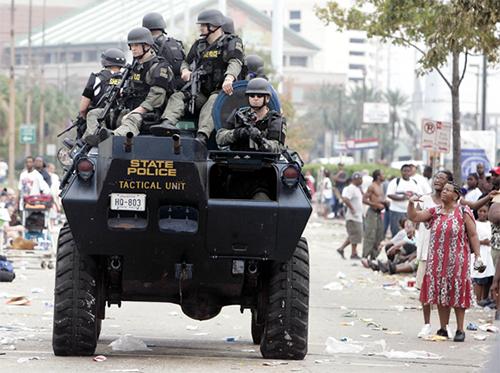
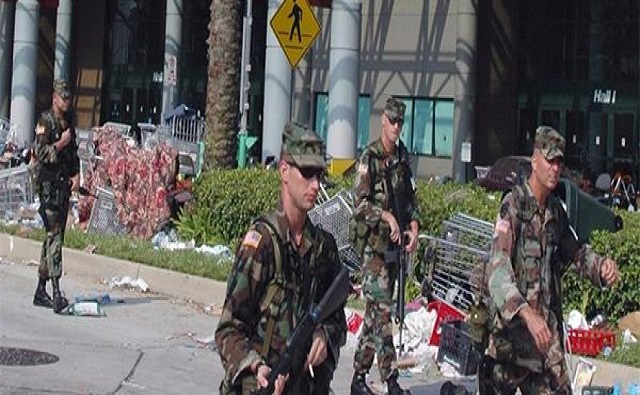
Their ability to solve murders has been declining for years, and the public’s trust with the police is in the toilet. Simply put, our government’s authority has been slipping at the local level for a long time, and this doesn’t even account for the mobs of panic-stricken citizens that might emerge after a disaster. It also doesn’t account for situations like Hurricane Katrina, where numerous police officers abandoned their posts in the wake of the storm.

If you ask me, it looks like our government would crumble at every level if faced with a widespread disaster, and they may not be able to recover from it after the fact. The police will be outmatched, and the military will either be stranded in overseas outposts, or tied up with the police in our urban areas.

Really, it boils down to this. If there is an event that is so catastrophic, that it shatters our police and military into isolated units with little communication to the outside world, will they be able to survive? And for those cops and soldiers who do survive, will they be willing to pledge allegiance to our current politicians and bankers, when they emerge from their fortified bunkers?

At the end of the day, our government is nothing more than the people who work for it and their ability to enforce the law in any given area. It’s hard to say if they would prevail in their current form during any widespread disaster.

So what do you think? If it hits the fan, will the federal government weather the storm, or will they be completely overwhelmed by the chaos?
8+ Places To Avoid Like The Plague When SHTF (the biggest threat to you in a SHTF scenario is, unfortunately, other people.)

To begin today’s article with a word of wisdom from our sponsor, everything in life is location, location, location.

Joke aside, an interesting issue to be addressed when it comes to prepping is which places are to be avoided after SHTF. The short story goes something like this, I mean this is the preamble: it is very possible for a catastrophic event to take place at some point in one’s life, whether you like it or not; it may be a large scale disaster of sorts, like a nuke strike, or an EMP strike, solar-made or man-made, courtesy of your local-crazy-nuke-armed dictator, or whatever natural extinction-level event, or terrorist attack.

The possibilities are endless.

Now, provided you’ve survived the initial “shock-wave”, you should concentrate your efforts on staying alive for a little bit longer, because, after all, there’s no fun in prepping and stockpiling gear and food and what not, if you’re not going to benefit from your efforts, right? It’s not about “he who dies with the biggest stockpile wins”, the trick is to stay alive, or at least to die last.

Hence, today’s article, which is aimed at trying to help you with the noble endeavor of saving one’s skin in the aftermath of WW3 or whatever catastrophic scenario you could think of.

The Number One Lesson

First world countries, like (parts of) the US, are awesome places to live when everything works fine and dandy. I am not talking about South-Central LA, or diverse neighborhoods in Chicago or Memphis, where crime rates are through the roof, if you know what I mean. The point is that our modern day uber-high tech society comes with obvious benefits. The caveat to living in a first-world country is that when everything is starting to fall apart, people are generally clueless with regard to surviving in third world conditions, i.e. without running water, electricity and things of that nature.

And yes, in a large-scale disaster, it’s very probable that electricity will go first, which means nothing would work anymore, since everything today runs on electricity, including your computer used for reading this article.

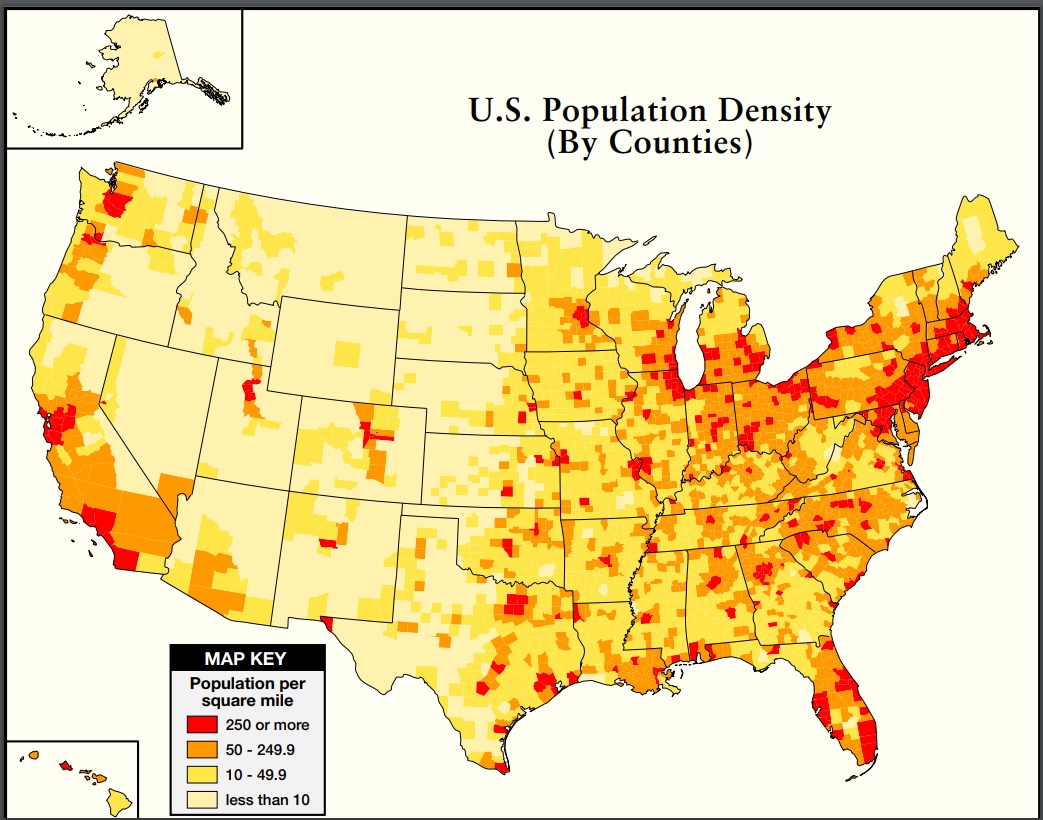
Also, since most of the US population is concentrated in a relatively small number of densely populated urban areas, it goes without saying that big cities are to be avoided like the plague in the eventuality of a SHTF event. Incidentally, almost every big city only has enough supplies to last for three days tops, and I am especially talking about food. The concept is that the food-delivery chain is never going to stop, the trucks will keep on hauling, hence nobody bothers to stockpile food anymore.

Obviously, in a serious crisis, life in a big city will become hellish rather quickly, as essential supplies are going to disappear fast (think about what happened this Black Friday, then amplify that by a factor of, I don’t know, 10,000 and you’ll start to get what I am talking about), people will get desperate for food and water (yes, your water utility company uses electrically powered pumps to deliver water to your faucet), and rioting and looting will become the new normal.

Naturally, it makes little sense to prepare (as in stockpile) large amounts of gear, including food, in a densely populated urban area. Since you’ll be the only one in “the hood” having emergency supplies of water and food and what not, you’d basically have a big-red TARGET sign painted all over your property. And soon enough, you’ll have to share your goodies with your local and not so friendly mob of looters. And that will get you nowhere, in terms of survival. Most probably, you’ll end up shot anyway.

So, if you’re all about “doom and gloom”, considering relocating from the big-bad city would make for a great idea. . And do it now, while you still can, until it’s too late.

The general rule of thumb is that big cities are to be avoided like the plague in SHTF scenarios. The good news is that the US has over 3000 counties, but half of the population lives in 146 counties, which means there’s a lot of “people-free” real-estate available for your bug-out retreat, where you can safely store food, water, guns, gold, bitcoin or whatever.

Joke aside, if you’re a city dweller, it would be a good idea to have a little shack in the woods, somewhere remote, in an area (scarcely)  populated by friendly conservative folks, who know how to hunt, and love God and guns.

The Infrastructure Issue

As cities are collapsing under their own weight, due to violence spiraling out of control courtesy of desperate and hungry mobs trying to loot to live another day, not to mention the potential for third-world diseases breaking out due to  failure of basic infrastructure (a lack of sanitation because garbage trucks will be missing in action, law enforcement/emergency services rendered useless and impotent, dead bodies piling up everywhere and all that nice stuff that happens when people go berserk), it would be problematic trying to escape to your bug-out location, even if you have a getaway plan.

The transport infrastructure will get gridlocked instantly, as hundreds of thousands of people will try to escape the city in the same time, hence major highways will be something like Tetris meets Frogger, if you know what I mean. Also, a large-scale EMP strike would render most of the cars useless, hence hundreds of thousands of people will find themselves stuck across the countryside, in/near airports etc. And yes, they’ll try to get home by any means necessary, even if “home” would make for yet another nightmarish sight. So, any major airport, city or harbor is potentially “verboten area”, as in you should steer clear (at least 15 miles, if not more) from such spots.

Generally speaking, avoid all transportation nodes and all urban areas, that if you’re prepping for that big SHTF moment. Military bases are included in the list, since they  make for obvious targets for terrorist/nuclear attacks.

If you’re trying to get out of the big bad city following a SHTF event, I’d reckon you already have an escape plan. Just in case, stay away from chocking points, which are the logical consequence of thousands of people trying to bug-out in the same time. Obviously, I am talking about causeways, tunnels, bridges, you know the drill. Also, when you’re putting together your getaway plan, steer away from obvious choking points, alright?

Hospitals and prisons are also to be avoided like the plague.

In a crisis, like an EMP strike, it’s very probable that prisoners will receive an instant pardon, due to a lack of electricity , which would render locks and alarms useless. Also, officers will most probably flee to take care of their own families. It’s the human thing to do, and this would result in desperate and dangerous escapees roaming around. You don’t want that near your property now, do you?

On the other hand, hospitals would attract huge crowds of people looking for help, and yes, in a SHTF situation, you don’t want huge crowds of desperate people near you, especially sick (as in contagious) people. Basically, any kind of place that is prone to attract crowds of people in a catastrophic scenario is to be avoided, including FEMA camps (people may try to get in to grab food, water etc), gun and hardware stores (for obvious reasons, think along the lines of Black Friday in Zombie Apocalypse), you see where this is going, right?

Bottom Line

Stay away from major cities, transport-infrastructure, military bases, FEMA camps, prisons, hospitals, choke-points and major stores. Keep in mind that the biggest threat to you in a SHTF scenario is, unfortunately, other people. I think it was Sartre who said: Hell is the others. It’s a sad but true assessment.

I hope the article helped. If you have other ideas, questions or comments, you know what to do.

The Police and Military when SHTF – Friend or Armed Foe?

Preparing to survive in a post-SHTF world is challenging. More than anything, we have to realize that we’re preparing blind. We don’t know what sort of disaster we’re facing or what the post-disaster world is going to look like. With those two pieces of information missing, it’s hard to know exactly how people will react and what they will do. Therefore, we must prepare for the worst.

There is a wide-ranging assumption that public servants will abandon their posts. I would have to say that this assumption is totally unfair. We live in a hurricane zone and my wife is a city employee. She and her co-workers are required to agree that they will stay on the job, protecting the citizens of the city and keeping city services running, both during and after a hurricane. While a few might abandon their posts if things get bad enough, most seem to be people who will follow through on that requirement.

But what about a worst-case scenario? What about in the wake of an EMP or other grid-destroying event, which would result in a true breakdown of society and the banking system; a situation where they would no longer be paid to do their jobs?

That’s a difficult question. For some, like my wife, their positions probably wouldn’t exist anymore. But the real issue here is emergency workers and law enforcement officers. We would greatly need their services in the wake of such a serious disaster. Would they stay on the job or would they feel they had to abandon their posts to care for their families?

There’s really no way of knowing the answer to that question until the time comes. It is a very individual question, so I imagine that some will stay, while others leave. Whether they stay or leave will largely determine whether they are friend or foe.

The Cops Who Stay on the Job

Police officers tend to be highly disciplined individuals, much like soldiers. In fact, many start out as soldiers, then move to law enforcement when they get out of the military. As such, they are largely people with a high regard for the law. Oh, there are the few bad apples; but despite stories saying otherwise, there aren’t many of them.

Those who stay on the job will be concerned with maintaining law and order in the worst of circumstances. They will also be subject to the politicians who are still in place over them. This means that if those politicians declare martial law, they will most likely enforce martial law, unless they believe that to be an unlawful order.

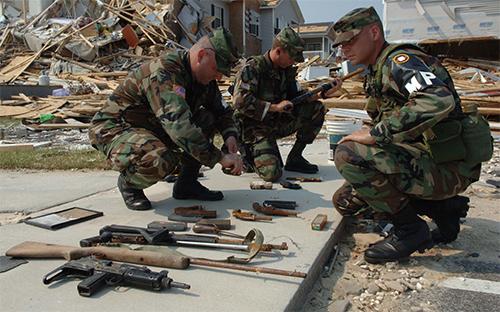
This could get sticky. As we saw during Hurricane Katrina, declaring martial law would probably mean they would be confiscating guns as well. That would put the police in the position of appearing to be the enemy in the eyes of any Second Amendment supporter. Whether or not they actually became an enemy would depend on how you, I and other gun owners would react to them. If we use force to reject their orders to turn over our guns, they will use force in response. That makes them our de-facto enemies.

The Cops Who Abandon their Posts

Some police officers may choose to abandon their posts, especially if they feel that their families are in danger. In that case, the question is what they will do to protect and care for their families. While there are very few bad cops out there, there is always the possibility that a cop will turn bad in such circumstances, out of desperation to take care of their families.

These people will be dangerous, because they will be able to present themselves to the public as law-enforcement officers, when in fact they are acting like criminals. There could even be some cases in smaller communities, where the police take over, much as warlords take over in times of anarchy. Should that happen, the police in question would be extremely dangerous.

It would be our duty, in such a case, to stand up against the police. But here’s the problem. How do you tell if what they are doing is in the public interest, or just in self-interest? If they are acting in the public interest, our duty is to support them, so we need to be sure they are the enemy, before treating them as such.

The National Guard

If military forces are called out to help gain control, it will be the National Guard, not the active military. US law prohibits the use of US military forces within the borders of the United States. Even if politicians in high places wanted to use the regular Army, it is doubtful that Army officers, all of whom know that prohibition in the law, would allow it.

But state Governors can call out the National Guard to help law enforcement in maintaining law and order. It’s not unusual for this to happen in the case of natural disasters. I would say that we should expect it to happen in a true SHTF scenario.

National Guard forces are US Army reserve soldiers and formations, which are “owned” by the governors of the several states. They serve a dual role, both as state owned military forces and reserves for the federal forces. If called out in a disaster situation, they could serve either to support law-enforcement or to provide disaster relief. In either case, they would be armed.

The Police and Military when SHTF – Friend or Armed Foe 2

Should martial law be declared, it is highly likely that the National Guard would be called out. If guns are confiscated, they are the ones who would most likely do the confiscation. They would probably be as polite as possible about it; but if they decided to obey that order, they would do their best to fulfill it.

However, the National Guard, like other military forces, is made up of predominantly conservatives. There’s a very good chance that they would refuse an order to disarm the population. Military officers swear an oath to uphold the Constitution and they would likely see the disarm order as a clear violation of the Second Amendment. As such, it would be their duty to refuse that order.

UN Troops

Of all these options, UN troops is the most dangerous. Any decision to use UN troops would have to be made at the federal government level. Were such a decision to be made, the troops which would be brought in to help maintain civil order would not be American troops. They would be unfamiliar with our culture (other than what they had seen in movies) and unfamiliar with our laws.

To these troops, a firearm confiscation order would seem perfectly reasonable, especially when you consider that they would probably come from a country where they don’t enjoy our Second Amendment protections. There would be no appeal to them on the grounds of our Constitution.

Should this happen, refusing an order to turn over your guns would be dangerous. The only thing that would protect any of us is the fact that there is no federal gun registration. Even so, there are states which require a permit to own guns, as well as concealed carry licenses which many of us have. That would give them a starting point for where to look.

Getting into a battle with armed troops is foolish. In such a situation, the only practical recourse is to hide all your guns where they won’t be able to find them, with the exception of a few, which you could then allow them to confiscate, making them think you’ve obeyed the order.

Regardless of the specific situation we would end up encountering, chances are that any police or military forces which were still in operation, would be there as part of whatever government managed to survive. Unless such forces decide to go rogue, we can count on them being there to help.

That doesn’t mean they’ll be our friends though. Unless you know them personally, they will look on you with suspicion, just like they will everyone else. Anyone carrying a weapon openly will be suspect. That doesn’t mean that they’ll hassle you, take away your weapons, fire upon you or arrest you; it just means that they will be watching to make sure that you aren’t a problem that they need to deal with.

The best thing you and I will be able to do in such a situation is to keep ourselves below the radar, so that we aren’t noticed. If we are not noticed, hopefully we will be left alone.

Should orders go out to confiscate any supplies that are stockpiled, it would probably be a good time to put our bug out plans into effect. Hopefully, we’ll all have a cache of supplies elsewhere, so that when we lose the supplies that we have stockpiled at home, we’ll still be okay.

8+ Places To Avoid Like The Plague When SHTF (the biggest threat to you in a SHTF scenario is, unfortunately, other people.)

To begin today’s article with a word of wisdom from our sponsor, everything in life is location, location, location.

Joke aside, an interesting issue to be addressed when it comes to prepping is which places are to be avoided after SHTF. The short story goes something like this, I mean this is the preamble: it is very possible for a catastrophic event to take place at some point in one’s life, whether you like it or not; it may be a large scale disaster of sorts, like a nuke strike, or an EMP strike, solar-made or man-made, courtesy of your local-crazy-nuke-armed dictator, or whatever natural extinction-level event, or terrorist attack.

The possibilities are endless.

Now, provided you’ve survived the initial “shock-wave”, you should concentrate your efforts on staying alive for a little bit longer, because, after all, there’s no fun in prepping and stockpiling gear and food and what not, if you’re not going to benefit from your efforts, right? It’s not about “he who dies with the biggest stockpile wins”, the trick is to stay alive, or at least to die last.

Hence, today’s article, which is aimed at trying to help you with the noble endeavor of saving one’s skin in the aftermath of WW3 or whatever catastrophic scenario you could think of.

The Number One Lesson

First world countries, like (parts of) the US, are awesome places to live when everything works fine and dandy. I am not talking about South-Central LA, or diverse neighborhoods in Chicago or Memphis, where crime rates are through the roof, if you know what I mean. The point is that our modern day uber-high tech society comes with obvious benefits. The caveat to living in a first-world country is that when everything is starting to fall apart, people are generally clueless with regard to surviving in third world conditions, i.e. without running water, electricity and things of that nature.

And yes, in a large-scale disaster, it’s very probable that electricity will go first, which means nothing would work anymore, since everything today runs on electricity, including your computer used for reading this article.

Also, since most of the US population is concentrated in a relatively small number of densely populated urban areas, it goes without saying that big cities are to be avoided like the plague in the eventuality of a SHTF event. Incidentally, almost every big city only has enough supplies to last for three days tops, and I am especially talking about food. The concept is that the food-delivery chain is never going to stop, the trucks will keep on hauling, hence nobody bothers to stockpile food anymore.

Obviously, in a serious crisis, life in a big city will become hellish rather quickly, as essential supplies are going to disappear fast (think about what happened this Black Friday, then amplify that by a factor of, I don’t know, 10,000 and you’ll start to get what I am talking about), people will get desperate for food and water (yes, your water utility company uses electrically powered pumps to deliver water to your faucet), and rioting and looting will become the new normal.

Naturally, it makes little sense to prepare (as in stockpile) large amounts of gear, including food, in a densely populated urban area. Since you’ll be the only one in “the hood” having emergency supplies of water and food and what not, you’d basically have a big-red TARGET sign painted all over your property. And soon enough, you’ll have to share your goodies with your local and not so friendly mob of looters. And that will get you nowhere, in terms of survival. Most probably, you’ll end up shot anyway.

So, if you’re all about “doom and gloom”, considering relocating from the big-bad city would make for a great idea. . And do it now, while you still can, until it’s too late.

The general rule of thumb is that big cities are to be avoided like the plague in SHTF scenarios. The good news is that the US has over 3000 counties, but half of the population lives in 146 counties, which means there’s a lot of “people-free” real-estate available for your bug-out retreat, where you can safely store food, water, guns, gold, bitcoin or whatever.

Joke aside, if you’re a city dweller, it would be a good idea to have a little shack in the woods, somewhere remote, in an area (scarcely)  populated by friendly conservative folks, who know how to hunt, and love God and guns.

The Infrastructure Issue

As cities are collapsing under their own weight, due to violence spiraling out of control courtesy of desperate and hungry mobs trying to loot to live another day, not to mention the potential for third-world diseases breaking out due to  failure of basic infrastructure (a lack of sanitation because garbage trucks will be missing in action, law enforcement/emergency services rendered useless and impotent, dead bodies piling up everywhere and all that nice stuff that happens when people go berserk), it would be problematic trying to escape to your bug-out location, even if you have a getaway plan.

The transport infrastructure will get gridlocked instantly, as hundreds of thousands of people will try to escape the city in the same time, hence major highways will be something like Tetris meets Frogger, if you know what I mean. Also, a large-scale EMP strike would render most of the cars useless, hence hundreds of thousands of people will find themselves stuck across the countryside, in/near airports etc. And yes, they’ll try to get home by any means necessary, even if “home” would make for yet another nightmarish sight. So, any major airport, city or harbor is potentially “verboten area”, as in you should steer clear (at least 15 miles, if not more) from such spots.

Generally speaking, avoid all transportation nodes and all urban areas, that if you’re prepping for that big SHTF moment. Military bases are included in the list, since they  make for obvious targets for terrorist/nuclear attacks.

If you’re trying to get out of the big bad city following a SHTF event, I’d reckon you already have an escape plan. Just in case, stay away from chocking points, which are the logical consequence of thousands of people trying to bug-out in the same time. Obviously, I am talking about causeways, tunnels, bridges, you know the drill. Also, when you’re putting together your getaway plan, steer away from obvious choking points, alright?

Hospitals and prisons are also to be avoided like the plague.

In a crisis, like an EMP strike, it’s very probable that prisoners will receive an instant pardon, due to a lack of electricity , which would render locks and alarms useless. Also, officers will most probably flee to take care of their own families. It’s the human thing to do, and this would result in desperate and dangerous escapees roaming around. You don’t want that near your property now, do you?

On the other hand, hospitals would attract huge crowds of people looking for help, and yes, in a SHTF situation, you don’t want huge crowds of desperate people near you, especially sick (as in contagious) people. Basically, any kind of place that is prone to attract crowds of people in a catastrophic scenario is to be avoided, including FEMA camps (people may try to get in to grab food, water etc), gun and hardware stores (for obvious reasons, think along the lines of Black Friday in Zombie Apocalypse), you see where this is going, right?

Bottom Line

Stay away from major cities, transport-infrastructure, military bases, FEMA camps, prisons, hospitals, choke-points and major stores. Keep in mind that the biggest threat to you in a SHTF scenario is, unfortunately, other people. I think it was Sartre who said: Hell is the others. It’s a sad but true assessment.

I hope the article helped. If you have other ideas, questions or comments, you know what to do.

Pioneer Foods We’ll Be Eating A Lot After SHTF- If society collapses, you can bet that the foods the pioneers ate will become dietary staples

Once upon a time, heading on down to the grocery store to fill the pantry whenever you needed to was not an option. Pioneers who traveled west in pursuit of religious freedom and a better life in the early days of U.S. settlement aimed to settle in areas where chances to buy supplies were few and far between.

This meant that they had to be self-sufficient, which required bringing along and preparing food that would last a long time, tending animals and hunting as needed, and eating what the land provided them.

While this self-imposed self-sufficiency is truly a measure of how passionate and hardworking the pioneers were, it’s also a glimpse into a future without the modern-day amenities we all enjoy in 21st-century America. If ever a situation arises that leads to the collapse of society as we know it, those pioneer foods may be more like our bread and butter (pun totally intended). Here are some foods that we’ll all have to become familiar with if doomsday happens.

During a SHTF situation, pain could become an annoyance for some, but unbearable for others.

If doctors are scarce and medicine becomes even scarcer, this one little weed, found all over North America and similar to morphine, could be a saving grace.

Cornmeal

A favorite of Native Americans, cornmeal was often used in place of today’s more traditional wheat flour because it could be easily ground from whole corn while on the move. Bread, cakes, and pancake-like products were often made from cornmeal. It’s got the added bonus of a little sweetness that could be hard to come by in a SHTF situation.

Dried or Cured Meats

Without refrigeration, meat from large animals like cattle, pigs, deer, and so on will have to be handled differently than it is today. Smoking, salting, and drying were all techniques employed in the pioneer days to keep meat from spoiling, and they’d be a handy way to keep our families fed for the long haul if we lose access to refrigeration. While cured and dried meats are more a novelty today, you can bet they’d quickly become a staple in more trying times.

(Here are 21 wild edibles you can find in urban areas.)

Wild Game, Especially Small Game

You don’t find a lot of people eating squirrel and wild rabbit these days. However, a squirrel or rabbit that was happened upon and harvested in pioneer times surely wouldn’t go to waste. Fresh meat was few and far between, with the bulk of protein coming from dried or cured meats, and taking large game wasn’t very practical if you were on the move as you’d likely wind up wasting much of the meat. Small game was perfect for feeding you for a day, though. That’ll be very important, especially as people are likely to take on more nomadic lifestyles post-doomsday.

This also includes fish and native shellfish. In many places, fish may be even easier to get your hands than rabbits and squirrels. Learning about the local varieties could make it much easier to add some protein to your dinner.

Experts predict that an EMP strike that wipes out electricity across the nation would ultimately lead to the demise of up to 90% of the population. However, this figure begs an important question: if we were able to live thousands of years without even the concept of electricity, why would we suddenly all die without it?

Animal Fats

Lard and other fats rendered from animals are definitely not the go-to these days, but they were far more readily available in pioneer society – and they were also a lot easier to process than the vegetable-based oils you’ll find in the average cabinet today. Because fat is a crucial part of our diets, animal fats are likely to make a comeback after doomsday.

Dried Fruits and Veggies

We know that drying produce is a great way to preserve it. People enjoy dried fruits and veggies even in modern times. However, if our society breaks down and leaves us with zero access to out-of-season produce and more modern preservation methods like canning and freezing, dehydrating fruits and veggies is likely to become common practice. You can even preserve produce this way using only the power of the sun.

Dried Beans

Beans tend to be fairly easy to grow, and dried beans can last a very long time. Pioneers packed dried beans to provide protein and fiber along the trail, and they’ll likely be popular for their high protein count and filling nature if ever the SHTF. You also don’t need much to prepare dried beans; a pan, water, heat, and a little patience is all it takes. Bonus: When you settle in somewhere, you can plant those babies and get a whole new crop ready for the next year.

These Solar Backup Generators Deliver 4 Times More Power Than Other Models!

Squash, Tubers, Onions, Garlic, and Apples

What do all of the above have in common? Aside from being fairly commonplace now, all of these produce items can be stored for fairly long periods in cool, dark places. As long as a little care is taken in storage, these will last through most of a winter. You commonly see references to these items in all sorts of literature written in earlier days, and root cellars were commonplace up until a few decades ago. If fresh produce was out of the question, wouldn’t some delicious fried squash or potatoes be an absolute treat?

Maple Syrup and Honey

While we as a society are pretty dependent on modern sugar, it was much harder to find in the days of the pioneers. In fact processed sugar was an expensive luxury for most people. Instead, they used other sweeteners like honey and maple syrup to help sweeten their dishes. Those items will likely become much more common in a SHTF situation because they’re easier to process than white sugar. With a little knowledge, and very minimal equipment that could be improvised easily, the common man can get syrup from tapping trees. A little bravery would certainly be necessary to collect honey, but it’s not impossible.

Foraged Foods

Obviously the foods you’d be able to forage vary from region to region, and the same was true for the pioneers, too. They’d forage local berries, greenery, wild fruits, mushrooms, and herbs to supplement their diets and add variety. If the SHTF it’ll pay dividends to be aware of the edible plants found in your region and have an idea of where to find them. These wild foods may also be propagated for home gardens if seeds and plants are unavailable for planting the more common gardens we see today.

If society collapses, you can bet that the foods the pioneers ate will become dietary staples. Those foods were wholesome, nutritious and, most importantly, available. Do yourself a favor and learn a little about how to find, prepare, and store these foods now, so that you’ll be prepared to feed yourself and your family in a SHTF situation.

Preparedness Hacks: Once a nuke is heading your way, you might think that there isn’t much left to do, but you would be wrong!

Because we will show you America’s natural nuclear bunkers that are also EMP proof. When the sirens start wailing, all you need to do is pick the closest one to your home, where you can take cover before it hits.

We are ushering in a new age of population growth and radical natural disaster as well as possible incivility- 7 Things to Remember During an Evacuation

What to Bring During an Evacuation – Helpful Tips to Prepare in Advance 

When disaster strikes, you and your family need to be prepared to evacuate at a moments notice. Fires, hurricanes, and floods are becoming much more common place these days. Emergency officials do their best to keep the public informed to protect lives. It is our duty to be as prepared as possible if an evacuation order is given. The best way is to create a list of things to bring with you during an evacuation, and plan ahead!

The Difference Between Bugout And Evacuation

A popular term in the world of disaster preparedness is Bugging Out. It’s probably one of the most written about topics in the whole of survival and preparedness literature. There are even whole books dedicated to the process, and for good reason.

The bugout is designed for an SHTF preparedness scenario and its self governed. In other words, no one is going to tell you its time to bugout. It will be your call. In an evacuation you will be told when it’s time to leave and you will be given a time window to get out of harms way.

Another big difference is in the planning. Bugout planning should involve a planned bugout location or locations. When running from a collapse of civility you will need to think out a few good places to hold up, away from the chaos. These are often called bugout locations. When you are faced with an evacuation you will either be ushered to another location, which is no picnic, or you can just drive off to a relative’s house who lives in another state.

Bottomline, they are very different things. You need to understand both. In the case of an evacuation, what items are you looking to take with you to be sure you are prepared while your away and when you return home.


7 Things To Remember During An Evacuation

1) Important Documents

One of the most overlooked items to take in an evacuation are your important documents like IDs, passports, insurance, deeds and the like. If you own it or if you need to prove it, you better have a copy of it.

The best way to deal with this is to create a simple document folder that is close by and contains everything. Upon evacuation you just slip this folder into your backpack and you are covered. We covered this topic here with helpful tips on creating an emergency binder with important documents.

2) Water, Fire, and Shelter

No matter where you are going you should always have a way to deal with the triangle of survival and that is water, fire and shelter. This doesn’t have to be luxury but your bag should have a few methods for making fire, some sort of simple shelter option for those in your party and a way to sanitize drinking water. You never know what could happen next in a disaster.

3) Self Defense

Sometimes evacuation means being loaded into a facility with different types of threats and dangers. While the people in the Superdome, during Katrina, were relatively safe from the storm they had to deal with robbery, violence and other unfortunate circumstances.

Unfortunately, the minds of criminals never stop running. Even during the most recent wildfires in southern California looters were running into evacuated homes, with the fire bearing down on them, to take the goods inside.

Whether you are put up in a hotel or a school gym, just be prepared to let those around you know you are not helpless. Its important that you be prepared to defend what is yours – by whatever means you find most appropriate.

4) Ready to Eat Food

Having a few types of ready to eat foods on hand can be a great way to boost morale as you are leaving your home and belongings behind. You may find yourself in traffic getting out of town or on a long trek and having food around always helps with that. With kids this can be especially important as they often won’t understand the gravity of the situation when their tummy is rumbling.

5) Sentimental effects

We all have things near and dear to our heart. They might be pictures, art, toys, or something else. Sentimental items are just as important as anything else. These are our memories and our bits of captured happiness. While it might not seem like it when you leave, this could be your last opportunity to secure your most sentimental items.

The best way to handle these is to identify them today. What do you have to take? What means the most to you? Don’t guess when you are on the clock. Isolate these items in your mind so you can grab them quickly when the time comes. Also make sure you can travel with them – a wall sized painting may not make the cut.

6) Means of Entertainment

Bring something to do while you are evacuated. This can be everything from simple books and games to power banks and video games. Evacuation is stressful and if you have kids keeping them occupied will shave off a whole layer of stress. Don’t discount that.

As sad as it is, evacuation can be the rare time when the whole family gets to sit down and focus on just playing a board game. Just be sure to consider games and books that are smaller in size. Large books can be back breaking – just ask your average school kid these days!

7) Emergency Cash

Cash is King in a collapse. You should always keep cash on hand when you leave the comforts of home for a long trip or evacuation. This cash doesn’t come from the air like magic, though. Its all about starting an emergency cash fund.

Putting away a little cash each week will amount to something you can look to when things like evacuation come up. This could be $500 or $5,000 dollars. Either way, the cash will get you things you need when ATM’s are down and people are holding tight to resources. Be sure to have ways to carry cash on your person (not in a bag), and if you have large amounts, have multiple ways to carry. Just in case you are robbed, you can reduce your risk of losing everything.  Here is a recent post to help you understand your survival cash needs.

Create Your Evacuation Checklist

Now that you understand what you should bring you need to understand the mechanism for getting everything right during an evacuation. It all comes down to checklists. You want to have checklists for each person to assure they get the things they need.

A simple list can be folded up and placed in a pocket of the backpack or you can even laminate that list and attach to the bag. While many things can be pre-packed for an evacuation you are going to need a small checklist to assure you grab everything, quickly, leaving the home.

Returning Home

Hopefully, you return home and things are fine. In most cases you are going to have to address some sort of damage. In the worst case you are going to have nothing to come home to. While you are evacuated its very important to discuss the various outcomes. Brace yourself. No one is ever prepared to return home and find your life’s work decimated.

Be sure you have your affairs in order with insurance and be prepared for serious inconvenience. That is what is coming if you lose your home in a disaster.

The Time To Prepare Is NOW!

Evacuation is a pain but remember, it can always be worse. We are ushering in a new age of population growth and radical natural disaster as well as possible incivility. In the future, there will be many more hurricanes, more wildfires and floods. For Preppers, now is the time to start taking evacuation seriously and get your affairs in order! Planning and preparation can make this process smooth and hopefully save your family from potential disaster.

After the basic survival necessities of shelter, water, fire, and food have been satisfied, acquiring a firearm should be one of your highest priorities after the SHTF: 9 Best Firearms To Have After SHTF

After the basic survival necessities of shelter, water, fire, and food have been satisfied, acquiring a firearm should be one of your highest priorities after the SHTF. In the event of a post-apocalyptic scenario, however, you may not be able to find one. For this reason, a good firearm is one of the most important things to acquire ahead of time.

Firearms can add an incredible amount of power to your inventory. With them, you have the ability to hunt, to defend yourself, and the leverage you might need in social scenarios to tip the balance of power in your favor.

In this article, we’ll cover the 9 best firearms to have after the SHTF: 3 rifles, 3 handguns, and 3 shotguns.

Rifles

There are many dissenting opinions out there about which firearm is the most important, but taking into account weapon maintenance, ammo weight, and availability, and overall weapon functionality, the rifle is probably the most useful.

It can be used readily in any hunting or defensive scenario you may come across. These three rugged options will serve you well almost anywhere.

1. Ruger 10/22 Takedown

One of the best, most versatile firearms you can have in a survival scenario is the Ruger 10/22 Takedown. This long rifle is excellent for hunting small game. Its .22 ammunition is readily available and extremely lightweight, making it the obvious choice when you want to carry hundreds of rounds of ammunition at a time.

Generally speaking, the ammunition is also fairly cheap, making it easy to stockpile ahead of time. The Ruger 10/22 Takedown is semiautomatic with a 10-round magazine, meaning it’s ideal for situations where you need to fire more quickly than you could with a bolt-action rifle.

2. ArmaLite AR-15

The classic, ever-popular AR-15 makes this list due to its durability, ease of use, and availability. The AR-15 is common enough that you could easily find parts for it, and its design makes it one of the easiest to clean and take apart. There are dozens of variants out there, and most of these are good options as well.

Make sure you have your AR-15 chambered in 5.56, which allows it to shoot both 5.56 rounds and .223 rounds. This gives you added versatility if you need to forage for ammunition at some point.

3. Mosin-Nagant

Your third rifle option should be something of a larger caliber–think in terms of being able to take down the biggest game in your area. The Russian-made Mosin-Nagant fires a 7.62×54 round, packing a punch that most big game won’t be likely to shrug off.

Another benefit to the Mosin-Nagant is that millions of them were made in the earlier years of the 20th century, making them easy to find and their ammunition fairly common. This firearm can even fill the role of sniper rifle should the need arise.

Handguns

Handguns give you the element of surprise and convenient protection. While you can hunt with handguns, you probably wouldn’t choose to unless it was your only option. With that in mind, here are some of the best pistol options you should try.

4. Glock 17

Perhaps the most useful handgun to have in preparation for the SHTF is the Glock 17. With a magazine capacity of 17 rounds, you also carry almost twice the amount of ammunition as some other handguns, which is useful since its 9mm round doesn’t have the highest stopping power out there.

This weapon is the most widely used handgun by law enforcement all around the world. Not only does this mean the weapon is extremely reliable, it also means it is readily available should you ever need replacement parts or extra ammunition.

5. Colt M1911

The 1911 is an all-around winner when it comes to pistols. With a slim profile that still has all the stopping power of a .45 round, this handgun is a good choice because of its durability and availability. A tried and true weapon since World War I, this will serve you well as your personal sidearm in any survival situation.

6. Smith and Wesson 586

No good handgun list would be complete without a tried and true revolver. The Smith and Wesson 586 is one of the most reliable revolvers available. Extremely easy to load and to clean, the Smith and Wesson 586 is the perfect survivalist pistol. Its only disadvantage is its ammunition capacity (6 or 7 rounds).

However, the revolver more than makes up for this by being versatile. The Smith and Wesson 586 can fire both .357 and .38 special rounds, making finding ammunition for the weapon easier.

Shotguns

Last but certainly not least, the shotgun is an important part of the survival arsenal. Most game can be hunted with one, and nothing says “don’t mess with me” like a shotgun.

The only reason this list didn’t rank its value above that of the rifle’s is for the weight of its ammunition and its limited range. Still, for versatility, you can’t beat a good scattergun. Here are three great options when the SHTF.

7. Mossberg 500 12 Gauge

Easy to use and easy to maintain, the Mossberg 500 easily makes the top of the list for survival shotguns. While it is made in 12 gauge, 20 gauge, and .410 bore variants, the 12 gauge is the most popular and allows the most customization.

Its pump action allows you to deliver firepower quickly and effectively–sometimes defending yourself takes more than one shot.

8. H&R Single Shot 12 Gauge

While many people dislike single shot shotguns for their slowness both in hunting and self-defense, the H&R single shot 12 gauge is perfect because it is a platform of possibilities. You can use a wide variety of chamber adapters, which allows you to effectively scavenge and use almost any kind of ammunition that comes your way.

Whether you find shotgun shells, birdshot, slugs, or a multitude of rifle ammunition, the H&R single shot 12 gauge with chamber adapters can have you covered.

9. Chiappa X-Caliber

The Chiappa X-Caliber is the ultimate survival option, sporting the ability to shoot both 12 gauge shotgun shells and .22 rounds with its double trigger, over-under style. It includes eight adapters that allow it to shoot eight separate pistol calibers. This truly is the one-tool option of the firearms world, if such a thing exists.

Will The United States Government Survive When the SHTF? Our government would crumble at every level if faced with a widespread disaster, and they may not be able to recover from it after the fact.

Tell me, if someone mentions “The United States of America”, what do you picture in your mind? The American flag? The White House? Mount Rushmore? Or perhaps you see a map of the Unites States, like this.

United States Map1

What you’re looking at is the sovereign territory that is both claimed and incorporated by the United States Federal Government. But in reality, that is not the United States. Would you like to know what it really looks like?

United States Map military bases

That’s more like it. What you’re looking at is a map of every military installation in the lower 48 (that we know of) according to Google Maps. There are a few more in Alaska and Hawaii, and hundreds more across the globe.  Now imagine a map of every police station, capital building, post office, courthouse, and every other federal and state agency. That, is the real United States.

To some of you that may sound obvious, but hear me out. Every government on Earth has a territory that they claim as their own. They have certain boundaries that legally exist as their jurisdiction. But then there are places that are disputed like Eastern Ukraine or the Senkaku Islands, and there are places that no employee of any state has ever set foot in like the depths of the Amazon Rainforest. They may legally belong to a government, but practically speaking is another story.

In truth, the government is not a series of lines on a map. It is the sum total of people who work for that government, and the areas where those people can successfully wield influence. I personally experienced this reality several weeks ago when I went hiking in a national forest. I was 15 miles away from the nearest cell reception, nobody knew I was there (long story) and there were small trees sprouting in the middle of the gravel road that led into the park. It was clear that not only had nobody been to my particular location in several months, but there had been no members of the park service there either in a very long time.

If you look at a map it would say that this place belongs to the United States Government, but the situation on the ground said otherwise. If someone attacked me in the park, my safety lies solely in my own hands, and what I do after the fact (if I survive) is totally up to me.

I suppose I could call the police, but if I didn’t nobody would know, and if I lost that particular fight, it’s unlikely anyone would be punished. There is no legal recourse for either party at that particular time and place. That piece of land, for all practical purposes, belongs to no one.

The reason I’m bringing any of this up is to illustrate a point about our government’s ability to survive a major disaster. I’m not very confident that they could. I’m sure they have an extensive series of bunkers that will shield the political and financial elite of our nation during any disaster, but when they emerge months or years later, will they have the infrastructure and personnel to enforce the boundaries they claim as their own?

I’m sure it would depend on the disaster, but in this case I’m talking about something catastrophic. Think EMP attack or nuclear war. Heck, even a major financial correction might get the dominoes tumbling into a wider disaster.

Most preppers would assume that they will quickly lose control of large swaths of the rural countryside. I would have to agree. If you look at most wars that have occurred over the past 100 years, one fact stands out. The cities have always been bastions of government authority, while the countryside is quickly overrun by rebels or foreign invaders. This can definitely be said of our own military.

When you compare our wars in Vietnam and Afghanistan, you’ll see the same situation. Our forces clung to cities and far-flung outposts, while occasionally sending patrols into a countryside that they would never successfully control. Cities are just easier to manage, plain and simple. But it’s hard imagine them maintaining control over a vast countryside that is filled with people who don’t like the government, who have lived without their help for many years, and are now dealing with an influx of desperate people who have fled the cities.

However, they do have those urban areas, and once they make contact with what’s left of the local authorities in small towns across America, they might be able to start exerting their previous control over those regions. The only problem is, they may not be able to keep the lid on our cities. You have to ask yourself, if they can’t control an area that is traditionally easy pickings for a government, will they be able to raise a flag anywhere else?

As of now, our cities are already bursting at the seams. In cities like Chicago, the number of police in their gang enforcement division is actually outnumbered by gang members with a 500-1 ratio. In other major cities, you might hear stories about certain neighborhoods that police just flat-out refuse to enter without extensive backup (again, is it really the United States if their employees can’t show their faces in that neighborhood?).

Their ability to solve murders has been declining for years, and the public’s trust with the police is in the toilet. Simply put, our government’s authority has been slipping at the local level for a long time, and this doesn’t even account for the mobs of panic-stricken citizens that might emerge after a disaster. It also doesn’t account for situations like Hurricane Katrina, where numerous police officers abandoned their posts in the wake of the storm.

If you ask me, it looks like our government would crumble at every level if faced with a widespread disaster, and they may not be able to recover from it after the fact. The police will be outmatched, and the military will either be stranded in overseas outposts, or tied up with the police in our urban areas.

Really, it boils down to this. If there is an event that is so catastrophic, that it shatters our police and military into isolated units with little communication to the outside world, will they be able to survive? And for those cops and soldiers who do survive, will they be willing to pledge allegiance to our current politicians and bankers, when they emerge from their fortified bunkers?

At the end of the day, our government is nothing more than the people who work for it and their ability to enforce the law in any given area. It’s hard to say if they would prevail in their current form during any widespread disaster.

So what do you think? If it hits the fan, will the federal government weather the storm, or will they be completely overwhelmed by the chaos?
17 Things People Will Wish They Have After The SHTF: When That Happens, People With No Survival Skills Or Emergency Supplies Won’t Last Long

This post is a little different from my usual posts. If you’re already a prepper, I don’t expect this article to teach you anything new. Rather, I expect it to serve as a reminder of why we prep. I also hope that it can serve as a warning to those who don’t prep.

For example, you might think it’s unlikely that your home will ever be damaged or destroyed, but you still buy homeowners insurance just in case. It’s the same with prepping. Maybe doomsday will never arrive, but you never know.

And it’s not like we’re preparing for something that has never happened before. Millions of people die in disasters every year, economies collapse all the time, and terrorism is an ever-present threat. Sure, you might luck out where you live and never face a serious disaster. But then again, you might not.

Unfortunately, most people in the Western World are unfamiliar with history and current events, so they have no idea how common disasters really are. They assume they will always have access to modern luxuries: electricity, air conditioning, fresh water, affordable food, and so forth. Consequently, humans are more helpless than ever before. It’s gotten so bad that there are even teenagers who don’t know how to use can openers.

But they won’t find out how helpless they are until the SHTF. When that happens, people with no survival skills or emergency supplies won’t last long. They’ll quickly realize that a few basic survival items can mean the difference between life and death. Here are 17 things people will wish they have and why (in alphabetical order).

1. Barter Items

Hyperinflation is the main reason people stock up on barter items, but there are several other scenarios where they could become necessary. Most people don’t carry much cash anymore, so if the power is out or the Internet is down, they’ll have no way to purchase anything. That’s where barter comes in.

You probably won’t be able to barter at the grocery store, but you could at least barter with your neighbors. If you are desperate for food but you don’t have any barter items, they might take pity and help you anyway. Then again, they might point their guns at you. It’s definitely better if you have something to trade.


2. Bug Out Bags

For most people, everything they own in the world is in one place: their home. But what if your home is destroyed? Floods, hurricanes, earthquakes, house fires–all these things are guaranteed to happen again somewhere. What if your neighborhood is next?

Or what if there’s a pandemic, nuclear fallout, or an invading army on its way and you have to bug out quickly?

These are just a few reasons why you need a bug out bag. Even the most experienced survivalists would be pretty miserable trying to bug out without any supplies.


3. Cooking Gear

Imagine your stomach is growling as you stare at a pile of food you can’t eat because it has to be cooked. Although many modern foods can be eaten out of the box or can, foods like pasta, rice, and some frozen foods are inedible if they’re uncooked.

If the power goes out, it will only be a matter of time before the all the frozen meat thaws out and starts to rot. When that happens, you’ll be wishing you had a way to cook without power.


4. Fire

In this day and age, most people never truly experience the cold. They just wrap themselves in a blanket and turn up the heater. But without power, you’ll need to build a fire if you want to stay warm.

This is more important than you might think. Every year thousands of people die from hypothermia, and that’s during good times! Also, don’t forget that many foods need to be heated up before you can eat them.

Speaking of fire, don’t forget fire extinguishers. After a long-term power outage, some of the people who’ve never cooked over a fire or used lots of candles are going to accidentally set their homes ablaze. And with no fire department to stop it, the fire will spread from home to home. Entire neighborhoods might burn down. If you don’t have a fire extinguisher, you may have to evacuate your home.


5. First Aid Kits

Most people have no idea how fragile their bodies actually are. Millions of us would be dead right now if it weren’t for basic first aid supplies to keep wounds clean and prevent infections. And keep in mind that during disasters, injuries tend to skyrocket because of all the people climbing, doing manual labor, messing around with fire, and consuming contaminated food and water. If hospitals are overrun, people will have to help themselves with a first aid kit.

In addition, you should also have some extra medications and antibiotics. I, myself, would probably be dead right now if it weren’t for antibiotics.


6. Food

When’s the last time you were truly hungry? I don’t mean you skipped breakfast and now your stomach is growling hungry. I’m talking about the kind of hunger where your arms and legs are shaking with weakness, your stomach is in knots, and all you can think about is food no matter how hard you try to concentrate.

Most people have never actually been this hungry, but they will be if the SHTF. Grocery stores only have about three days of food on hand, a week at most, so you need to keep plenty of survival food on hand.


7. Fuel

Gasoline is something we all tend to take for granted. We use it almost every day but rarely think about it (unless the price goes up a little), much less where it comes from. After the SHTF, gasoline will disappear very quickly. Just look at what happens to coastal cities when a hurricane is on the way.

Not only do you need gasoline for your bug out vehicle, you need it for your power generator.

But that is just one type of fuel. You’ll also want to stockpile firewood, propane, isopropyl alcohol, or any other type of fuel you might need to cook food and keep warm.


8. Gardening Supplies

Gardening supplies are essential if during a long-term disaster scenario. For example, if the economy collapses like it recently did in Venezuela, you could have a situation where food shipments are few and far between, or quality food is simply too expensive. People who can grow their own food won’t be nearly as hungry.

In addition to supplies like rakes, spades, hoes, you’ll also want to get plenty of buckets so you can grow food indoors and keep fresh fruits and veggies on the table year round.

You should get some greenhouse supplies as well. A hoop house covered in plastic can significantly extend the growing season. There are countless DIY greenhouse plans out there. Most of them just take a little PVC and plastic sheeting, and they’re not that hard to assemble.

Heirloom seeds are another essential item. They need to be non-hybrid and open-pollinated. Why? Because if they aren’t, they don’t produce as much food or as many seeds, and they usually don’t taste as good (most seeds you buy in stores are hybrids). I recommend these survival garden heirloom seeds.


9. Lights & Batteries

Imagine looking out the window at night and seeing only darkness. Even worse, imagine a pitch black home where you can’t find anything you need and can barely see the faces of your loved ones. Not only would that be unsettling, it could also make you an easy target for burglars. Don’t let that happen, especially when there are so many ways to light your home when the power goes out.

Also, don’t forget batteries. You will need them not only for your flashlights but for any other electronic devices you might need such as radios or medical equipment.


10. Radios

Having no information of any kind from the outside world can be almost as frightening as not having lights. We are so used to having news delivered right to our phones, we forget how frustrating it is to be in the middle of a long power outage and have no idea what’s going on out there.

It’s even worse if we have no way to communicate with our loved ones. If there are people you care about in an area that’s been hit by an earthquake or hurricane, you will be overcome with worry until you’re able to get in touch with them. Don’t let that happen.


11. Sanitary Supplies

Not only do you need to keep wounds clean, you need to keep your whole body clean. When the garbage trucks stop coming, trash will pile up in people’s yards which will attract bugs, rodents, and disease. And when the water stops flowing, people won’t be able to properly clean up after meals or bathe themselves.

Those who don’t know what to do with waste will keep using their toilets and stink up their houses. Eventually, once-clean neighborhoods will be as filthy as the streets of a third world country. In this environment, many people will get sick and die from infections and deadly diseases that could have easily been prevented with proper hygiene.


12. Survival Books

Without the Internet, people will have a hard time figuring out how to do basic things. They’ll wish they’d bought some of those survival books they’ve seen online or at the bookstore.

I know some people who argue that a true prepper should commit survival knowledge to memory and practice survival skills on a regular basis so they don’t have to refer to books. I completely agree, but no one can learn everything. Even the most experienced preppers can keep learning new things.

And besides, what if you just started learning about survival a few months ago and the collapse happens tomorrow? Or what if after the collapse, you have friends and family with so many questions you don’t have time to answer them all? Wouldn’t it be nice if you could refer them to your survival library?


13. Sewing Supplies

In a long-term disaster, it’s possible there won’t be any clothes left in the stores. More likely, however, is you simply won’t be able to afford them. This is what happens during economic depressions–many people live hand to mouth and can’t even gather enough money for new socks.

But back in the day, people didn’t throw away a sock just because it had a hole in it. They would actually repair their socks (it was called darning). They would probably scoff at the idea of throwing away a perfectly good sock with one little hole. After all, they’re not very difficult to repair.

If there’s another great depression, people will have to learn how to start sewing again so they can repair their torn clothes and even make new clothes out of sheets, curtains, and any other fabric they can find.


14. Shelter

This is more of a skill than a thing, but it’s a very important skill. If you have to bug out and you find yourself in the wilderness, one of your top priorities is to build a good shelter. That last thing you want to do is curl up under a tree while the cold air nips at your face and dampness from the ground seeps into your clothes. Do that, and you risk getting hypothermia.

Hopefully, you have a tarp and some paracord in your bug out bag, but it’s possible to build a shelter from scratch.


15. Tools & Home Repair Supplies

After a disaster such as a hurricane or an earthquake, you will probably need tools to repair things around your home. Hammers, screwdrivers, wrenches, shovels, saws, and so forth. Even if your home doesn’t get damaged, you still may want to lend tools to your neighbors, or you may want to board up windows to stop potential intruders, or you may simply need an ax for chopping firewood. You never know.

Tools are no good without home repair supplies. Don’t forget to stockpile nails, screws, lumber, plywood, caulking, wire ties, duct tape, plastic sheeting, etc.


16. Water

You will be shocked by how quickly thirst sets in once there’s nothing to drink. If the power is out for too long, the tap water will stop flowing. And unless you’re able to collect rainwater, you’ll die of thirst in just a few days.

Even if the water is still flowing, you could be facing a disaster where the water is contaminated. The last thing you want to do is drink water that makes you and your family sick, especially if the hospitals are overrun. So make sure you stock up on water and have at least two ways to purify water.


17. Weapons

Every time there’s a riot or a widespread disaster, some people take advantage of the situation and start looting. If the event lasts a long time and the authorities are unable to restore order, you can bet the looters will move from the commercial areas to the residential areas. Especially if they’re starving.

This is why you need to have a good weapon for self-defense, preferably a firearm. Don’t stand there helplessly as criminals kick in your door, attack your family, and steal the things you need to survive. If possible, prevent this from happening in the first place by putting some good home security measures in place.


As I said in the intro, I don’t expect preppers to learn a whole lot from this article. But every now and then we need reminders like this to keep us motivated. And if you’re not a prepper, then hopefully this article will give you the push you need to get started. 

14 Things to Consider If You Choose to Bug In When SHTF

I believe that for many of us sheltering in place, or bugging, in will be the best choice if everything hits the fan, such as a major pandemic. The only way I will leave my property is when it becomes more dangerous to stay than to leave. Becoming a refugee isn’t an attractive option.

Now, that doesn’t mean that I won’t have a plan B for leaving, but if possible, I plan on bugging in. I know this area well, I have family and friends close by that will help, and it would be hard to duplicate what I have here in a second location. I suspect the same thing applies to most of you.

I have spent some time thinking about what you have to plan for when bugging in, and there are 14 major categories to consider as you prep. These are not listed in any order of importance; you’ll have to determine which are the most important to you, depending on your situation.

 14 Things to Consider When Bugging In

  1. Fire – Both wild land and structural fires need to be taken into consideration. Take into consideration whether or not you will have open flame devices for cooking and lighting, and if so, having several fire extinguishers is a necessity. Learn good fire safe practices and have fire extinguishers on hand.
  2. Security – This is a hard one to advise you on since it will depend on the type of home you are securing and the area in which you live. However, one simple step is to think in terms of securing a perimeter in some way and making your home unattractive to looters or others. The less people can see, the better. Keep your preps and other supplies hidden. Watch for prying eyes.
  3. Sanitation – This includes the ability to keep yourself and your clothes clean. Have the supplies on hand to wash your clothes, dishes, pots and pans. You need to have a plan to dispose of bodily wastes. This can include burying them or using them for fertilizer, or a combination of both. I recommend buying the book, The Humanure Handbook, and learning how to use human waste as compost.
  4. Trash – A large pile of trash can be like putting up a billboard advertisng you have supplies. For instance, tin cans can be flattened and the metal saved for future projects.
  5. Water – You need a substantial water storage and a way to replenish it. Don’t forget the supplies to filter and purify contaminated water. The Berkey water filter is one of the best and can filter just about every contaminant to make water safe.
  6. Medical – Have on hand a well-supplied medical kit and the necessary prescription drugs that you require. Here’s a list of medical supplies that most people overlook.
  7. Food production – Develop some means of producing addition food to supplement your food storage.  This can be in the form of a garden, raising small animals or both. You can do this on a much smaller piece of land than you might think. You should also know what plants are  growing wild in your neighborhood and how to utilize them.
  8. Communications  – I recommend that you have at least short range radio communication with close family and friends. Read, Strategic vs Tactical Radios for Defensive Use.
  9. Food storage – In my opinion, you need at least a one year supply of food and the means to preserve any additional foods that you can grow or gather. Learn how to safely forage and where to find free food to supplement your food supply.
  10. Electricity – This can be as simple as a generator or solar panels to recharge batteries.  Remember generators take fuel and make noise and you should have a repair manual to make sure your generator remains operational. Solar panels, depending on their size, can be highly visible.
  11. Build trust with your neighbors – Having friends and family close by that you can count on is very important. I will help a good neighbor to the best of my ability, even if he is not a prepper, if I can count on him for support and help with work.
  12. Shelter – This includes protection from heat and cold. Have the means to keep your family warm in the winter and cool in the summer. One of the easiest methods for staying cool is to have a number of battery-operated fans in different sizes. If you live in a cold climate, have plenty of fuel on hand to stay warm.
  13. Food preparation – Have the means to cook and prepare your food. This can consist of things like Wonder boxes, Sun Oven or a Solavore, Coleman stoves, kerosene stoves or wood stoves. You should have at least 3 different methods for cooking food and they should all use different fuel types.
  14. Plan B – Always have a plan in case it becomes too dangerous to stay.  This should include a bug out location and the necessary supplies to get there.

This type of planning is always a work in progress. Don’t say, “I am ready”, and rest on your laurels. Always keep improving your position.

Design a site like this with WordPress.com
Get started