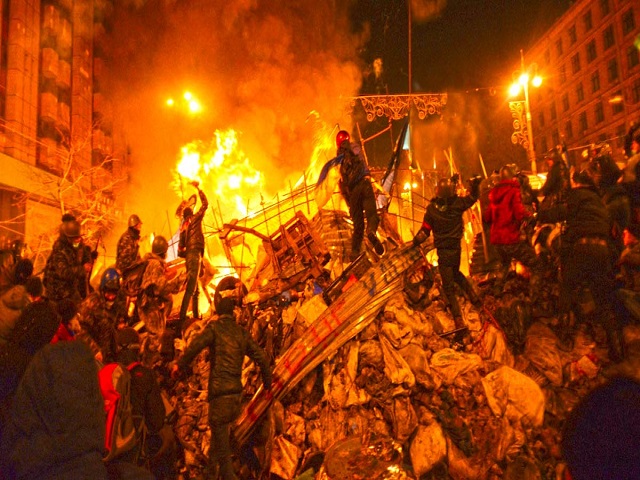
Will The United States Government Survive When the SHTF? Our government would crumble at every level if faced with a widespread disaster, and they may not be able to recover from it after the fact.

Tell me, if someone mentions “The United States of America”, what do you picture in your mind? The American flag? The White House? Mount Rushmore? Or perhaps you see a map of the Unites States, like this.

United States Map1

What you’re looking at is the sovereign territory that is both claimed and incorporated by the United States Federal Government. But in reality, that is not the United States. Would you like to know what it really looks like?

United States Map military bases

That’s more like it. What you’re looking at is a map of every military installation in the lower 48 (that we know of) according to Google Maps. There are a few more in Alaska and Hawaii, and hundreds more across the globe.  Now imagine a map of every police station, capital building, post office, courthouse, and every other federal and state agency. That, is the real United States.

To some of you that may sound obvious, but hear me out. Every government on Earth has a territory that they claim as their own. They have certain boundaries that legally exist as their jurisdiction. But then there are places that are disputed like Eastern Ukraine or the Senkaku Islands, and there are places that no employee of any state has ever set foot in like the depths of the Amazon Rainforest. They may legally belong to a government, but practically speaking is another story.

In truth, the government is not a series of lines on a map. It is the sum total of people who work for that government, and the areas where those people can successfully wield influence. I personally experienced this reality several weeks ago when I went hiking in a national forest. I was 15 miles away from the nearest cell reception, nobody knew I was there (long story) and there were small trees sprouting in the middle of the gravel road that led into the park. It was clear that not only had nobody been to my particular location in several months, but there had been no members of the park service there either in a very long time.

If you look at a map it would say that this place belongs to the United States Government, but the situation on the ground said otherwise. If someone attacked me in the park, my safety lies solely in my own hands, and what I do after the fact (if I survive) is totally up to me.

I suppose I could call the police, but if I didn’t nobody would know, and if I lost that particular fight, it’s unlikely anyone would be punished. There is no legal recourse for either party at that particular time and place. That piece of land, for all practical purposes, belongs to no one.

The reason I’m bringing any of this up is to illustrate a point about our government’s ability to survive a major disaster. I’m not very confident that they could. I’m sure they have an extensive series of bunkers that will shield the political and financial elite of our nation during any disaster, but when they emerge months or years later, will they have the infrastructure and personnel to enforce the boundaries they claim as their own?

I’m sure it would depend on the disaster, but in this case I’m talking about something catastrophic. Think EMP attack or nuclear war. Heck, even a major financial correction might get the dominoes tumbling into a wider disaster.

Most preppers would assume that they will quickly lose control of large swaths of the rural countryside. I would have to agree. If you look at most wars that have occurred over the past 100 years, one fact stands out. The cities have always been bastions of government authority, while the countryside is quickly overrun by rebels or foreign invaders. This can definitely be said of our own military.

When you compare our wars in Vietnam and Afghanistan, you’ll see the same situation. Our forces clung to cities and far-flung outposts, while occasionally sending patrols into a countryside that they would never successfully control. Cities are just easier to manage, plain and simple. But it’s hard imagine them maintaining control over a vast countryside that is filled with people who don’t like the government, who have lived without their help for many years, and are now dealing with an influx of desperate people who have fled the cities.

However, they do have those urban areas, and once they make contact with what’s left of the local authorities in small towns across America, they might be able to start exerting their previous control over those regions. The only problem is, they may not be able to keep the lid on our cities. You have to ask yourself, if they can’t control an area that is traditionally easy pickings for a government, will they be able to raise a flag anywhere else?

As of now, our cities are already bursting at the seams. In cities like Chicago, the number of police in their gang enforcement division is actually outnumbered by gang members with a 500-1 ratio. In other major cities, you might hear stories about certain neighborhoods that police just flat-out refuse to enter without extensive backup (again, is it really the United States if their employees can’t show their faces in that neighborhood?).

Their ability to solve murders has been declining for years, and the public’s trust with the police is in the toilet. Simply put, our government’s authority has been slipping at the local level for a long time, and this doesn’t even account for the mobs of panic-stricken citizens that might emerge after a disaster. It also doesn’t account for situations like Hurricane Katrina, where numerous police officers abandoned their posts in the wake of the storm.

If you ask me, it looks like our government would crumble at every level if faced with a widespread disaster, and they may not be able to recover from it after the fact. The police will be outmatched, and the military will either be stranded in overseas outposts, or tied up with the police in our urban areas.

Really, it boils down to this. If there is an event that is so catastrophic, that it shatters our police and military into isolated units with little communication to the outside world, will they be able to survive? And for those cops and soldiers who do survive, will they be willing to pledge allegiance to our current politicians and bankers, when they emerge from their fortified bunkers?

At the end of the day, our government is nothing more than the people who work for it and their ability to enforce the law in any given area. It’s hard to say if they would prevail in their current form during any widespread disaster.

So what do you think? If it hits the fan, will the federal government weather the storm, or will they be completely overwhelmed by the chaos?
SHTF – What to do? – 2020 Edition( what do most people do? Probably, most will sit in front of a TV, or access the internet, to see what is happening around them.)

When the Stuff Hits The Fan (SHTF), what do most people do? Probably, most will sit in front of a TV, or access the internet, to see what is happening around them.

While that may help in some instances, it is not the only thing you need to do – otherwise, you will be wiped out by the lawlessness and other repercussions that come when SHTF. There are three things to remember when SHTF – food, shelter, and weapons.

Preppers spend their time getting ready for disasters that might unexpectedly come. As a prepper, you have to be prepared all the time or have a plan to get ready within a few days.

When SHTF, the indecisive, the sentimental, the macho, the fantasy-world planners, the uncreative, and those who panic a lot will be the first to succumb to whatever disaster comes. So, what should you do to stay alive for as long as possible?

Find out More About the Situation

The first phase in any operation is intelligence gathering – you do not want to rush to your bunker when there are earthquakes. In most cases, whatever you see or hear when SHTF, will depend on where you live and what time of day you see it.

In case an Electromagnetic Pulse (EMP) blasts across the country, you will need to gather more information from different avenues, including your neighbors, the TV, and the internet. Your neighbors might not only give you more details on the disaster, but you can also form neighborhood security teams, and they can teach you skills you never had.

To know if an EMP hit the entire country, and it is not just a power outage issue, you can check your electrical devices. If you have a metallic torch with a bulb and dry cells, it will not be affected. If all other electrical devices are affected, including your car, then know the EMP is a widespread disaster. If an EMP wipes out everything, having a Faraday cage will help you start your electronics.

Next, you will need to find out how widespread the disaster is. To do so, you will need a ham radio, which does not go off when the SHTF. The information you gather will help you know whether to move or stay where you are.

Be Ready to Move

If SHTF today, do you have the right gear to move for a couple of days? The first thing you need to do, wherever you are, is to ensure you have enough water to last you many days. At some point, however, you will have to move.

A prepper always has their things in their bags ready to bug out. That bag should not be more than 30 pounds – if you can, make your bug out bag 20 pounds or less. Ensure the bags are weatherproof so you can last in the snow or in water. You shouldn’t travel alone – ensure that everyone else has their gear ready. Be sure to carry enough drinking water in your bag to last a couple of days, and have a way to purify more.

Find Your Team and Those Close to You

It is not easy to reach out to everyone in your team or your family when SHTF. You can be ready no by buying ham radio with which you can reach out to your team. If you do not have the radio when SHTF, you might have to track your team through other communication means.

The other great way of getting to your team is having a predetermined location where everyone can check in once in a while – this way; you might all meet at the predetermined rally point.

In most cases, the rally point will be the home of one of the team members. You will need to change that immediately, you establish communication with everyone and choose a safer location.

Stay Safe

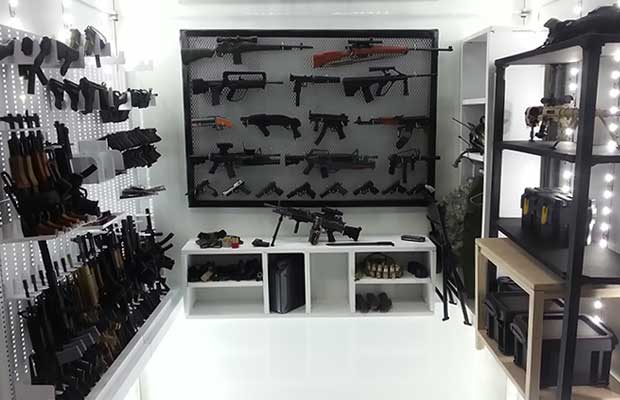
Lawlessness ensures in times of disaster. Whether you are in a team or you are all alone, having the right armory will help you stay safe. If you have a handgun or rifle not affected by the disaster, you can use it to scare away threats.

A rifle scope comes in handy for optimal stability when you shoot. In some instances, your bug out or rally location might in the woods where you need to fight off wild animals, and kill some for food.

If you are traveling as a team, you can set up a perimeter and be on the watch out for threats. The best place to start is to identify the skills of members of your team. Those who are good in arms can defend the rally point, hunters can get food, and anyone else can help keep watch.

Even if you are alone, pick a vantage point where you can see anyone or anything that approaches from all directions, as your hideout.

Trust Your Guts and Be Ready for Anything

It is tough to make friends in times of disaster – you should not trust everyone. Those who are not prepared for disaster will try and take advantage of those who are ready – and the confrontation will not be peaceful. Stay away from suspicious-looking strangers. Again, be ready to move in case anything happens. Be careful of the food you eat to ensure you are not exposed to food poisoning.

Conclusion

The only way to survive when SHTF is to prepare in advance – have all the right gear (clothing, bag, and boots), safe drinking water and non-perishable food, and a means to communicate. Learning self-defense and staying in shape will also help you significantly.

Sound advice for dangerous times: Safety tips for preppers who want to survive in a post-SHTF world

Preppers don’t take a break from their lifestyle. Even when things are quiet and peaceful, a prepper knows that it can go bad without warning.

To help your family survive in a post-SHTF world, make necessary preparations like the ones detailed below.

Stay away from large crowds during times of social unrest.

When SHTF, unprepared people may resort to looting. You won’t have any problems at all if you start stocking up on necessities while times are quiet.

If times are tense, it is wise to avoid large, crowded areas like malls.

Stay informed.

Monitor the news so you have the information you need before deciding if the whole family should bug in or if you all need to bug out.

Listen to reports on any local situations that may turn into full-blown riots. Identify danger zones in your area and avoid them even before SHTF.

If a crisis is ongoing, tune in on the news. Make sure you have a battery-operated or hand-crank radio so you can stay informed even if you lose power.

Desperation can make people resort to unthinkable acts.

When times are tense, people are not focused on what is going on around them as much. Stressed people can cause accidents on the road, and you might encounter more people who are drunk or high.

Avoid these unpredictable individuals by staying at home and waiting until things quiet down.

Mind your own business and keep quiet.

You can’t reason with everyone. Live your life however you want, be considerate, but don’t expect everyone to like you. Not everyone understands the prepping lifestyle, but as long as you aren’t inconveniencing anyone, do as you please and prep all you want.

Stop posting photos of your gear and supplies on social media. You might as well stand on the corner of your street and tell strangers where to find your well-stocked pantry and valuables.

Instruct family members to keep your emergency plans and survival prep a secret to avoid attacks from looters after SHTF.

Don’t go on unnecessary trips for supplies.

When SHTF, you can’t waste fuel and money if you only need a couple of items at home. Plan trips to town ahead of time, and make a list of anything you need to buy so you don’t waste your time and money by going on frequent trips.

When you do go on a trip, buy essentials like grains or other food items in bulk. Scheduling trips also limit your exposure to distracted drivers who could cause car accidents.

By planning trips ahead of time, you also limit the wear and tear on your car.

Think of alternate routes to and from school and work.

This is crucial, especially if you have kids who still go to school. Before SHTF, inform your family of alternate routes that they can take when things go bad.

Even if a particular route takes longer during quiet times, it may be faster if you are dealing with a disaster scenario.

Don’t use public transport during tense times.

In the early stages of a survival scenario, people will panic. If they’re not prepared, their first instinct will be to flee using public transport.

Disaster shelters may seem like a good idea, but consider this: when SHTF, do you want to be stuck in an unfamiliar place with strangers desperate for food and shelter, or do you want to have access to supplies in your own home?

Even if you bug-out, you should prepare ahead of time so your bug-out location is stocked with supplies that you will need if you have to evacuate.

It’s better to be overprepared when a disaster scenario occurs instead of being caught unaware when SHTF.

Will The United States Government Survive When the SHTF? Our government would crumble at every level if faced with a widespread disaster, and they may not be able to recover from it after the fact.

Tell me, if someone mentions “The United States of America”, what do you picture in your mind? The American flag? The White House? Mount Rushmore? Or perhaps you see a map of the Unites States, like this.

United States Map1

What you’re looking at is the sovereign territory that is both claimed and incorporated by the United States Federal Government. But in reality, that is not the United States. Would you like to know what it really looks like?

United States Map military bases

That’s more like it. What you’re looking at is a map of every military installation in the lower 48 (that we know of) according to Google Maps. There are a few more in Alaska and Hawaii, and hundreds more across the globe.  Now imagine a map of every police station, capital building, post office, courthouse, and every other federal and state agency. That, is the real United States.

To some of you that may sound obvious, but hear me out. Every government on Earth has a territory that they claim as their own. They have certain boundaries that legally exist as their jurisdiction. But then there are places that are disputed like Eastern Ukraine or the Senkaku Islands, and there are places that no employee of any state has ever set foot in like the depths of the Amazon Rainforest. They may legally belong to a government, but practically speaking is another story.

In truth, the government is not a series of lines on a map. It is the sum total of people who work for that government, and the areas where those people can successfully wield influence. I personally experienced this reality several weeks ago when I went hiking in a national forest. I was 15 miles away from the nearest cell reception, nobody knew I was there (long story) and there were small trees sprouting in the middle of the gravel road that led into the park. It was clear that not only had nobody been to my particular location in several months, but there had been no members of the park service there either in a very long time.

If you look at a map it would say that this place belongs to the United States Government, but the situation on the ground said otherwise. If someone attacked me in the park, my safety lies solely in my own hands, and what I do after the fact (if I survive) is totally up to me.

I suppose I could call the police, but if I didn’t nobody would know, and if I lost that particular fight, it’s unlikely anyone would be punished. There is no legal recourse for either party at that particular time and place. That piece of land, for all practical purposes, belongs to no one.

The reason I’m bringing any of this up is to illustrate a point about our government’s ability to survive a major disaster. I’m not very confident that they could. I’m sure they have an extensive series of bunkers that will shield the political and financial elite of our nation during any disaster, but when they emerge months or years later, will they have the infrastructure and personnel to enforce the boundaries they claim as their own?

I’m sure it would depend on the disaster, but in this case I’m talking about something catastrophic. Think EMP attack or nuclear war. Heck, even a major financial correction might get the dominoes tumbling into a wider disaster.

Most preppers would assume that they will quickly lose control of large swaths of the rural countryside. I would have to agree. If you look at most wars that have occurred over the past 100 years, one fact stands out. The cities have always been bastions of government authority, while the countryside is quickly overrun by rebels or foreign invaders. This can definitely be said of our own military.

When you compare our wars in Vietnam and Afghanistan, you’ll see the same situation. Our forces clung to cities and far-flung outposts, while occasionally sending patrols into a countryside that they would never successfully control. Cities are just easier to manage, plain and simple. But it’s hard imagine them maintaining control over a vast countryside that is filled with people who don’t like the government, who have lived without their help for many years, and are now dealing with an influx of desperate people who have fled the cities.

However, they do have those urban areas, and once they make contact with what’s left of the local authorities in small towns across America, they might be able to start exerting their previous control over those regions. The only problem is, they may not be able to keep the lid on our cities. You have to ask yourself, if they can’t control an area that is traditionally easy pickings for a government, will they be able to raise a flag anywhere else?

As of now, our cities are already bursting at the seams. In cities like Chicago, the number of police in their gang enforcement division is actually outnumbered by gang members with a 500-1 ratio. In other major cities, you might hear stories about certain neighborhoods that police just flat-out refuse to enter without extensive backup (again, is it really the United States if their employees can’t show their faces in that neighborhood?).

Their ability to solve murders has been declining for years, and the public’s trust with the police is in the toilet. Simply put, our government’s authority has been slipping at the local level for a long time, and this doesn’t even account for the mobs of panic-stricken citizens that might emerge after a disaster. It also doesn’t account for situations like Hurricane Katrina, where numerous police officers abandoned their posts in the wake of the storm.

If you ask me, it looks like our government would crumble at every level if faced with a widespread disaster, and they may not be able to recover from it after the fact. The police will be outmatched, and the military will either be stranded in overseas outposts, or tied up with the police in our urban areas.

Really, it boils down to this. If there is an event that is so catastrophic, that it shatters our police and military into isolated units with little communication to the outside world, will they be able to survive? And for those cops and soldiers who do survive, will they be willing to pledge allegiance to our current politicians and bankers, when they emerge from their fortified bunkers?

At the end of the day, our government is nothing more than the people who work for it and their ability to enforce the law in any given area. It’s hard to say if they would prevail in their current form during any widespread disaster.

So what do you think? If it hits the fan, will the federal government weather the storm, or will they be completely overwhelmed by the chaos?

The Best Prepper Guns List – Must Have Weapons for SHTF

As another year draws to a close, I find myself considering a host of issues that I routinely pause to reflect on at the end of each year. Since I started prepping back in 2007, my days to varying degrees are filled with a sense of expectation that wanes or increases with current events and trends. My reason for prepping was and remains to be able to protect my family from disasters whether man-made or natural in origin and it is that goal that causes me to look to the future for warning signs. Some days I see problems just over the horizon and others the risk is further away. The sense of something in our future never leaves but the intensity changes.

If you consider yourself a prepper you may have had similar thoughts. In the beginning there was for me a greater sense of urgency to get ready, but as I have learned and gathered supplies, that urgency has relaxed a good bit. I chalk that up to actually being prepared at some level and the comfort I gain from knowing if something does happen, I have a lot of bases covered already. It seems that I start each year with a reasonable belief that it is all going to tank “this year” only to be sitting at my home at the end of the year with my family safe from any disastrous EMP, a pandemic that ravages the planet or an economic collapse that destroys our wealth and throws everyone into a second great depression. I am not depressed or disappointed in this fact, don’t get me wrong but time passing does have a way of making me recheck my priorities and reevaluate my personal prepping plans.

I think there are 4 key survival concepts that every prepper should work on at all times to place you in the best possible position to survive anything that happens. These are Water, Food, Shelter, and Security. If you have these four bases covered, you will be so much better prepared to survive anything from a flood, hurricane or Global pandemic. We talk about all of these survival concepts on the Prepper Journal, but there is one topic that comes around frequently that generates a substantial amount of debate so I wanted to write an article that focuses on Security.

There are a lot of opinions on firearms as defensive weapons. There are also numerous laws and regulations that govern what you may be able to legally purchase. I believe that all things being equal, the best defensive weapons you can own are firearms and with that I mind I want to discuss what I recommend everyone have if you are considering a firearm as part of your preparedness strategy.

What are the best prepper guns?

A shotgun makes a great first firearm for a prepper.

If you can legally own firearms I believe that there are 5 firearms that make up a well-rounded prepper battery of arms. With these 5 firearms, you will be able to deal with situations that we routinely talk about in a breakdown in society. Even if you never go through any disaster, having these firearms will benefit you in terms of security and firearms generally do not lose value, only appreciate so they are an investment that pays off in multiple ways.

I have listed the weapons below in priority order. If you can only afford one weapon, you should buy the first one on the list and add to your arsenal as your budget/resources allow.

  1. Shotgun – If you can only have one single weapon for home defense in a collapse scenario, I recommend a shotgun. Shotguns are easy to use, the ammunition is reasonably cheap and they can pull double duty as both defensive weapons and hunting firearms. In terms of price, shotguns are cheaper than pistols (generally) and can be purchased a lot of times without the same background scrutiny that you get with other handguns.
  2. Semi-Automatic Rifle – Also known as “Assault rifles” by anyone trying to demonize guns. A semi-automatic rifle is simply one that automatically chambers another round when you pull the trigger. For the weapon to fire again, you would need to pull the trigger again. Civilians cannot buy fully automatic weapons so to compare these rifles to what the police or military has is not accurate on one side. They do have many advantages though and when we think of a semi-automatic rifle for a prepper there are two that are the most common. Those two options are the AK47 and the AR-15. When it comes down to choosing which one to go with like anything on this subject there is a lot of debate, but for me personally I believe the AR-15 is the better of the two for a variety of reasons. Either one will work fine and you should have one.
  3. Full size pistol – Again, another topic that causes a lot of arguments but for the sake of inclusion I will say a 9mm, .40 or .45 would work equally well as your main defensive pistol. I am not talking about a concealed carry firearm here as I deal with that in another article. This is the  nightstand gun that can also be used as your backup weapon in the event your main battle rifle (semi-automatic) is unavailable for some reason. I do not recommend only having a pistol but I think they are great to have and compliment the other firearms nicely.
  4. Long Range Rifle – The shotgun is perfect for close range. The AR-15 will definitely reach out to several hundred yards, but you likely won’t be engaging anyone at that distance. To go further 400-600 yards or to take large game animals I would go with a .308 or a .30-.06. Some will say you can simply purchase an AR chambered in .308 and kill two birds with one stone. That is one solution but it comes down to preference and who is shooting the rifle. .308 certainly has more of a kick than a .556 or .223 round.
  5. Small game Rifle – For me this is a .22 rifle. I would not buy a .22 pistol unless I was purchasing this for a younger child or for plinking (practice). A .22 will actually kill larger game and even humans as many will argue but I would not count on that as my main weapon for defense. It is great at taking small game though and the ammo is still much cheaper than any of the other options.
Boston T. Party – Gun Bible is a great resource for choosing your survival arsenal.

Is there a best gun for home defense?

There are arguments for shotguns, pistols and even Semi-automatic rifles as your home defensive weapon and it really comes down to what you have, what the threat is and where you are in your home at the time in relation to the weapon. I have all of the items above but my home defense plan is different if I am in bed as opposed to out in the kitchen. It also depends on whether we are in a normal situation like now or in the middle or wide-spread riots and looting.

If I am in bed and someone breaks in, I won’t grab the shotgun or the rifle, I would go for the pistol. Now, that is because I have one in close proximity and I am comfortable using and firing this particular firearm. If I didn’t have any weapons at all, I would still purchase a shotgun first and that would be my home defense weapon.

Shotguns are more forgiving with aim and this could help you in a high stress situation. Now, before anyone starts beating me up on that comment let me clarify. A shotgun is going to shoot what you are aiming at so I am not trying to say that you can just wave it in the general direction and actually hit someone, but shotgun pellets spread. If you aim at a person, the spread of the shot will more likely hit them even if your aim is a little off. Naturally, you need to practice with any firearm you have that you are planning to shoot. If you have in mind the potential for shooting someone who has entered your home you need to know exactly how this deadly tool works and become proficient in hitting what you are aiming at.

There are always considerations for penetration in a home since our walls are made from sheet-rock and not concrete, but this applies to any firearm.

How much ammo do I need?

How much do you plan on shooting and how confident you will be able to purchase more ammunition when you need it? We are starting to see a return to normal on ammunition availability and cost but any upcoming legislation could change that again. When the last ammo shortage hit you were not able to easily find many of the most common calibers and what you were able to find was much more expensive. I had the benefit of having plenty of ammo stored up so I didn’t need to purchase anymore. Had the end of the world happened, I would already have full stock of ammo for each of my weapons, but I started stocking up years ago. I have recommended ammo storage amounts listed on another article.

You should also consider an inventory system and we have a free ammo inventory spreadsheet available for download that you can use to set targets and track your own personal ammo storage amounts. This will help with budgeting as well as give you a clear idea of what you need to purchase if you have some extra money.

17 Things People Will Wish They Have After The SHTF (Don’t stand there helplessly as criminals kick in your door, attack your family, and steal the things you need to survive.)

This post is a little different from my usual posts. If you’re already a prepper, I don’t expect this article to teach you anything new. Rather, I expect it to serve as a reminder of why we prep. I also hope that it can serve as a warning to those who don’t prep.

For example, you might think it’s unlikely that your home will ever be damaged or destroyed, but you still buy homeowners insurance just in case. It’s the same with prepping. Maybe doomsday will never arrive, but you never know. (And besides, doomsday is just one of many reasons to prep.)

And it’s not like we’re preparing for something that has never happened before. Millions of people die in disasters every year, economies collapse all the time, and terrorism is an ever-present threat. Sure, you might luck out where you live and never face a serious disaster. But then again, you might not.

Unfortunately, most people in the Western World are unfamiliar with history and current events, so they have no idea how common disasters really are. They assume they will always have access to modern luxuries: electricity, air conditioning, fresh water, affordable food, and so forth. Consequently, humans are more helpless than ever before. It’s gotten so bad that there are even teenagers who don’t know how to use can openers.

But they won’t find out how helpless they are until the SHTF. When that happens, people with no survival skills or emergency supplies won’t last long. They’ll quickly realize that a few basic survival items can mean the difference between life and death. Here are 17 things people will wish they have and why (in alphabetical order).

1. Barter Items

Hyperinflation is the main reason people stock up on barter items, but there are several other scenarios where they could become necessary. Most people don’t carry much cash anymore, so if the power is out or the Internet is down, they’ll have no way to purchase anything. That’s where barter comes in.

You probably won’t be able to barter at the grocery store, but you could at least barter with your neighbors. If you are desperate for food but you don’t have any barter items, they might take pity and help you anyway. Then again, they might point their guns at you. It’s definitely better if you have something to trade.


2. Bug Out Bags

For most people, everything they own in the world is in one place: their home. But what if your home is destroyed? Floods, hurricanes, earthquakes, house fires–all these things are guaranteed to happen again somewhere. What if your neighborhood is next?

Or what if there’s a pandemic, nuclear fallout, or an invading army on its way and you have to bug out quickly?

These are just a few reasons why you need a bug out bag. Even the most experienced survivalists would be pretty miserable trying to bug out without any supplies.


3. Cooking Gear

Imagine your stomach is growling as you stare at a pile of food you can’t eat because it has to be cooked. Although many modern foods can be eaten out of the box or can, foods like pasta, rice, and some frozen foods are inedible if they’re uncooked.

If the power goes out, it will only be a matter of time before the all the frozen meat thaws out and starts to rot. When that happens, you’ll be wishing you had a way to cook without power.


4. Fire

In this day and age, most people never truly experience the cold. They just wrap themselves in a blanket and turn up the heater. But without power, you’ll need to build a fire if you want to stay warm.

This is more important than you might think. Every year thousands of people die from hypothermia, and that’s during good times! Also, don’t forget that many foods need to be heated up before you can eat them.

Speaking of fire, don’t forget fire extinguishers. After a long-term power outage, some of the people who’ve never cooked over a fire or used lots of candles are going to accidentally set their homes ablaze. And with no fire department to stop it, the fire will spread from home to home. Entire neighborhoods might burn down. If you don’t have a fire extinguisher, you may have to evacuate your home.


5. First Aid Kits

Most people have no idea how fragile their bodies actually are. Millions of us would be dead right now if it weren’t for basic first aid supplies to keep wounds clean and prevent infections. And keep in mind that during disasters, injuries tend to skyrocket because of all the people climbing, doing manual labor, messing around with fire, and consuming contaminated food and water. If hospitals are overrun, people will have to help themselves with a first aid kit.

In addition, you should also have some extra medications and antibiotics. I, myself, would probably be dead right now if it weren’t for antibiotics.


6. Food

When’s the last time you were truly hungry? I don’t mean you skipped breakfast and now your stomach is growling hungry. I’m talking about the kind of hunger where your arms and legs are shaking with weakness, your stomach is in knots, and all you can think about is food no matter how hard you try to concentrate.

Most people have never actually been this hungry, but they will be if the SHTF. Grocery stores only have about three days of food on hand, a week at most, so you need to keep plenty of survival food on hand.


7. Fuel

Gasoline is something we all tend to take for granted. We use it almost every day but rarely think about it (unless the price goes up a little), much less where it comes from. After the SHTF, gasoline will disappear very quickly. Just look at what happens to coastal cities when a hurricane is on the way.

Not only do you need gasoline for your bug out vehicle, you need it for your power generator.

But that is just one type of fuel. You’ll also want to stockpile firewood, propane, isopropyl alcohol, or any other type of fuel you might need to cook food and keep warm.


8. Gardening Supplies

Gardening supplies are essential if during a long-term disaster scenario. For example, if the economy collapses like it recently did in Venezuela, you could have a situation where food shipments are few and far between, or quality food is simply too expensive. People who can grow their own food won’t be nearly as hungry.

In addition to supplies like rakes, spades, hoes, you’ll also want to get plenty of buckets so you can grow food indoors and keep fresh fruits and veggies on the table year round.

You should get some greenhouse supplies as well. A hoop house covered in plastic can significantly extend the growing season. There are countless DIY greenhouse plans out there. Most of them just take a little PVC and plastic sheeting, and they’re not that hard to assemble.

Heirloom seeds are another essential item. They need to be non-hybrid and open-pollinated. Why? Because if they aren’t, they don’t produce as much food or as many seeds, and they usually don’t taste as good (most seeds you buy in stores are hybrids). I recommend these survival garden heirloom seeds.


9. Lights & Batteries

Imagine looking out the window at night and seeing only darkness. Even worse, imagine a pitch black home where you can’t find anything you need and can barely see the faces of your loved ones. Not only would that be unsettling, it could also make you an easy target for burglars. Don’t let that happen, especially when there are so many ways to light your home when the power goes out.

Also, don’t forget batteries. You will need them not only for your flashlights but for any other electronic devices you might need such as radios or medical equipment.


10. Radios

Having no information of any kind from the outside world can be almost as frightening as not having lights. We are so used to having news delivered right to our phones, we forget how frustrating it is to be in the middle of a long power outage and have no idea what’s going on out there.

It’s even worse if we have no way to communicate with our loved ones. If there are people you care about in an area that’s been hit by an earthquake or hurricane, you will be overcome with worry until you’re able to get in touch with them. Don’t let that happen.


11. Sanitary Supplies

Not only do you need to keep wounds clean, you need to keep your whole body clean. When the garbage trucks stop coming, trash will pile up in people’s yards which will attract bugs, rodents, and disease. And when the water stops flowing, people won’t be able to properly clean up after meals or bathe themselves.

Those who don’t know what to do with waste will keep using their toilets and stink up their houses. Eventually, once-clean neighborhoods will be as filthy as the streets of a third world country. In this environment, many people will get sick and die from infections and deadly diseases that could have easily been prevented with proper hygiene.


12. Survival Books

Without the Internet, people will have a hard time figuring out how to do basic things. They’ll wish they’d bought some of those survival books they’ve seen online or at the bookstore.

I know some people who argue that a true prepper should commit survival knowledge to memory and practice survival skills on a regular basis so they don’t have to refer to books. I completely agree, but no one can learn everything. Even the most experienced preppers can keep learning new things.

And besides, what if you just started learning about survival a few months ago and the collapse happens tomorrow? Or what if after the collapse, you have friends and family with so many questions you don’t have time to answer them all? Wouldn’t it be nice if you could refer them to your survival library?


13. Sewing Supplies

In a long-term disaster, it’s possible there won’t be any clothes left in the stores. More likely, however, is you simply won’t be able to afford them. This is what happens during economic depressions–many people live hand to mouth and can’t even gather enough money for new socks.

But back in the day, people didn’t throw away a sock just because it had a hole in it. They would actually repair their socks (it was called darning). They would probably scoff at the idea of throwing away a perfectly good sock with one little hole. After all, they’re not very difficult to repair.

If there’s another great depression, people will have to learn how to start sewing again so they can repair their torn clothes and even make new clothes out of sheets, curtains, and any other fabric they can find. And to do that, they will need sewing supplies.


14. Shelter

This is more of a skill than a thing, but it’s a very important skill. If you have to bug out and you find yourself in the wilderness, one of your top priorities is to build a good shelter. That last thing you want to do is curl up under a tree while the cold air nips at your face and dampness from the ground seeps into your clothes. Do that, and you risk getting hypothermia.

Hopefully, you have a tarp and some paracord in your bug out bag, but it’s possible to build a shelter from scratch.


15. Tools & Home Repair Supplies

After a disaster such as a hurricane or an earthquake, you will probably need tools to repair things around your home. Hammers, screwdrivers, wrenches, shovels, saws, and so forth. Even if your home doesn’t get damaged, you still may want to lend tools to your neighbors, or you may want to board up windows to stop potential intruders, or you may simply need an ax for chopping firewood. You never know.

Tools are no good without home repair supplies. Don’t forget to stockpile nails, screws, lumber, plywood, caulking, wire ties, duct tape, plastic sheeting, etc.


16. Water

You will be shocked by how quickly thirst sets in once there’s nothing to drink. If the power is out for too long, the tap water will stop flowing. And unless you’re able to collect rainwater, you’ll die of thirst in just a few days.

Even if the water is still flowing, you could be facing a disaster where the water is contaminated. The last thing you want to do is drink water that makes you and your family sick, especially if the hospitals are overrun. So make sure you stock up on water and have at least two ways to purify water.


17. Weapons

Every time there’s a riot or a widespread disaster, some people take advantage of the situation and start looting. If the event lasts a long time and the authorities are unable to restore order, you can bet the looters will move from the commercial areas to the residential areas. Especially if they’re starving.

This is why you need to have a good weapon for self-defense, preferably a firearm. Don’t stand there helplessly as criminals kick in your door, attack your family, and steal the things you need to survive. If possible, prevent this from happening in the first place by putting some good home security measures in place.

Introduce Yourself (Example Post)

This is an example post, originally published as part of Blogging University. Enroll in one of our ten programs, and start your blog right.

You’re going to publish a post today. Don’t worry about how your blog looks. Don’t worry if you haven’t given it a name yet, or you’re feeling overwhelmed. Just click the “New Post” button, and tell us why you’re here.

Why do this?

  • Because it gives new readers context. What are you about? Why should they read your blog?
  • Because it will help you focus you own ideas about your blog and what you’d like to do with it.

The post can be short or long, a personal intro to your life or a bloggy mission statement, a manifesto for the future or a simple outline of your the types of things you hope to publish.

To help you get started, here are a few questions:

  • Why are you blogging publicly, rather than keeping a personal journal?
  • What topics do you think you’ll write about?
  • Who would you love to connect with via your blog?
  • If you blog successfully throughout the next year, what would you hope to have accomplished?

You’re not locked into any of this; one of the wonderful things about blogs is how they constantly evolve as we learn, grow, and interact with one another — but it’s good to know where and why you started, and articulating your goals may just give you a few other post ideas.

Can’t think how to get started? Just write the first thing that pops into your head. Anne Lamott, author of a book on writing we love, says that you need to give yourself permission to write a “crappy first draft”. Anne makes a great point — just start writing, and worry about editing it later.

When you’re ready to publish, give your post three to five tags that describe your blog’s focus — writing, photography, fiction, parenting, food, cars, movies, sports, whatever. These tags will help others who care about your topics find you in the Reader. Make sure one of the tags is “zerotohero,” so other new bloggers can find you, too.

Design a site like this with WordPress.com
Get started