Guerrilla Warfare: What Every Prepper Should Know (Part 1): guerrillas can take advantage of this defense/public-relations balancing game and force the hands of the security forces to further their long-term goals.

Disclaimer: Although this article is being published during a time of great upheaval, this is by no means an endorsement by the author or publication of any of the actions described in this article. This article is purely for academic purposes and to allow law-abiding citizens to make more informed choices regarding the defense and security of their communities.

Guerrilla warfare has been the bane of empires since the beginning of recorded history. When conventional forces fail or cannot be reasonably employed, and when a will to fight remains amongst the people, it can be expected that irregular warfare, or guerrilla warfare, will occur.

For Americans, the concept isn’t new. Americans have spent the better portion of the last fifty years fighting against guerrillas in Vietnam and the Middle East. The overwhelming firepower of the United States military has forced modern insurgents, terrorists, and revolutionaries to almost exclusively employ guerrilla tactics.

At the same time, The United States was forced to utilize guerrilla warfare in order to combat the British and likely wouldn’t exist if such tactics didn’t prove so effective.

While the terminology we use for guerrilla warfare originated in the early 19th century with Napoleon’s occupation of Spain (in Spanish it means, “little war”) and subsequent uprising of irregular forces to oppose him, records of such warfare can be found as far back as Alexander the Great’s campaigns in Afghanistan.

Important below:

Today I’d like to share with you a 3-second survival hack you can use to skyrocket your chances of protecting your loved ones during ANY crisis.
This technique is so powerful it can give you almost superhuman powers during the ugliest nightmares imaginable….
From natural disasters like earthquakes or tornadoes…
To explosive situations like mass shootings or even nationwide martial law.
And It doesn’t matter if you’re out of shape…
Or have no equipment…
Or even if you’re disabled living in a wheelchair.
This technique has been tested and proven by elite soldiers and real world “miracle” survivors from around the world.

Learning about guerrilla warfare is the next logical step for those who understand the importance of utilizing their second amendment rights when it is constitutionally called for. If you can understand why the second amendment and training with your firearm are necessary, you should also understand the necessity of learning to employ your protective weaponry in more complex scenarios.

For any SHTF scenario, you will need an understanding of employable tactics. Since you will likely be operating with a small group of like-minded community members, guerrilla tactics will be the ones that you can employ to best defend your neighborhoods.

To this end, we are going to explore guerrilla warfare and the tactics involved. This will be a two-part piece, with the first piece (this one) covering the goals, methods, and stages of guerrilla warfare. The second part will spend more time looking at specific tactics and techniques utilized in guerrilla warfare.

TABLE OF CONTENTS:

  • Why Should All Citizens Have a Basic Understanding of Guerrilla Warfare?
  • What is Guerrilla Warfare? What are Guerrilla Tactics?
    • Realities Vary By Conflict, But Similarities Remain
    • Are Guerrillas Terrorists?
    • Guerrilla Warfare has Political Goals
    • Food for Thought: Is It Worth It?
  • The Stages of Guerrilla Warfare
    • Propaganda Stage
    • Growth Stage
    • Assault Stage
  • A Guerrilla Warfare Case Study: 1969 Belfast

Union Soldiers Picket Duty

WHY SHOULD ALL CITIZENS HAVE A BASIC UNDERSTANDING OF GUERRILLA WARFARE?

An understanding of guerrilla warfare allows well-drilled groups of the local populace to defend against organized militaries, as well as react against groups of militarized criminals.

While most of us understand the first scenario, like Red Dawn, where a scrappy militia fights back against soldiers, the latter is just as likely for us in North America if things collapse. Gangs taking over chunks of territory is nothing new, and the cartels are often well-armed and well manned.

For example, in 2014, drug cartels had more or less dominated a large portion of Mexico. Luckily, after the government proved inept, the local populace rose up and began to push the drug lords out of their towns.

Sadly, the Mexican government took control of the militias, and they once again became ineffective, but the example is still a good one. From this case study, we can see that in the Americas, these cartels are capable of dominating swathes of territory, but also that organized populaces are capable of resisting them with the right strategies.

As we stated earlier, if you can understand why the second amendment is necessary, you should also understand the necessity of learning to effectively employ your weaponry for any SHTF conflict that goes beyond your personal property.

By understanding guerrilla tactics, you can better understand how to defend your community and how bad actors may be planning to work against you.

The military and police need to understand these tactics for much the same reasons. In the Marine Corps Manual: The Guerrilla and How to Fight Him the Marines emphasize the importance of learning how to deal with constant hit and run tactics and how devastating they can be to both life and morale when left unchecked.

WHAT IS GUERRILLA WARFARE? WHAT ARE GUERRILLA TACTICS?

“Two weapons today threaten freedom in our world. One is the 100-megaton hydrogen bomb; it requires vast resources, technology, effort, and money… The other is a nail in a piece of wood buried in a rice paddy.” – The Guerrilla and How to Fight Him, USMC Manual
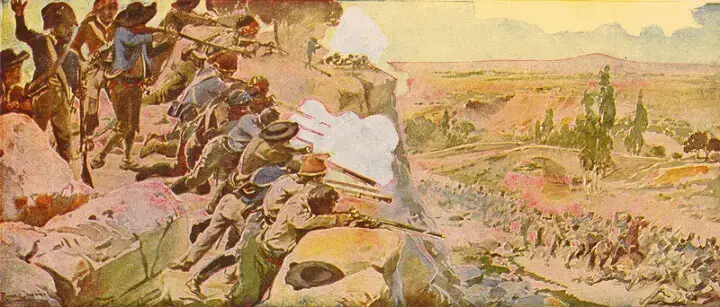
Portugese Guerrillas

Guerrilla warfare is a form of war that is indirect. Guerrilla warfare is ‘irregular,’ it involves small groups of armed personnel (often not official soldiers, though soldiers can fight as guerrillas) who utilize tactics such as ambushes, booby-traps, hit-and-runs, assassinations, and more to maximize damage with minimized risk and the minimal resources on-hand.

These tactics allow a small and less organized force to deal with more substantial and more traditional militaries. As far back as the biblical age and the Roman conquests of Judea, you can see the use of guerrilla tactics to strike back at an overpowering military.

The organization of a guerrilla unit has some similar characteristics, whether you are talking 19th century China or 1st century Judea. The guerrilla unit may originate in any the following ways:

  1. From the people upset at the law or an occupation.
  2. Regular army soldiers put behind enemy lines for that purpose.
  3. Combination of A and B, with groups of A typically being trained by elite units of B.
  4. From the local militia.
  5. Deserters from the ranks of the enemy.

REALITIES VARY BY CONFLICT, BUT SIMILARITIES REMAIN

Every conflict is informed by the culture and weapons of the age. The guerrillas who fought against Napoleon in Spain looked and thought quite differently from the ISIS fighters who took over sections of the Philippine Capital. However, many of the methods, strategic goals, and tactics will remain quite similar from conflict to conflict.

“The guerrilla band is an armed nucleus, the fighting vanguard of the people. It draws its great force from the mass of the people themselves. The guerrilla band is not inferior to the army which it fights simply because it is inferior in firepower. Guerrilla warfare is used by the side which is supported by a majority but which possesses a much smaller number of arms for use in defense against oppression.” – Che Guevara 

ARE GUERRILLAS TERRORISTS?

The simple answer is: sometimes. In my opinion, you should think of guerrillas as a force designation, like a militia or cavalry, and terrorism more as a set of tactics. Terrorism is the act of spreading terror, typically through violence, in order to further political goals.

Guerrilla forces specialize in hit-and-run tactics that go after supply lines and symbolic targets; this often overlaps with terror tactics. While some guerrilla forces may utilize terrorism, others may not.

When Che Guevera talked about terrorism, he noted that killings of enemies of ‘small importance’ would typically gain noting and only lead to reprisals. Rather, he emphasized strategic sabotage when possible—though history shows his forces were the cause of much terror.

Regardless, in almost all cases, guerrilla forces will be labeled as terrorists by the government they oppose. This is typically done as a public relations move rather than due to any precise definitions.

GUERRILLA WARFARE HAS POLITICAL GOALS

The circumstances that lead to guerrilla warfare, an armed sector of the populace against a much larger force, will 99% of the time be a political fight on some level. Traditionally, guerrilla leaders have spent as much time on instruction, agitation, and propaganda as they have on fighting, “for their most important job is to win over the people.”

Guerrilla warfare is typically not conducted in an effort to defeat the opposing force, but to either make the occupation too expensive or too politically untenable—and these goals often overlap. More supplies, information, and ultimately victory can occur when you can make your efforts are politically popular.

Even the FARC (Revolutionary Armed Forces of Colombia), who have a multi-step plan for controlling large areas of drug production (and have spent decades operating mainly as a drug cartel and hostage-taker), plan to eventually rely on a popular general uprising to overthrow the government. All guerrilla wars eventually need to engage in politics to succeed.

To this end, Mao made some interesting points regarding how his guerrilla forces should act and how this benefits them. Basically, Mao said that guerrillas must train to be polite and courteous to the people. Shut doors after yourself, pick up things you knock over, replace items and pay for food, etc.

By doing this, guerrillas can operate behind enemy lines for extended periods since their presence isn’t disruptive or upsetting to the local people. If you are the local people, these acts keep you in the good graces of your community.

FOOD FOR THOUGHT: IS IT WORTH IT?

If you are employing guerrilla warfare in defense of your community, that means a superior military force is currently dominating your community. Deciding to engage in this form of combat means you must think of your goals in the long-term (i.e., eventual freedom) because immediate actions will likely increase the violence and danger in your community.

Engaging in guerrilla warfare to protect your neighborhood will often be counterproductive as it will likely ensure a more extensive response. However, large-scale guerrilla warfare on multiple fronts and protracted long-term resistance have all proven to be effective at combating even the most potent forces in the modern age.

THE STAGES OF GUERRILLA WARFARE

This is a simplified summary of works published during the Vietnam war, a paper by Che Guevera, and a thesis by an American general.

PROPAGANDA STAGE

Goal: Raise Awareness, Gain Sympathy, and Gain Resources.

In this stage, symbolic attacks and attempts to obtain weapons or money are the most common. Attacking foreign embassies and emblematic buildings, as well as symbolic assassinations, are standard methods. The terrorists we see launch attacks from time to time are usually attempting some sort of propaganda message via their attacks, although reckless violence will often turn a populace against you.

These may not need to be violent attacks at all. The internet can be very useful, and you can see during the Syrian civil war how multiple groups used various forms of propaganda to grow their cause and gain recruits.

The surrounding culture and nature of the supposed conflict will typically dictate what the propaganda stage looks like as it is less about being tactically efficient and more about winning over ‘hearts and minds.’

GROWTH STAGE

In this stage, the guerrilla forces are able to put enough pressure in one area (let’s say we are working with a rural and urban sector) to draw troops from another. If the guerrillas can put enough pressure on the urban area, they can draw enemy soldiers away from the rural sector.

Once they can move in and dominate one of the sectors, the guerrilla forces are able to increase their supplies and recruits exponentially. Or, if they do not intend to stay and occupy, the guerrilla forces can at least ensure that the one sector is no longer aiding their opposition.

You can see during the occupation of Afghanistan how roadside bombs and ambushes were done in an attempt to isolate American outposts and occupied cities so that insurgent forces could draw attention away from other areas and soften them up for a more significant assault.

By doing so, the Taliban was able to occupy U.S. built power plants and other infrastructure and even began to tax the surrounding area.

ASSAULT STAGE

Attacks move from symbolic to strategic. Attacks on police stations or barracks force government troops out of more areas. In many cases, guerrillas will begin to take over sections of government in the areas they have started to control. Radio stations and media points are often targeted in an attempt to take control o the airwaves.

From here war is fought over territory, equipment, and messaging for control of the state.

Sometimes, the goal may not be to overthrow an existing state, but to establish a separate one or to simply survive (as we saw with the Jews in the Warsaw Ghetto and in the Russian forests). In either case, the end goal is to hold off government forces long enough to make conflict no longer tenable for them, not to necessarily dominate on the battlefield.

A GUERRILLA WARFARE CASE STUDY: 1969 BELFAST

This is a summary of a piece in the U.S. Army’s Urban Operations Handbook.

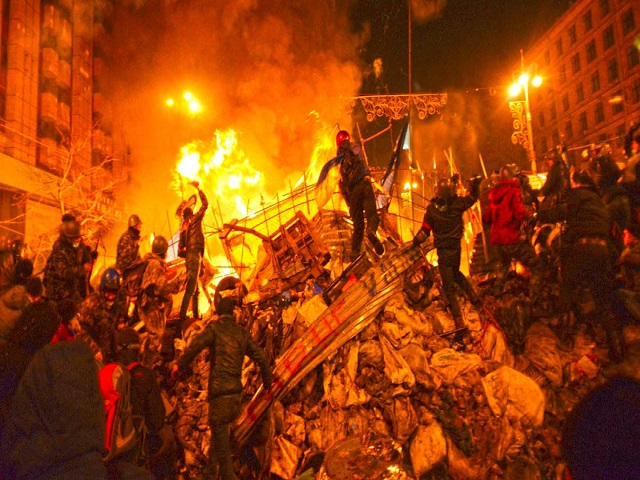
During the Irish uprisings against the British, Belfast became a hotspot full of explosions, shootings, barricades, petrol bombs, and other tactics that challenged the British forces. The British were able to defend infrastructure targets, which opened more military targets up to attack. These relatively isolated soldiers made for easy targets and were more legitimate targets for violent attacks in the public eye.

In response, the British were forced to increase the armor and armaments their soldiers were equipped with, which in turn made them look even more like a brutal occupier. As force-protection increased, the region’s stabilization decreased, and guerrillas were then offered better targets for attack.

The lesson here is that guerrillas can take advantage of this defense/public-relations balancing game and force the hands of the security forces to further their long-term goals.

Next week we’ll talk about guerrilla tactics and strategies.

Important below:

You might be living in one of America’s deathzones and not have a clue about it
What if that were you? What would YOU do?

In the next few minutes, I’m going to show you the U.S. Nuclear Target map, where you’ll find out if you’re living in one of America’s Deathzones.

13 Things to Do Before the Economy Collapses- We’ll get to a point where the Federal Reserve can’t save the economy??

I once shared an article on Facebook about the potential for an economic collapse in the near future, and someone left a comment saying, “Why do I keep hearing this warning over and over for years, and yet nothing ever happens?” Good question. When people keep saying that the sky is falling and it never does, it’s hard not to be skeptical.

As I said in my response to him, “After the stock market crash in 2008, everyone started claiming an economic collapse was about to happen, but what they didn’t realize is that it DID happen… in 2008. Since then, the economy has slowly been recovering. But the systemic problems that led to the crash were never corrected, and the bubble has been re-inflating. It can’t re-inflate forever.”

To stop the economy from completely collapsing into chaos, the Federal Reserve had to print huge sums of money to prop up Wall Street. Then they had to do it again during the Covid recession. But every time they do this, they print even more money than before, and the bubble re-inflates and gets even bigger. The larger it gets, the larger the next crash will be.

Eventually, we’ll get to a point where the Federal Reserve can’t save the economy. They won’t be able to keep printing money because it causes too much inflation. But they won’t be able to raise interest rates because it causes the economy to grind to a halt. Basically, they’ve painted themselves into a corner.

The most shocking article can be found below.

Liberal’s hidden agenda: more than just your guns…

… the impending collapse of the US food supply system
will steal the food from your kids’ tables…

Watch this video below to find out the great secrets hidden by the government.

We are currently in the mother of all financial bubbles. I believe the next depression (they’ll call it a recession) will begin within the next few years. Something will spook the markets, and even the Fed won’t be able to stop the economy from melting down.

All this is why I believe it’s more important than ever to prepare for a financial collapse, so in this article I’m going to cover 13 things you should do before that happens, starting with the most obvious ones:

1. Stockpile the Necessities

Having some extra food and water is a good idea in general, particularly if you live in an area where inclement weather can affect your daily life. To prepare for an economic collapse, however, you’ll need to have months of rations on hand.

Stockpile enough food, at a minimum, to survive a season without any incoming produce grown yourself. Store enough water for several months’ use and make sure you have multiple ways to purify future water supplies.

Also, stockpile plenty of medical supplies as doctors may be in short supply after a major collapse. Another thing that may be in short supply is electricity. Get all the things you’d need for a power outage, including ways to cook food and keep warm (or cool if it’s summertime). And don’t forget home security measures.

Desperate times means desperate people.

2. Build Some Bug Out Bags

Depending on the severity of the collapse, your town or city might become so dangerous that you have no choice but to leave it and head for a bug out location. But first, you’ll want to put together bug out bags for yourself and your family. You could even make bug out bags for your pets.

You should also consider getting a good bug out vehicle. If all you have is a small car, then you’ll have a hard time getting where you need to go.

3. Grow Your Own Food

Unless you have an underground vault the size of the Sistine Chapel in your backyard, you probably won’t be able to stockpile a lifetime of food for you and your loved ones. A more sustainable option is to grow your own food.

Growing your own food takes quite a bit of trial and error to reach a point where you can live off your own produce, which is all the more reason to start sooner rather than later.

4. Create Your Own Electricity or Learn to Live Without

In the event of an economic collapse, being dependent on the power grid is not the best situation to be in. The more you rely on electricity to accomplish your daily tasks, the more you’ll be behind when the power goes out. Solve this problem by learning to do as many daily activities without electricity as possible.

For example, start using kitchen gadgets and off grid lights that work without power. Combine this with a portable generator for the essentials and you’ll be self-reliant and comfortable.

5. Keep Cash on Hand

If the market tanks, you may still have some time to buy your way out of a sticky situation before inflation hits or the economy collapses altogether. Keep a hefty sum of cash on hand at all times so that you can make an emergency purchase without having to take a trip to the bank.

You never know when you might have to use it, especially if the electricity is out and no credit card transactions are possible.

6. Invest in Precious Metals

When other currencies lose their value, you can trust that gold and silver will still be viable for making purchases in a disaster scenario. In fact, when inflation hits, the price of gold and silver goes up tremendously because these precious metals keep their value despite economic changes.

Be sure to have them in a form that is easily tradable, like coins, rather than in a larger form such as bars.

7. Stock Up on Barter Items

I know, I know, I’ve mentioned cash, precious metals, and barter items now. So you’re probably wondering, which one should I get? Well, all three, if possible. In a deflationary collapse, you’ll want cash. In an inflationary collapse, you’ll want precious metals.

And in a total collapse, you’ll want barter items. Try to have a little bit of each so you’re prepared for every possibility.

8. Get Out of Debt

Once you’ve acquired at least a little bit of cash, precious metals, and barter items, it’s time to start getting out of debt. If the economic crisis isn’t catastrophic (i.e. society’s infrastructure is left intact), you’ll want to make your money go as far as possible.

To that end, get out of debt as fast as you can! You want to be able to respond to a rapid change in the economy as quickly as possible. If inflation hits, you lose your home, or scarcity becomes a real problem, you don’t want to owe your creditors the money you need to survive. To do that…

9. Lower Monthly Bills / Spend Less

In the same vein as paying off debts, lower your bills and try to spend less at the store, so you can spend your money on more important things. Having a monetary obligation to too many places can be a serious drawback in the event of a crisis.

Great ways to lower monthly bills are mentioned earlier: grow your own food, provide your own electricity, and pay off your debts.

10. Create an Emergency Fund

After you’ve gotten out of debt, create an emergency fund that will allow you to handle anything that comes up during a disaster. If the economy is in crisis but stable enough that your money still has value, having 3-6 months’ expenses saved can go a long way toward keeping you out of crisis mode yourself.

To do this, start learning new ways to save money.

11. Learn to Eat Healthy and Exercise Right

Getting in the habit of eating right and exercising is very important for preparing yourself for a survival situation. When the economy collapses, chances are you’ll be burning a lot more calories simply trying to survive than you normally do.

Similarly, knowing the proper fuel to put in your body will pay off later when you’re having to work to stay full.

12. Learn Self Defense

The best time to learn how to defend yourself is now. Start with firearms training and become proficient with rifles, shotguns, and pistols. You may need them to protect yourself, others, and to hunt with. Stockpile ammunition as well, preparing for a shortage or a time when you won’t be able to purchase or find any.

13. Beef Up Your Home Security

After an economic collapse, there are going to be a lot of desperate people out there who won’t think twice about breaking into your home and taking your supplies so they can feed their families.

Don’t make it easy for them. Reinforce your doors and windows, set up hobo alarms so they don’t catch you off guard, put up solar-powered motion lights to try and deter them, and get some guns and ammo in case they manage to break into your house.

Important below:

You might be living in one of America’s deathzones and not have a clue about it
What if that were you? What would YOU do?

In the next few minutes, I’m going to show you the U.S. Nuclear Target map, where you’ll find out if you’re living in one of America’s Deathzones.

We’ll get to a point where the Federal Reserve can’t save the economy?? (13 Things to Do Before the Economy Collapses)

I once shared an article on Facebook about the potential for an economic collapse in the near future, and someone left a comment saying, “Why do I keep hearing this warning over and over for years, and yet nothing ever happens?” Good question. When people keep saying that the sky is falling and it never does, it’s hard not to be skeptical.

As I said in my response to him, “After the stock market crash in 2008, everyone started claiming an economic collapse was about to happen, but what they didn’t realize is that it DID happen… in 2008. Since then, the economy has slowly been recovering. But the systemic problems that led to the crash were never corrected, and the bubble has been re-inflating. It can’t re-inflate forever.”

To stop the economy from completely collapsing into chaos, the Federal Reserve had to print huge sums of money to prop up Wall Street. Then they had to do it again during the Covid recession. But every time they do this, they print even more money than before, and the bubble re-inflates and gets even bigger. The larger it gets, the larger the next crash will be.

Eventually, we’ll get to a point where the Federal Reserve can’t save the economy. They won’t be able to keep printing money because it causes too much inflation. But they won’t be able to raise interest rates because it causes the economy to grind to a halt. Basically, they’ve painted themselves into a corner.

We are currently in the mother of all financial bubbles. I believe the next depression (they’ll call it a recession) will begin within the next few years. Something will spook the markets, and even the Fed won’t be able to stop the economy from melting down.

All this is why I believe it’s more important than ever to prepare for a financial collapse, so in this article I’m going to cover 13 things you should do before that happens, starting with the most obvious ones:

1. Stockpile the Necessities

Having some extra food and water is a good idea in general, particularly if you live in an area where inclement weather can affect your daily life. To prepare for an economic collapse, however, you’ll need to have months of rations on hand.

Stockpile enough food, at a minimum, to survive a season without any incoming produce grown yourself. Store enough water for several months’ use and make sure you have multiple ways to purify future water supplies.

Also, stockpile plenty of medical supplies as doctors may be in short supply after a major collapse. Another thing that may be in short supply is electricity. Get all the things you’d need for a power outage, including ways to cook food and keep warm (or cool if it’s summertime). And don’t forget home security measures.

Desperate times means desperate people.

2. Build Some Bug Out Bags

Depending on the severity of the collapse, your town or city might become so dangerous that you have no choice but to leave it and head for a bug out location. But first, you’ll want to put together bug out bags for yourself and your family. You could even make bug out bags for your pets.

You should also consider getting a good bug out vehicle. If all you have is a small car, then you’ll have a hard time getting where you need to go.

3. Grow Your Own Food

Unless you have an underground vault the size of the Sistine Chapel in your backyard, you probably won’t be able to stockpile a lifetime of food for you and your loved ones. A more sustainable option is to grow your own food.

Growing your own food takes quite a bit of trial and error to reach a point where you can live off your own produce, which is all the more reason to start sooner rather than later.

4. Create Your Own Electricity or Learn to Live Without

In the event of an economic collapse, being dependent on the power grid is not the best situation to be in. The more you rely on electricity to accomplish your daily tasks, the more you’ll be behind when the power goes out. Solve this problem by learning to do as many daily activities without electricity as possible.

For example, start using kitchen gadgets and off grid lights that work without power. Combine this with a portable generator for the essentials and you’ll be self-reliant and comfortable.

5. Keep Cash on Hand

If the market tanks, you may still have some time to buy your way out of a sticky situation before inflation hits or the economy collapses altogether. Keep a hefty sum of cash on hand at all times so that you can make an emergency purchase without having to take a trip to the bank.

You never know when you might have to use it, especially if the electricity is out and no credit card transactions are possible.

6. Invest in Precious Metals

When other currencies lose their value, you can trust that gold and silver will still be viable for making purchases in a disaster scenario. In fact, when inflation hits, the price of gold and silver goes up tremendously because these precious metals keep their value despite economic changes.

Be sure to have them in a form that is easily tradable, like coins, rather than in a larger form such as bars.

7. Stock Up on Barter Items

I know, I know, I’ve mentioned cash, precious metals, and barter items now. So you’re probably wondering, which one should I get? Well, all three, if possible. In a deflationary collapse, you’ll want cash. In an inflationary collapse, you’ll want precious metals.

And in a total collapse, you’ll want barter items. Try to have a little bit of each so you’re prepared for every possibility.

8. Get Out of Debt

Once you’ve acquired at least a little bit of cash, precious metals, and barter items, it’s time to start getting out of debt. If the economic crisis isn’t catastrophic (i.e. society’s infrastructure is left intact), you’ll want to make your money go as far as possible.

To that end, get out of debt as fast as you can! You want to be able to respond to a rapid change in the economy as quickly as possible. If inflation hits, you lose your home, or scarcity becomes a real problem, you don’t want to owe your creditors the money you need to survive. To do that…

9. Lower Monthly Bills / Spend Less

In the same vein as paying off debts, lower your bills and try to spend less at the store, so you can spend your money on more important things. Having a monetary obligation to too many places can be a serious drawback in the event of a crisis.

Great ways to lower monthly bills are mentioned earlier: grow your own food, provide your own electricity, and pay off your debts.

10. Create an Emergency Fund

After you’ve gotten out of debt, create an emergency fund that will allow you to handle anything that comes up during a disaster. If the economy is in crisis but stable enough that your money still has value, having 3-6 months’ expenses saved can go a long way toward keeping you out of crisis mode yourself.

To do this, start learning new ways to save money.

11. Learn to Eat Healthy and Exercise Right

Getting in the habit of eating right and exercising is very important for preparing yourself for a survival situation. When the economy collapses, chances are you’ll be burning a lot more calories simply trying to survive than you normally do.

Similarly, knowing the proper fuel to put in your body will pay off later when you’re having to work to stay full.

12. Learn Self Defense

The best time to learn how to defend yourself is now. Start with firearms training and become proficient with rifles, shotguns, and pistols. You may need them to protect yourself, others, and to hunt with. Stockpile ammunition as well, preparing for a shortage or a time when you won’t be able to purchase or find any.

13. Beef Up Your Home Security

After an economic collapse, there are going to be a lot of desperate people out there who won’t think twice about breaking into your home and taking your supplies so they can feed their families.

Don’t make it easy for them. Reinforce your doors and windows, set up hobo alarms so they don’t catch you off guard, put up solar-powered motion lights to try and deter them, and get some guns and ammo in case they manage to break into your house.

Biden Regime Dark Forces Plotting a Nuclear Disaster

A previous article discussed how evil is defined.

In the modern era, it’s spelled USA.

As explained time and again, its ruling regimes caused more harm to more people over a longer duration than previous empires in world history.

Unlike earlier ones, it’s done it at home and worldwide with no end of its reign of terror in prospect — especially with undemocratic Dems empowered.

For weeks, dominant Biden regime hardliners orchestrated and directed terror attacks by Kiev Nazis on the Zaporozhye nuclear power plant in Energodar, Ukraine — controlled by Russia to protect it.

Their diabolical aim is all about wanting Moscow — and Vladimir Putin personally — falsely blamed for what they’ll cause if able to release and spread deadly radiation across central Europe to irreparably harm millions.

The latest attack came overnight Thursday, according to area official Vladimir Rogov, saying shelling by Ukrainian Nazis struck areas around the plant.

No damage occurred, no radiation released from earlier and most recent Ukrainian missile, rocket artillery and kamakaze drone strikes.

Russian air defense systems protect the plant effectively.

Yet nothing is fail-safe or otherwise able to work as intended at all times with no exceptions.

The most shocking article can be found below.

Liberal’s hidden agenda: more than just your guns…

… the impending collapse of the US food supply system
will steal the food from your kids’ tables…

Watch this video below to find out the great secrets hidden by the government.

If attacks on the plant continue, the risk of a nuclear disaster will remain ominously high.

Along with its Ukrainian proxies, hegemon USA bears full responsibility for wanting central Europe irradiated — to falsely blame Russia for the reckless criminality of the empire of lies and forever wars on invented enemies.

According to Rogov, Russia boosted the NPP’s safety system to prevent (the Biden regime’s plotted) disaster, adding: 

“I cannot disclose all the details.”

“We are well prepared as anything can be expected from the (Nazi-infested) Zelensky regime” — as directed by its US master.

According to Russia’s Defense Ministry on Thursday:

“The Ukrainian side, together with its US handlers, try to play the card and cause, in their opinion, a minor accident at the Zaporozhye NPP, disrupting its normal and safe operation and pointing the finger at Russia.”

If Biden regime orchestrated and directed Ukrainian terror attacks cause a large-scale radiation release, Germany, Poland, Slovakia, Scandinavia and other European countries will be contaminated, millions irreparably harmed.

If the NPP’s diesel generators and mobile pumps are destroyed or badly damaged, its nuclear reactors will dangerously overheat — posing a high risk of large-scale release and spread of deadly radiation across central Europe.

Along with likely catastrophic harm to millions, mass migration from contaminated areas will likely occur, making a bad situation far worse.

In recent days, Ukrainian Nazis launched 12 attacks on the NPP, Russia’s Defense Ministry explained.

According to Erergodar official Alexander Volga:

“All services have been put on alert and are always on duty” 24/7, adding:

As directed by its US master, Kiev Nazis are targeting the NPP’s “cooling system (and irradiated) waste dry storage facility.”

According to Politico on Thursday:

The Biden regime “approved strike(s) (on the Russian Republic of) Crimea.”

An unnamed US hardliner defied reality as follows, saying:

“We don’t select targets (sic).”

“Everything we’ve provided is for self-defense purposes (sic).”

“Any target they choose to pursue on sovereign Ukrainian soil (sic) is by definition self defense (sic).”

Fact: Dominant Biden regime hardliners, the Pentagon and CIA orchestrate and direct terror attacks by Ukrainian Nazis against Donbass civilians, its freedom fighters and Russian forces.

The US-installed Nazified regime follows orders from its master in Washington, including Ukraine-based Pentagon and CIA officials.

Separately according to WaPo on Thursday, (puppet) Zelensky is no longer “beyond reproach (or) a national hero” to Ukrainians.

According to the broadsheet, reality on the ground “punctured the bubble, triggering a cascade of public criticism unprecedented since (Russia’s liberating SMO) began.”

After meeting with CIA head, William Burns, in January, Zelensky promised peace, Ukrainians to be barbequing come spring.

Instead, the Zelensky regime wrecked Ukraine more than already, greatly harming the lives and well-being of its people.

Are his days in office numbered?

Will he be gone before Russia declares mission accomplished in Ukraine?

There’s been no ambiguity about the outcome of its liberating SMO since begun in February.

Reality on the ground in Ukraine and Donbass is clear.

Analyst Larry Johnson explained what’s indisputable, saying:

Ukrainian warplanes were largely eliminated.

When airborne, Russia targets and destroys them.

What few remain are virtually useless, “providing (no) close air support to besieged Ukrainian troops or carrying out aerial attacks against Russian positions.”

The same reality applies to its helicopters.

In Donbass, “Ukraine’s tank battalions are nonexistent.”

The regime has “no ability” to counterattack or otherwise halt advances of Russian forces.

Its strikes by US-supplied HIMARS, artillery, other weapons and Pentagon/CIA orchestrated and directed sabotage of Russian munitions depots were “isolated incidents and have not changed the strategic picture.”

Rubbish like the following from Reuters turned reality on its head, saying:

“What we are seeing is a ‘strategic deadlock (sic).”

And this Reuters trash:

“In the south, Ukrainian forces routed an attempted advance by Russian forces near the town of Bilohirka, northeast of Kherson (sic).”

Like other fake news on all things Russia and Ukraine, well into its propaganda report, Reuters admitted:

It’s “not able to independently confirm (Ukrainian) battlefield reports.”

Left unexplained by the wire disservice is that virtually everything claimed by Kiev, and puppet Zelensky personally, are bald-faced Big Lies and mass deception to conceal how Russian forces have been smashing the made-in-the-USA Ukrainian monster.

Since Moscow’s liberating SMO began, the public throughout the US/West and Ukraine has been systematically lied to.

Consistently turning reality on its head, their ruling regimes and MSM press agents suppress what Russia’s SMO is all about.

Instead of explaining how its forces are smashing Ukrainian troops and their capabilities, they perpetuate the myth of things going the other way around or are in stalemate.

Biden regime desperation likely lies behind its diabolical plot to release and spread deadly radiation from the Zaporozhye NPP.

Russia successfully foiled it so far.

One more reality check.

When US orchestrated and directed aggression by Kiev ends — begun in April 2014 on Donbass by its Nazified Kiev proxies — what remains of what’s called Ukraine will be without its industrial heartland and richest agricultural land.

It’ll be a rump made-in-the-USA wasteland, mostly on worthless scrubland.

Important below:

You might be living in one of America’s deathzones and not have a clue about it
What if that were you? What would YOU do?

In the next few minutes, I’m going to show you the U.S. Nuclear Target map, where you’ll find out if you’re living in one of America’s Deathzones.

The Last Phase Is Near And The World Is Not Ready- The Worst Places to Avoid Going When SHTF

When it comes to being prepared for a SHTF event, preppers are focused on threats from natural disasters to nuclear wars, EMPs, and devastating cosmic events.  The situations that people can focus on and become obsessed with preparing for and unpredictable and vary widely. There’s no way that one person or family could be completely prepared for every single type of event. So, most people choose one or several related events they believe are imminent and prepare as best they can for those.

But the less talked about threat that will be overwhelming no matter what the situation is that arises, is population density. For example, according to this map of population density by county shows that roughly two-thirds of the U.S population is located in the Eastern half of the United States. In fact, according to recent reports by the U.S. Census Bureau (2010 data), approximately half the population resided in just 146 counties out of 3000 counties in the United States.

That’s right. The biggest threat to your safety and the safety of your family is in fact, other people. They aren’t “bad” people out to get you. Some of them would likely give the shirt off the back to help others in normal circumstances. But in a SHTF situation, people just like you who are doing what they need to do to provide for their families can be a threat. Scared, and willing to do anything to get away from immediate danger, large numbers of these people can be the difference between life and death for your family.

So, when SHTF, how do you mitigate population density to increase your ability to keep yourself and your family safe? The easiest way is to plan to avoid other people as much as possible. The problem that most people run into during an emergency or SHTF situation is they are unprepared, and they panic. When you sense danger, the first instinct for most people is to flee. Sure, some people will naturally react with fight instead of flight, but the majority of people will flee first and fight only when cornered.

The best way to be prepared to avoid the crowds of desperate people is to know which places to avoid going when SHTF. We’ve listed some examples below:

1. Downtown

It goes without saying that downtown areas of any city should be avoided. This is especially true in mid to large cities where lack of regular sanitation services will create ideal conditions for diseases. The risk of rioting, looting, and violent attacks is also greater in downtown areas. City dwellers are statistically less prepared for a SHTF event as many families live paycheck to paycheck with very little stockpiled supplies.

In addition, because population density is highest in these areas, stores and other sources for supplies will be quickly cleaned out. Many city residents depend on public transportation on a daily basis and are less likely to have access to a vehicle to flee the city. Mass numbers of people in these areas will be desperately seeking food, water, and medical supplies, as well as transportation out of the city.

2. Main Roads, Intersections, and Freeways

If you are planning to bug out to an area outside of the city, or if you are caught away from home, it may seem like the shortest route is the best course of action. But, keep in mind that main roads and busy intersections will quickly become overwhelmed with people trying to flee just like you are.

Most people only know one or two ways to get out of the city and these are usually main roads. Those who are looking to steal supplies will see main roads and intersections as prime locations to ambush unwary travelers. Get a map of your area now and plan several routes out of the city and from work to home that use side roads rather than highways and state routes.

3. Bottleneck Points

A bottleneck can be any area that a majority of people must travel in order to get out of a cul de sac, neighborhood, city, county, or state. In most cases, this will be things such as bridges, overpasses, underpasses, freeway ramps, etc. If several hundred or thousands of people are fleeing the same area, and everyone must cross the same bridge to get out of town, that will quickly become a bottleneck point.

The same is true for any areas where there is only one road going in or out. Avoid these areas at all costs and look for alternative ways to get through or cross, even if it means taking a longer way around or traveling in a nontraditional way (motorcycle, private plane, bicycle, on foot, etc.).

4. Hospitals

It may seem weird to see hospitals on a list of places to avoid following a SHTF event because one would think this would be a place to find help. The reason to avoid hospitals if at all possible is because most people, especially those that are injured, will flock to them. Even people who aren’t injured may head for the hospitals to get help for family members who have been injured.

Emotions in this area will be high and the risk of violence is greater as people lose control. In addition, patients who are ill and/or patients dying from lack of resources will increase the risk of rampant infection and disease. The hospital and surrounding areas will be a petri dish environment for viruses and bacteria. With medical resources limited, you’ll want to avoid getting sick to increase your odds of long-term survival.

5. Prisons and Surrounding Areas

This one should be a no brainer. If there is a prison in your area or along the route to your bug out location (BOL), you’ll want to avoid the area as much as possible.

During a SHTF event, it’s likely that guards and staff may abandon their posts to care for their families which increases the likelihood that violent prisoners can escape and be on the roads. These prisoners will come out into the chaos without any supplies, they will be desperate to survive and could be more willing to use violence to commandeer your supplies or vehicle.

6. Police Stations and Military Bases

Like with hospitals, it may seem counterintuitive to avoid police stations and military bases following a SHTF event. Police and military are supposed to serve and protect citizens, right? But although it may seem like going to these locations would be a safer alternative, in most cases it will be a waste of precious time and may in fact get you killed or locked up instead.

Police stations and military bases will be among the most secure buildings. They will be heavily guarded, and they will not be opening their doors to the mass numbers of people who show up. Crowds outside these areas will be frustrated and angry at not being granted protection. The last thing you want is to step into the middle of that crowd with your BOB of supplies, food, and water.

7. Shelters or FEMA Camps

Although shelters are designed to help those people who find themselves without a place to sleep or food to eat, most shelters are understaffed and operating at or above capacity even in normal times. Homeless shelters and food banks will be quickly overrun by mass numbers of people. Some may be forced to close the doors to newcomers within days of a SHTF event.

These shelters and any publicized FEMA camps that spring up will have very poor conditions. Supplies will be rationed, tempers will be high, and violence will be rampant. As more people arrive, and conditions worsen, the buildings and surrounding areas will quickly become breeding grounds for infection and disease.

8. Grocery Stores and Shopping Plazas

For people who are not prepared, their first instinct will be to find food, water, and supplies. Humans are creatures of habit and thus many will flock to local grocery stores and shopping plazas and begin looting for needed supplies.

These areas will be picked clean within less than 24 hours of a SHTF event. Those that are left there will be the most desperate and scared for their lives. These crowds are unpredictable and often violent.

9. Gas Stations, Auto Parts, and Convenience Stores

The reason to avoid gas stations, auto parts, and convenience stores is similar to that of other stores and shopping areas. Desperate people are going to flock to the first places they think of to find supplies to get out of the area. Those trying to get of the city will want to try to gas up and/or get.

For all but those people who were quick to get on the road, getting gas will be nearly impossible. Lines at these places will be long, tempers will be high, and violence will be much more likely, especially when pumps run dry and shelves are bare.

10. Hardware and Sporting Goods Stores

One thing that people will be searching for when SHTF is guns, ammo, and other items to use for protection. Since sporting goods and hardware stores carry a lot of these items, these stores will be hot spots for looting. If you don’t already have your weapons ready when SHTF, you’re better off to look around your home for items you can use, rather than try for a quick trip to a hardware or sporting goods store.

11. Banks, Check-Cashing, & Pawn Shops

One thing just about everyone who isn’t prepared in advance will be looking to get first is accessing to cash. For this reason, banks, check cashing or loan offices, and pawn shops should be avoided following a SHTF event. This is where large numbers of people will flock toward first.

Many people in these areas will become trapped, unable to access their money, either because computers are down or because cash reserves were already depleted. When desperate people can’t get access to cash that they believe will help them get needed supplies, things will get ugly.

12. Large Shopping Malls and Public Squares

When things get chaotic just before a SHTF event, the last place you will want to be is in a public square or large shopping mall. These places can quickly become a gathering place for desperate, angry people. Rioting, looting, and violence will be high in these areas so it’s best to avoid them if possible.

13. Large Social Gatherings and Public Events

If you even suspect that things around you are getting chaotic. If you sense civil or economic unrest or have recognized other precursors to a SHTF event, you will want to avoid large social gatherings and public events. These events draw large crowds of people on the same date and time. Events or gathering that are tradition or annual events that can be predicted or are widely publicized are more dangerous. These are prime target events for terrorists.

What to do Instead:

Now that you know what places to avoid going when SHTF, here are some things you can do to make sure you can avoid these places and still have a good chance of surviving:

Starting today, make it a habit to keep your gas tank at least 3/4 full at all times. Take steps to properly store additional gasoline in approved containers so that you can fuel up at home and skip the last-minute trip to the gas station on your way out of town.

Follow a regular maintenance schedule for your vehicle to keep it in top running condition at all times. Proactively make vehicle repairs so that your risk of a breakdown is less when SHTF. Stockpile spare parts such as belts, spark plugs, wiper blades, washer fluid, transmission fluid, antifreeze, brake fluid, and engine oil so you can replenish as needed without that trip to the auto parts store.

Create safe storage places where you can begin to stockpile emergency cash so that you have it on hand when SHTF and do not need to make any last-minute runs to a bank, ATM, or pawnshop for cash.

Conduct a weapons inventory of any guns, ammo, knives, and personal self-defense weapons (mace, stun gun, etc.). Be sure to consider any other potential items (ball bats, shovels, chains, etc.) that could be used for weapons and protection during a SHTF event. Know what you have on hand and train yourself and family in how to use it if needed for protection.

Clearly mark danger zones in advance on a map or maps of your local area and surrounding areas. Plan several different escape routes so that you can quickly change course if needed due to unexpected danger or obstacles. Identify and plan to use alternative routes out of town including logging roads, railroad tracks, and power line easements if needed to avoid danger zones.

Locate and clearly map out any sources of fresh water that won’t be the first thought for others such as small lakes, ponds, private or public swimming pools, creeks, and rivers. Include a hand water pump and collapsible water jug in your BOB as well as a way to filter and boil water from these sources.

Stockpile lightweight food, ways to filter water, and medical suppliesso that you won’t be tempted to make a last run to grocery or other shopping areas. Create a system of hidden supply caches along your routes to your BOL so you can replenish supplies that are used, stolen, or confiscated along the way.

Planning a bug out can seem overwhelming. But the more you plan and prepare in advance, the more likely you will remember which places to avoid going when SHTF.

Humanity On The Brink: Trump Warns That “Everyone Will Be Dead” If Both Sides Continue To Escalate World War 3

In all of modern history, the world has never had a worse group of leaders than it does right now, and the fate of civilization is literally in their hands.  If both sides continue to escalate matters, the proxy war in Ukraine will eventually become a shooting war between the United States and Russia.  And once a shooting war between the United States and Russia starts, it will only be a matter of time before it goes nuclear.  It is often said that there are no winners in a nuclear war, and that is certainly true.  But if a nuclear war becomes inevitable, you definitely want to be on the side that strikes first.  Because a devastating surprise first strike may not enable you to “win” a nuclear war, but it will certainly give you the best chance of surviving one.

Donald Trump can see where things are heading.  This week, he penned the most ominous statement that he has ever issued…

“It doesn’t make sense that Russia and Ukraine aren’t sitting down and working out some kind of an agreement. If they don’t do it soon, there will be nothing left but death, destruction, and carnage. This is a war that never should have happened, but it did. The solution can never be as good as it would have been before the shooting started, but there is a solution, and it should be figured out now—not later—when everyone will be DEAD!”

Like Trump, I am desperately hoping that a negotiated agreement can be reached somehow, because if a full-blown nuclear war erupts billions of people will die.

We must not allow that to happen.

Unfortunately, officials in the U.S. are not taking this threat seriously.  In fact, I have been seeing talking heads all over cable news downplaying the threat of nuclear war.  These experts assure us that Russia “would never use nuclear weapons”, but meanwhile Russia continues to feverishly prepare for a potential nuclear war with the United States.

The most shocking article can be found below.

Liberal’s hidden agenda: more than just your guns…

… the impending collapse of the US food supply system
will steal the food from your kids’ tables…

Watch this video below to find out the great secrets hidden by the government.

In fact, the Russians just conducted a test of the new Sarmat intercontinental ballistic missile…

Russia has test launched a new intercontinental ballistic missile, raising fears of a further escalation of Vladimir Putin’s barbaric war in Ukraine.

The Russian leader said the Sarmat missile, also known as Satan-2, will provide ‘food for thought for those who try to threaten Russia’ and will make his enemies ‘think twice’.

It is being reported that the Sarmat has a range of 11,000 miles and can hit any target on the entire planet.

It can carry up to 15 independently targetable warheads, and the Russians are bragging that the collective power of those warheads could destroy an area the size of Texas or France.

Remember, this is just one missile that we are talking about.  Ultimately, the Russians are planning to put vast numbers of these missiles into service.

According to Vladimir Putin, nobody in the world has anything like these new missiles…

“The new complex has the highest tactical and technical characteristics and is capable of overcoming all modern means of anti-missile defence. It has no analogues in the world and won’t have for a long time to come,” Putin said.

“This truly unique weapon will strengthen the combat potential of our armed forces, reliably ensure Russia’s security from external threats and provide food for thought for those who, in the heat of frenzied aggressive rhetoric, try to threaten our country.”

Sadly, he is right.

The U.S. doesn’t have anything even close.

Minuteman III missiles that went into service in the 1970s are still the backbone of the U.S. strategic nuclear arsenal, and they are not scheduled to be replaced by something new until about 2030.

Needless to say, the test of the new Sarmat missile was intended as a message to anyone that is attempting to aid the Ukrainians…

Russia notified the US of the ICBM test launch in accordance with the New Start treaty, but its rhetoric and choice to go ahead with the treaty stands in stark contrast to the US, which had canceled an ICBM test-launch in March not long after Russia began its war on Ukraine. Putin and his aides have repeatedly threatened to use nuclear weapons in what experts believe to be a ploy to warn powerful countries like the UK, Germany and the US from coming to Ukraine’s aid.

This missile test represents yet another escalation by the Russians, and that is extremely alarming.

But U.S. officials are escalating matters as well.  On Wednesday, the Biden administration announced another round of sanctions against Russia…

The United States on Wednesday unveiled its latest round of sanctions going after Russia over its war on Ukraine, this time targeting a key commercial bank and “a global network of more than 40 individuals and entities led by U.S.-designated Russian oligarch Konstantin Malofeyev.”

In a news release, the US Treasury Department said it was also targeting “companies operating in Russia’s virtual currency mining industry, reportedly the third largest in the world,” noting it was the first time it has “designated a virtual currency mining company.”

And the Biden administration is also telling us that another “military aid package” will soon be sent to Ukraine…

The Biden administration is preparing to announce another substantial military aid package for Ukraine this week, five U.S officials tell NBC News. Three officials said the package is expected to be similar in size to the $800 million one the administration announced last week.

Two officials said the package is expected to include more artillery and tens of thousands more artillery rounds, which will likely be critical to the fighting in Ukraine’s eastern Donbas region.

At this point, we are providing most of the weapons and ammunition for the Ukrainian military, we are constantly providing them with battlefield intelligence, and we are even training their troops on our own soil.

Yes, that last part is actually true.  As I have discussed previously, U.S. Secretary of Defense Lloyd Austin has publicly admitted that Ukrainian troops are actually being flown to the United States to be trained how to fight the Russians…

“This morning, I had the pleasure of speaking with Ukrainian troops training in the U.S. who are returning home to Ukraine today. Their bravery and skill are amazing. I made clear the U.S. will continue to provide them with the assistance they need.”

Like I said at the beginning of this article, this is a proxy war between the United States and Russia.

If the American people truly understood the implications of what our leaders are doing, there would be massive protests in the streets of every U.S. city right now.

So when will everyone finally wake up?

Hopefully it will be before we get to the “everyone is dead” part of the story.

Important below:

You might be living in one of America’s deathzones and not have a clue about it
What if that were you? What would YOU do?

In the next few minutes, I’m going to show you the U.S. Nuclear Target map, where you’ll find out if you’re living in one of America’s Deathzones.

The First 6 Places to be During Martial Law (By the way, many people were asking questions about why former President Trump didn’t enact any sort of lockdowns at a federal level. That was because he legally couldn’t do so.)

The issue of martial law is something that comes up from time to time, usually when we see some sort of governmental overreach, where agents of our government, at whatever level, use heavy-handed actions to stifle the voice of their opposition.

A perfect example of this was when Canadian Prime Minister, Justin Trudeau, ordered the police to dismantle the truckers’ protest. As best I know, they didn’t do anything illegal, unless it is illegal to block bridges and roads in Canada. Even if that is illegal, the actions taken are heavy-handed for the crime, especially since the Prime Minister didn’t even meet with them to hear their grievances. 

This is not what martial law is supposed to be. Originally, the term referred to the military taking over from the government, on a temporary basis, for the protection of the people, when the government was unable to meet their prime obligation of protecting the people. But I have never seen it used in that way. 

During a SHTF situation, pain could become an annoyance for some, but unbearable for others.

If doctors are scarce and medicine becomes even scarcer, this one little weed, found all over North America and similar to morphine, could be a saving grace.

Considering the political divide in our country and how tightly one side is constantly trying to control the narrative, while silencing any opposing voices, I wouldn’t be surprised if we saw martial law enacted at some time in our lives. The only real question is when it’s going to come and how severe it will be when it gets here. 

Before anyone tries saying that martial law couldn’t come to the United States, it would do good for us to remember that it already has. While not common, there are incidents when it has been officially implemented. Although it was not officially implemented on a statewide basis during Hurricane Katrina, there were local areas where officials took it upon themselves to implement an unofficial marital law, complete with the confiscation of privately owned firearms. 

Preventing such actions is all but impossible, as it would take action by a higher level of government. Before they would consider acting, the situation would have to be investigated and proof would need to be offered that there actually was an active abuse of citizens’ rights. By the time all that could be done and a conclusion reached, things would probably be back to normal, making any such investigation after the fact and not preventative. 

Of course, any such invoking of martial law is more likely to take place in the big cities, rather than in smaller communities. Not only that, but as evidenced by how state governors handled COVID and the associated restrictions that were put into place by different states, as well as how long those restrictions remained, it seems more likely that martial law would be implemented in Democrat controlled cities and states than in Republican controlled ones. 

Want to prep but not sure where to begin?

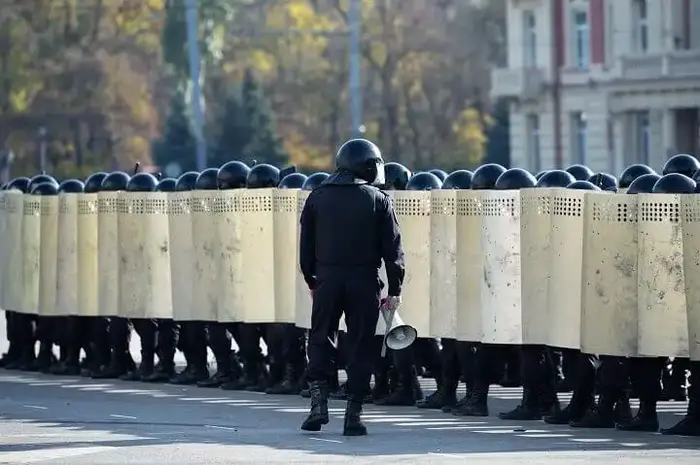
Riot Police in the Streets

By the way, many people were asking questions about why former President Trump didn’t enact any sort of lockdowns at a federal level. That was because he legally couldn’t do so.

The National Defense Authorization Act of 2007 gave the sitting president the authority to declare martial law in times of emergency; but this provision was quickly seen to be unnecessary and overreaching by Congress, who revoked that specific provision the next year. So the likelihood of a nationwide or even statewide martial law is nowhere near as likely as local invoking of it. But what if it was? What could we do then? 

Obviously the answer is to be somewhere where martial law was not in effect or if it was officially in effect, it wasn’t as well enforced. Big cities have big city police departments as well as the ability to petition the governor for help from State Police or the National Guard. While small towns technically have the same ability, their mayors don’t have as loud a voice and are much less likely to receive that support from the governor. 

Here are the best places to be in such a situation and how to avoid martial law affecting you. 

Smaller Communities

As I just alluded to, smaller communities have smaller police forces and are much less likely to receive support from either the State Police or the National Guard. Not only that, but the police and the rest of the government in those communities are much more likely to identify with the townspeople, making them much less likely to implement such orders, even if they did come down from on high.

Oh, they might use it as an excuse to crack down on known troublemakers, but that’s probably about it. Small town police are more likely to help their towns’ citizens break martial law, rather than implementing it. 

Out in the Country

Taking that one step further, actually living out in the country reduces the police available to harass you even more. The only law enforcement officers who would have any authority out in the country would be sheriff’s deputies and the state police. In both cases, we’re talking about law enforcement officers who are spread rather thin, with a large territory to cover. 

At the same time, these LEOs are going to see much less of a reason to implement martial law then the police in the city would. Theoretically, the declaration of martial law would have to be backed up by some sort of public danger, such as rioting or looting. Those are things that happen in the city, not out in the country. People in the country are usually prepared to defend themselves and LEOs understand that they are. 

In the Wilderness

If you happen to be fortunate enough to have a bug out plan that takes you into the wilderness, especially to a prepared survival shelter in the wilderness, this would be a good time to make use of it. Regardless of what’s going on elsewhere, the chances of a Forest Ranger showing up to implement martial law out in the middle of nowhere are somewhere south of zero. 

Of course the other advantage of being out in the wilderness is that you will be far away from whatever condition has caused officials to declare martial law. So while you are protecting yourself from government overreach, you’re protecting your family from danger too. 

Outside the Area

As I said earlier, there is almost no likelihood of nationwide martial law being declared, because there is no law that gives the president the authority to declare it and there’s nobody else who can either. The rumors of former President Obama signing an executive order allowing him to declare martial law are untrue.

While he did sign the executive order in question, it didn’t include a provision for martial law, but rather talked about the allocation of resources during a national emergency. An almost identical policy has existed since the time of President Truman. 

With that being the case, all any of us have to do to get out of localized martial law is to leave the area, perhaps going to a neighboring state. Granted, that would be a bit difficult for an extended period of time, such as to avoid the COVID pandemic lockdowns, but most martial law situations would be much shorter than that, mere weeks at the most. 

Neighboring Countries 

If you’re having trouble finding a state to go to, where martial law has not been declared, it might be worth considering a visit to our neighboring countries to the north and south. One of my bug out plans for years has been to go to Mexico, where I have many friends.

While anything going on in the United States would probably affect Mexico in some way, it probably wouldn’t be enough to cause martial law to be enacted there. Besides, even if it was, it probably wouldn’t be enacted as thoroughly, leaving openings that could be exploited. 

Out on the Water

Finally, all it takes to get out of American legal jurisdiction is to go out in the ocean. International maritime law limits nations’ territorial limits to 12 miles. Once outside that zone, the only ones who have any jurisdiction are the Coast Guard, whose jurisdiction extends to 200 miles off shore.

Of course, that’s assuming they can find you. The ocean is a big place and it’s much harder to find individual boats out on the water than Hollywood would make us believe.


Important below:

You might be living in one of America’s deathzones and not have a clue about it
What if that were you? What would YOU do?

In the next few minutes, I’m going to show you the U.S. Nuclear Target map, where you’ll find out if you’re living in one of America’s Deathzones.

How To Get A Ham Radio License For When SHTF- Continuity of communications is critical after an emergency, especially in a grid down or SHTF scenario.

Continuity of communications is critical after an emergency, especially in a grid down or SHTF scenario.

The issue is that modern communication systems are often tied to the grid, meaning that when the grid fails, our ability to maintain effective communication will fail along with it.

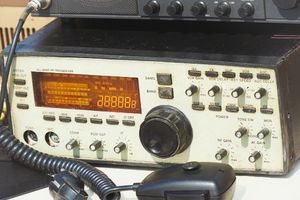
Amateur Radio, commonly referred to as ham radio, is an effective way to communicate over short distances or to the opposite side of the globe.

To use Amateur Radio, you must first become licensed. Each country that licenses Amateur Radio operators will have rules and regulations set out regarding testing, privileges, and licensing.

For the purposes of this article, I will be discussing the procedures to become a licensed ham radio operator in the United States.

Why Get Licensed?

How To Get A Ham Radio License For When SHTF

I have been a licensed Amateur Radio operator for only a couple of years, and in that time, I discovered that buying a radio is not nearly enough. To effectively use Amateur Radio equipment after a disaster, practice is essential. All the ‘bugs,’ so to speak, must be worked out before depending on them in a life or death scenario.

The only way to practice and dial in your equipment legally, before disaster strikes, is to become a licensed Amateur Radio operator.

Getting Licensed

The United States has three classes of Amateur Radio license, each with its own unique set of privileges. The level you decide to test for will depend on your situation and the scenarios you are preparing for.

These licenses are valid for ten years before they need to be renewed. There is also a two-year grace period where if your license expires, you can renew it without retesting.

The Three Classes Of Amateur Radio Licensing In The United States Are:

Technician: The Technician class is the lowest and least privileged level. To obtain a Technician class license, you must pass a 35-question test by getting at least 26 questions correct.

As a Technician, you have access to all the VHF/UHF Amateur Radio bands and limited privileges to specific frequency spaces and modes in the HF bands.

How To Get A Ham Radio License For When SHTF

General: The General class license is the next level and grants anyone holding a General license broad access to all the Amateur Radio bands except specific frequency spaces reserved for those holding an Extra class license.

To obtain the General license, you must first obtain a Technician license and then pass the 35-question General class license test by answering at least 26 questions correctly.

Extra: The Extra class is the pinnacle of the amateur radio licensing spectrum in the United States. Once you have obtained an Extra class license, you are granted access to the entire spectrum of Amateur Radio bands.

To become an Extra class Amateur Radio operator, you must successfully pass a 50-question test by answering 37 or more questions correctly.

What License Should I Get?

Suppose your goal is to build a robust comms plan for your preparedness in a disaster.

In that case, I suggest you obtain a General Class license. It grants you broad access to large swaths of the frequency spectrum.

How To Get A Ham Radio License For When SHTF

In addition, it will allow you to establish amateur radio stations capable of worldwide communications.

However, this does mean that you will need to pass two tests, but the good news is that you can take these tests back to back in one sitting.

If you find the ham radio hobby appealing, you may want to upgrade to the Extra class, but it is not necessary from an off-grid or prepping standpoint.

Preparing For The Test

We live in the golden age of ham radio, and anyone wanting to get licensed has a massive number of resources available to study for any level of testing.

Generally speaking, there are two ways to go when preparing for the test. You can either find a course which would often be run by a local ham radio club, or you can self-study.

antenna

The American Radio Relay League (ARRL) has many resources to help you start your self-study journey, but it is far from the only option.

Websites, podcasts, YouTube Channels, Apps, books, etc., are available to you in your quest to become a licensed Amateur Radio operator.

One of the best ways I have found to study is to take practice tests and then use all your wrong answers as a guide for areas that you need to study.

For example, I would use an app to take randomly generated practice tests from the question pool, which helped me focus my studies on areas where my knowledge was weak.

Testing

You will be tested by volunteer examiners (VE). These ham radio operators volunteer their time to test those who want to become hams. The ARRL website contains resources for finding a VE near you.

VEs started testing online during the pandemic, and we did the same thing here in Canada. This is a convenient option if you find it available to you because you can do the test from the comfort of your home.

I took my test from my dining room table in 2020, and the process was very comfortable and straightforward. After you successfully pass the test, the VEs will submit the necessary documents to the FCC, and the FCC will issue you an Amateur Radio callsign.

Callsigns

The callsign that you will receive will be unique to yourself and be a combination of numbers and letters. These callsigns are not chosen randomly.

Instead, they are structured to provide information about where the holder of the callsign was licensed and the class of license they hold.

Callsigns in the United States are a one or two-letter prefix followed by a number that denotes the region and then a one to three-letter suffix.

My Experience Getting A Ham Radio License

I studied for and passed the Basic Amateur Radio Qualification here in Canada. Because I scored above 80 percent, I am granted privileges to all Amateur Radio bands, similar to the General class license in the United States. The test we take in Canada is a 100-question test.

In my study efforts, I used a textbook and an app that randomly generated tests from the question pool. One of the best resources that I found was YouTube. During my studies, I encountered many topics that I found confusing.

A quick search of YouTube inevitably brought up dozens, if not hundreds, of videos offering in-depth explanations of what I was confused about.

Many ham radio-related podcasts often have episodes devoted to the questions you might have or the topics you need clarification on. One such podcast that I found very helpful was the Ham Radio Crash Course Podcast and YouTube Channel; they answered almost all my ham radio-related questions.

It doesn’t matter what emergency you are preparing for; an Amateur Radio license should be considered as essential as food, water, shelter, and protection.

My time in the military taught me that the quality and effectiveness of communications could make or break an operation. Never underestimate the importance of comms; ineffective comms absolutely will get people killed.

Lessons from the Roman Army for Post-SHTF Combat Operations- Small unit tactics are more than just a matter of either superior arms or numerical advantages

Alright, we have done a couple of articles on “Knowing Yourself,” and “Knowing Your Enemy.”  Now that everyone knows one another, let’s take it to another level.  As a single individual, as a family member, or operating in a group, after it hits the fan, you will have to fight eventually.  You will not be able to avoid it and hunker down until the cavalry comes, because it will be in your neighborhood and the cavalry isn’t coming to your rescue.

We’ve discussed “Fabian Tactics” in previous articles.  These were based on the exploits of Quintus Fabius Maximus in the First Punic War between Carthage and Rome. “Hit and Run” tactics exemplify their description: strike a numerically superior larger force at a time and place of your choosing, and then break contact.  Fade back into the forest, hide, and avoid further combat until the next engagement of your choice.

Lessons from the Roman Army for Post-SHTF Combat Operations

Let’s “fix” ‘em: set the enemy up and zap ‘em!  Let’s do a few things that the Romans were famous for…using these techniques here and now.

  1. Choose the Ground: Yes, you choose the place you will engage them.  Along with this, you pick the time of day, the formation of the attack, the objective, and the criteria for withdrawal.  You choose it.  As an individual, you would be sniping.  As a group (depending on your numbers and composition), you can engage in operations limited by your size.  Choosing the ground means also to actively recon the enemy and not allow him to choose it and catch you unawares.
  2. Prep the Ground: The Roman Army were masters of this task. They scouted the area and with thorough intel, they knew where their enemies were, actions these people planned on taking, and avenues of approach.  They cut timber and created obstacles of logs interlaced with natural “barbed wire” in the form of thorns and thistles…along with spikes and stakes, to limit enemy cavalry.  Long before William Wallace of “Braveheart” was ever a thought, the Roman legions spread out hay soaked with pitch and oil in areas where enemy foot soldiers would move, and applied flaming arrows when the time was right.  They always took the high ground when possible, and used the natural terrain features (cliffs, rivers, etc.) to form boundaries to help them channel the enemy.
  3. Always Fight with the Sun at your Back: The Romans positioned themselves and attacked to place the sun in the eyes of their enemies. I know, I know: the enemy has “Ray-Bans,” right?  No, it worked for the Viet Cong as well.  When they’re looking into the sun, they’re at a severe disadvantage.  Use the sun.  Use the terrain.  Live with the land and live.
  4. “SPECVLATORES”- the Speculatores…the deep-cover operatives…the Special Forces and Reconnaissance warriors of the Roman Empire. You need operatives in your “unit” with the ability to do “deep penetration” of an enemy’s defenses…whether in their midst unsuspectingly or observing them from a nearby locale…operating on their own ground unbeknownst to them.  You need one or two people who can get the job done…and provide you with the deep-cover intel you’ll need to make decisions.
  5. Alliances – “The enemy of my enemy is my friend.” Not always so, but you can use such rifts to your advantage…with other groups who your enemy is at odds with.  Here is where diplomacy, teamwork, and political acumen/savvy comes into play.  These “non-combat” skills are just as important to “fixing” your enemy as any of the actual missions you will undertake to defeat him.  Be skilled at making alliances, and do not make them just for the sake of socializing.  It is an art that we will cover more in-depth in future pieces.
  6. Feed Them Disinformation: Yes, the Romans were very adept at sending messages or planting information that was false. This regarded their strengths, their movements, supplies, and reinforcements.  Sun Tzu was not the only one with a knowledge of how to monopolize disinformation, and he wasn’t the first to employ it.
  7. Lure Them and “Stake” ‘Em – the Roman Army would plant different things out in front of an approaching enemy force in order to delay and distract them…making them ripe for an attack or ambush. You can do the same, and make it fall “in line” with the enemy you’ll be facing.  Quick question: How many of you have Russian or Chinese canned delicacies, such as Borscht or caviar for the former, or imported Chinese canned foods and fineries for the latter?  Because you may be able to use it to lure such if they ever come to this country…and set a trap on or in it, or place shooters in an overwatch position overlooking it.  Because you may need prisoners, and what better way to lure them in than with a carton of their own cigarettes, their own liquor that they would think to be safe?      Be advised: SAVE YOUR RECEIPTS FROM THE STORE YOU BOUGHT IT!  This is because in the times to come if anyone ever suspects you of collaborating with them…you can show the receipts that you bought it all long before the conflict began, and give them an explanation of why you bought it all.  This may keep you from being shot by your own countrymen.
  8. The Violence of Action in a Controlled Manner – the Romans did not win their mastery over all of Europe and most of the Middle East by conducting drill and ceremony. They were trained, skilled killers and understood that the thing that made the Empire possible was the discipline and aggression of the individual legionnaire.
  9. A Perfect Chain of Command – Modern militaries all have a chain of command and an order of succession for someone to fill the “vacancy” at all levels when a commander “buys the farm,” so to speak. You need to enable each member of your team to be able to step into the shoes and position of the leader and take charge to continue with the mission.
  10. Discipline: this encompasses all areas. A “guerrilla fighter,” whether fighting off marauders from a neighboring town post SHTF, or a tyrannical, oppressive government, or a foreign invader…the guerrilla needs to be disciplined.  Physical toughness, adherence to standard operating procedures (SOP’s), a cool head and iron nerves, and endurance…the ability to keep this up for years…to go the distance.  These are the things that the Romans kept focused upon and central to their legions for many centuries.

In conclusion, small unit tactics are more than just a matter of either superior arms or numerical advantages.  They are based on common sense and knowing how to plan out your objectives, as well as a plan of attack.  You will have to be the “David” going against the Goliath, and although not shirking from battle, picking the time and place of your engagement, and the conditions and standards you will set to achieve those objectives.  It is no guarantee of success, but you are guaranteed to perform better with the proper planning, training, and clarity of purpose prior to a battle.  It can mean the difference between success and failure, life or death.  In this vein, I highly encourage you to study more about the Roman Army and the warfare in ancient times.  Take the time to clean the tarnished pitcher and you may just find a silver piece made by Revere.  The knowledge is there: seek after it and make your future rather than just allowing it to happen to you.

Will The United States Government Survive When the SHTF? Our government would crumble at every level if faced with a widespread disaster, and they may not be able to recover from it after the fact.

Tell me, if someone mentions “The United States of America”, what do you picture in your mind? The American flag? The White House? Mount Rushmore? Or perhaps you see a map of the Unites States, like this.

United States Map1

What you’re looking at is the sovereign territory that is both claimed and incorporated by the United States Federal Government. But in reality, that is not the United States. Would you like to know what it really looks like?

United States Map military bases

That’s more like it. What you’re looking at is a map of every military installation in the lower 48 (that we know of) according to Google Maps. There are a few more in Alaska and Hawaii, and hundreds more across the globe.  Now imagine a map of every police station, capital building, post office, courthouse, and every other federal and state agency. That, is the real United States.

To some of you that may sound obvious, but hear me out. Every government on Earth has a territory that they claim as their own. They have certain boundaries that legally exist as their jurisdiction. But then there are places that are disputed like Eastern Ukraine or the Senkaku Islands, and there are places that no employee of any state has ever set foot in like the depths of the Amazon Rainforest. They may legally belong to a government, but practically speaking is another story.

In truth, the government is not a series of lines on a map. It is the sum total of people who work for that government, and the areas where those people can successfully wield influence. I personally experienced this reality several weeks ago when I went hiking in a national forest. I was 15 miles away from the nearest cell reception, nobody knew I was there (long story) and there were small trees sprouting in the middle of the gravel road that led into the park. It was clear that not only had nobody been to my particular location in several months, but there had been no members of the park service there either in a very long time.

If you look at a map it would say that this place belongs to the United States Government, but the situation on the ground said otherwise. If someone attacked me in the park, my safety lies solely in my own hands, and what I do after the fact (if I survive) is totally up to me.

I suppose I could call the police, but if I didn’t nobody would know, and if I lost that particular fight, it’s unlikely anyone would be punished. There is no legal recourse for either party at that particular time and place. That piece of land, for all practical purposes, belongs to no one.

The reason I’m bringing any of this up is to illustrate a point about our government’s ability to survive a major disaster. I’m not very confident that they could. I’m sure they have an extensive series of bunkers that will shield the political and financial elite of our nation during any disaster, but when they emerge months or years later, will they have the infrastructure and personnel to enforce the boundaries they claim as their own?

I’m sure it would depend on the disaster, but in this case I’m talking about something catastrophic. Think EMP attack or nuclear war. Heck, even a major financial correction might get the dominoes tumbling into a wider disaster.

Most preppers would assume that they will quickly lose control of large swaths of the rural countryside. I would have to agree. If you look at most wars that have occurred over the past 100 years, one fact stands out. The cities have always been bastions of government authority, while the countryside is quickly overrun by rebels or foreign invaders. This can definitely be said of our own military.

When you compare our wars in Vietnam and Afghanistan, you’ll see the same situation. Our forces clung to cities and far-flung outposts, while occasionally sending patrols into a countryside that they would never successfully control. Cities are just easier to manage, plain and simple. But it’s hard imagine them maintaining control over a vast countryside that is filled with people who don’t like the government, who have lived without their help for many years, and are now dealing with an influx of desperate people who have fled the cities.

However, they do have those urban areas, and once they make contact with what’s left of the local authorities in small towns across America, they might be able to start exerting their previous control over those regions. The only problem is, they may not be able to keep the lid on our cities. You have to ask yourself, if they can’t control an area that is traditionally easy pickings for a government, will they be able to raise a flag anywhere else?

As of now, our cities are already bursting at the seams. In cities like Chicago, the number of police in their gang enforcement division is actually outnumbered by gang members with a 500-1 ratio. In other major cities, you might hear stories about certain neighborhoods that police just flat-out refuse to enter without extensive backup (again, is it really the United States if their employees can’t show their faces in that neighborhood?).

Their ability to solve murders has been declining for years, and the public’s trust with the police is in the toilet. Simply put, our government’s authority has been slipping at the local level for a long time, and this doesn’t even account for the mobs of panic-stricken citizens that might emerge after a disaster. It also doesn’t account for situations like Hurricane Katrina, where numerous police officers abandoned their posts in the wake of the storm.

If you ask me, it looks like our government would crumble at every level if faced with a widespread disaster, and they may not be able to recover from it after the fact. The police will be outmatched, and the military will either be stranded in overseas outposts, or tied up with the police in our urban areas.

Really, it boils down to this. If there is an event that is so catastrophic, that it shatters our police and military into isolated units with little communication to the outside world, will they be able to survive? And for those cops and soldiers who do survive, will they be willing to pledge allegiance to our current politicians and bankers, when they emerge from their fortified bunkers?

At the end of the day, our government is nothing more than the people who work for it and their ability to enforce the law in any given area. It’s hard to say if they would prevail in their current form during any widespread disaster.

So what do you think? If it hits the fan, will the federal government weather the storm, or will they be completely overwhelmed by the chaos?

Design a site like this with WordPress.com
Get started