7 Unexpected Consequences of an Economic Crisis: That Will Throw The Nation Into Total Chaos- With The Collapses Of The College And University Systems And Student Aid-The Bands Of People,E Hopeless And Helpless Will Turn Dangerous Fast!

Other than the obvious consequences, what might we expect from a partial economic collapse? A total collapse of the economy would throw the nation into utter chaos. But what if we endure an economic depression, or a severe and long-lasting downturn? I think that some of the effects are not so obvious.

1. The college and university system will collapse

As I explained in this previous post, the system of higher education is a house of cards. The cost of getting a college degree has risen sharply and steadily, while real income has remained relatively flat. The price rise is due to the easy availability of grants and loans for education. But with so many persons getting a college degree, its value in the marketplace has plummeted. Many college grads are out of work, or they are working in a job that does not require a degree. Eventually, this practice of paying more and more, for something that is worth less and less, will collapse the system. Colleges and universities will not have enough paying students, and professors will not agree to a drastic pay cut. Overhead expenses are far too high.

All that is needed is an economic collapse, or partial collapse, to topple this house of cards. Many universities and colleges will be forced by economics to shut down.

2. Agricultural yields will plummet

The current U.S. agricultural system is based on the expectation of high yields. But high yields are obtained by high inputs — all the things that go into growing the crop, including lots of fertilizer, perhaps irrigation, herbicides, pesticides, labor, machinery. Then those high yields are sold and the money is then used to fund the inputs for the next crop cycle.

An economic collapse will mean that farmers will not be able to afford all the inputs needed for high yields. And when yields fall, the amount of money from that crop will be less. Then the next crop cycle will have even less money for inputs, resulting in even lower yields. And the process will continue — lower yields, less money, lower inputs — until many farmers are out of business and a food crisis results.

3. Violent crime will increase

When people lack money and food, they become desperate. And desperate people do desperate things. Theft and robbery will skyrocket, and people will be afraid in their homes, and afraid to go out in the community. Even a quick trip to the market will become risky. Sales of most goods will plummet, causing the economic crisis to worsen. Protests will turn violent. Home invasion robberies will become much more common. Many people will be killed or injured as a result of this increase in violent crimes.

4. Law enforcement will be overwhelmed

The law enforcement system in the U.S. is commercial. Officers are paid. We don’t keep a large excess of officers on the payroll, just in case crime sharply increases. So it is relatively easy for the system to be overwhelmed. And that means a call to 911 might not bring the police to your door in time, if at all. Those who have firearms for home defense will be much better off than those who rely solely on the police. But many households have no firearms. And that means that robberies will increase, and so will the economic damage and the number of injuries and deaths.

5. The healthcare system will be overwhelmed

The healthcare system is also commercial, and lacks a safety margin in the form of excess doctors and nurses. Hospitals operate at close to capacity. A sudden increase in persons who are sick or injured will overwhelm the system.

The aforementioned increase in violent crime will undoubtedly increase injuries. But it is less obvious that a disruption to the food production and distribution system will increase illnesses. Plenty of good healthy food is the first line of defense against illness. Malnourished persons are much more likely to get sick. So an extended disruption to the food supply will cause an increase in illnesses.

6. Travel anywhere will become dangerous

As a result of all the above described problems, travel will be dangerous. Want to make a quick trip to the supermarket? You risk having your house robbed, if it is left unoccupied. And you risk being attacked on your way back from the market. Robbers might wait outside the market and follow anyone who looks like they purchased a lot of food.

There will be protests in many places, and violence will often break out. People who are hungry and afraid do not make the best decisions. Then there is the cultural aspect of the situation. We live in a culture that tells us to expect the government to take care of us, and to protest whenever anything doesn’t go our way. Ironically, self-sufficiency is abhorrent to our narcissistic culture.

I expect that the roadways will be dangerous, as violent criminals will see travelers as easier targets than homes.

7. The death rate will jump higher

People will be malnourished because of the disruption in the food supply, so they will get sick more easily. Violent crimes and violent protests will result in many more injuries than usual. And yet healthcare will be much more difficult to access. There will be a shortage of hospital beds. It will be difficult to get a doctor’s appointment. There may be a shortage of prescription and OTC medications.

All of these factors will make life a riskier endeavor.

Now if you are a seasoned prepper, who has long considered the dangers inherent in an economic collapse, you may have anticipated some of the above consequences. But I hope I’ve added to your understanding of the possible problems that we may soon face.

I Lived In A Post-SHTF World: In The Last Years, Venezuela Has Become A True SHTF Scenario, Where The Only Way to Move Forward Is to Learn How to Survive.

As a professional physician having always lived in a big city, I never imagined that at some point in my life, the social and economic situation of my country, Venezuela, would lead me to learn and use survival skills that I had read about but never even thought of applying.

Without being in a declared war or a formal armed conflict, we have experienced different situations of chaos for about 10 years in Venezuela. But in the last three years, the country has become a true SHTF scenario, where the only way to move forward is to learn how to survive.

I feel that the lack of food, clean water, and, at the lowest point of the situation, electricity, has given me new skills that have undoubtedly prepared me for any catastrophic situation.

After three years in this contingency, I can now share every situation that took me by surprise and the techniques I had to learn by doing.

WATCH BELOW!

I Lived In A Post-SHTF World For 3 Years, And This Is What I Learned

There is no such thing as “too much” stored water

I Lived In A Post-SHTF World For 3 Years And This Is What I Learned

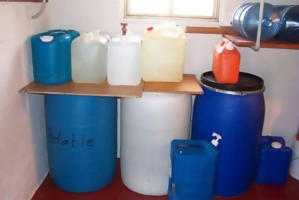
Water is one of the most important resources we need for life. Unlike other supplies, it is not interchangeable with another product, and to be ingested, it must go through a purification process.

I have never been prepared for a water shortage before. Now I know it is important to keep water stored safely in closed containers. If water is not drinkable, it must be purified before ingesting it since contaminated water can cause serious gastrointestinal diseases.

Water is not just for drinking but is used in many other activities, such as cooking and cleaning, so I had to learn some purification techniques that can be done at home.

One of the most popular techniques to decontaminate water is to boil it for three minutes. Purification tablets are also very useful, not that expensive, and easy to use.

Adding five drops of chlorine per liter of water as an emergency measure is another way to clean the stored water.

Grains are my friends

To eat properly, it is necessary to consume proteins, fats, and carbohydrates.

The moment I realized that animal protein was scarce—in addition to the fact that the electricity problems spoiled it—I had to investigate the nutritional content of other foods in order to keep myself well-fed.

Lentils are grains that are easy to store, non-perishable, and high in protein. Together with a cereal like rice, they make a complete meal that keeps us well-nourished and in good health.

Let there be light: candles, matches, flashlights, and batteries

I Lived In A Post-SHTF World For 3 Years And This Is What I Learned

After spending more than four hours without power, I began to worry. I had some candles saved, but I did not know where they could be. I also had a couple of flashlights, but I had removed the batteries to prevent them from being sulfated.

Candles and matches must be in several easily accessible places. Likewise, the batteries should be in the same place where the flashlights are kept, and we must be sure that they have a charge.

During this year, the country suffered the most serious electrical crisis. In several areas, there were blackouts of up to five days.

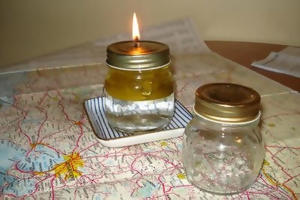
After a couple of days without electricity, the candles will not be enough, so learning to make oil lamps becomes a vital skill in this situation.

The lack of electricity can lead to a state of anguish that grows with the passage of time. It is important to do everything possible to minimize that effect.

Be prepared with medicines, but it’s better to learn from nature

Due to my profession, I am always very attentive about keeping basic medications, such as anti-inflammatories, analgesics, and antibiotics, in the cabinet.

When I had to live in an SHTF situation, my medical supplies became insufficient, and I couldn’t find any in the pharmacies or they were too expensive. So I had to learn a little more about natural medicine, its uses, and its benefits.

I must say that this is one of the most important things I learned during that time.

Many anti-inflammatory drugs and synthetic analgesics damage the stomach mucosa as a side effect. In situations of stress, there is a large production of acids in the stomach, so using drugs that further damage this organ is not the best idea.

Roots such as ginger and turmeric are excellent anti-inflammatories. They are easy to get and easy to store. Likewise, garlic is a potent analgesic.

In the case of presenting wounds or cuts and not having antibiotic ointments, honey, ginger, and cloves are foods that have scientifically proven antibiotic properties.

Chamomile and lavender are natural relaxants and help fight stress and insomnia.

No matter how big the supply of medicines we have, it will always be more economical, favorable, and easy to store the natural product, with equal and, in some cases, greater effects.

Cash

Banks have made life easier for us with the use of debit and credit cards. However, there are situations in which having a lot of money in the bank does not help much, and I learned it the hard way.

When there is an electrical fault, despite the fact that light and other electrical services have been restored already, the digital communication of the points of purchase become so affected that it is impossible to buy anything in this way.

For this reason, I understood that it is always important to keep some amount of cash for this type of contingency.

Take advantage of any time you get to replace supplies

I Lived In A Post-SHTF World For 3 Years And This Is What I Learned

Although during those years I did not have to be locked in a bunker without being able to leave, the feeling of confinement was quite similar. When, in spite of having the money, you can’t find what you need to eat or, despite having a private vehicle, you can’t move for lack of gasoline, the situation becomes desperate.I understood that in those moments in which there was an opportunity to replace the supplies I had at home, especially water and non-perishable food, I had to do it.

The situation in my country has improved. Although still not at the best economic and social level, and with many problems of scarcity and lack of some supplies, society has been regularized.

However, I appreciate the years that taught me these valuable lessons that I still apply.

The most important thing I learned was to be prepared for when an SHTF situation strikes again.

How To Deal With Neighbors And Friends That Come Begging For Food At Your Door In A Crisis

Your survival dependents are not the burden you once thought. Believe me.

While you know the flaws of the people around you, they have two ears, two eyes and a heart that wants to survive.

50 Dirt-Cheap Items That Will Be Priceless After The Collapse

Although some survival supplies can be pretty expensive, most of the things people will need after the SHTF are dirt cheap. For example, right now toilet paper costs less than a dollar per roll. But when the store shelves are bare, most people will trade a lot for a single roll of toilet paper. And that’s just the beginning.

When you think about disaster preparedness, keep in mind that a lot of cheap stuff we take for granted will be extremely valuable after SHTF. This is the stuff you want to stock up on now. Not only will you need it for yourself and your family, but you may also need it for bartering.

Here are just 50 examples of cheap items you’ll want to stock up on while they’re still available. I’m sure there are plenty more, so if you think of any, be sure to leave a comment below. Now on to the list…

1. Activated Charcoal

Activated charcoal is a cheap yet potentially life-saving item that many people overlook. It helps treat poisonings, purifies water, and relieves gas and bloating. If you can’t find any, it’s possible to make your own.

2. Aluminum Foil

Aluminum foil has dozens of uses. Buy lots so you can use it for cooking, cleaning, gardening, fire making, and many other things.

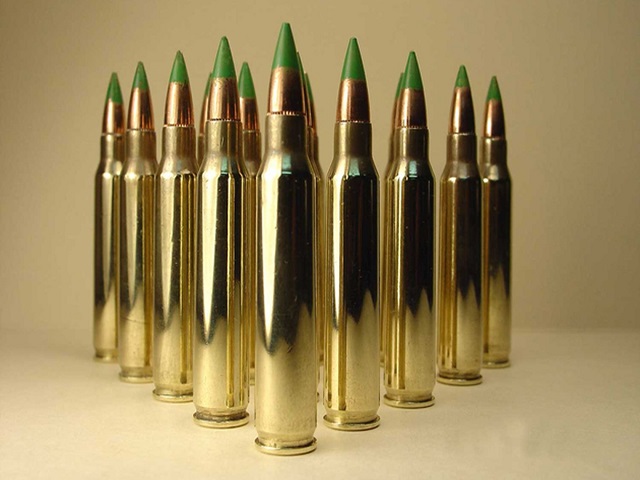
3. Ammunition

Ammunition is fairly inexpensive, depending on which caliber you get. However, the price could skyrocket if Democrats take power in the U.S., so get it while you can.

4. Baking Soda

Baking soda isn’t just for baking. You can use it for many things such as cleaning, deodorizing, brushing your teeth, and more.

5. Bandages

Bandages are only a few bucks for dozens of them. Buy a lot so you can treat minor wounds, which will become very common in an SHTF scenario where you’re working outdoors, clearing debris, fixing broken windows, and so forth.

6. Batteries

AA batteries are less than 50 cents each, but during a long-term power outage, they’ll be worth a lot more than that.(Here are 21 wild edibles you can find in urban areas.)

Human Figure Made Of Batteries

7. Can Openers

You can get a simple can opener for just a few dollars. Can you imagine having all that canned food and no can opener?

8. Candles

Candles are fairly cheap and you will be surprised at how many you will go through. Candles can be used in place of flashlights to conserve battery power. And if you know how to make them, you can sell them when they’re no longer available in stores.

9. Candy

Candy will be an excellent way to keep the kids happy and reward them for helping out during hard times. It’s fun for adults, too, and a great way to boost morale when times are tough.

10. ChapStick

Chapstick is more important than many people realize. When you’re outside working in cold or windy weather, your lips will become chapped and it can be very painful. Plus, there are many other uses for it, some of which may surprise you.

11. Cheap Wine

Cheap wine is easy to come by and will store forever. After fighting all day, a nice glass of wine will go a long way toward calming the nerves. It also makes for a great barter item.

12. Cigarettes

Cigarettes may not be healthy, but after the SHTF, they are going to be in very high demand. A single pack could be worth a lot of supplies, and they actually have some survival uses.

13. Condiments

Condiments like ketchup, mustard, salsa, and Tobasco sauce can sit on the shelf for years without going bad, and they can make an ordinary meal taste a lot better.

Want to prep but not sure where to begin?

Condiments in Bowls

14. Condoms

Because having lots of babies after the SHTF is not going to be ideal, and chemical birth control probably won’t be available.

15. Cotton Balls

Cotton balls can be used for cleaning, treating wounds, and protecting the ears when you have to be outside in the bitter cold.

16. Duct Tape

Duct tape has all sorts of uses, from building shelter to treating wounds to fixing just about anything. Be sure to buy several rolls because you’ll need more than you might think.

17. Feminine Products

Feminine products will be in high demand as women get used to a new way of living without the luxury of feminine hygiene products in the stores.

18. Fishing Line

Fishing line isn’t just for fishing. You can use it to hang up items, make a snare trap, and set booby traps around your camp.

19. Glow Sticks

Glow sticks can serve as night lights, trail markers, signals, and more. They are very cheap, but very useful. (Bonus tip: These are really cheap right after Halloween.)

20. Hand Sanitizer

Hand sanitizer will be very useful when water is in short supply and you need to keep your hands clean. If you can’t find any, it’s possible to make your own.

21. Kleenex

People will continue to get colds and have allergy problems after the SHTF, and you don’t want snot everywhere or a raw nose.

22. Lighters

Lighters will obviously be useful in a disaster scenario, and they’re excellent barter items. Buy them in bulk and keep one with you at all times.

23. Lotion

Lotion can help prevent cracked and chafed skin which, for some people, can become a serious problem if left untreated.

24. Matches

Matches can be purchased for just a few dollars. Store hundreds or thousands if you can. Without stoves and heaters, you will have a lot of fires to start after the SHTF.

25. Nail Polish

You might be surprised how many survival uses there are for nail polish.

26. OTC Medications

OTC medications like aspirin, ibuprofen, and acetaminophen do expire eventually, but the first few years of a post-apocalyptic world will be a lot easier if you have them.

27. Paper Clips

Paper clips aren’t just for clipping papers together. You can use them to fix things, make a compass, make fishing hooks, and more.

28. Paper Plates

In a disaster scenario, you might not have running water. If that happens, you won’t want to waste a single drop of your stored water. By using paper plates, you won’t have to waste water on washing dishes.

29. Paper Towels

You probably use these every day, and I guarantee you’ll still be using them every day after the SHTF.

Paper Towel on Wooden Holder

30. Pens, Pencils, and Paper

Pens, pencils, and paper can provide entertainment as well as a way to send information and document your new way of life. In fact, if it’s the end of the world as we know it, you should definitely keep a journal. Not only will it be valuable to future generations, but it will also be therapeutic.

31. Plastic Sheeting

You’ll need this to cover broken windows, repair roof leaks, and setting up a medical quarantine. And that’s just the beginning.

32. Ponchos

Ponchos can be picked up at any dollar store. You can’t afford to get wet when it’s cold out. If you have a heavy-duty poncho, there are several other things you can do with it.

33. Rubber Bands

These cost next to nothing, but there are at least a couple dozen uses for them, especially when it comes to organization.

34. Rubbing Alcohol

This is one of the things that disappeared from the shelves right after the pandemic began. Why? Because you can use it to make hand sanitizer. It’s also important for disinfecting in first aid situations.

35. Salt

Salt makes food edible and can be used for cleaning, de-icing in the winter, repelling pests that are invading your camp, and many other things.

36. Seeds

Seeds to grow a garden will be crucial to creating a sustainable life. Store a large variety of heirloom seeds so you’ll also have seeds for next season and so on.

37. Sewing Supplies

Sewing supplies will be needed to mend your clothing when you can no longer stop by Walmart any time you need new clothes.

38. Shoestrings

Shoestrings aren’t just for keeping your shoes on. They can be used as cordage for all sorts of things, from setting traps to building shelter.

39. Soap

Soap is so cheap today that we tend to take it for granted. But when it’s gone, people will miss it badly. It is crucial to maintaining cleanliness after the SHTF to keep diseases from spreading. If you run out, you can make your own.

40. Socks

Another simple item that people use every day and tend to take for granted. You don’t want to be stuck wearing wet socks all day. Or worse, no socks.

41. Spices

Spices like basil, cumin, oregano, garlic powder, seasoned salt, and the like will turn that bland soup or stew into a delicious meal.

42. Sugar

Sugar makes life better all the way around. You want to enjoy the food you eat; not just eat for survival. I know some people will scoff at this, but morale is very important during a disaster.

Important Below:

Here’s just a small glimpse of what you’ll find in The Lost SuperFoods:

The US Army’s Forgotten Food Miracle And 126 Superfoods That You Can Store Without Refrigeration for Years

Watch the video below!

43. Sunscreen

Sunscreen is very important and needs to be used to prevent serious sunburns that can leave you dehydrated or suffering from heat exhaustion. This will be crucial if you’re bugging out on foot.

44. Super Glue

I can’t overstate how useful this stuff can be for fixing gear or repairing everyday items. Here are some other uses for it.

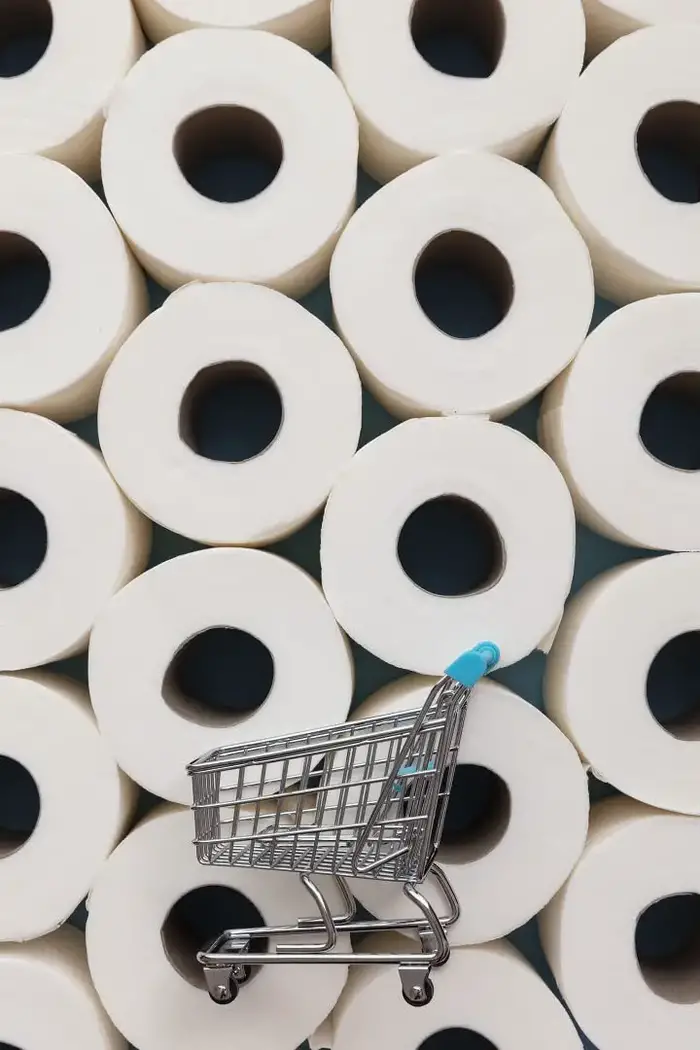
45. Toilet Paper

Toilet paper is pretty self-explanatory unless you are fond of leaves and what-not. If you can’t find any, here are some alternatives.

Shopping Cart in Front of Toilet Paper

46. Toothbrushes and Toothpaste

Toothbrushes and toothpaste should be stored in bulk. Good oral hygiene will be incredibly important when there are no dentists around. You don’t want a bad toothache when that happens. In fact, you may want to put together an emergency dental kit.

47. Towels

Towels can be picked up at yard sales and thrift stores. Use them as intended, to make slings, to blackout your windows, to seal up a drafty door, and more.

48. Vitamins

Vitamins will help keep your immune system strong, which will be crucial when you’re living through the stress of a disaster scenario. Remember, most survival food isn’t very high in vitamins, and your body desperately needs vitamins to stay healthy. Especially Vitamin C.

49. Zip Ties

Zip ties are versatile and extremely useful for putting up a quick shelter, holding a door closed, fixing small things around the house, and much more.

50. Ziploc Bags

Ziploc bags will be helpful to store leftover bread and other treats you make, or for keeping socks, tinder, small electronics, and other things dry.

Conclusion

Next time you visit the dollar store, take a walk down each aisle and start stocking up on all the little things that will make life easier after the SHTF.

Ammo stockpiling: Four more reasons buying more ammo is one of the smartest things you’ll ever do before SHTF:But there’s one thing that almost never fails a soldier: Their rifle. Ever wonder why? Because rifles don’t need software to function

Ammoland recently ran an article by a fake prepper group that claims you don’t need to stockpile ammo, since you can’t fight a national military invasion anyway. The group — which is obviously a front run by the anti-American intelligence community — claims to cite scientific evidence that “proves” you don’t need to stockpile ammo. Among this sketchy evidence is the claim that police officers in New York City “fire an average of only two point nine shots per [shooting] incident.”

So there. You don’t need any ammunition. Cops only fire fewer than 3 rounds per shooting incident, see?

Anyone who thinks they can survive an assault on their country home by firing merely three rounds of 9mm ammunition is not merely delusional; they’re dead.

By the same argument, maybe these preppers think you should only have a 3-round magazine, too. I’m sure Eric Swalwell, Nancy Pelosi and Joe Biden would agree. Who needs more than three rounds, anyway?

Ammoland also ran a rebuttal article to this, which explains why you can never have too much ammo. The rebuttal article is a good start, but I didn’t see it covering the far more powerful arguments for why stockpiling ammo makes so much sense to any thinking person. (Dare I say “rational” person?)

So I decided to share these very compelling reasons here. What qualifies me to talk about any of this? In addition to being a published food scientist and patent holder, I’m an accomplished tactical shooter with thousands of hours of training and hundreds of thousands of rounds of ammunition expended on the range and during training scenarios. I’ve trained with former special forces, former Navy SEALs and former law enforcement. I’ve trained in executive protection, clearing structures, “tubular assaults” (in airplanes and buses, for example), long-range target shooting, NV-equipped night shooting and much more. And even though I’m more accurate in my shooting than perhaps 99% of gun owners, I also know that even the best shooters are useless if they run out of ammo.

If you don’t stockpile ammo, you’re a fool.

Reason #1: In a world where everything is virtual bullshit, ammunition needs no software updates to function

Everything in the world, it seems, needs a software upgrade to function. This includes your car, your DVD player and of course your silly mobile phone. Nothing works without constant software upgrades, and if you’ve seen the recent news about Boeing aircraft, in many cases nothing works even with the software upgrades.

Software will probably be the downfall of modern society, as nearly every modern system is so dependent on a long supply line of sketchy code that the complexity itself is a recipe for disaster. I’ve seen the United States Postal Service real-time postage calculation systems go offline twice in the last month, and the FBI background check system seems to crater with disturbing regularity. NASA crashed an orbiter into Mars a few years back after writing bad software code, and one of their Mars landers couldn’t transmit photos without a remote software upgrade transmitted from Earth (because the geniuses at NASA forgot to test the code here on Earth… oops).

Rest assured the U.S. military’s equipment is also heavily dependent on software updates and techno-crap that fails more often than it works. The average U.S. soldier has been turned into a walking battery transport burro, now carrying so much electronics gear that the original purpose of being a soldier in the first place seems to get lost in all the tech.

But there’s one thing that almost never fails a soldier: Their rifle. Ever wonder why? Because rifles don’t need software to function. That’s because ammunition works based on the laws of physics, not based on some hare-brained programmer who showed up to work stoned and suffering from a sleep deficit.

I don’t trust software to work. But I do trust ammo. It works almost without fail, and even the few “click” failures in pistols, for example, are usually slide cycling problems rather than primer failures. With modern ammo, primers have a failure rate of less than 1 in 100,000 if properly struck with a firing pin.

In a collapsing world, stuff that reliably works has tremendous value. What’s the value of an iPhone in a grid-down scenario? Zero. What’s the value of a GPS unit after a devastating solar flare? Zero. What’s the value of insulin that gets too hot because the pharmacy refrigerators went offline? Zero.

What’s the value of ammunition that goes bang every time? PRICELESS.

Reason #2: Ammunition is EMP-proof

For reasons explained above, ammunition (and firearms) work even after an EMP attack or solar flare / Carrington event. Sure, your super high-tech red dot sight might stop functioning, but you did zero in your iron sights, right?

Unlike almost everything else in society that fails at the slightest disturbance, guns and ammo keep working during floods, volcanoes, superstorms, civil unrest, power outages, financial collapse events, nuclear war and even invasions of space aliens.

If you don’t think that’s priceless, you haven’t really thought much about survival and prepping.

Just wait until all those people who said prepping is a “waste of time” try to dial 911 on their dead Android phones to report that a gang of looters has entered their home. Dialing 911 doesn’t work when the power grid is down, you numbskull. But a handy dandy AR-15 doesn’t need public infrastructure to function.

Just try to remember which end goes bang.

Reason #3: Every human being has a body, and every person wants to defend their body, giving ammunition near-“universal demand”

If I were in a barter situation, I would want to have something to barter that virtually everyone wanted. That’s called “universal demand,” and ammunition is about as close as you can get to the perfect barter item.

That’s because ammunition has a multitude of uses, including gathering food (hunting) and defending yourself (or your family) against violent attackers.

Since law enforcement is likely to collapse in almost any SHTF scenario, self-defense becomes a personal affair. And that means ammunition has near-universal value to any person who wants to live.

Ammunition is even more valuable than gold in one sense because it is immediately practical. Gold is only a means of exchange in a SHTF scenario, since there’s not much real-world practical use for gold in a collapsed society other than a store of value. But ammunition that’s acquired can be immediately loaded into a magazine and used to bolster personal defend, mere seconds after the barter transaction. Ammo is practical and real.

If you don’t follow my reasoning here, ask yourself this question: If you’re sitting in a house during an EMP collapse, and three armed bad guys break down your front door, which would you rather have in your hand? 1) A gold bar. 2) A loaded AR-15. 3) A cell phone.

If you didn’t answer #2, then you may need to have your head examined.

Reason #4: Basing your ammo strategy on the tactical behavior of cops is sheer lunacy

I don’t know anyone in the realms of tactical shooting or hard core survival prepping who bases their strategies on the behavior of cops. With apologies to all the courageous men and women in blue, cops are almost universally considered the least proficient firearms operators around. It’s no fault of their own, as cops are given almost no training, no ammunition, no body armor, no range time and are usually handed crappy pistols with heavy triggers that are almost impossible to operate with finesse. This is especially true among East Coast cops where the guns are deliberately designed with super heavy triggers precisely to discourage cops from ever using them. And when those cops do deploy their pistols in crowded cities, they more often than not end up shooting civilians or each other.

It’s also worth noting that U.S. courts have repeatedly ruled that police officers have no legal duty whatsoever to protect citizens from violence committed by others. This truth was recently reiterated by yet another federal judge in this recent court case.

Cops, in other words, have no duty to protect you. That’s an irrefutable fact.

Even worse, most cops (with a few exceptions, noted below) are barely capable of protecting themselves from violence, as they have very poor gun skills. When I’m at a gun range and cops are nearby, they almost always come to me asking for advice. “How do you learn to shoot with your left hand alone?” they’ll ask me. One time a highway patrolman asked me to take a look at his AR-15 and tell him how to improve it. I opened the action and the thing was bone dry, having never been lubed… ever. (I told him to buy some axle grease, for starters. And put a red dot sight on it. My current recommendation is the Sig Romeo series.)

I rarely meet cops who demonstrate much in the way of shooting proficiency. The exception to this is former Marines, Navy SEALs, etc., who become cops. These individuals are very proficient. I’ve never met a U.S. Marine who wasn’t highly competent with a rifle and a pistol. The Marines will not “graduate” a soldier who can’t shoot straight, and that’s to their credit. If you are in a collapse scenario, hurry up and make friends with a U.S. Marine veteran…

One of the things the authors of the original “you don’t need ammo” story failed to point out is that nearly all ammunition fired by cops MISSES the intended targets. I don’t know what the actual number is, but it’s almost certainly greater than 80%. One reason cops fire so many shots in actual firefights is because they almost never hit what they are trying to hit.

If you study the numbers, you’ll see shooting incidents where cops fired 100+ rounds (in aggregate) and maybe hit their intended target with only 10 rounds. And a lot of those hits aren’t even center body mass or anything that stops bad guys. Shooting some doped-up lunatic in the arm with a 9mm round doesn’t stop them, by the way. To really bring them down, you have to aim for the pelvis and structurally halt their ability to ambulate. Good cops know this already, but poorly trained cops can’t even hit the pelvis anyway, so they just spray and pray.

Don’t believe me? Watch this video of a Las Vegas cop shooting through the windshield of his own cop car, flinging rounds down a busy street where any civilian could be walking around or sitting in their own car, all while driving with one hand. The shooting begins at around the 1:58 mark:

This cop is firing rounds all over the place, into buildings, other people’s cars, into the air, etc.  At one point he’s driving with no hands on the steering wheel while firing his gun through his windshield. If you have an IQ above 50, you’ll notice that almost every shot misses the intended target, which is the driver of the vehicle.

At the 2:28 mark, this genius police officer tried to load a magazine into his pistol backwards. As this is happening, the suspect is still driving away and appears to be fully functional.

Eventually, after at least two full magazines emptied by this police officer, he apparently manages to nail the bad guy and shut him down. This is after dozens of other rounds were drilled into who knows how many other vehicles, buildings, pedestrians and tree squirrels along the way.

And this isn’t even the most telling video. This next video shows L.A. cops chasing a suspect who flees into a convenience store on a crowded street. To the surprise of no one, a whole group of cops opens fire at the convenience store, completely oblivious to the fact that there might be innocent civilians working there or shopping at the store.

See the 1:57 mark of this video:

Just as you might suppose would happen, one of the rounds kills the store manager. The manager’s name was Melyda Marciela Corado and the store was none other than Trader Joe’s.

What you’re seeing here is the genius L.A. cops opening fire on a retail store, completely oblivious to the other people inside. Why do cops engage in this behavior? Because they aren’t properly trained, that’s why.

But these are the same cops that are going to respond when you dial 911 and beg for help. And even if they do respond — which is unlikely during a SHTF collapse event — they will probably shoot your dog while approaching your house.

If you design a self-defense strategy around the shooting skills of cops, you’re just begging to fail

My point is that anyone trying to reach an informed conclusion about the usefulness of ammunition by examining the horribly bad shooting habits of most cops is just wasting time chasing irrelevant statistics. SHTF survival scenarios and modern-day cop scenarios are wildly different, too. Trying to equate them in some way is worse than comparing apples to oranges. Cops have tough jobs, by the way, and I honor their courage and duty. I’m just being honest: Most cops are not very proficient shooters. And they end up killing a lot of innocent people because they don’t practice fire discipline or shooting skills.

Interestingly, cops are held to a much higher legal standard than civilians when it comes to where their rounds go. You wouldn’t know it from the videos above, but cops are taught they they are legally responsible for every round that leaves their gun. (And technically, you are too.)

But civilians who are being assaulted by criminals, armed gangs or apocalypse zombies need not practice the same sort of fire discipline that would be reasonably expected in a peacetime cop scenario. When being assaulted in a SHTF scenario, you’re basically in a “fire at will” scenario, and it’s a bad day to be named “Will,” by the way.

In such a scenario, you will wish that you had more ammo, by the way. The good cops that I know carry four spare mags for their pistols. Some cities limit the ammo capacity of cops to just two mags, which is intended to encourage cops to shoot less. I think it’s a suicide rule, since cops should be allowed to carry all the ammunition they want, in my view. And you should have multiple mags and ammo cans available for your home defense, too.

Soldiers very often carry 10 mags, each with 30 rounds. That’s 300 rounds of ammo, or slightly less if they’re loading their mags to only 29 rounds each. Ever wonder why soldiers don’t carry just 3 rounds of ammo? Because that would be suicide.

Throwing rounds downrange with accuracy is the name of the game here. Even if you’re not hitting your target with precision, you’re probably causing a barrage of flying chunks of bricks, concrete, glass or whatever you’re hitting that’s near the intended target. Most likely, he’s not wearing eye pro, so he’s already half-blinded by the time you get to your second mag. And since most bad guys are morons who think car doors block bullets (since they saw that in a movie once), your second mag goes right into (and through) both sides of the car, taking out your target.

Better yet, carry a .308 ultralight rifle that fires 7.62 NATO rounds. You’ll only get 20 rounds per mag, but all 20 of those rounds do a whole lot more damage than the 5.56 most guys carry. 2A Arms sells the XLR-18 ultralight .308 rifle, which I recently acquired (but haven’t put through the paces yet).

The bottom line: If you want to live, stockpile some ammo… the RIGHT ammo

In summary, I suppose you could conform to the anti-prepping advice circulating online and decide you don’t need guns or ammunition to survive. Or you can choose to be effective and alive. If you want to be effective, you’ll need a lot of ammo, a lot of training and some reliable gear. Your pistol is a joke compared to your rifle, remember, since force equals one-half mass times velocity squared. In other words, your puny 9mm that’s pushing 1050 fps is a spitwad compared to a 62 grain 5.56 round moving at 2700 fps. It’s the velocity squared that translates into kinetic energy. (Personally, I prefer the 168-grain 7.62 rounds traveling at closer to 3000 fps.) But of course that only counts if the bullet transfers the energy into your target, which is why you shouldn’t load your survival rifles with FMJ ammo.

Try the “Controlled Chaos” or “Maximum Expansion” bullets machined by Lehigh Defense. Underwood Ammo sells loads suitable for AR rifles. This is what I load into my ranch defense AR rifles for the simple reason that if you’re going to shoot someone in self-defense, don’t be polite about it. If you’re not using ammunition that deliberately causes maximum trauma, then why do you own a rifle for self-defense in the first place?

If you run suppressors on your rifles or pistols, a company called Discreet Ballistics makes subsonic, expanding rounds that are said to offer excellent expansion even at subsonic velocities. I’ve tried this ammo and found it to have a lot of trouble cycling in AR-style rifles due to the non-rounded shape of the bullet nose. Even after using a Dremel tool on the feed ramps of the barrel, I still couldn’t get the rounds to work very effectively, but you might have better luck. I’ve found a lot more success using rounds that have a polymer tip, such as the Barnes VOR-TX line, which is excellent. Their 300 blackout bullets are my current choice for subsonic 300 blackout rifles.

See, it’s not just about stockpiling ammo… it’s about stockpiling the correct ammo. Tactical ammo. Ammunition that expands. If you don’t have that ammo — and if you haven’t made sure it cycles in your firearms — then you’re really just carrying around “practice ammo” that isn’t really very effective in a survival scenario. FMJ rounds go right through people all the time and do minimal damage.

The shocking thing that a U.S. Army combat medic who treated over 20,000 gunshot victims learned about ammunition

FMJ ammo in the 5.56 caliber merely “punches straight holes” through people’s limbs, accomplishing nothing. Remember, 5.56 ammo is only the diameter of a pencil eraser. Poking pencil eraser-sized holes in people who are trying to kill you is a tragic mistake. If they’re trying to harm you, and you’re invoking your right to self-defense, you need to be punching massive holes that rip their bones apart and cause them to completely stop their attack on you due to the laws of skeletal physics. If you merely punch tiny holes in people, you’re only encouraging them to rethink why they decided to be there at that moment, but you haven’t forced them to stop. Yes, you might motivate them to change their mind and go away, but you haven’t really solved the problem until they’re involuntarily forced to stop attacking you.

As the former combat medic explains in the above article — which you will find astonishing and perhaps unbelievable — shooting people with pistols almost never kills them. Here’s why:

On the civilian side, I saw only one single-shot kill from a pistol ever, and that was from a .357 magnum, within a living room, probably not more than five yards. The round entered the sternum and exited the spine. In fact, within the US, the vast majority of people that I saw shot lived after receiving medical treatment. That includes attempted suicides. I even had a patient live after a self inflicted shotgun wound to the face. He died of the cancer he was attempting to flee from, months later.

Beyond that, I do have recorded kills with a 9X19, but they all required multiple shots or they all took time to die.  Time enough to return fire or flee far enough to have to search for them. I don’t mean seconds of life, either — I mean minutes or hours. I have seen people shot that had to traverse long distances that still got away.

I’ve seen a lot of pistol shootings, much more than US police would ever see, and much more than experienced by most medics deploying solely with US personnel. And yet, I have zero, not one single experience, where a single gunshot wound from a 9X19 NATO round killed someone prior to them being able to return fire or flee. This includes people shot in the chest, back, back of the head (one hit behind the left ear) the neck and the face.  None.

He even explains that standard AR-15 rounds (5.56 NATO) aren’t very effective, either:

Unfortunately, the same goes for the 5.56 NATO round. I have yet to witness a single shot quick kill with this round. I even recorded a patient shot from less than three feet away, square in the back of the head, who lived. The round did not exit his body. Yes, he was immediately rendered unconscious and required (might I say exceptional) medical treatment. He was comatose for at least six months after that, but he lived.

But more importantly, in every experience, at ranges from zero (negligent discharges) to 35 yards (my closest, and worst-placed, shot on a person) to 400 yards (our average initial engagement distance in Afghanistan) individuals shot with a single 5.56 NATO round had time to fire, maneuver, or both. Did I see single shots that killed eventually? Yes. Does that matter in combat? Not one damn bit if you are the one they are still shooting at.

In my experience, the standard NATO combat round pokes 5.56mm holes in both bones and flesh, shattering nothing. It creates minimal bleeding. I know people say it tumbles and yaws, but that isn’t my experience at all. I saw it poke tiny holes in humans and rarely induced hemorrhaging sufficient to cause unconsciousness or uncompensated shock, which is the only result that matters.

On the flip side, having a patient who was shot by a 7.62X51 NATO or larger round was a rarity. Dead people aren’t patients, they are a supply issue.

… Take from that what you will. For me, what I learned is, when it comes to combat, shoot the heaviest rifle round I can, shoot at what I can hit, and then shoot it again if I can. I also learned that, in general, multiple organ damage shortens the time a patient is able to compensate for hemorrhagic shock far greater than the effect of a larger wound track in a single organ.

The bottom line? Yes, you need to stockpile ammo. But more importantly, you need to stockpile expanding ammo that will get the job done. This is especially for those of you who own AR-15s and you have nothing but standard 5.56 FMJ / NATO ammo, which flat-out doesn’t get the job done.

Whether you’re rolling a 9mm pistol or an AR with 5.56 ammo (or something bigger), it’s the ammo itself that determined the effectiveness of shots placed on target. Yes, you can practice with FMJ ammo, but you should carry something that’s far more effective.

Current firearms recommendations for people who wish to survive the chaos that’s coming

Stay informed. I also publish Gear.news for up-to-date news on self-defense and tactical firearms. Ammoland.com is also a good website, and TheGunFeed.com is sort of like a Drudge Report for gun-related news.

Here are my current recommendations for those of you who wish to survive the coming chaos:

Best pistol: Sig P320 RX (compact) with ROMEO red dot sight and night sights. After running the Glock 19 for years, I switched to Sig P320 for a whole host of reasons. The link for the actual model I recommend (and carry myself) is.

Best rifle for first-time rifle buyers: Sig M400 Tread. Don’t even think about it. Just buy it. There is no debate about a starter rifle.

Best rifle for experienced gun owners: Bravo Company USA. I like the 14.5″ RECCE. The Sig MCX Virtus series is also outstanding for different reasons.

For long-range shooting, I may do a review later about the best rifles, ballistics systems, rangefinders, etc., for defending your country home or ranch against long-range threats (500 – 1500 yards).

Bottom line: Keep it legal. Follow all local gun laws. I personally do not own anything that is “fully automatic” (there’s no need), and don’t own any SBRs. Everything I buy is 100% legal, and I encourage you to keep it legal, too. If you live in a city that does not allow you to legally purchase and own rifles, pistols, standard-capacity magazines and thousands of rounds of ammunition, then you are living in the wrong city.

Maybe you should think about leaving before the zombie apocalypse arrives at your doorstep.
NewsBlog The Police and Military when SHTF – Friend or Armed Foe? Any police or military forces which were still in operation, would be there as part of whatever government managed to survive!

Preparing to survive in a post-SHTF world is challenging. More than anything, we have to realize that we’re preparing blind. We don’t know what sort of disaster we’re facing or what the post-disaster world is going to look like. With those two pieces of information missing, it’s hard to know exactly how people will react and what they will do. Therefore, we must prepare for the worst.

There is a wide-ranging assumption that public servants will abandon their posts. I would have to say that this assumption is totally unfair. We live in a hurricane zone and my wife is a city employee. She and her co-workers are required to agree that they will stay on the job, protecting the citizens of the city and keeping city services running, both during and after a hurricane. While a few might abandon their posts if things get bad enough, most seem to be people who will follow through on that requirement.

But what about a worst-case scenario? What about in the wake of an EMP or other grid-destroying event, which would result in a true breakdown of society and the banking system; a situation where they would no longer be paid to do their jobs?

That’s a difficult question. For some, like my wife, their positions probably wouldn’t exist anymore. But the real issue here is emergency workers and law enforcement officers. We would greatly need their services in the wake of such a serious disaster. Would they stay on the job or would they feel they had to abandon their posts to care for their families?

There’s really no way of knowing the answer to that question until the time comes. It is a very individual question, so I imagine that some will stay, while others leave. Whether they stay or leave will largely determine whether they are friend or foe.

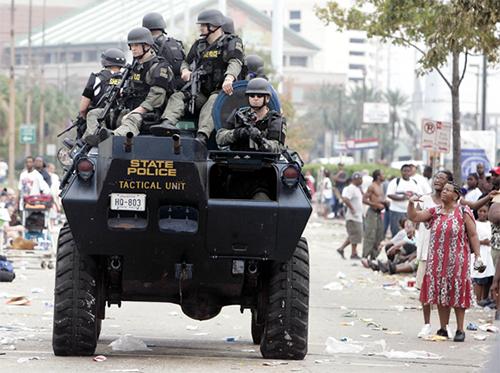
The Cops Who Stay on the Job

Police officers tend to be highly disciplined individuals, much like soldiers. In fact, many start out as soldiers, then move to law enforcement when they get out of the military. As such, they are largely people with a high regard for the law. Oh, there are the few bad apples; but despite stories saying otherwise, there aren’t many of them.

Those who stay on the job will be concerned with maintaining law and order in the worst of circumstances. They will also be subject to the politicians who are still in place over them. This means that if those politicians declare martial law, they will most likely enforce martial law, unless they believe that to be an unlawful order.

This could get sticky. As we saw during Hurricane Katrina, declaring martial law would probably mean they would be confiscating guns as well. That would put the police in the position of appearing to be the enemy in the eyes of any Second Amendment supporter. Whether or not they actually became an enemy would depend on how you, I and other gun owners would react to them. If we use force to reject their orders to turn over our guns, they will use force in response. That makes them our de-facto enemies.

The Cops Who Abandon their Posts

Some police officers may choose to abandon their posts, especially if they feel that their families are in danger. In that case, the question is what they will do to protect and care for their families. While there are very few bad cops out there, there is always the possibility that a cop will turn bad in such circumstances, out of desperation to take care of their families.

These people will be dangerous, because they will be able to present themselves to the public as law-enforcement officers, when in fact they are acting like criminals. There could even be some cases in smaller communities, where the police take over, much as warlords take over in times of anarchy. Should that happen, the police in question would be extremely dangerous.

It would be our duty, in such a case, to stand up against the police. But here’s the problem. How do you tell if what they are doing is in the public interest, or just in self-interest? If they are acting in the public interest, our duty is to support them, so we need to be sure they are the enemy, before treating them as such.

The National Guard

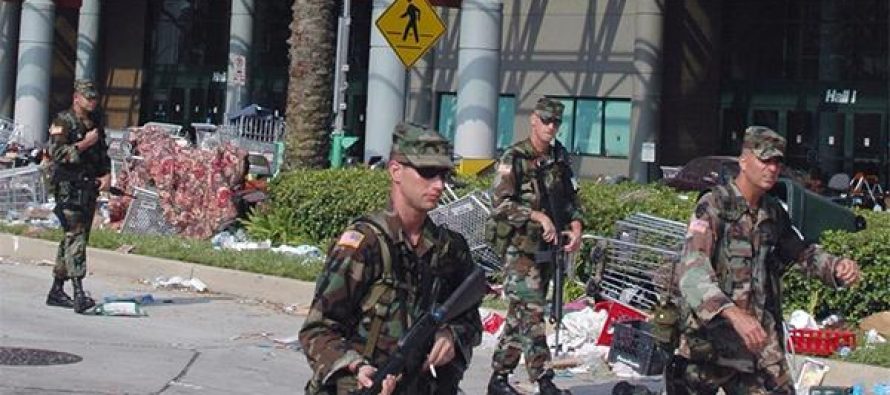
If military forces are called out to help gain control, it will be the National Guard, not the active military. US law prohibits the use of US military forces within the borders of the United States. Even if politicians in high places wanted to use the regular Army, it is doubtful that Army officers, all of whom know that prohibition in the law, would allow it.

But state Governors can call out the National Guard to help law enforcement in maintaining law and order. It’s not unusual for this to happen in the case of natural disasters. I would say that we should expect it to happen in a true SHTF scenario.

National Guard forces are US Army reserve soldiers and formations, which are “owned” by the governors of the several states. They serve a dual role, both as state owned military forces and reserves for the federal forces. If called out in a disaster situation, they could serve either to support law-enforcement or to provide disaster relief. In either case, they would be armed.

The Police and Military when SHTF – Friend or Armed Foe 2

Should martial law be declared, it is highly likely that the National Guard would be called out. If guns are confiscated, they are the ones who would most likely do the confiscation. They would probably be as polite as possible about it; but if they decided to obey that order, they would do their best to fulfill it.

However, the National Guard, like other military forces, is made up of predominantly conservatives. There’s a very good chance that they would refuse an order to disarm the population. Military officers swear an oath to uphold the Constitution and they would likely see the disarm order as a clear violation of the Second Amendment. As such, it would be their duty to refuse that order.

UN Troops

Of all these options, UN troops is the most dangerous. Any decision to use UN troops would have to be made at the federal government level. Were such a decision to be made, the troops which would be brought in to help maintain civil order would not be American troops. They would be unfamiliar with our culture (other than what they had seen in movies) and unfamiliar with our laws.

To these troops, a firearm confiscation order would seem perfectly reasonable, especially when you consider that they would probably come from a country where they don’t enjoy our Second Amendment protections. There would be no appeal to them on the grounds of our Constitution.

Should this happen, refusing an order to turn over your guns would be dangerous. The only thing that would protect any of us is the fact that there is no federal gun registration. Even so, there are states which require a permit to own guns, as well as concealed carry licenses which many of us have. That would give them a starting point for where to look.

Getting into a battle with armed troops is foolish. In such a situation, the only practical recourse is to hide all your guns where they won’t be able to find them, with the exception of a few, which you could then allow them to confiscate, making them think you’ve obeyed the order.

Regardless of the specific situation we would end up encountering, chances are that any police or military forces which were still in operation, would be there as part of whatever government managed to survive. Unless such forces decide to go rogue, we can count on them being there to help.

That doesn’t mean they’ll be our friends though. Unless you know them personally, they will look on you with suspicion, just like they will everyone else. Anyone carrying a weapon openly will be suspect. That doesn’t mean that they’ll hassle you, take away your weapons, fire upon you or arrest you; it just means that they will be watching to make sure that you aren’t a problem that they need to deal with.

The best thing you and I will be able to do in such a situation is to keep ourselves below the radar, so that we aren’t noticed. If we are not noticed, hopefully we will be left alone.

Should orders go out to confiscate any supplies that are stockpiled, it would probably be a good time to put our bug out plans into effect. Hopefully, we’ll all have a cache of supplies elsewhere, so that when we lose the supplies that we have stockpiled at home, we’ll still be okay.

If society collapses, you can bet that the foods the pioneers ate will become dietary staples

The Lost Ways prepares you to deal with worst-case scenarios with the minimum amount of resources just like our forefathers lived their lives, totally independent from electricity, cars, or modern technology.

So pay chose attention because this video will change your life forever for the good!

Your Neighbors Could Be Your Worst Nightmare in an Emergency:What is important to know is that when the needs of the neighbors are not able to be met, those needs will be attempted to be filled at your expense if you are the one with the supplies

This piece summarizes one of the episodes of “The Twilight Zone” entitled “The Shelter” that bears mention for all who have neighbors, especially those they are “unsure” of.  In this (two minutes to midnight) preparatory lifestyle, it’s always important to know about those who live around you.

Today’s neighbors can morph into tomorrow’s marauders in the blink of an eye.

The fragile nature of our society is best described as the thinnest of veneers of civilization overlaying an underlying barbarism that can manifest itself at any given moment.

“The Shelter” is an excellent case-study of such a precept that I recommend to everyone to watch at least once.  This is of the original series, and the episode was written in 1961 by Rod Serling.

The story commences in the home of a neighborhood doctor where he and his neighbors are celebrating his birthday.  Everyone is festive, and the mood is one of good spirits, laughter, and indulgence in food and drink.  After a birthday toast, several birthday guests comment (abrasively) on the noise the doctor has had over the months from the construction of a bomb shelter in his basement.  The doctor kind of ignores it, and the party continues.

Soon the doctor’s son comes into the dining room (only adults are present) and announces that the TV has gone dead, and just prior it announced to go to the Conelrad station on the radio.  The following report came forth on the radio as everyone listened:

“…Four minutes ago the President of the United States made the following announcement.  I quote: at 11:04 pm Eastern Standard Time both our Distant Early Warning Line and Ballistics Early Warning Line reported radar evidence of unidentified flying objects flying due southeast.  As of this moment we have been unable to determine the nature of these objects, but for the time being and in the interests of national safety we are declaring a state of yellow alert.  The Civil Defense Authorities request that if you have a shelter already prepared, go there at once.  If you do not have a shelter, use your time to move supplies of food, water, medicine, and other supplies to a central place.  Keep all windows and doors closed.  We repeat: if you’re in your home, go to your prepared shelters or to your basement.”

Needless to say, all of the guests frantically depart.  The doctor and his family scramble around, filling up jars with extra water and moving some extra stuff down into the bomb shelter.  In the shelter were beds for the family and shelves with canned goods and medicines, as well as other gear and some chairs and a table.  The doctor returns upstairs, and then one of the neighbors, Jerry, begins rapping on the window.  The doctor opens the door, and Jerry worms his way in, slyly informing the doctor that he and his family are unprepared for what’s coming.

The neighbor wants to shelter himself, his wife, and two children in a shelter designed for three people.  The doctor leaves him and enters the shelter, locking the door and sealing it off.  Presently, more neighbors arrive.  One of them pounds the door, insisting that the doctor allow him to enter.  Soon even more neighbors arrive, and one of them is very belligerent.  Men and women are irate, and they’re demanding the doctor let them in.  It escalates very shortly, as the aggressive man belligerently makes the following demand with several other men beside him to the doctor after yelling his name:

 “You’ve got a bunch of your neighbors outside who want to stay alive.  Now you can open that door and talk to us, and figure out with us how many can come in there…or you can just keep on doing what you’re doing and we’ll [hitting the door] bust our way in there.”

The doctor refuses, and the men outside move away from the door, and then begin to argue among themselves.  There is already infighting about who (of the outsiders) will enter the shelter, as the men move out of the house.

“Bill, who are those people?” the mother asks.

“Those people…those people are our neighbors…our friends…the people we’ve lived with and alongside for twenty years.  C’mon, Paulie.  We better get up some of this furniture and this bunk so we’ll have some protection in case that door goes through,” the doctor said.

The half-dozen men return to the house, smashing up furniture in the dining room and trashing the house.  They enter the basement with a heavy pipe, and as their wives cheer them on, they begin battering the shelter door.  Presently they break through.  Just as they are stepping into the shelter, the radio in the shelter with the family announces that the previously-spotted objects were satellites, and the alert was lifted.

As the dust settles, the neighbors try to blow it off half-heartedly, but the doctor doesn’t really want any of it.  The neighbors had managed to smash in the door and force their way in.  The doctor summarized it quite eloquently with his description of what had happened:

“The kind of people we are just underneath the skin.  I mean all of us…a lot of naked, wild animals who put such a price on staying alive that they’ll claw their neighbors to death just for the privilege.”

The episode is excellent, and in under 25-minutes presents exactly what human nature boils down to…in a non-profane, “Hallmark” version with no blood or gore to offend the tender sensibilities.  The doctor made the following critical mistakes.

 All of his neighbors knew he had built a bomb shelter in his basement

  1. The shelter (although made to resist radiation) was not built sturdily enough to be able to resist the marauders
  2. The doctor did not have one weapon to protect himself and his family and drive off the angry mob
  3. He allowed “Jerry” to come inside the house, instead of locking and barring every part of it to keep the neighbors away

The old adage, “Know thy neighbor” holds true…and not just from a superficially-friendly, good time perspective.

What is important to know is that when the needs of the neighbors are not able to be met, those needs will be attempted to be filled at your expense if you are the one with the supplies and safe haven.  “The Shelter” is an oldie but a goodie, and a perfect tool to keep in mind that all of us can pass beyond the limits of the “better angels of our nature,” and the situation turn from “Rebecca of Sunnybrook Farm,” to “The Road Warrior” in the blink of an eye.  Happy watching, and hope you take something from it.

13 Places to Avoid Going When SHTF- Planning a Bug Out Can Seem Overwhelming. but the More You Plan and Prepare in Advance, the More Likely You Will Remember Which Places to Avoid Going When SHTF

When it comes to being prepared for a SHTF event, preppers are focused on threats from natural disasters to nuclear wars, EMPs, and devastating cosmic events.  The situations that people can focus on and become obsessed with preparing for and unpredictable and vary widely. There’s no way that one person or family could be completely prepared for every single type of event. So, most people choose one or several related events they believe are imminent and prepare as best they can for those.

But the less talked about threat that will be overwhelming no matter what the situation is that arises, is population density. For example, according to this map of population density by county shows that roughly two-thirds of the U.S population is located in the Eastern half of the United States. In fact, according to recent reports by the U.S. Census Bureau (2010 data), approximately half the population resided in just 146 counties out of 3000 counties in the United States.

That’s right. The biggest threat to your safety and the safety of your family is in fact, other people. They aren’t “bad” people out to get you. Some of them would likely give the shirt off the back to help others in normal circumstances. But in a SHTF situation, people just like you who are doing what they need to do to provide for their families can be a threat. Scared, and willing to do anything to get away from immediate danger, large numbers of these people can be the difference between life and death for your family.

So, when SHTF, how do you mitigate population density to increase your ability to keep yourself and your family safe? The easiest way is to plan to avoid other people as much as possible. The problem that most people run into during an emergency or SHTF situation is they are unprepared, and they panic. When you sense danger, the first instinct for most people is to flee. Sure, some people will naturally react with fight instead of flight, but the majority of people will flee first and fight only when cornered.

The best way to be prepared to avoid the crowds of desperate people is to know which places to avoid going when SHTF. We’ve listed some examples below:

1. Downtown

It goes without saying that downtown areas of any city should be avoided. This is especially true in mid to large cities where lack of regular sanitation services will create ideal conditions for diseases. The risk of rioting, looting, and violent attacks is also greater in downtown areas. City dwellers are statistically less prepared for a SHTF event as many families live paycheck to paycheck with very little stockpiled supplies.

In addition, because population density is highest in these areas, stores and other sources for supplies will be quickly cleaned out. Many city residents depend on public transportation on a daily basis and are less likely to have access to a vehicle to flee the city. Mass numbers of people in these areas will be desperately seeking food, water, and medical supplies, as well as transportation out of the city.

2. Main Roads, Intersections, and Freeways

If you are planning to bug out to an area outside of the city, or if you are caught away from home, it may seem like the shortest route is the best course of action. But, keep in mind that main roads and busy intersections will quickly become overwhelmed with people trying to flee just like you are.

Most people only know one or two ways to get out of the city and these are usually main roads. Those who are looking to steal supplies will see main roads and intersections as prime locations to ambush unwary travelers. Get a map of your area now and plan several routes out of the city and from work to home that use side roads rather than highways and state routes.

3. Bottleneck Points

A bottleneck can be any area that a majority of people must travel in order to get out of a cul de sac, neighborhood, city, county, or state. In most cases, this will be things such as bridges, overpasses, underpasses, freeway ramps, etc. If several hundred or thousands of people are fleeing the same area, and everyone must cross the same bridge to get out of town, that will quickly become a bottleneck point.

The same is true for any areas where there is only one road going in or out. Avoid these areas at all costs and look for alternative ways to get through or cross, even if it means taking a longer way around or traveling in a nontraditional way (motorcycle, private plane, bicycle, on foot, etc.).

4. Hospitals

It may seem weird to see hospitals on a list of places to avoid following a SHTF event because one would think this would be a place to find help. The reason to avoid hospitals if at all possible is because most people, especially those that are injured, will flock to them. Even people who aren’t injured may head for the hospitals to get help for family members who have been injured.

Emotions in this area will be high and the risk of violence is greater as people lose control. In addition, patients who are ill and/or patients dying from lack of resources will increase the risk of rampant infection and disease. The hospital and surrounding areas will be a petri dish environment for viruses and bacteria. With medical resources limited, you’ll want to avoid getting sick to increase your odds of long-term survival.

5. Prisons and Surrounding Areas

This one should be a no brainer. If there is a prison in your area or along the route to your bug out location (BOL), you’ll want to avoid the area as much as possible.

During a SHTF event, it’s likely that guards and staff may abandon their posts to care for their families which increases the likelihood that violent prisoners can escape and be on the roads. These prisoners will come out into the chaos without any supplies, they will be desperate to survive and could be more willing to use violence to commandeer your supplies or vehicle.

6. Police Stations and Military Bases

Like with hospitals, it may seem counterintuitive to avoid police stations and military bases following a SHTF event. Police and military are supposed to serve and protect citizens, right? But although it may seem like going to these locations would be a safer alternative, in most cases it will be a waste of precious time and may in fact get you killed or locked up instead.

Police stations and military bases will be among the most secure buildings. They will be heavily guarded, and they will not be opening their doors to the mass numbers of people who show up. Crowds outside these areas will be frustrated and angry at not being granted protection. The last thing you want is to step into the middle of that crowd with your BOB of supplies, food, and water.

7. Shelters or FEMA Camps

Although shelters are designed to help those people who find themselves without a place to sleep or food to eat, most shelters are understaffed and operating at or above capacity even in normal times. Homeless shelters and food banks will be quickly overrun by mass numbers of people. Some may be forced to close the doors to newcomers within days of a SHTF event.

These shelters and any publicized FEMA camps that spring up will have very poor conditions. Supplies will be rationed, tempers will be high, and violence will be rampant. As more people arrive, and conditions worsen, the buildings and surrounding areas will quickly become breeding grounds for infection and disease.

8. Grocery Stores and Shopping Plazas

For people who are not prepared, their first instinct will be to find food, water, and supplies. Humans are creatures of habit and thus many will flock to local grocery stores and shopping plazas and begin looting for needed supplies.

These areas will be picked clean within less than 24 hours of a SHTF event. Those that are left there will be the most desperate and scared for their lives. These crowds are unpredictable and often violent.

9. Gas Stations, Auto Parts, and Convenience Stores

The reason to avoid gas stations, auto parts, and convenience stores is similar to that of other stores and shopping areas. Desperate people are going to flock to the first places they think of to find supplies to get out of the area. Those trying to get of the city will want to try to gas up and/or get.

For all but those people who were quick to get on the road, getting gas will be nearly impossible. Lines at these places will be long, tempers will be high, and violence will be much more likely, especially when pumps run dry and shelves are bare.

10. Hardware and Sporting Goods Stores

One thing that people will be searching for when SHTF is guns, ammo, and other items to use for protection. Since sporting goods and hardware stores carry a lot of these items, these stores will be hot spots for looting. If you don’t already have your weapons ready when SHTF, you’re better off to look around your home for items you can use, rather than try for a quick trip to a hardware or sporting goods store.

11. Banks, Check-Cashing, & Pawn Shops

One thing just about everyone who isn’t prepared in advance will be looking to get first is accessing to cash. For this reason, banks, check cashing or loan offices, and pawn shops should be avoided following a SHTF event. This is where large numbers of people will flock toward first.

Many people in these areas will become trapped, unable to access their money, either because computers are down or because cash reserves were already depleted. When desperate people can’t get access to cash that they believe will help them get needed supplies, things will get ugly.

12. Large Shopping Malls and Public Squares

When things get chaotic just before a SHTF event, the last place you will want to be is in a public square or large shopping mall. These places can quickly become a gathering place for desperate, angry people. Rioting, looting, and violence will be high in these areas so it’s best to avoid them if possible.

13. Large Social Gatherings and Public Events

If you even suspect that things around you are getting chaotic. If you sense civil or economic unrest or have recognized other precursors to a SHTF event, you will want to avoid large social gatherings and public events. These events draw large crowds of people on the same date and time. Events or gathering that are tradition or annual events that can be predicted or are widely publicized are more dangerous. These are prime target events for terrorists.

What to do Instead:

Now that you know what places to avoid going when SHTF, here are some things you can do to make sure you can avoid these places and still have a good chance of surviving:

Starting today, make it a habit to keep your gas tank at least 3/4 full at all times. Take steps to properly store additional gasoline in approved containers so that you can fuel up at home and skip the last-minute trip to the gas station on your way out of town.

Follow a regular maintenance schedule for your vehicle to keep it in top running condition at all times. Proactively make vehicle repairs so that your risk of a breakdown is less when SHTF. Stockpile spare parts such as belts, spark plugs, wiper blades, washer fluid, transmission fluid, antifreeze, brake fluid, and engine oil so you can replenish as needed without that trip to the auto parts store.

Create safe storage places where you can begin to stockpile emergency cash so that you have it on hand when SHTF and do not need to make any last-minute runs to a bank, ATM, or pawnshop for cash.

Conduct a weapons inventory of any guns, ammo, knives, and personal self-defense weapons (mace, stun gun, etc.). Be sure to consider any other potential items (ball bats, shovels, chains, etc.) that could be used for weapons and protection during a SHTF event. Know what you have on hand and train yourself and family in how to use it if needed for protection.

Clearly mark danger zones in advance on a map or maps of your local area and surrounding areas. Plan several different escape routes so that you can quickly change course if needed due to unexpected danger or obstacles. Identify and plan to use alternative routes out of town including logging roads, railroad tracks, and power line easements if needed to avoid danger zones.

Locate and clearly map out any sources of fresh water that won’t be the first thought for others such as small lakes, ponds, private or public swimming pools, creeks, and rivers. Include a hand water pump and collapsible water jug in your BOB as well as a way to filter and boil water from these sources.

Stockpile lightweight food, ways to filter water, and medical suppliesso that you won’t be tempted to make a last run to grocery or other shopping areas. Create a system of hidden supply caches along your routes to your BOL so you can replenish supplies that are used, stolen, or confiscated along the way.

Planning a bug out can seem overwhelming. But the more you plan and prepare in advance, the more likely you will remember which places to avoid going when SHTF.

I Lived In A Post-SHTF World For 3 Years, And This Is What I Learned

As a professional physician having always lived in a big city, I never imagined that at some point in my life, the social and economic situation of my country, Venezuela, would lead me to learn and use survival skills that I had read about but never even thought of applying.

Without being in a declared war or a formal armed conflict, we have experienced different situations of chaos for about 10 years in Venezuela. But in the last three years, the country has become a true SHTF scenario, where the only way to move forward is to learn how to survive.

I feel that the lack of food, clean water, and, at the lowest point of the situation, electricity, has given me new skills that have undoubtedly prepared me for any catastrophic situation.

After three years in this contingency, I can now share every situation that took me by surprise and the techniques I had to learn by doing.

There is no such thing as “too much” stored water

I Lived In A Post-SHTF World For 3 Years And This Is What I Learned

Water is one of the most important resources we need for life. Unlike other supplies, it is not interchangeable with another product, and to be ingested, it must go through a purification process.

I have never been prepared for a water shortage before. Now I know it is important to keep water stored safely in closed containers. If water is not drinkable, it must be purified before ingesting it since contaminated water can cause serious gastrointestinal diseases.

Water is not just for drinking but is used in many other activities, such as cooking and cleaning, so I had to learn some purification techniques that can be done at home.

One of the most popular techniques to decontaminate water is to boil it for three minutes. Purification tablets are also very useful, not that expensive, and easy to use.

Adding five drops of chlorine per liter of water as an emergency measure is another way to clean the stored water.

Grains are my friends

To eat properly, it is necessary to consume proteins, fats, and carbohydrates.

The moment I realized that animal protein was scarce—in addition to the fact that the electricity problems spoiled it—I had to investigate the nutritional content of other foods in order to keep myself well-fed.

Lentils are grains that are easy to store, non-perishable, and high in protein. Together with a cereal like rice, they make a complete meal that keeps us well-nourished and in good health.

Let there be light: candles, matches, flashlights, and batteries

I Lived In A Post-SHTF World For 3 Years And This Is What I Learned

After spending more than four hours without power, I began to worry. I had some candles saved, but I did not know where they could be. I also had a couple of flashlights, but I had removed the batteries to prevent them from being sulfated.

Candles and matches must be in several easily accessible places. Likewise, the batteries should be in the same place where the flashlights are kept, and we must be sure that they have a charge.

During this year, the country suffered the most serious electrical crisis. In several areas, there were blackouts of up to five days.

After a couple of days without electricity, the candles will not be enough, so learning to make oil lamps becomes a vital skill in this situation.

The lack of electricity can lead to a state of anguish that grows with the passage of time. It is important to do everything possible to minimize that effect.

Be prepared with medicines, but it’s better to learn from nature

Due to my profession, I am always very attentive about keeping basic medications, such as anti-inflammatories, analgesics, and antibiotics, in the cabinet.

When I had to live in an SHTF situation, my medical supplies became insufficient, and I couldn’t find any in the pharmacies or they were too expensive. So I had to learn a little more about natural medicine, its uses, and its benefits.

I must say that this is one of the most important things I learned during that time.

Many anti-inflammatory drugs and synthetic analgesics damage the stomach mucosa as a side effect. In situations of stress, there is a large production of acids in the stomach, so using drugs that further damage this organ is not the best idea.

Roots such as ginger and turmeric are excellent anti-inflammatories. They are easy to get and easy to store. Likewise, garlic is a potent analgesic.

In the case of presenting wounds or cuts and not having antibiotic ointments, honey, ginger, and cloves are foods that have scientifically proven antibiotic properties.

Chamomile and lavender are natural relaxants and help fight stress and insomnia.

No matter how big the supply of medicines we have, it will always be more economical, favorable, and easy to store the natural product, with equal and, in some cases, greater effects.

Cash

Banks have made life easier for us with the use of debit and credit cards. However, there are situations in which having a lot of money in the bank does not help much, and I learned it the hard way.

When there is an electrical fault, despite the fact that light and other electrical services have been restored already, the digital communication of the points of purchase become so affected that it is impossible to buy anything in this way.

For this reason, I understood that it is always important to keep some amount of cash for this type of contingency.

Take advantage of any time you get to replace supplies

I Lived In A Post-SHTF World For 3 Years And This Is What I Learned

Although during those years I did not have to be locked in a bunker without being able to leave, the feeling of confinement was quite similar. When, in spite of having the money, you can’t find what you need to eat or, despite having a private vehicle, you can’t move for lack of gasoline, the situation becomes desperate.I understood that in those moments in which there was an opportunity to replace the supplies I had at home, especially water and non-perishable food, I had to do it.

The situation in my country has improved. Although still not at the best economic and social level, and with many problems of scarcity and lack of some supplies, society has been regularized.

However, I appreciate the years that taught me these valuable lessons that I still apply.

The most important thing I learned was to be prepared for when an SHTF situation strikes again.

This guide below can help you in a survival situation

If society collapses, you can bet that the foods the pioneers ate will become dietary staples

The Lost Ways prepares you to deal with worst-case scenarios with the minimum amount of resources just like our forefathers lived their lives, totally independent from electricity, cars, or modern technology.

So pay chose attention because this video will change your life forever for the good!

Your Weapon Is Only Tool to Survive: The Tactics of a Gunfight After SHTF-‘IF YOU KNOW THE ENEMY AND KNOW YOURSELF, YOU NEED NOT FEAR THE RESULT OF A HUNDRED BATTLES.’SUN TZU,CHINESE IMPLEMENTING THIS NOW AGAINST U.S.

Looking around I couldn’t find an important piece of information – how one should fight in a SHTF situation. I think this is an important topic to cover because it has several special circumstances that need to be considered.

  1. Ammo will need to be conserved – I don’t care how many rounds you have saved up, it won’t be enough and the long-term of a complete collapse of society (potentially 40+ years) means that from the get go every single shot will be precious.
  2. Due to the fact that it is almost a certainty that combatants will be intensely familiar with the area and possibly have been residing for a long period of time it rather changes the mechanics of combat.
  3. Due to limited manpower and the fact that any attrition will be felt heavily, patrols, night combat, and outposts will be nigh impossible to field with regularity.
  4. Expanding on the above, most medication has a limited shelf life and even minor wounds will start to become quite threatening (increased risk of disease and infection) – Medication will run out fast.

With that in mind, let us analyse why tactical considerations are always important and what style of fighting we will have to adopt. Due to the fact that ammo will always be a luxury, modern tactics which rely on the idea of expending more ammo in a gunfight at the foe over men or positioning is obviously not possible.

Now – every weapon you should use should focus on stopping power, the smallest cartridge in your arsenal should be 6.5mm (handguns excluded).

With that out-of-the-way – let us look at the overall thought process and things to identify before you engage in any situation.

  1. Manpower: Who has more bodies at their disposal – do they look weak and ill-trained or are their movements/positions well thought out and the men (and women!) well fed? Are they all moving armed or do they have the luxury of people dedicated to guard duties?
  2. Armament: What weapons are they using – are they rusted and in ill repair? Can you identify if they are carrying enough ammo for everyone to fight adequately?
  3. Maneuver: Who is in the better position? – do they have a path of pursuit and escape, do they have a height advantage? Importantly are they defending something valuable (like a base or stash)? If so you may have the luxury of being able to attack at will, the same thing goes if you are on the defensive.

From these 3 guidelines a threat level can be deduced, obviously there will be some situation where one advantage is so great that it will offset disadvantages – this is a rough guideline. If they check off none, then you are probably in a position to utilize a diplomatic approach and join groups. If they check off one of 3 then you should approach with caution, maybe attempt to surround them at night and make your intentions clear – again diplomacy may be the best decision here. If they check two of three than combat should be avoided until you are in a position to use your advantage to overwhelm them (attacking at night, in an ambush, etc). Do not attempt diplomacy at this threat level as you will not be in a position to make a fair deal and all emphasis should be placed on evening the odds or avoiding the threat. Finally if they check off all three do not engage at all, the goal is survival not heroic death and if worst comes to worst retreating completely or surrendering goods is preferable to a bullet in the brain. They still are people and unless you are absolutely sure that they are completely hostile they may be willing to work with you.

Now with the overall threat assessment done we may now talk about the five stages of combat (Recce, Skirmish, Combat, Push/Withdraw, Decisive Blow/Total Withdrawal).

RECCE

“IF YOU KNOW THE ENEMY AND KNOW YOURSELF, YOU NEED NOT FEAR THE RESULT OF A HUNDRED BATTLES.” – SUN TZU

Recce is often the most overlooked stage of combat but it is BY FAR the most important. Recce is the mode of thought that you should be on at all times, dispatching a scout if possible and identifying incoming threats. The more focus you place on recce the more forewarning you will have as to inbound threats, and more time to prepare/evacuate. Obviously you will be unable to have a complete recon net due to limited supplies but any extra hands should be trained for recce and dispatched when possible.

This is where you will identify your enemies capabilities on your threat checklist and decide whether to choose engagement/diplomacy/retreat. Just to outline how vital this is, 90% of a good tactician’s skill is how the deploy and utilize information from recce, with the other 10% being a good leader with good interpersonal skills and the ability to keep cool under pressure.

SKIRMISH

This is where you action your initial decision on engaging the enemy, it is the period where hostilities have begun but you are not locked into a fight. This will be the period where you harry the enemy with traps and marksman to attempt to pick off men before you attack or they reach your designated point of defense (usually your fortifications).

Some skirmishes may only last a minute or two and some may be the entire fight, note that your main focus should be leaders and sensitive targets (heavily armed fighters and if possible, medics). The goal of this will be to break your enemies organisation and morale when combat begins – that being said…

COMBAT

This will be the time when individual training counts. Communication will be close to impossible in this brief period and this is where the most casualties will be sustained – though despite this being the most calamitous point of a fight it will be the least important for you as the person in command. Your main role will be encouraging your men and stopping any obvious screw-ups.

What you should be watching closely is the movement of combat, are you making good progress towards your goal or are you sustaining casualties – are there hostile elements that you were unaware of?

Before I make my next point the thing to keep in mind is that in a ‘battle’ there may be multiple combats, intensive fighting between periods of skirmish, pushing, and retreat.

PUSH/WITHDRAW

This is as much a phase of combat as it is its own separate action, and the commands will have to be executed well and especially in the case of a withdrawal you need pre-planned points to ensure cohesiveness.

Really the most that can be said of pushing is that your enemy has begun to break or have thinned enough that they can no longer maintain the area their position demands, as I would expect almost all combatants to be ill-trained this will almost certainly result in a decisive victory as the enemy breaks completely.

However, keeping your men together in the case of a withdrawal is another issue. The things to watch out for: can you retreat to your designated point safely (if you have one – keep in mind most defense should take a multi layered approach), do you have enough manpower left to pursue another attack, is the enemy willing to pursue or are they holding position. If it is the latter the combat may switch to a skirmishing stance again.

TOTAL WITHDRAWAL/ DECISIVE BLOW

Decisive blow: Your enemy has completely shattered, this is the period encompassing cleaning up resistance before taking stock of supplies and beginning the process of recce again – re-assessing.

Total Withdrawal: This comes about one of two ways – Your force has broken and are fleeing in a blind panic, or it is (hopefully) an organised retreat to put some distance between yourselves and the enemy combatants and re-asses. You will again need to survey the situation and determine the next point of action for your group.

Something to note – Overall your group should always be prepared for a total retreat, even an easy fight could be a ruse and you always need to be prepared to move and maintain as many supplies as possible.

Guns have been referred to as “the great equalizer,” and there’s no weapon which can come close to them in that regard.

A lot of the popularity of firearms is due to the fact that anyone can use them effectively, not only the strong and agile. The young, the old, men, women and child can take up firearms in defense of home and family and do so effectively.

But what do you do if you can’t use a gun – or if you don’t have a gun — to protect yourself?

With The Collapses Of The College And University Systems And Student Aid-The Bands Of People,E Hopeless And Helpless Will Turn Dangerous Fast! (7 Unexpected Consequences of an Economic Crisis: That Will Throw The Nation Into Total Chaos.)

Other than the obvious consequences, what might we expect from a partial economic collapse? A total collapse of the economy would throw the nation into utter chaos. But what if we endure an economic depression, or a severe and long-lasting downturn? I think that some of the effects are not so obvious.

1. The college and university system will collapse

As I explained in this previous post, the system of higher education is a house of cards. The cost of getting a college degree has risen sharply and steadily, while real income has remained relatively flat. The price rise is due to the easy availability of grants and loans for education. But with so many persons getting a college degree, its value in the marketplace has plummeted. Many college grads are out of work, or they are working in a job that does not require a degree. Eventually, this practice of paying more and more, for something that is worth less and less, will collapse the system. Colleges and universities will not have enough paying students, and professors will not agree to a drastic pay cut. Overhead expenses are far too high.

All that is needed is an economic collapse, or partial collapse, to topple this house of cards. Many universities and colleges will be forced by economics to shut down.

2. Agricultural yields will plummet

The current U.S. agricultural system is based on the expectation of high yields. But high yields are obtained by high inputs — all the things that go into growing the crop, including lots of fertilizer, perhaps irrigation, herbicides, pesticides, labor, machinery. Then those high yields are sold and the money is then used to fund the inputs for the next crop cycle.

An economic collapse will mean that farmers will not be able to afford all the inputs needed for high yields. And when yields fall, the amount of money from that crop will be less. Then the next crop cycle will have even less money for inputs, resulting in even lower yields. And the process will continue — lower yields, less money, lower inputs — until many farmers are out of business and a food crisis results.

3. Violent crime will increase

When people lack money and food, they become desperate. And desperate people do desperate things. Theft and robbery will skyrocket, and people will be afraid in their homes, and afraid to go out in the community. Even a quick trip to the market will become risky. Sales of most goods will plummet, causing the economic crisis to worsen. Protests will turn violent. Home invasion robberies will become much more common. Many people will be killed or injured as a result of this increase in violent crimes.

4. Law enforcement will be overwhelmed

The law enforcement system in the U.S. is commercial. Officers are paid. We don’t keep a large excess of officers on the payroll, just in case crime sharply increases. So it is relatively easy for the system to be overwhelmed. And that means a call to 911 might not bring the police to your door in time, if at all. Those who have firearms for home defense will be much better off than those who rely solely on the police. But many households have no firearms. And that means that robberies will increase, and so will the economic damage and the number of injuries and deaths.

5. The healthcare system will be overwhelmed

The healthcare system is also commercial, and lacks a safety margin in the form of excess doctors and nurses. Hospitals operate at close to capacity. A sudden increase in persons who are sick or injured will overwhelm the system.

The aforementioned increase in violent crime will undoubtedly increase injuries. But it is less obvious that a disruption to the food production and distribution system will increase illnesses. Plenty of good healthy food is the first line of defense against illness. Malnourished persons are much more likely to get sick. So an extended disruption to the food supply will cause an increase in illnesses.

6. Travel anywhere will become dangerous

As a result of all the above described problems, travel will be dangerous. Want to make a quick trip to the supermarket? You risk having your house robbed, if it is left unoccupied. And you risk being attacked on your way back from the market. Robbers might wait outside the market and follow anyone who looks like they purchased a lot of food.

There will be protests in many places, and violence will often break out. People who are hungry and afraid do not make the best decisions. Then there is the cultural aspect of the situation. We live in a culture that tells us to expect the government to take care of us, and to protest whenever anything doesn’t go our way. Ironically, self-sufficiency is abhorrent to our narcissistic culture.

I expect that the roadways will be dangerous, as violent criminals will see travelers as easier targets than homes.

7. The death rate will jump higher

People will be malnourished because of the disruption in the food supply, so they will get sick more easily. Violent crimes and violent protests will result in many more injuries than usual. And yet healthcare will be much more difficult to access. There will be a shortage of hospital beds. It will be difficult to get a doctor’s appointment. There may be a shortage of prescription and OTC medications.

All of these factors will make life a riskier endeavor.

Now if you are a seasoned prepper, who has long considered the dangers inherent in an economic collapse, you may have anticipated some of the above consequences. But I hope I’ve added to your understanding of the possible problems that we may soon face.

Design a site like this with WordPress.com
Get started