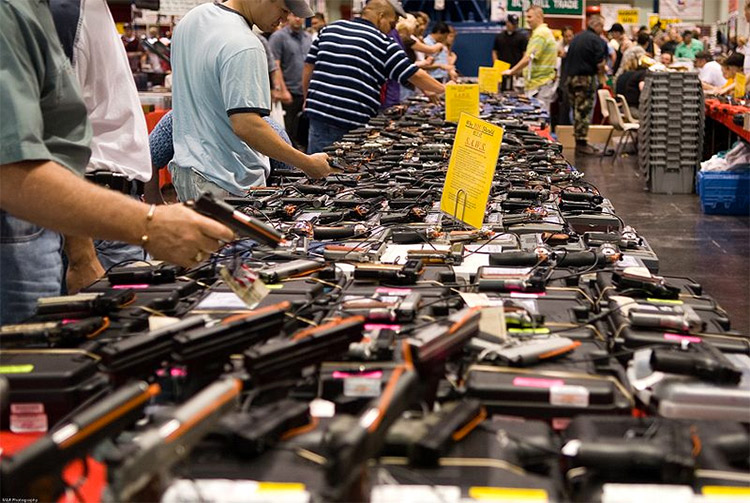
Resources to Protect the Right to Keep & Bear Arms

The state governments intervening against federal encroachment on behalf of its residents is a constitutional solution because the Constitution is a contract (technically a compact) among the States which created the federal government. The States are the parties to the Constitutional Contract and the federal government is the PRODUCT of that contract. Inherent in EVERY contract is the right of the parties to that contract to control the product of the contract. The States are the representatives of the people in this contract and have a DUTY to keep the federal government within its constitutional boundaries and thus protecting the rights of the people. It is inherent in the very nature of the Constituion. This intervention is that act of the PEOPLE through their States to keep the federal government within in its “limited and defined” boundaries and should be as regularly carried out as an oil change in your car. Madison states this principle again in Federalist #49:

“As the people are the only legitimate fountain of power, and it is from them that the constitutional charter, under which the several branches of government hold their power, is derived; it seems strictly consonant to the republican theory, to recur to the same original authority, not only whenever it may be necessary to enlarge, diminish, or new-model the powers of government; but also whenever any one of the departments may commit encroachments on the chartered authorities of the others.”

In Federalist #46 he further states:

“should an unwarrantable measure of the federal government be unpopular in particular States, which would seldom fail to be the case, or even a warrantable measure be so, which may sometimes be the case, the means of opposition to it are powerful and at hand. The disquietude of the people; their repugnance and, perhaps, refusal to co-operate with the officers of the Union; the frowns of the executive magistracy of the State; the embarrassments created by legislative devices, which would often be added on such occasions, would oppose, in any State, difficulties not to be despised; would form, in a large State, very serious impediments; and where the sentiments of several adjoining States happened to be in unison, would present obstructions which the federal government would hardly be willing to encounter.”

The Supreme Court of the United States in Printz v. United States has also affirmed these clear constitutional principles in its articulation of the anti-commandeering doctrine stating:

“The Federal Government may neither issue directives requiring the States to address particular problems, nor command the States’ officers, or those of their political subdivisions, to administer or enforce a federal regulatory program.”

Or as Chief Justice John Roberts writes in NFIB v. Sebelius (2012):

“…we look to the States to defend their prerogatives by adopting “the simple expedient of not yielding” to federal blandishments when they do not want to embrace the federal policies as their own. Massachusetts v. Mellon, 262 U. S. 447, 482 (1923) . The States are separate and independent sovereigns. Sometimes they have to act like it.”

Based upon these principles, there are presently numerous bills moving through the state legislatures to protect Americans’ natural right to keep and bear arms. These bills need your support. If you live in these states and you believe you can support the bill, contact your representatives, and tell the bill in your state. Go to the link below to find your representatives. Also look for the committee members that are hearing the bill and contact them.

Some things to consider:

  1. In the legislative process you don’t always get the perfect bill the first time. What you need to determine is whether it moves in the direction of liberty. Make a first step, then you continue to work to make it stronger going forward.
  2. Some law enforcement will oppose such measures to curtail federal gun control. They use the feds as a force multiplier, and they receive funds and equipment that they don’t wish to lose. That it why a constitutional sheriff is so important.
  3. Don’t be threatening or obnoxious; you’ll undermine your own cause.
  4. If you can, attend hearings where you can make public comment.

Click the Bill to see its status:

  • Alabama HB157
  • Arizona HB2111
  • Florida H1205
  • Georgia HB597 and SB268
  • Iowa HF518
  • Minnesota HF1265
  • Missouri HB85 – and SB39
  • Montana HB238
  • Nebraska LB188
  • North Carolina H189
  • Ohio HB62
  • Oklahoma SB486
  • South Carolina H3042
  • Texas HB635
  • Utah HB76
  • West Virginia SB353
  • Wyoming HB124 and SF81

Most of these bills mirror one another to a great extent and follow the Second Amendment Preservation Act (SAPA) model which draws largely upon the model legislation created by the Tenth Amendment Center. Many counties are passing SAPA resolutions as well.  Here is a model from the Missouri counties:

___________ County, Missouri,
Second Amendment Preservation Resolution

WHEREAS, The 2nd Amendment to the Constitution for the United States reads as follows, A well regulated militia, being necessary to the security of a free state, the right of the people to keep and bear arms, shall not be infringed; and

WHEREAS, Article I, Section 23 of the Constitution of Missouri reads as follows, That the right of every citizen to keep and bear arms, ammunition, and accessories typical to the normal function of such arms, in defense of his home, person, family and property, or when lawfully summoned in aid of the civil power, shall not be questioned. The rights guaranteed by this section shall be unalienable. Any restriction on these rights shall be subject to strict scrutiny and the state of Missouri shall be obligated to uphold these rights and shall under no circumstances decline to protect against their infringement. Nothing in this section shall be construed to prevent the general assembly from enacting general laws which limit the rights of convicted violent felons or those adjudicated by a court to be a danger to self or others as result of a mental disorder or mental infirmity; and

WHEREAS, The right to be free from the commandeering hand of the federal government has been most notably recognized by the Supreme Court of the United States in Printz v. United States when the Court held: The Federal Government may neither issue directives requiring the States to address particular problems, nor command the States’ officers, or those of their political subdivisions, to administer or enforce a federal regulatory program; and

WHEREAS, The anti-commandeering principles recognized by the Supreme Court of the United States in Printz v. United States are predicated upon the advice of James Madison, who in Federalist #46 advised “a refusal to cooperate with officers of the Union” in response to either unconstitutional federal measures or constitutional but unpopular federal measures, and

WHEREAS, In Section 21.750 RSMo, “The general assembly hereby occupies and preempts the entire field of legislation touching in any way firearms, components, ammunition and supplies to the complete exclusion of any order, ordinance or regulation by any political subdivision of this state.” And, thereby leaves the statutory defense of the right to keep and bear arms largely in the hands of the general assembly.

NOW, THEREFORE BE IT RESOLVED that the County of __________, Missouri hereby reaffirms its full commitment to the 2nd Amendment to the Constitution for the United States and Article I, Section 23 of the Constitution of Missouri.

BE IT FURTHER RESOLVED that the County of ______ considers all federal acts, laws, orders, rules or regulations restricting firearms, firearms accessories, and ammunition to be violations of the 2nd Amendment to the Constitution for the United States; and

BE IT FURTHER RESOLVED that pursuant to and in furtherance of the principles of federalism enshrined in the Constitution for the United States, the federal government may not commandeer officers, agents, or employees of the County of _______, or any political subdivision of the state of Missouri, to participate in the enforcement or implementation of any federal act or regulatory program; and

BE IT FURTHER RESOLVED that is the intent of this Resolution to support legislation in the Missouri General Assembly that would protect the employees of this county, including law enforcement officers, from orders or other pressure to participate in actions that would violate their oath of office and the individual rights affirmed under the 2nd Amendment to the Constitution for the United States and Article I, Section 23 of the Constitution of Missouri; and

BE IT FURTHER RESOLVED that the Commissioners and Sheriff of the County of ______ express full support for the passage of House Bill 85, as passed by the House of Representatives on February 4, 2021, or Senate Bill 39, as passed by the Senate General Laws Committee on January 26, 2021, including accountability provisions; and

BE IT FURTHER RESOLVED that the County of ______ urges all other political subdivisions of the State of Missouri, on behalf of their residents, to pass a similar resolution in support of passing House Bill 85 and Senate Bill 39 into law during the 2021 legislative session; and

BE IT FURTHER RESOLVED that the County of ______ intends to vigorously uphold the right of the people to keep and bear arms.

__________________________________
Presiding Commissioner

__________________________________
Associate Commissioner

__________________________________
Associate Commissioner

__________________________________

There are several resources that help you quickly identify the gun laws in your state so that you can see how constitutional your state is and what needs to be changed:

Gun Owners of America and the Tenth Amendment Center have SAPA models on their websites.

The NRA-ILA website has a list of gun laws by state which give you a good overview of the status of gun rights in your state even though the NRA has fought for several pieces of legislation that infringe on the right to keep and bear arms.

The ATF website has an excellent resource – State Laws and Published Ordinances – where you can see how they are infringing on your rights in each state.

We must protect state and local authority against federal consolidation. We are a republic of independent sovereign states. Our states created the federal government through the Constitution. Our states must do their duty to enforce their compact and protect each state’s residents. Our states must protect each American’s right to defend life, liberty and property. Encourage your state to take this stand.

8 Tools for Underground City Navigation: In an EMP attack, or a major power grid failure, GPS systems would be out of service along with cell phones and other electronic communication systems. So all you rely on today for getting from one place to anoth

In an EMP attack, or a major power grid failure, GPS systems would be out of service along with cell phones and other electronic communication systems.  So all you rely on today for getting from one place to another will be rendered useless and all you’ll have left is your knowledge and your skills.

That is if you have them, because not a lot of us have ever been put in a situation where they had to get from A to B using the underground sewage system. Or even a map or a road atlas.

That’s why it would be to your advantage to know how to navigate using these older, tried and true methods. It’s never to late to start learning and practicing your skills, so I won’t drag this on anymore and get to the point.

Using Maps to Find Your Way Above Ground

How to Use Folding Street Map

A folding street map is exactly what the name implies. It is a detailed map of streets in a specific area. To be compact the map is folded up to conserve space. These types of maps were originally designed to be kept in motor vehicle glove boxes or to be carried in back packs or brief cases by pedestrians.

{adinserter emp}A street map is a grid map. Map grids are formed by vertical and horizontal lines drawn on the map. Locations on a map are expressed as grid coordinates. Grid coordinates are designed to divide the earth’s surface equally and evenly on a flat surface.

Map coordinates are the numbers and letters used to pinpoint a location. The letters are on the top and bottom of the map and the numbers are on the left and right side of the map. To locate the street that you are looking for first check the street index for the coordinates.

To locate the street on a map, read right across the bottom of the map until you find a grid coordinate that corresponds to your east-west position. Then read up the left side of the map until you reach a coordinate that corresponds to the north-south position. Where these lines cross will be the location of the street that you are looking for.

Note: On proper street maps, North is always up.

The map legend is an index and a table of contents. It tells when the map was made, a list of street names in the street name index, and all other visual information that is necessary to read and understand the map symbols.

Practice regularly on how to travel across the city without the aid of a GPS system. Get used to using maps and written directions for travel. If you have a good memory, memorize emergency travel routes to your home or to another safe location.

How to Use Bus Route Maps, Trolley Car Route Maps, and Elevated Train Route Maps

In the cities that have public transportation there are usually bus, trolley car, or elevated train route maps at each of the larger stops mounted in a protected frame. These maps are grid maps and can be used to find locations the same way you use a standard city grid map.

There are usually free copies of the maps at these stations to help you find your way when not at the larger protected route maps. These maps may not have a lot of detail, but they will give you a general idea about which way to go.

How to Use the Rand McNally Road Atlas

Rand Map

The road atlas books are grid maps and are updated each year to ensure that the atlas is as accurate as possible. These books contain very detailed maps of all 50 states. These books are usually paperback and are either spiral-bound or staple-bound.

The atlas shows main roads, secondary roads, and major city and county roads. They keep track of all new construction and highways that are being taken out of service. If you have an older atlas, try comparing it to newer ones. Even if there are roads taken out of commission, you may still be able to travel along on foot as opposed to trying to navigate through more difficult places.

These abandoned roads may also be overlooked by anyone trying to stop you from leaving the city. If you aren’t certain about the status of an unmarked road, take some time to visit it when you will not be readily observed in the area. If you notice unusual activity, then it may not be a good idea to try that road during a crisis situation.

To use an atlas, turn to the state you are looking for. Then the specific location within that state in the road or location index. Finally use the map coordinates to locate the location or road you are looking for.

How to Travel Underground

In a time of crisis it may be to dangerous to travel on the city streets. Because of this you will have to find alternate safe ways to travel to get home or to leave the city. To prepare and to practice safe ways of travel will give you and your family the edge in a world gone mad.

How to Read Subway Maps

Subway maps are not grid maps, these maps are subway route maps. Like a grid map, those routes that go up and down travel north-south. The routes that go across the north-south routes are the east-west routes just like the streets above.

Most subway maps come in the following types.

  • The whole subway system map which shows all routes of the system.
  • Individual subway route maps that give better detail  of a subway route in a particular area.
  • Neighborhood maps that show all subway routes going through a particular neighborhood in a city.

Since the subway was tunneled underground each route is color coded, lettered, or numbered and is given a route name.

  • The colors, letters, and numbers define the transit routes.
  • The maps will show you which routes go east-west or north-south.
  • Each station is clearly marked on the map.
  • Each station is clearly marked with the station name on the walls in big letters.

As you enter a subway station from the street there are information signs that tell you the station name or location and if it is open or not. These signs are usually located above the stairs as you enter the station level.

In every station there is an information board that has a large detailed whole subway route map and subway train time schedules. You can always get free subway maps and schedules in this area.

When using a subway map you need to know where you are at and where you wish to go. Say that you are at 5Th ave. and 59Th st. and you wish to go to Time Square and 42St. The subway routes that service 5 Th ave. and 59Th st. are  the N, Q, and the R. The subway routes that go to Times Square and 42St. are  1, 2, 3, 7, A, C, E, N, Q, R, and S. So the N, Q, and R trains will make the trip.

In a time of crisis subway construction maps, abandoned subway tunnel routes, and out of service station locations would be a helpful tool for getting around a major city without the general public knowing of these routes. These maps may be obtained from a construction company’s public relations office that is doing the new subway construction or the city public works department.

Know which Direction Tunnels Go in Your City

railway

In large cities that have tunnels it is very important that you know which direction the tunnel is pointing when you enter it or exit it. Depending on the city location the tunnels may be north-south or east-west.

In the beginning of a crisis it may be safe to use a tunnel to get out of a city. As the crisis continues there will be uncontrollable traffic jams and grid lock that could make these tunnels unusable and dangerous to use or be in. Most modern tunnels have emergency closing doors that can seal off the tunnel in an emergency situation and possibly trap those individuals inside.

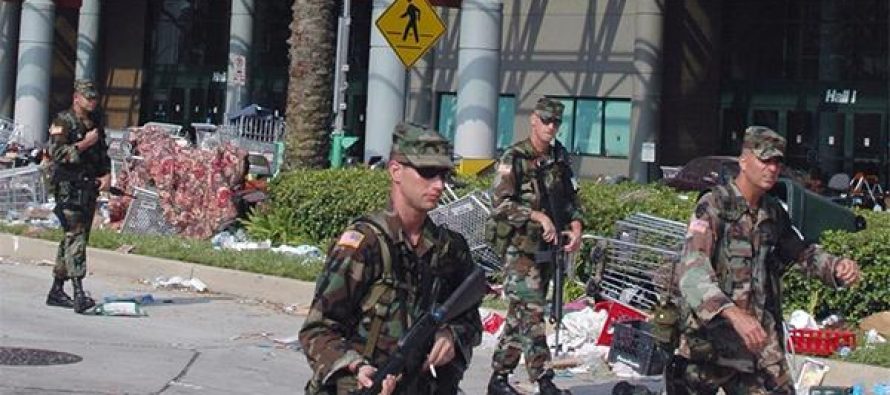
If the crisis was one of biological or nuclear in nature, all roads, bridges, and tunnels would be closed due to martial law in the city to control the population from spreading disease and contamination. With martial law comes the use of deadly force to further control the people and the crisis.

You can also use storm water sewer maps, sewer system maps, and underground utility tunnels and vault maps (natural gas, water, electrical, steam, or other utility services).  In the older larger cities there are miles upon miles of underground storm water sewers,  raw sewage sewers, and combined sewer systems. Each have their good points and each have their bad points as escape routes.

How to Use Raw Sewage Sewers

Raw sewage sewers just transport raw human sewage away from buildings and sends it to a sewage treatment plant. At the treatment  plant the sewage is decontaminated and released to the ocean, rivers, or streams. The nice thing about these sewers is that they run all over the city.  Unfortunately, if you use these sewers even with waders and other protective clothing, there is still a great chance of you getting contaminated and sick from being exposed to the raw sewage.

How to Use Storm Water Sewers  

Storm water sewers just carry rainwater run off. When it is not raining these sewers make a good underground pathway to all parts of the city. If you get caught in these sewers during or after rainstorms flash flooding could kill you by drowning. For safety sake, know what the weather is going to be before going underground and do not forget to wear your waders. Storm water is usually sent directly to lakes, rivers, streams, or to the ocean, so following them will take you out of the city and possibly quite far from it.

How to Use Combined Water Sewer Systems

Combined sewer systems are designed to carry raw sewage, industrial waste water, and rainwater runoff in the same pipes to waste water treatment plants. Not only does this treatment plant treat raw sewage, but it must remove all kinds of toxic waste compounds from the water as well. When industrial waste compounds are mixed up in the sewer system water, no one truly knows how dangerous and what kind of a health hazard exists.  Therefore, it is hard to say what will happen to your health  if you are traveling unprotected in these sewers.

Where to Get Your Maps From

For secrecy sake and if you have some knowledge of map making, it would be to your advantage to make your own maps for traveling around the city. If you are planning to use the storm water system only,  then you could walk the proposed rainwater routes on the surface then make your map. Test the routes to ensure that they will work out for you.

If you are not very good at making maps or the city is too large, then you will need to locate city maps that will be detailed enough for you to make multiple travel routes through different types of terrain. When you are traveling in a crisis situation to either your home or trying to leave the city, it would be to your advantage to use a route that has a very little chance of you being seen or followed.  With multiple route plans, if there is a problem on one route, all you have to do is to switch it to another route and continue on your way.

The following is a list of places where you might locate underground maps of your city:

  • City public works office.
  • The city planner’s office.
  • The city building permit office.
  • The city records office.
  • If you can’t find maps in these places, the city clerk may be able to direct you to a viable source.
  • If the city is very old and has a lot of classic architecture there is a good chance that some of the old underground utility tunnels may be intact, and old maps of the tunnels may be found at the city’s public library.
  • In some of the older cities in this country like New York City, they also have a lot of natural caves in and around the city. With a little research it might be possible to locate old caving map books or old city maps in a library research section.  Even though these caves and tunnels may have been abandoned for decades, you may still be able to travel through them safely.

Now that you know the basics of underground traveling during disaster, all that’s left to do is practice. Try different routes in your area and see how you manage to get there without using any electric device. And by “routes” I don’t mean a trip to the corner store.

What To Do If The Biggest Civil Unrest Of Our Time Hits Your Town

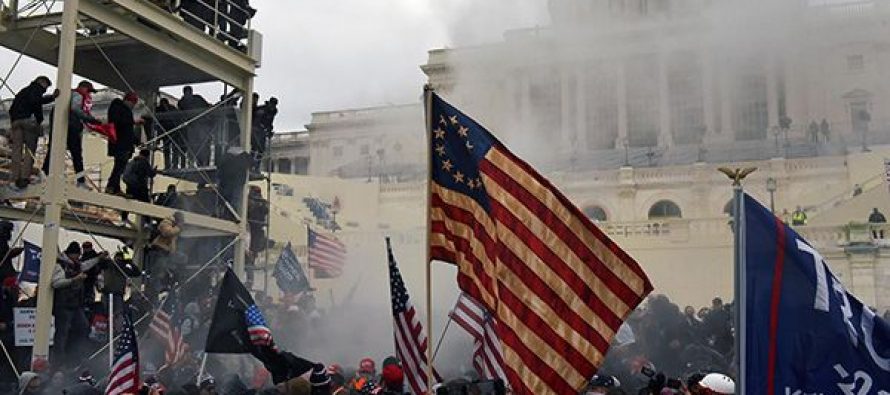
January 6th was heart-rending. To see people breaking into the capitol building, pilfering things there and causing both houses of Congress to be evacuated was something I never expected to see in this country. That’s the kind of thing that happens in third-world countries, usually as part of a coup of some sort. Yet it was live and in color, for all the world to see.

But it did prove one thing. That is, radical extremists on both sides can do foolish things, including engaging in violence. In fact, there have been people arrested and identified in conjunction with the capitol riot, which are from extremist groups on both sides. Nobody has a corner on foolishness.

I will have to say that the full story about that event hasn’t come out yet; and it’s quite possible that it never will. As with so many other things in the news these days, what we’re receiving is the commentary of pundits, disguised as news. Those opinions may have nothing at all to do with what actually happened, if another narrative fits their own political philosophy.

This is actually quite dangerous, as it helps to fuel those radical elements. The news media today is all about getting a reaction; how many “clicks” can you get. So they play to the more extreme elements on both sides of the political divide, and then measure their effectiveness by how big a reaction they get from those extreme elements.

That leaves you and I, as well as 99.9% of the rest of the population in the middle, where we are just trying to live our lives and make it until next payday. Even so, we need to concern ourselves with those radical groups; not so much who they are, as what they are likely to do.

As we all know, what they are likely to do is cause more trouble for everyone. Whether or not we are included in the group that they cause trouble for, is not something we get to choose. It’s a more random chance than anything else.

Nevertheless, there are things we can do to minimize the risk and to make sure that we can survive, if we somehow get in their way and become a target.

Let’s Talk Priorities

Before talking about specific actions to take, we need to establish what our basic priorities are. Understanding those priorities is an important part of making our decisions as to what we are going to do in light of civil unrest.

  • Priority #1 : Make sure that we and our families survive the incident without becoming injured or killed
  • Priority #22: Keep our homes from becoming vandalized or destroyed
  • Priority X: There are no other priorities

The vast difference between priority #1 and priority #22 is intentional. While stated as a bit of a joke, it is intended to show the vast difference between the two. When it comes down to it, we can rebuild our homes and replace our possessions, but we can’t replace our family. Taking care of them comes first.

What To Do If The Biggest Civil Unrest Of Our Time Hits Your Town

As for anything else, like our personal political opinion, that has to take a back seat to taking care of our families. Getting embroiled in the great political divide we have here in our country is a good way to end up becoming part of the violence, either as a rioter or as a victim. There really are no other categories.

Save your political opinion for times when it might make a difference; like voting and having a real discussion with others about the issues.

Step 1 – Avoidance

The most important thing for any of us to do is to avoid places and gatherings where riots are likely to spring up.

In today’s heated political environment, that means avoiding all of them. People are already filled to the brim with frustration due to Coronavirus lockdowns and the problems we’ve all faced throughout the last year. It doesn’t take much to make them go over the edge, which in a crowd situation, can very well mean the crowd turns into an angry mob.

What To Do If The Biggest Civil Unrest Of Our Time Hits Your Town

So, what are these places? They can be anywhere where people gather in large numbers. But they are most likely to be in public spaces, close to seats of government. Most of the protests and riots over the last year have taken place outside of municipal government buildings. Some have also taken place in front of state capitol buildings.

Political rallies or demonstrations of any kind are the most dangerous place to be. In many cases, it’s not the people who are there for the demonstration who are the problem, but professional agitators who are brought in for the specific purpose of trying to turn that demonstration into a violent riot.

What To Do If The Biggest Civil Unrest Of Our Time Hits Your Town

These people are trained in what they do. They know how to tap into people’s anger and frustration, turning it into something ugly.

Once they get things started, they’ll back off and sneak out of the crowd, so that they can avoid arrest and live to agitate another day.

What this means if that the violence that goes on with many demonstrations is probably not started by the demonstrators or for the purpose of the demonstrators. We’ve seen that in both the BLM demonstrations and possibly in the January 6th break-in of the Capitol building.

Saying away doesn’t mean that you have to give up your political beliefs or even that you have to forego letting our elected legislators know what you think about the issues at stake. It just means finding other ways of expressing your opinion, like calling their offices or sending them an e-mail.

If You’re Caught in a Violent Protest

Regardless of how hard you try to stay out of the fray, there’s always a chance that you might find yourself caught in an emerging mob situation. That’s obviously very dangerous. You might not even realize that there’s an event happening or the event might end up coming to where you are.

Maintaining good situational awareness can help you avoid this. If you’re constantly looking to see what dangers there might be around you, you’re likely to see an emotion-charged crowd forming. That would be a good indicator that it’s time to leave, before anything else can happen.

What To Do If The Biggest Civil Unrest Of Our Time Hits Your Town

But even then, you might find it impossible to leave, without attracting notice. In that case, the most important thing to do is act like you’re part of the mob. Basic mob mentality is that if you’re not with them, then you’re an enemy. Since enemies get attacked, it’s much safer to act like you’re one of them, than to act any other way.

That’s not to say that you become part of the mob. Keep a clear head, so that you don’t fall into that trap. It can be very easy to become part of what you’re trying to avoid, if you let your emotions get the best of you. This is much truer in situations where you might agree with the demonstrators.

Rather, you want to work your way gradually to the edge of the crowd and then make good your escape. Don’t take a direct line for the edge, as that might make you stand out. Rather, move slowly and gradually towards the edge, all the while moving in other directions, like a sailboat tacking into the wind. Then, when you are on the edge and the opportunity presents itself, you can slip behind something that hides you from the crowd’s view and make good your escape.

What About Weapons?

What To Do If The Biggest Civil Unrest Of Our Time Hits Your Town

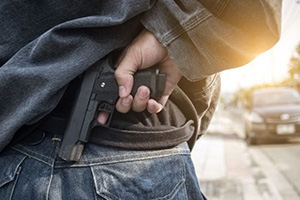
Even if you carry concealed every day, like I do, the last thing you want to do is take out your gun in this sort of situation. That goes for any other weapon as well.

There are just too many people for you to deal with, no matter how good you are.

Eventually, you’ll either run out of ammunition or strength and then the crowd will have their own way with you, probably kicking you to death.

It’s a problem of numbers. I carry a pistol with a five round magazine and two spare seven round extended magazines. So, with the round in the chamber, I have a total of 20 rounds. Even if I make a killing headshot all 20 times, I’ve done no more than scratch the surface of that mob, while enraging everyone else further. I probably won’t have to worry about my self-defense case in court, because I won’t be around to make that case.

If You’re in a Vehicle

What To Do If The Biggest Civil Unrest Of Our Time Hits Your Town

Being in a vehicle won’t necessarily be to your benefit. While the vehicle body does offer some protection against thrown rocks and blows from baseball bats, the vehicle will suffer for it. Should things come to that, they’ll probably go for the windshield and other glass pretty quickly; none of which will withstand much abuse.

Even if they don’t break through the windshield, you may not be able to see well enough to drive safely.

Protesters who block traffic are counting on you stopping. But if you do, it makes you more vulnerable. You’re actually better off if you keep moving slowly, pushing against their bodies and forcing them to let you through. Don’t ram them and don’t try to run them over, just keep driving ahead very slowly.

This is risky for legal reasons. While it is the sort of advice that has been given for decades, the laws in most states have never addressed the issue. Some states have passed laws which allow drivers to continue driving through the mob; but even then, there’s going to be a point at which the courts say that there was intent to do serious harm, rather than just trying to get through the crowd.

Your only real defense here is to be doing it in self-defense. That means using the criteria that there is an imminent threat of life and limb.

In other words, there’s an immediate threat that the mob will either seriously hurt you or kill you. They’ve singled you out and they are taking violent action against you, such as trying to rock your vehicle to turn it over.

Without something like that, you have a hard time proving that it was self-defense, so make sure you give the protesters ample opportunity to get out of your way.

Protecting Your Home

Even if you decide to stay home and away from any place where violence might occur, there’s always the risk that the violence might come find you.

While the vast majority of these events happen nearby government buildings, it’s not all that uncommon for the riots or protests to move beyond that area and into surrounding business districts and even residential areas.

If you live in an upscale area or the city mayor lives in your housing development, their home might be targeted, putting your family at risk due to proximity.

What To Do If The Biggest Civil Unrest Of Our Time Hits Your Town

That’s what happened in the case of the McCloskeys; the couple who were charged for defending their home in Saint Louis in June of 2020.

A Black Lives Matter protest broke into their gated community, because the mayor lived there and they were video-taped standing in front of their home, armed, protecting it.

The case became highly controversial, with the DA charging them with unlawful use of a firearm, about the lowest-level crime involving a firearm you can be charged with.

I highly recommend having firearms to protect your home; but not like the McCloskeys did. The mistake they made wasn’t in having the firearms or being ready to defend their home, it was in letting the mob know that they did. That invoked anger on the part of some demonstrators, while putting them in jeopardy of criminal charges. Oh, and by the way, they live in a state which has enacted the Castle Doctrine into law.

What To Do If The Biggest Civil Unrest Of Our Time Hits Your Town

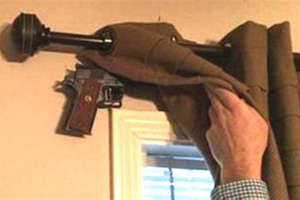
The secret here is to keep your defenses of your home hidden from view.

While you need to be ready to defend home and family, don’t advertise.

In other words, don’t go outside, brandishing a firearm.

If you’re going to have a firearm on your body, either have it in a holster of slung across your chest with your hands off it.

There will be plenty of time to draw your gun if it looks like the mob is going to attack your home. Then and only then should you move to take action. Let them make the first violent move and make sure that you get it on video.

Should You Flee?

Different states have different stances on the Castle Doctrine or Stand Your Ground laws. It would be a good idea to find out what your state says. But regardless of that, you should think through whether you’re going to abandon your home or whether you’re going to stay to defend it.

While I’m a strong proponent of the Second Amendment, carry concealed every day and go to the range regularly for tactical practice, I also recognize the inherent dangers of using a firearm to defend myself.

My basic stance is to make sure that I am as prepared as possible to defend myself and my family and then do everything possible to avoid having to. I have no problem with the old phrase, “Discretion is the better part of valor.”

In today’s political climate, the idea that you can get off scott-free from killing someone in self-defense is wearing thin. Even though we technically still have that right, there is always the chance that you will be charged, just like the McCloskeys were. Thank God they didn’t fire a shot, as that would have been worse for them.

What To Do If The Biggest Civil Unrest Of Our Time Hits Your Town

There is nothing shameful about leaving your home when there is violence nearby and heading to a safer place.

There is no guarantee that you won’t be the one to get shot, rather than successfully defending your home.

You’re better off not taking the risk.

If You Have to Fire

Should you find yourself in a position where you have to take up arms in defense of your home, there are a few basic rules that you should endeavor to follow. First, make sure that any action you take is without a doubt action taken in self-defense. That means letting them take the first shot, even if that puts you at risk.

Secondly, get it on video. Have a family member take a video of everything that’s happening, so that you can concentrate on defending your home. That video is evidence you can use to defend your actions, especially if it shows that the mob started the violence.

If you do have to take a shot, make sure that the person you shoot at is actually a threat, taking time to aim carefully so that you don’t miss. If there are several who are a threat, try to shoot the leader, as taking out the leader will tend to demotivate others and could lead to breaking up the attack.

Top 10 Vehicles For Your EMP Survival: Nowadays, Even NASA Admits That EMP Is One Of Those Events We Could Not Recover Grom

Thirty years ago, most of the cars used carburetors, and only a few people believed that electromagnetic pulse (EMP) is a real threat.

Nowadays, even NASA admits that EMP is one of those events we could not recover from: it would stop all infrastructures that sustain modern society which rely so much on electronics. No communication, to transportation, and no escape with your fancy new car out of the crowded urban jungle.

So if you are one of those readers who wish to consider EMP-resistance as a factor in selecting a bug-out vehicle, then you should not miss this article.

I have been doing the survival thing for some time and I see precious few absolutes when it comes to survival and a whole lot of gray area. And I am not a mechanic or car salesman by trade, but I do have a solid background in technology and understanding of EMP as well what most people would term as vast experience as a self-reliant consumer.

Considering this, I will take a poke at answering some questions about EMP and how it would affect automobiles, which were asked by our readers after our recent article that described some top picks for ideal bugout vehicles.

9 EMP-Related Factors to Think Of When Buying Your Vehicle

First, there are factors to consider in choosing a post-EMP bug-out or survival vehicle:

1. Benefits of Diesel

A large and strong enough EMP could stop the extraction, refinement, distribution and sale of fossil fuels. Whatever gas you have on hand could be all the gas you get for years. The more highly a fuel is refined, the shorter its storage life. Diesel is less refined than unleaded so diesel stores longer.

You make biodiesel from crops that you grow. Diesel motors are somewhat simpler than gasoline motors in that they do not have an ignition system. This cuts down on some vulnerable parts.

Most tractors also run on diesel too, so for many homesteaders, it is worth considering.

2. Fuel Capacity

You can add oversized and/or additional fuel tanks to many vehicles, increasing the vehicle’s range. A post EMP world will likely have far fewer gas stations, if any. To get at any of remaining fuel, you will need a pump and hose like the Jackrabbit by Black & Decker.

3. Cargo or Towing Capability 

By the time you pile in what will surely be everything you own in this world, your spouse, your 2.4 kids, grandma and the golden retriever, you may be looking for ways to increase your vehicle’s carrying capacity. So cargo space, a trailer hitch, roof rack, swing outs and so forth will come in handy. For many, the vehicle will likely double as their home.

4. Off-Road Capability

Features such as 4-wheel drive, a full size spare, plenty of ground clearance, all-terrain tires, lockers, extraction or trail gear, towing points, winch and off road lighting will come in handy post-EMP because roads will no longer be maintained, disabled vehicles and vehicles that have run out of fuel will litter the roadway. Imagine the highway or even your own street after a snowstorm without any snowplows or drivers to remove the snow and 4-wheel drive and over-size tires starts to look like a pretty good idea.

5. Ease of Maintenance & Repair

Simplicity is a good thing when it comes to survival. Without computers, there is only so much to “do it yourself” on newer vehicles so older vehicles have greater appeal. A good repair manual and well-equipped toolbox are mission-critical equipment.

6. Commonality of Parts

An expensive custom vehicle might look cool online or be fun to daydream about, but after a HEMP, the first time it needs a part, you might wish you bought something a little more pedestrian (no pun intended). Better still would be 2 or 3 less-expensive vehicles as opposed to a single vehicle that strains your financial resources.

My grandfather did this and I learned it from him. He would take multiple beat-up vehicles and turn them into fewer good ones … and have a bunch of spare parts left over. A bunch of spare parts would be a good thing post-EMP.

7. Fewest Possible Microelectronics, Computers or Chips

Some newer vehicles have in excess of 100 processors that run on miniscule amounts of power. They sense and control virtually every function of the vehicle and are very sensitive to EMP.

How far are you going to get without an engine, fuel injection, transmission or 4-wheel drive system? Sure, car manufacturers take reasonable precautions to shield them, but not against such great field strengths or over the entire frequency range EMP covers. Any transistor-based technology is vulnerable.

Avoid vehicles with the following systems, rewire them or replace them with their non-electronic counterparts and/or stock replacements in a Faraday cage:

  • PCM (Powertrain Control Module)
  • Anti-lock Braking System
  • Electronic Fuel Injection
  • Electronic Ignition
  • Computers Controlling Critical Systems
  • Consumer Electronics
  • Long Antennas
  • Negative Battery Terminal Grounded to Vehicle Frame

8. Overt vs Covert

It is often best to blend in as opposed to standing out. In the city, that might mean driving a white sedan or van. In the bush, it might mean a camouflage or matte earth tone paint job.

Other times, looking like you are not worth tangling with might be the better option.

9. Conductive Metal Body

For the best EMP-resistance, choose a vehicle with conductive metal body enclosing the engine and passenger compartment or cab over a vehicle with body panels made of fiberglass, plastic or any other non-conductive material.

How to EMP-Harden Your Auto

If your vehicle already has these features or you are already doing these things, then you are already part of the way there. There are many features to look for and modifications to make to both your vehicle and your SOP (Standard Operating Procedure) regarding that vehicle.

No matter which automobile you choose, there is always more that can be done to minimize the effect of HEMP on the vehicle.

  • Ground all conductive components of the vehicle to a single point on the chassis. Do not ground them to the earth.
  • Park in an EMP-protected garage: I described how to build such a structure in the article How To Turn Your Q-Hut Into an EMP-shielded Home.
  • Do not connect your vehicle to an unprotected engine oil warmer.
  • Rewire with shielded wiring: Verify that your wiring is shielded or replace all you can with shielded wiring.
  • Re-bond metal body panels: Remove body panels and make sure that you have good conductive bonds between body panels by removing paint and installing conductive gasket material or make sure you have metal on metal contact with as much overlap as possible. This will help the body conduct energy through the vehicle skin like the skin of a Faraday cage. Just do not allow yourself to be fooled into thinking that the vehicle skin is without holes that compromise its integrity. EM shielding is not all or nothing. Every little bit helps.
  • Route wiring close to the vehicle frame
  • Install ferrite clamps or snap on cores on cable ends
  • Protect cable entry and exit points with surge suppression: This will need to be fast-clamping surge protection faster than one millisecond that will handle high voltages. (Think lightening protection.)
  • Mechanical ignition (points and condenser)
  • Install EMP-rated surge protection on antennas
  • Mechanical fuel & water pumps
  • Carburetor or mechanical fuel injection
  • Keep spares of vulnerable parts you cannot replace in a Faraday cage: You may have a vehicle that is mostly good to go, but it still parts like a starter, alternator and voltage regulator that do not contain microelectronics, but could still conceivably be affected. Get some extras and store them in a Faraday cage. They do not even have to be new. Pull them off a junk vehicle and test them if you cannot afford new parts.
  • Manual transmission: Some will surely disagree with me on this one, but they are easier to repair and make it possible to push start vehicles even if the battery is shot or missing. Even some diesels can be push or roll started if you wire open the fuel valve.

This is by no means a comprehensive list of vehicle modifications. Every vehicle is different. As previously stated, there is no one standard followed by manufacturers even for EMP shielding.

Keep in mind that everything you do improves your chances. Start with the easiest and least expensive and work your way through the harder ones.

10 Recommendations for EMP-resistant Transport:

There are a lot of good vehicles to choose from. There are many appealing aspects to these older vehicles. They are inexpensive to buy, inexpensive to work on as long as you provide the labor, simple to understand, inexpensive to insure and inexpensive to register.

You will have to do a little research on specific models to figure out what year the manufacturer started installing EFI (Electronic Fuel Injection) and so forth because I am supposed to be writing an article or two as opposed to a book here, but the topic is certainly worthy of a book.

1. Pre-1985 Toyota Hilux 4×4

EMP-cars Toyota Hilux 1983

These are tough little trucks. If you can find a 4×4 with the solid front axle and a carbureted 22R motor, you have a good starting point.

I have run one of these since the 1980’s and the worse I treat it, the better it runs. They are tough little trucks.

2. Sand Rail or Dune Buggy

The simpler the motor the better, but with larger motors, long wheel travel and skid braking, they will go faster than I want to go, that is for sure. Top a hundred mph off-road in one of these and it will either age you or make you younger. If you like to tinker and weld, they can be a great hobby. Hey, if they are good enough for the SEALs …

EMP-cars dune buggy

They are short on carrying capacity, but can sometimes fit in small planes when disassembled. Depending on where you live, a simple model of any of these may be a must have or you might keep one or more at a retreat or in a Toy Hauler trailer. There are even some diesel models out there.

3. CUCV

CUCV (Commercial Utility Cargo Vehicle) on the surplus market. They are basically a military diesel pickup or Blazer.

They started being manufactured in the 1970’s and are not armored, but some models do have some BOV-friendly features like a diesel power plant, blackout switch (to kill all lights), 4 wheel drive, dual 12v/24v voltage, Detroit lockers, dual alternators, Dana axles, brush bars, tow hooks and pintle hitches. And some are topped with shelters or ambulance beds.

You have to research each model though. Not all are 4×4’s and so on.

EMP-cars cucv dodge

4. Pre-1980’s American-made Trucks and SUVs

Ford, Chevy, Dodge, these older US-made trucks are very common and are great candidates for a low profile bug out vehicles that double as daily drivers. I do not believe that any other vehicle on this list has the volume of accessories and options available to customize it.

5. Deuce and a Half Variants

There are many variants of these iconic 6×6 vehicles. Some are even bobbed to 4×4’s. They are not so great for keeping a low profile, but they are the go to choice for many preppers looking for a vehicle with plenty of cargo space and can be had starting at under $10K.

EMP-cars deuce and a half

There are even some shops that will fix them up for you if you are not particularly mechanically inclined. Plan B Supply can hook you up with a Deuce and a half that is all decked out for the apocalypse for less than $40K, which is a tenth the price of a Knight, UniCat or the like, a whole lot less than an Earth Roamer and way more likely to still run after a HEMP.

6. Older Mercedes Benz Unimog (Diesel with Mechanical Fuel Injection)

Think of these as the European answer to the Deuce and a half. They were first manufactured just after WWII and were sold as the Freightliner Unimog in the US. They are popular as off-road expedition vehicles and even off road endurance events.

EMP-cars unimog

They are very reliable and you may find them hauling supplies in jungles, running the Dakar Rally, fighting fires or plowing snow in the North. They come in medium and heavy series.

Large diesel rigs like Unimogs and Deuce and a half’s are sometimes outfitted with marine diesel appliances and solar power and can even be fitted with a wind generator.

7. Sail Boats and Older Vessels With EMP-resistant Diesel Power Plants

If your bugout plan involves blue water, it likely involves a boat or sailboat. Space is limited on boats and must be carefully planned out, but many vessels have miniature versions of all the comforts of home.

There have been many self-reliant adaptations of boats and sailboats. They usually have one or more sails, a diesel power plant and appliances that run off diesel, use solar and sometimes wind as backup power sources.

A heavy duty desalinator and a backup desalinator are critical to make this option work.

8. Canoes, Kayaks, Sailboats, Pack Rafts and Other Small Watercraft

Maybe your bugout plan does not involve a blue water voyage, but it does involve running a stretch of river, lake or crossing a body of water. Man has used boats to solve these types of problems since prehistoric times.

A couple recently rowed across the Atlantic Ocean, but I would not recommend it and I am sure they would not either.

But if your route involves crossing a smaller body of water, a small watercraft may be an important arte of your plan.

9. Draft Horses & Wagon, Horses or Pack Animals

After a severe HEMP, they may make a comeback. As some of our troops were surprised to learn in Afghanistan, there is just no substitute for horses and pack animals in certain terrain.

My county has a mounted search and rescue team that is very effective in certain regions. Mules are an important part of maintaining many of our nation’s wilderness trails to this day and American mountain men would not have been able to travel the Western US trapping without horses and mules.

I have been grateful for them on trips that I have used them and it is plain to see why they figured so prominently into life until the advent of the automobile and how they will again if we lose are large electrical transformers due to EMP or any other reason.

10. Motoped or Bicycle with Trailer

Motoped is on my shopping list. You do not have to be a prepper to appreciate not having to deal with the Department of Motor Vehicles and being able to park in the bike rack.

Motopeds and bicycles are quiet and can be carried on the outside or on top of your rig as backup transport. If the motor is small enough or it doesn’t go faster than a certain speed motopeds are not classified as motorcycles in many states, but this varies by jurisdiction so check your local laws.

Other noteworthy options are:

  • Older Toyota Landcruiser
  • Pre-1980’s International Scout
  • Pre-1980’s Jeep, Cherokee & Cherokee Chief
  • Pre- 1980’s Land Rover
  • Volkswagen Bug and Bus
  • Motor Cycle, ATV, UTV or Snowmobile

In truth, there are many vehicles that would serve the function of bug out vehicle admirably, but in the end, your choice will likely be determined largely by availability, opportunity and economics. Whatever your financial situation may be, automobiles are generally a lousy investment. Invest in function as opposed to form when it comes to rolling stock, including bug out vehicles.

Similar to the prepper who is all guns and no groceries, every so often, I see someone who owns a car that is worth more than their home or someone who has invested a substantial portion of their net worth in a vehicle while living in an apartment. This never fails to cause me to pause to consider it.

Find a vehicle that will get you from point A to point B and make sure you have your food storage and other survival priorities in place.

If you get too far out of balance in any one area of preparedness, your plan is flawed.

These Are The Best Self-Defense Firearms For Urban Survival- Prepare your guns and practice your shooting skills, so you could survive the disaster!

No matter how many times it is said, it can never be said or heard enough: “The best self defense firearm for you is the one you are proficient with, feel confident with, and are carrying in a time of need.”

In an urban environment, you have to defend yourself at close, intermediate, and long ranges. This is why you need to develop proficiency with at least one weapon in each of the three main categories of firearms: handguns, shotguns, and rifles.

For each of these groups, there are questions to think about and answer for yourself in order to decide which weapon will best meet your needs.

Since .22 Caliber handguns and rifles are often underestimated as defensive rounds, I created a category just for them. In most cases, as a beginner, you will be starting with a .22 and then moving onto higher powered weapons.

Handguns

This is the weapon you should always carry and have on hand when a rifle or shotgun is impractical. Choose a defensive handgun that is comfortable to shoot under any circumstances and feels comfortable to carry all day.

While those questions are a matter of personal taste, reliability and stopping power (should be powerful enough to put an attacker down with the first or second shot) are much easier to gauge via known facts about specific handgun models.

In pistols, the most popular defense calibers are the 9mm, .40 S&W, and .45 ACP. All are good choices, but I prefer the 9mm for its larger magazine capacity and the .45 ACP for its knock down power with lighter recoil than the .40 S&W. For open or concealed carrying, I prefer to carry a full-size pistol at all times.

My recommendations for pistols are the following:

  • In the 9mm – the Glock 17 with it’s 17 rounds per magazine. This pistol is safe to be use by adults and older teenagers after instruction.
  • In the .45ACP category – the Springfield XD-M with it’s 13 rounds per magazine. This pistol is to be used by adults only who can handle the heavier recoil.

Revolvers are an excellent option, and a good choice for inexperienced shooters since they are a rather simple handgun to operate. They are also very reliable and do not require buying and using spare magazines. I would choose the Ruger stainless steel GP100 in .357 magnum/.38 Special with a four inch barrel. I would recommend this revolver for adults and older teenagers that can safely handle them after training.

If you live in a dangerous area, or want a handgun that might be used against bears or big cats, a S&W 629 .44 magnum revolver would be suitable. I would recommend this revolver for adults only because of the heavy recoil.

In a time of social unrest it’s to your advantage to use the same caliber ammunition as the police and the military do. This makes it easier to scrounge up extra ammunition in your calibers during and after these periods of unrest.

For most modern pistols and revolvers, it is easy enough to get spare parts or repairs. However, as laws continue to change, these options may become limited. Now is the time to buy parts kits, accessories, and any tools you might need to make basic repairs or manage deeper cleaning.

Experts predict that an EMP strike that wipes out electricity across the nation would ultimately lead to the demise of up to 90% of the population. However, this figure begs an important question: if we were able to live thousands of years without even the concept of electricity, why would we suddenly all die without it?

Shotguns

The shotgun is an excellent and formidable home and personal defense weapon. Shotguns come in pump action, semi-auto, double barrel, and single barrel.

My personal preference is the pump action because of the distinctive sound it makes when being racked. If there is one gun in this group that will act as a deterrent that reduces the need to open fire, the pump action models can do the job. If they can’t, you will still have an excellent weapon to resolve the matter with.

Pump action shotguns are rugged, reliable, simple to operate, and best of all easy to learn and teach.

Shotguns can be concealable if it is done right. The first thing that you must consider is how to make the shotgun a more compact weapon. To shorten the overall length, I would use the shortest legal tactical barrel and stock combination possible. The standard stock would be replaced with either a cruiser or a folding stock that folds over the top of the shotgun. Finally to help support the weight and add control ability I would attach a single point sling.

For a shotgun to be concealed properly you must be wearing clothing that can cover the shotgun without standing out. Here, loose fitting clothing and a long cold weather or rain coat would help, but the clothing must fit the season and temperatures.

One of the things I like most about a lot of the pump shotguns is that changing barrels is very easy. To make the most of your pump action shotgun, you should have at least two barrels for it. This gives you two guns for the price of one.

The first one should be a field barrel with multiple choke tubes. This one is your hunting and varmint control barrel. The second barrel should be a shorter tactical barrel in the 18-20 inch range. This one is for home defense purposes. It is quicker handling in tight quarters and gives a wider shot spread at short ranges. The tactical barrels come either rifled or smooth bore.

What to choose from so many pump action shotguns?

For adults and older teenagers that will not have any problems with recoil or operating a pump action shotgun, the Parkerized Mossburg 590-A1 in 12 Gauge should work well. This shotgun was designed for the military and is a very heavy duty shotgun that holds 9 rounds of 3 inch shotgun shells. If need be a M-7 or M-9 bayonet can be mounted under the tube magazine for further self defense.

For smaller framed adults, teenagers, and older children that can operate a pump action shotgun, I would recommend the Remington 870 Shotguns in 20 Gauge. An 18-20 inch barrel can still be used for defense and a 26-28 inch barrel for hunting.

For individuals that can’t operate either pump action or semi-auto shotguns, the double barrel shotgun may be a viable answer. If you can handle the recoil of a 12 Gauge shell, but can’t work the pump action or semi-auto action, the 12 Gauge double barrel shotguns should work fine. The same is true for those individuals who can handle the 20 Gauge recoil, but can’t work pump or semi-auto actions.

My recommendation in this group is the Stoeger Double Defense over/under double barreled shotgun for adults and older teenagers that have no issues with 12 Gauge recoil. This shotgun comes with a fiber optic front sight and a picatinny rail for your optics or rear sights. It shoots 2 3/4” or 3” shells. These shotguns are well made and very reliable. It is easier for most people to aim and shoot an over/under shotgun, because of it’s similarities to shooting a rifle. Most people prefer it over the side-by-side double barrel shotguns, because they are more accurate and are easier to aim.

Smaller framed adults, teenagers, and older children that can handle the 20 Gauge recoil and would rather not shoot an over/under double barreled shotguns can try the Stoeger Coach double barreled shotguns with a 20” barrel. These are well made and very reliable shotguns that can shoot 2 3/4” or 3” shotgun shells.

As with handguns, in a time of social unrest it’s to your advantage to have and use the same Gauge shotgun ammunition as the police and the military do. This makes it easier to scrounge up extra shotgun ammunition in your gauges during and after these periods of unrest. Now is a good time to find out what is most commonly being used in your area.

For most shotguns today, it is very easy to get repair or spare parts. You can get them today by ordering direct from the shotgun manufacturers or from firearm part dealers. In a time of social conflict, repair or spare parts will not be available on the open market. It is best to purchase extra kits now while you can.

Centerfire Rifles

As with any other weapon, it will be a matter of personal preference in terms of which one feels most comfortable and easy to carry. You will still need to choose a rifle that is reliable and can put down an attacker with the first shot, if you have to face the aftermath of a disaster in your urban location.

If you need a few recommendations for semi-autos and bolt action rifles in today’s popular calibers, here are some options. As with the other categories, each of these models has a long standing reputation for reliability and has suitable stopping power for most situations.

The Springfield Saint (Military Spec) AR-15 in the 5.56×45 can also shoot the .223 Remington. This gun is very easy to shoot and works well with high capacity magazines or drums. Because of its low recoil, I recommend it for adults, teenagers and slender built individuals after proper training.

In the 7.62×51, the Springfield M1A would be an excellent choice. I highly recommend the M1A for it’s knock down power, durability, an reliability. It shoots very accurately from 20 round magazines, and is an excellent hunting or battle rifle. I would recommend this rifle for adults and older teenagers that can take the recoil after proper training.

In 7.62×39, the AK-47 is my hands down favorite weapon. This weapon is a proven warhorse rifle that has stood the test of time. It is extremely reliable, low recoiled, shoots high capacity magazines and drums, and has good knock down power. I would recommend this weapon to all shooters except young children after proper training.

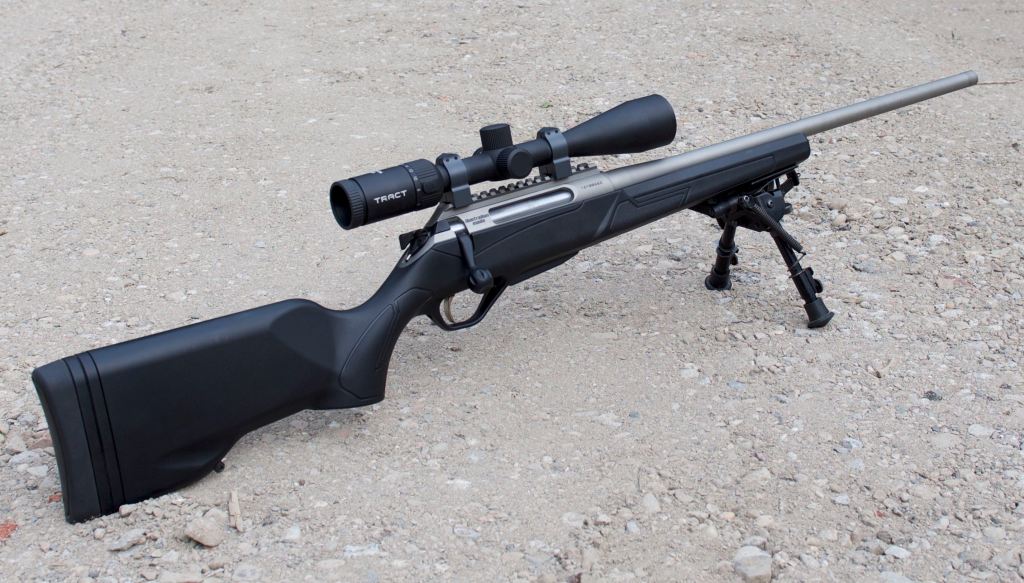
My choice for a bolt action rifle is the Ruger Gunsite Scout in .308. This is a well built rifle that is very accurate, reliable, has an 18 inch tactical barrel, and uses ten round magazines. This rifle can be scoped two ways; by a regular scope, or by using a scout scope on the picatinny scope rail. If you don’t wish to scope this rifle, it comes standard with front blade and rear aperture sights. This rifle has a bit of a recoil, so it is best for adults and teenage shooters that can take it after proper training.

For those individuals that would like to shoot semi-auto rifles, but have recoil issues, I would recommend an AR-15 that shoots the 9mm pistol round. This AR could be a companion rifle to anyone that is carrying a Glock 9mm semi-auto pistol. Both of these weapons can use the large capacity Glock magazines when needed. This rifle is safe to use by all shooters after proper training.

If you choose a gun that uses ammunition other than what the local military, police, or sheriffs use, it would be to your advantage to stock up on them now.

For most centerfire rifles of today, it is also easy to get repair or spare parts. You can get them by ordering direct from the manufacturers or from firearm part dealers. Get them now while they are still available and easy to get with relatively little effort.

AR-15s with a folding stock or a collapsible stock and AK-47 rifles with a side folding stock or an under folding stocks can be concealed. It will depend upon the climate, time of day, and the type of clothing being used. Concealing other full sized centerfire rifles will depend on their size and weight. Some are very hard or impossible to conceal.

What About .22 Caliber Rifles and Handguns?

.22 caliber rifles and handguns are great learning and practice tools for shooters of all skill levels. It is also an underestimated defensive round, and will put down attackers quite well with good shot placement.

Swing the barrel

Training and practice are the keys to being a good marksman and with these firearms. Ammo for these weapons is also cheaper than for higher powered guns, so you will find training and practice more affordable.

I recommend the following .22 caliber rifles and handguns for training and defense:

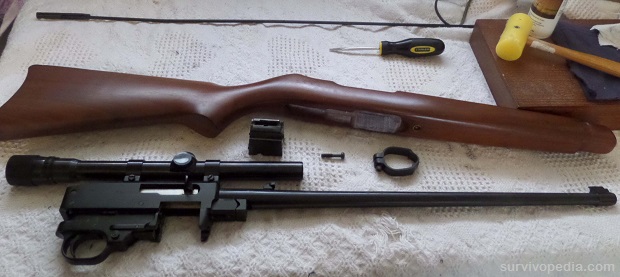
  • For a semi-auto rifle – Ruger 10/22 in stainless steel with a black synthetic stock. This rifle can be scoped or use the metal adjustable sights. The 10/22 is a tough, reliable little rifle with a lot of accessories. Upgrades are also available. If taken care of, this 10/22 will last a life time.
  • For a lever action rifle – Henry Lever Action .22 caliber. This is a very well made and dependable rifle that shoots .22 LR, .22L, and .22S.This rifle has adjustable sights or can be scoped.
  • For a semi-auto pistol – Ruger Mark III Hunter. This is a .22LR very well made, reliable, stainless steel pistol with adjustable sights, and a 10 round magazine.
  • For a .22 caliber revolver – Taurus Tracker in .22LR. This is a very well made and dependable SA/DA stainless steel revolver, with a 4 inch barrel, and a 9 round cylinder capacity.

Typically, .22RL ammunition is not used by most local military, police, or sheriffs. It would be to your advantage to stock up on this ammo now because it will disappear very quickly in time of need. At this time the ammunition is priced reasonably, but you never know when the next shortage will come.

For most .22 caliber handguns and rifles today, it is easy to get repair or spare parts by ordering direct from the manufacturers or from firearm part dealers. It is best to buy extra parts now while you can get them at a reasonable price on the open market.

In a time of social conflict, you have to defend yourself at close, intermediate, and long ranges in an urban environment that goes crazy. Proficiency with handguns, shotguns, and rifles will go a long way to helping you achieve that goal.

Each of these weapon types have their advantages and disadvantages, as do specific models in each category. Regardless of how many models you try out, the best one is always going to be the one you are comfortable with and actually have on hand in a time of need.

Prepare your guns and practice your shooting skills, so you could survive the disaster!

18th Century Skills That Will Become Life-Saving When SHTF (What will you need to know if you want to survive in a post SHTF world?)

What will you need to know if you want to survive in a post SHTF world?

This article will answer that question by referencing skills that were common amongst our forebears living in the 18th century. But before I give you a list of skills you need to master, I need to talk about the 18th-century survival mindset.

You will often hear someone say that people nowadays are soft. And that we couldn’t survive out in the wild on our own. That may be partially true, in particular, as it refers to mindset.

You probably know more about surviving than you realize, but do you have the right mindset?

The loss of knowledge about how to survive is real. But what I see today is a loss of common sense, a lack of daring, and an absence of initiative.

Home Alone

18th Century people didn’t harbor the expectation that someone else was on their way to save them. They were on their own and understood that they were responsible for their survival.

Common Sense

18th Century people lived by common sense. Any animal can be eaten, including dogs, cats, snakes, and even bugs.

Modern people rarely apply common sense. Believing if they don’t have access to modern solutions, then there is nothing to be done.

Let’s suppose you need to treat a cut but have no antiseptic? What about whiskey, salt, bleach, or even a searing hot piece of wire to sterilize and cauterize the wound?

Lack Of Daring

If you can only do what you have been taught, you will be in for a rough time in a world where you can’t call someone or Google for a solution.

In my mind, lack of daring refers to trying things that no one has taught or shown you. Can you find your way? Can you figure something out? A pioneering spirit is all about finding a way where none currently exists. A willingness to keep failing but also keep trying is required.

Absence Of Initiative

18th Century people knew that no one was coming to save them. They understood that surviving was their responsibility, and as such, didn’t wait around for instructions.

There was no one to tell them what to do. 18th Century people had to seize the initiative and assume responsibility for themselves.

It’s your fault if you freeze to death or have nothing to eat. You need to set the ball in motion.

18th Century Skill Set

Here are a few suggestions on what every prepper should learn or have.

#1. A Practical Walking Staff

18th Century Skills That Will Become Life-Saving When SHTF

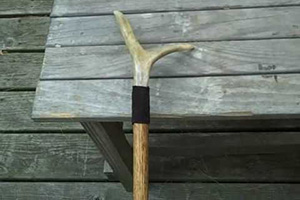
You must have a walking staff. The most practical solution is a staff that has a sharp point on one end, and a Y shape on the other. This is the most useful staff possible.

Firstly, both the sharp point and the Y-shaped end can serve as a defensive weapon, protecting against both people and animals.

Animals that have been wounded or trapped can be pinned to the ground with the Y section.

The sharp end can be driven into the ground and used as a tentpole. You can also push it into soft soil and hang a satchel or small bag on the Y section, keeping food or clothes off the ground.

The staff can also be used as a shooting stick while hunting, or rested against a tree and covered with a camo cloth to create a small shelter or hide.

Your walking stick can be used as a flagstaff if you need to signal someone. Another practical use is as a crutch that can support your weight in case of a serious leg injury. A cloth wound around the y-section will enable the stick to be placed under the arm, supporting maximum weight.

The ideal thickness is around 1″ to 1,5″ inches. The ideal height is just below your arm. (If you want to use it as a shooting stick or crutch.) Fire can be used to harden the sharp point.

#2. Estimating The Time Till Sunset

If you are out in the wilderness you need to know how much time you have till it gets dark.

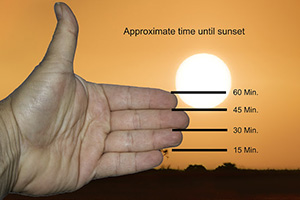
The best technique is to use your hand at arm’s length, palm toward you. Your fingers must be held horizontally. Now measure how many hands/fingers between the horizon and the bottom of the sun.

18th Century Skills That Will Become Life-Saving When SHTF

Every full hand is about one hour, and every finger about 15 minutes. This is only a rough estimate, as the time of year and width of hands differ.

But still, if the sun is two hands and two fingers above the horizon, you have roughly two and a half hours till sunset. I would work for two hours just to be safe.

#3. The Distance You Can Cover In An Hour

On a flat surface, along a reasonably well-maintained path, the average person can walk between 3 and 4 miles per hour.

Forests, mountains, deserts, and even alongside the sea on the beach will be slower going. Thick forest or rocky mountainous terrain can slow you down to between 3/4 to 1 mile per hour.

Use this in conjunction with estimating time till sunset when moving around outside.

#4. Maintain Direction While Walking In A Forest

I write this assuming you have no compass, GPS, or watch and that there is no sun by which you can navigate. Maintaining direction when you can’t see the sun and have no navigation tools is more difficult than most people think.

Some would say it’s impossible. But if you have to try, this is the best advice.

Don’t trust your inner sense of direction. Rather, have a sound strategy based on reason.

Method 1 – Marker To Marker

18th Century Skills That Will Become Life-Saving When SHTF

Try to move from marker to marker. Gauge the direction you want to move in. Look ahead and find a tree, rock, or landmark to focus on. Walk to that tree or landmark.

Then, using your starting position and current position, mentally trace a line and identify a new focus point ahead.

This will be tedious and slow going but will keep you in an approximate straight line. You can use broken branches at your starting point and waypoints to help you maintain a straight line.

Method 2 – Navigate With Moss

Another way of doing this is to use moss to navigate. In the Northern Hemisphere, moss grows on the north side of trees. This can keep you going in the approximate direction that you want to head.

If you want to head east, the main growth of moss on trees must consistently be on your right-hand side, etc.

Method 3 – Use The General Slope

This will work on mountains, and also only if you know the general lay of the land.
If you follow the slope straight up or straight down, you will be walking in more or less in a straight line or general direction.

Slope

Walking horizontally along a mountain will take you in the direction that the mountain lies, east-west or north-south, or in whichever direction the range stretches. Don’t try this on a round outcropping, as you will end up where you started.

If you find yourself walking downwards, then level, then later you’re heading upwards, then down again, the chances are good that you are walking in a circle or a curve.

Method 4 – Passing Left Then Right

The last method is speculative at best but may keep you from walking in circles. The theory is that while walking in a forest, there will often be a tree directly in our path.

If you keep on passing to the left of every tree in your path, you will trace a circle. But, if you alternate passing to the left and to the right of trees that lie roughly in your path, you would trace a straighter line than when passing every tree on the same side.

The best is to try and navigate using the sun or moon or large visible beacons.

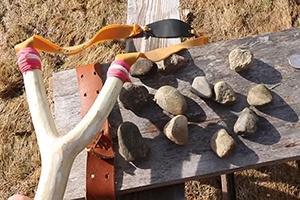
#5. Sling

This easy to make object can be used quite successfully to propel stones at high velocities, and can be used to hunt birds and small animals.

In the bible, David killed Goliath with the sling he used to drive predators away from his flock of sheep. A sling is easy to make.

You Will Need

A length of rope or twine, even animal hide can be used. A length of between 4 and 6 feet will work best.

You will need a leather patch to put hold the stone. The size of the patch should be about half the size of your palm.

Next Steps

Sling

Cut the patch into an oval shape. Then cut two small slits close to the thin/sharp ends of the oval.

Run the rope through the tow slit of the patch, positioning the paths roughly in the middle. You need to tie a loop onto one end of the rope. Make sure that the loop must is large enough to insert your last two fingers through

How To Use

To propel a stone, you insert your two fingers through the loop and place the other end of the rope in the same hand. Now make a fist and hold both ends tight.
Next, enclose the stone within the patch, ( rope on the outside, stone cradled inside) and then slide the patch until it’s in the middle of the rope (The furthest position possible from your hand.)

You can now start swinging the rope in a circular motion above your head. To “Fire”, just open your hand to release the loose end.
Aiming with the sling involves letting go of the rope a few instances before the stone points in the direction you want it to go in. You will need to practice this.

Lastly. You don’t need to twirl the sling tens of times. Keep it in motion while you find the object you want to throw at. Once you have it spotted, speed the sling up vigorously and release it. Two or three spins overhead should do.

Trial And Error

Lastly, it’s never prudent to field test skills for the first time when your life depends on getting it right. Try and put the above into practice whenever the opportunity presents itself.

NewsBlog The Police and Military when SHTF – Friend or Armed Foe? Any police or military forces which were still in operation, would be there as part of whatever government managed to survive!

Preparing to survive in a post-SHTF world is challenging. More than anything, we have to realize that we’re preparing blind. We don’t know what sort of disaster we’re facing or what the post-disaster world is going to look like. With those two pieces of information missing, it’s hard to know exactly how people will react and what they will do. Therefore, we must prepare for the worst.

There is a wide-ranging assumption that public servants will abandon their posts. I would have to say that this assumption is totally unfair. We live in a hurricane zone and my wife is a city employee. She and her co-workers are required to agree that they will stay on the job, protecting the citizens of the city and keeping city services running, both during and after a hurricane. While a few might abandon their posts if things get bad enough, most seem to be people who will follow through on that requirement.

But what about a worst-case scenario? What about in the wake of an EMP or other grid-destroying event, which would result in a true breakdown of society and the banking system; a situation where they would no longer be paid to do their jobs?

That’s a difficult question. For some, like my wife, their positions probably wouldn’t exist anymore. But the real issue here is emergency workers and law enforcement officers. We would greatly need their services in the wake of such a serious disaster. Would they stay on the job or would they feel they had to abandon their posts to care for their families?

There’s really no way of knowing the answer to that question until the time comes. It is a very individual question, so I imagine that some will stay, while others leave. Whether they stay or leave will largely determine whether they are friend or foe.

The Cops Who Stay on the Job

Police officers tend to be highly disciplined individuals, much like soldiers. In fact, many start out as soldiers, then move to law enforcement when they get out of the military. As such, they are largely people with a high regard for the law. Oh, there are the few bad apples; but despite stories saying otherwise, there aren’t many of them.

Those who stay on the job will be concerned with maintaining law and order in the worst of circumstances. They will also be subject to the politicians who are still in place over them. This means that if those politicians declare martial law, they will most likely enforce martial law, unless they believe that to be an unlawful order.

This could get sticky. As we saw during Hurricane Katrina, declaring martial law would probably mean they would be confiscating guns as well. That would put the police in the position of appearing to be the enemy in the eyes of any Second Amendment supporter. Whether or not they actually became an enemy would depend on how you, I and other gun owners would react to them. If we use force to reject their orders to turn over our guns, they will use force in response. That makes them our de-facto enemies.

The Cops Who Abandon their Posts

Some police officers may choose to abandon their posts, especially if they feel that their families are in danger. In that case, the question is what they will do to protect and care for their families. While there are very few bad cops out there, there is always the possibility that a cop will turn bad in such circumstances, out of desperation to take care of their families.

These people will be dangerous, because they will be able to present themselves to the public as law-enforcement officers, when in fact they are acting like criminals. There could even be some cases in smaller communities, where the police take over, much as warlords take over in times of anarchy. Should that happen, the police in question would be extremely dangerous.

It would be our duty, in such a case, to stand up against the police. But here’s the problem. How do you tell if what they are doing is in the public interest, or just in self-interest? If they are acting in the public interest, our duty is to support them, so we need to be sure they are the enemy, before treating them as such.

The National Guard

If military forces are called out to help gain control, it will be the National Guard, not the active military. US law prohibits the use of US military forces within the borders of the United States. Even if politicians in high places wanted to use the regular Army, it is doubtful that Army officers, all of whom know that prohibition in the law, would allow it.

But state Governors can call out the National Guard to help law enforcement in maintaining law and order. It’s not unusual for this to happen in the case of natural disasters. I would say that we should expect it to happen in a true SHTF scenario.

National Guard forces are US Army reserve soldiers and formations, which are “owned” by the governors of the several states. They serve a dual role, both as state owned military forces and reserves for the federal forces. If called out in a disaster situation, they could serve either to support law-enforcement or to provide disaster relief. In either case, they would be armed.

The Police and Military when SHTF – Friend or Armed Foe 2

Should martial law be declared, it is highly likely that the National Guard would be called out. If guns are confiscated, they are the ones who would most likely do the confiscation. They would probably be as polite as possible about it; but if they decided to obey that order, they would do their best to fulfill it.

However, the National Guard, like other military forces, is made up of predominantly conservatives. There’s a very good chance that they would refuse an order to disarm the population. Military officers swear an oath to uphold the Constitution and they would likely see the disarm order as a clear violation of the Second Amendment. As such, it would be their duty to refuse that order.

UN Troops

Of all these options, UN troops is the most dangerous. Any decision to use UN troops would have to be made at the federal government level. Were such a decision to be made, the troops which would be brought in to help maintain civil order would not be American troops. They would be unfamiliar with our culture (other than what they had seen in movies) and unfamiliar with our laws.

To these troops, a firearm confiscation order would seem perfectly reasonable, especially when you consider that they would probably come from a country where they don’t enjoy our Second Amendment protections. There would be no appeal to them on the grounds of our Constitution.

Should this happen, refusing an order to turn over your guns would be dangerous. The only thing that would protect any of us is the fact that there is no federal gun registration. Even so, there are states which require a permit to own guns, as well as concealed carry licenses which many of us have. That would give them a starting point for where to look.

Getting into a battle with armed troops is foolish. In such a situation, the only practical recourse is to hide all your guns where they won’t be able to find them, with the exception of a few, which you could then allow them to confiscate, making them think you’ve obeyed the order.

Regardless of the specific situation we would end up encountering, chances are that any police or military forces which were still in operation, would be there as part of whatever government managed to survive. Unless such forces decide to go rogue, we can count on them being there to help.

That doesn’t mean they’ll be our friends though. Unless you know them personally, they will look on you with suspicion, just like they will everyone else. Anyone carrying a weapon openly will be suspect. That doesn’t mean that they’ll hassle you, take away your weapons, fire upon you or arrest you; it just means that they will be watching to make sure that you aren’t a problem that they need to deal with.

The best thing you and I will be able to do in such a situation is to keep ourselves below the radar, so that we aren’t noticed. If we are not noticed, hopefully we will be left alone.

Should orders go out to confiscate any supplies that are stockpiled, it would probably be a good time to put our bug out plans into effect. Hopefully, we’ll all have a cache of supplies elsewhere, so that when we lose the supplies that we have stockpiled at home, we’ll still be okay.

So turn off social media and your cell phone and grab a pen and paper to take notes. Because what I’m about to show you will change your life. Ever wonder why some people crack during a crisis?

The United States of America, is on the verge of war…

Knowing About This Coming Apocalypse Is The Key To Your Family’s Survival And It’s Only Revealed In This Presentation

All Americans  Will Lose Their Home, Income And Power By March 17, 2021

Hi, my name is John Stone,

And today, in this short video I’ll tell you something only a handful of powerful people have known for more than 10 years… I’ll present you crucial information that might save your life.

I’m talking about one of the best guarded secret of the 21st century that may be a lifeline for you and your family.

Over the past year over 34,000 people have already found out how to protect their loved ones from this dark secret and it can help every American citizen get over tragic milestones such as hurricanes, snow storms or floods.

It was discovered by a stroke of luck in the archives of the Holy Country and its content predicted the turn points for mankind’s history and not only does it hold the answers to many questions already answered, but also to questions not yet asked …

I’m sure you’re already intrigued and you want to know all about this mystery so that you can also be prepared.

Honestly, it’s like nothing you’ve ever seen or heard and in a few minutes from now you’ll be outraged you never knew the danger you and your family have been living in…

So you absolutely need to watch this short presentation today, while it’s still up…

I don’t know how much longer I’ll have this free presentation online, so watch this right now, while you still can…

Before we continue, let me tell you who I am, and how it all started.

As I mentioned before, my name is John Stone, a 65 year old historian from Wichita, Kansas, and for the last 20 years I’ve been studying ancient and contemporary prophecies and I’ve witnessed countless revelations most people are unaware of…

While researching, I came across some shocking rumors from inside the White House and I decided to dig deeper into this mystery…

I was shocked to find out a big secret passed on from Bush to Obama and recently to Trump, but we’re being kept in the dark…

This secret deal is more dangerous that any present armed conflict…

It’s a sinister pact between The White House and high ranking officials of Vatican and it will reach its terms in a short while with devastating consequences…

Hidden investigations revealed that the core of this pact is one of Nostradamus’s long lost books that never reached the surface…

This book is the best guarded secret of the 21st century and it contains crucial information on horrible events that already happened, and, more important, on America’s morbid destiny…

The events presented by this dark secret reveal that The United States will be hit by something bigger than hurricanes Michael or Florence, bigger than the great tsunami on the coast of Japan that brought over 15,000 deaths and destroyed over 1.1 billion buildings, or even the Indonesian earthquake that reached 9.1 magnitude.

But this time, the chaos will be man-made…

America as we know it will cease to exist… Mayhem, famine, diseases, death will take its place and will spread like cancer…

Don’t think for a second you’re prepared for the dark future that awaits us all…

Yet, before unraveling the much needed information, please give me the chance to tell you who Nostradamus is and why his predictions are so important for each and every one of us…

For centuries people have interpreted the words of Nostradamus and historians, even scientists have been amazed how accurate his prophecies have been…

It is a known fact that time after time Nostradamus predicted the rise of nations and fall of economies…

But his darkest prediction has yet to come true. Historians say it’s the most fearful and it means the beginning of the end. Scientist backed up the aspects with hard evidence…

The Roman Army: Tactics, Organization, and Command Structure (History is witness to the triumph of the ancient Roman army, as evidenced from the Roman empire in its apical scope.)

History is witness to the triumph of the ancient Roman army, as evidenced from the Roman empire in its apical scope – which held sway over a major chunk of the known world, ranging from Spain to Syria (and Iraq), and from North African coasts and Egypt to most of Britain. Suffice it to say, this ancient military was known for its sheer discipline, incredible organizational depth, and the ability to adapt. Some of these qualities were demonstrated through logistics during the Second Punic War, where the Romans ultimately emerged victorious, in spite of (possibly) losing one-tenth to one-twentieth of their male population in a single battle (at Cannae). And complementing their unflinching capacity to bounce back from disastrous situations, was the evolution of the Roman military over the centuries. To that end, a plethora of Roman military developments was actually ‘instigated’ by their foes, and as such many of the successes of the ancient Roman military system can be attributed to their inherent capacity to simply ‘react’.

Evolution of Tactics of the Roman Army –

IFrame

This fascinating graphical video concocted by YouTuber Historia Civilis aptly showcases the ‘reactionary’ evolution of Roman battle tactics. And while the content treads a simplistic (though nifty) overview, we can get the core idea behind the Roman military system and how its adaptability set it apart from some of the other militaries of the ancient world.

The Early Roman Levy –

Early Roman soldiers, circa 7th century BC. Illustration by Richard Hook.

While the video doesn’t really cover the scope of the Romans during their initial days, the earliest Roman army equipment’s archaeological evidence ranges far back to 9th century BC, mostly from the warrior tombs on the Capitoline Hill. As for the literary evidence, they mention how the earliest Roman armies were recruited from the three main ‘tribes’ of Rome. This shouldn’t come as too much of a shock (for those who are used to reading about the ‘civilized’ nature of Rome) since the settlement of Rome itself started out as a backwater which was inhabited by cattle rustlers who made their camps and rudimentary dwellings among the hills and the swamplands.

As for the evolutionary part, the transition of the Roman army from ‘tribal’ warriors to citizen militia was achieved in part due to the Roman society and its intrinsic representation (with voting rights) in the Roman assembly. To that end, the early Romans were almost entirely depended on their citizen militia for the protection and extension of the burgeoning faction’s borders. These militiamen were simply raised as levy or legio – which in turn gives way to the term ‘legion’. In essence, the so-called legions of early Rome were ‘poor’ predecessors to the uniformly-equipped and disciplined soldiers of the ensuing centuries (which we have discussed later).

The Roman Phalanx –

Roman army

Roman hoplite (on right) fighting against the Etruscan warriors. Source: WeaponsandWarfare

The video starts off with what can be termed as the first solid formation of the Roman army (when Rome was still a city-state kingdom). And quite unsurprisingly, the Roman military system of this time was inspired by its more-advanced neighbor (and enemy) – the Etruscans. In fact, the mass formation of hoplites fighting with their shield and spear – known as a phalanx, was already adopted by the Greeks by 675 BC and reached the Italy-based Etruscans by early 7th century BC. The Romans, in turn, were influenced by their Etruscan foes, and thus managed to enact many of the rigid Greek-inspired formations along with arms in real-time battle scenarios.

Many ancient authors conform to this Roman army adoption of ‘foreign’ tactics. For example, Diodorus Siculus (In his The Library of History) mentions how the Romans ditched their light rectangular shields and endorsed the heavier bronze shields of the Etruscans. This military replication, in turn, allowed the Romans to triumph over the Etruscans. Anon (in his Ineditum Vaticanum) also supports this view by saying how the Etruscans were given a taste of their own medicine when the Roman army embraced the very same tight hoplite formations to counter its enemies.

As per historical tradition, the adoption of the hoplite tactics was fueled by the sweeping military reforms undertaken by the penultimate Roman ruler Servius Tullius, who probably ruled in 6th century BC. He made a departure from the ‘tribal’ institutions of curia and gentes, and instead divided the military based on the individual soldier’s possession of the property. In that regard, the Roman army and its mirroring peace-time society were segregated into classes (classis).

According to Livy, there were six such classes – all based on their possession of wealth (that was defined by asses or small copper coins). The first three classes fought as the traditional hoplites, armed with spears and shields – although the armaments decreased based on their economic statuses. The fourth class was only armed with spears and javelins, while the fifth class was scantily armed with slings. Finally, the six (and poorest) class was totally exempt from military service. This system once again alludes to how the early Roman army was formed on truly nationalistic values. Simply put, these men left their homes and went to war to protect (or increase) their own lands and wealth, as opposed to opting for just a military ‘career’.

The Roman Maniple –

IFrame

But the greatest strength of the Roman army had always been its adaptability and capability to evolve. Like we mentioned before how the early Romans from their kingdom era adopted the hoplite tactics of their foes and defeated them in turn. However, by the time of the First Samnite War (in around 343 BC), the Roman army seemed to have endorsed newer formations that were more flexible in nature. This change in battle-oriented stratagem was probably in response to the hardy Samnite armies – and as a result, the maniple formations came into existence (instead of the earlier rigid phalanx).

The very term manipulus means ‘a handful’, and thus its early standard incorporated a pole with a handful of hay placed around it. According to most literary pieces of evidence, the Roman army was now divided up into three separate battle-lines, with first-line comprising the young hastati in ten maniples (each of 120 men); the second line comprising the hardened principes in ten maniples; and the third and last line consisting of the veteran triarii in ten maniples – who probably fought as heavy hoplites (but their maniples had only 60 men). Additionally, these battle-lines were also possibly screened by the light-armed velites, who mostly belonged to the poorer class of Roman civilians.

Suffice it to say, a maniple was a far more flexible formation than the ‘solid’ yet (occasionally) unwieldy phalanx. More importantly, these formations, collectively called the triplex acies, allowed for a battlefield system of reserves being deployed for better tactical advantage. For example, when the front-lining hastati was drained of his strength during the heat of the battle, he could fall back upon the reserve lines of the elite triarii. The well-armored veterans were then deployed forward in a cyclic manner – thus resulting in a fresh batch of troops countering the exhausted (and usually less-organized) enemy. This simple yet effective tactic changed the outcome of many a smaller battle in 4th century BC – as represented by the above video (reconstructed by Invictus, in the Rome 2 game engine).

The Roman Cohort –

Illustration by Peter Dennis. Credit: Warlord Games Ltd.

As the Roman realm continued to expand at a rapid rate, especially during and after the conclusion of the Second Punic War, the Romans encountered larger armies of the more organized military powers of the contemporary times. By the 2nd century BC, the maniples were simply not ‘big’ enough to be deployed in mass scale in battles. So again, as a reactionary measure, the Romans (gradually) moved away from a pseudo-class based system, to induct a collective solution for their armies. The result was the cohort – a flexible group of around 480 men who were armed and armored in a similar fashion. Ten such cohorts made a legion, and thus the later Roman soldiers are simply known as the legionaries, as opposed to individualistic categorization like hastati and triarii.

For all-intents-and-purposes, the Roman legionary was a professional soldier of the ancient times – recruited (and sometimes conscripted) from different parts of the Roman Republic (and later Empire). And befitting a professional soldier, the green recruits who were successfully enlisted as legionaries had to go through a stringent training period of 4 months. During this training ambit, each soldier was given the unenviable task of marching 29 km (18 miles) in five hours with regular steps, and then 35 km (21.7 miles) in five hours with faster steps – all the while carrying a backpack that weighed 45 lbs (20.5 kg).

This weight was intentionally allotted for increasing the endurance level of a legionary and thus added to the overall weight of the panoply worn by the soldiers in their full gear (the weight of the lorica segmentata armor alone might have gone beyond 20 lbs). As expected, the ‘slowpokes’ were severely beaten by centurions and officers with their staffs. Interestingly enough, many of the similar ‘regimens’ are preserved through our modern military culture – with elite forces of some countries trained via such rigorous boot camp methods.

The Organization of the Roman Army –

IFrame

The ancient Roman army was known for its sheer discipline and incredible organizational depth. Pertaining to the latter ‘quality’, an animated short video by Blair Harrower aptly demonstrates how the Romans organized their army down to the last details when it came to troop-types, corresponding officers and their formations, thus alluding to an impressive tactical scope that was matched by very few ancient armies. Now it should be noted that the animation showcases the scope of post-Marian reforms – a military system overhaul that only took place after 107 BC (thus corresponding to the late Roman Republic and the subsequent Roman Empire).

Length of Service –

Now while the video does provide some solid, unwavering numbers when it came to Roman legionaries, in actual scenarios the situations faced by the Roman army were often more chaotic. During the latter part of 1st century BC, Augustus followed the guidelines of the preceding centuries and officially formalized the length of service of a legionary to 16 years (in 13 BC). But it should be noted that even after 16 years of service, he was expected to join the vexillum veteranorum or unit of veterans for four more years. 

However, by 6 AD, the initial length of service was increased to 20 years, and it was complemented by the praemia militare (or discharge bonus), a lump sum that was increased to 12,000 sesterces (or 3,000 denarii). And by the middle of 1st century AD, the service was further extended to 25 years. Now beyond official service lengths, the protocols were rarely followed in times marked by wars. This resulted in retaining the legionaries well beyond their service periods, with some men fighting under their legions for over three to four decades. Suffice it to say, such chaotic measures frequently resulted in mutinies.

As for pay, other than the lump sum of praemia militare, a basic legionary was paid 900 sesterces per year (paid in three installments). This pay scale remained the same until at least 80 AD, in spite of presumed inflation. However, the pay differed for the various units in a legion, with under-officers and specialists being paid one-and-a-half or twice the basic pay grade. And furthermore, this pay figure was only a nominal value from which various deductions were made in accordance with the goods (like food, equipment, attires, and even burial fees) consumed by the legionary. Still, there were cases when the legionary was paid less than he deserved, and sometimes the ‘swindling’ measures were initiated by giving the soldiers worthless parcels of land instead of the praemia militare.

Bonding Beyond Numbers –

Roman army

The video clearly mentions how a contubernium was the smallest division in a Roman army. Now beyond discipline and training, one of the crucial reasons for the effectiveness of a legionary was directly related to his sense of fraternity within a century (made of 80 men). So on a deeper level, a century (centuria) was further divided into ten contubernium (a ‘tent group’, each consisting of eight members). Such classifications basically led to a behavioral aspect of comradeship among the tent group who fought, dined and rested together in their military careers spanning over decades. This sense of identification often translated to high morale and protectiveness on the part of the legionaries when fighting in an actual battleground.

Interestingly, the contubernium was not just limited to the bonding exercises. The Roman army also pushed forth the tent group as a mess ‘team’. These grouped soldiers were expected to cook their own meals and eat them together (while the cost of food was deducted from their salaries). Simply put, the absence of mess halls and catering services rather solidified the bond between the legionaries who had to depend on each other even for peaceful meals.

Other Specialized Units –

As we mentioned before, a legionary was only considered as a veteran after he had served for 16 years in the army. In the 1st century AD, even after such a long period of service, the soldier was not expected to ‘retire’ from his legion. Instead, the veteran was reinstated to a special unit of vexillum veteranorum for four more years of service. Typically consisting of 500 to 600 men, the Roman army unit had its own administrative branch with different officers. It was however attached to the original legion, but at times were deployed independently. The latter case is evident from their separate garrison at the town of Thala, with this particular vexillum veteranorum being derived from Legio III Augusta in 20 AD. Unsurprisingly, the veterans with their years of experience were highly successful against the onslaught of Tacfarinas and his Numidian forces.

Other than vexillum veteranorum, there were also slaves (or calones) that could be attached to a legion. Though unlike the veterans, they were governed as a part of the legion, with 120 men attached to each cohort of 480 soldiers. So basically, a single legion (generally comprising ten cohorts) could be accompanied by around 1,200 slaves; and these men were trained for specific tasks. During times of emergency, they were even armed with weapons to defend their camps.

And finally, the soldiers who truly made a Roman military unit self-sufficient were the immunes, a group of highly trained specialists attached to each legion. Ranging from doctors, engineers to architects, these men were exempt from the hard labor duties of the rank-and-file soldiers, while also earning more than them.

The Command Structure of the Roman Army –

IFrame

We already talked about the fascinating organization of the Roman army. However, the strength of the Roman legion was also complemented by its incredibly deep yet sufficiently straightforward command structure. In other words, the hierarchical system of command was tailored to suit both ways, with overlapping representations that mirrored the interests of the senate, the aristocracy and most importantly – the rank-and-file soldiers (legionaries). In essence, it was a collective scope of leadership that fueled the tactical maneuvers (and even strategic deployment) of a legion – and this complex ambit is presented in a comprehensible manner by Historia Civilis’ amazing short animation on the command structure of the Roman legion.

Note* – The animation showcases the scope of post-Marian reforms – a military system overhaul that only took place after 107 BC (thus corresponding to the late Roman Republic and the subsequent Roman Empire).

The Vexillationes –

Roman army

While Roman legions fighting with their full capacity was a regular occurrence during early 2nd century AD, by the middle of the 3rd century the conflicts faced by the Roman empire (and the changing emperors) were pretty volatile from both the geographical and logistical scope. And so it was uncommon and rather impractical for the entire legion to leave its provincial base to fight a ‘distant’ war on the shifting frontiers of 3rd century AD. As a solution, the Roman military commanders sanctioned the use of vexillationes – detachments from individual legions that could be easily transferred without compromising the core strength of a legion (which was needed for fortifying and policing its ‘native’ province).

These mobile combat ‘divisions’, comprising one or two cohorts, were usually tasked with handling the smaller enemy forces while being also used for garrisoning duties along with strategic points like roads, bridges, and forts. And on rare occasions when the Romans were faced by a large number of opposing troops, many of these different vexillationes were combined to form a bigger field army.

The Comitatus –

Roman army

The later Roman empire and its volatile political scope also brought forth newer Roman units separate from the Roman legion. For example, Emperor Gallienus (who ruled alone from 260 to 268 AD) created his own mobile field army consisting of special detachments from the praetorians, Legio II Parthica, and other guard units. Hailed as the comitatus (retinue), this central reserve force functioned under the emperor’s direct command, thus hinting at the ambit of insecurities faced by the Roman rulers and elites during the ‘Crisis of the Third Century’. Interestingly enough, many of ‘extra’ equites (cavalry) that were assigned to each conventional legion, were also inducted as the elite promoti cavalry in the already opulent (and the militarily capable) scope of the comitatus.

Lessons from the Roman Army for Post-SHTF Combat Operations- Small unit tactics are more than just a matter of either superior arms or numerical advantages

Alright, we have done a couple of articles on “Knowing Yourself,” and “Knowing Your Enemy.”  Now that everyone knows one another, let’s take it to another level.  As a single individual, as a family member, or operating in a group, after it hits the fan, you will have to fight eventually.  You will not be able to avoid it and hunker down until the cavalry comes, because it will be in your neighborhood and the cavalry isn’t coming to your rescue.

We’ve discussed “Fabian Tactics” in previous articles.  These were based on the exploits of Quintus Fabius Maximus in the First Punic War between Carthage and Rome. “Hit and Run” tactics exemplify their description: strike a numerically superior larger force at a time and place of your choosing, and then break contact.  Fade back into the forest, hide, and avoid further combat until the next engagement of your choice.

You might be living in one of America’s deathzones and not have a clue about it
What if that were you? What would YOU do?

In the next few minutes, I’m going to show you the U.S. Nuclear Target map, where you’ll find out if you’re living in one of America’s Deathzones.

This image has an empty alt attribute; its file name is untitled-1.png

Lessons from the Roman Army for Post-SHTF Combat Operations

Let’s “fix” ‘em: set the enemy up and zap ‘em!  Let’s do a few things that the Romans were famous for…using these techniques here and now.

  1. Choose the Ground: Yes, you choose the place you will engage them.  Along with this, you pick the time of day, the formation of the attack, the objective, and the criteria for withdrawal.  You choose it.  As an individual, you would be sniping.  As a group (depending on your numbers and composition), you can engage in operations limited by your size.  Choosing the ground means also to actively recon the enemy and not allow him to choose it and catch you unawares.
  2. Prep the Ground: The Roman Army were masters of this task. They scouted the area and with thorough intel, they knew where their enemies were, actions these people planned on taking, and avenues of approach.  They cut timber and created obstacles of logs interlaced with natural “barbed wire” in the form of thorns and thistles…along with spikes and stakes, to limit enemy cavalry.  Long before William Wallace of “Braveheart” was ever a thought, the Roman legions spread out hay soaked with pitch and oil in areas where enemy foot soldiers would move, and applied flaming arrows when the time was right.  They always took the high ground when possible, and used the natural terrain features (cliffs, rivers, etc.) to form boundaries to help them channel the enemy.
  3. Always Fight with the Sun at your Back: The Romans positioned themselves and attacked to place the sun in the eyes of their enemies. I know, I know: the enemy has “Ray-Bans,” right?  No, it worked for the Viet Cong as well.  When they’re looking into the sun, they’re at a severe disadvantage.  Use the sun.  Use the terrain.  Live with the land and live.
  4. “SPECVLATORES”- the Speculatores…the deep-cover operatives…the Special Forces and Reconnaissance warriors of the Roman Empire. You need operatives in your “unit” with the ability to do “deep penetration” of an enemy’s defenses…whether in their midst unsuspectingly or observing them from a nearby locale…operating on their own ground unbeknownst to them.  You need one or two people who can get the job done…and provide you with the deep-cover intel you’ll need to make decisions.
  5. Alliances – “The enemy of my enemy is my friend.” Not always so, but you can use such rifts to your advantage…with other groups who your enemy is at odds with.  Here is where diplomacy, teamwork, and political acumen/savvy comes into play.  These “non-combat” skills are just as important to “fixing” your enemy as any of the actual missions you will undertake to defeat him.  Be skilled at making alliances, and do not make them just for the sake of socializing.  It is an art that we will cover more in-depth in future pieces.
  6. Feed Them Disinformation: Yes, the Romans were very adept at sending messages or planting information that was false. This regarded their strengths, their movements, supplies, and reinforcements.  Sun Tzu was not the only one with a knowledge of how to monopolize disinformation, and he wasn’t the first to employ it.
  7. Lure Them and “Stake” ‘Em – the Roman Army would plant different things out in front of an approaching enemy force in order to delay and distract them…making them ripe for an attack or ambush. You can do the same, and make it fall “in line” with the enemy you’ll be facing.  Quick question: How many of you have Russian or Chinese canned delicacies, such as Borscht or caviar for the former, or imported Chinese canned foods and fineries for the latter?  Because you may be able to use it to lure such if they ever come to this country…and set a trap on or in it, or place shooters in an overwatch position overlooking it.  Because you may need prisoners, and what better way to lure them in than with a carton of their own cigarettes, their own liquor that they would think to be safe?      Be advised: SAVE YOUR RECEIPTS FROM THE STORE YOU BOUGHT IT!  This is because in the times to come if anyone ever suspects you of collaborating with them…you can show the receipts that you bought it all long before the conflict began, and give them an explanation of why you bought it all.  This may keep you from being shot by your own countrymen.
  8. The Violence of Action in a Controlled Manner – the Romans did not win their mastery over all of Europe and most of the Middle East by conducting drill and ceremony. They were trained, skilled killers and understood that the thing that made the Empire possible was the discipline and aggression of the individual legionnaire.
  9. A Perfect Chain of Command – Modern militaries all have a chain of command and an order of succession for someone to fill the “vacancy” at all levels when a commander “buys the farm,” so to speak. You need to enable each member of your team to be able to step into the shoes and position of the leader and take charge to continue with the mission.
  10. Discipline: this encompasses all areas. A “guerrilla fighter,” whether fighting off marauders from a neighboring town post SHTF, or a tyrannical, oppressive government, or a foreign invader…the guerrilla needs to be disciplined.  Physical toughness, adherence to standard operating procedures (SOP’s), a cool head and iron nerves, and endurance…the ability to keep this up for years…to go the distance.  These are the things that the Romans kept focused upon and central to their legions for many centuries.

In conclusion, small unit tactics are more than just a matter of either superior arms or numerical advantages.  They are based on common sense and knowing how to plan out your objectives, as well as a plan of attack.  You will have to be the “David” going against the Goliath, and although not shirking from battle, picking the time and place of your engagement, and the conditions and standards you will set to achieve those objectives.  It is no guarantee of success, but you are guaranteed to perform better with the proper planning, training, and clarity of purpose prior to a battle.  It can mean the difference between success and failure, life or death.  In this vein, I highly encourage you to study more about the Roman Army and the warfare in ancient times.  Take the time to clean the tarnished pitcher and you may just find a silver piece made by Revere.  The knowledge is there: seek after it and make your future rather than just allowing it to happen to you.

If society collapses, you can bet that the foods the pioneers ate will become dietary staples

The Lost Ways prepares you to deal with worst-case scenarios with the minimum amount of resources just like our forefathers lived their lives, totally independent from electricity, cars, or modern technology.

So pay chose attention because this video will change your life forever for the good!

Design a site like this with WordPress.com
Get started